












Two water well drilling rigs both rated at 500 m may not have the same hole-making capability at the same hole location and the same hole diameter. Drilling depth is an upper-limit description of equipment capability, but whether the target depth can actually be reached, whether the hole can be completed, and whether well completion proceeds smoothly after drilling depends more on three other parameters: lifting force, rotary torque, and mud pump displacement. Each constrains a different operational stage, and only together do they constitute the true construction boundary of a drilling rig.
The following content is compiled from verified product information on this site. It only explains the meaning of the parameters and their constraint relationships, and does not provide unsupported matching numerical ranges. Specific matching conclusions for different hole depths, hole diameters, and formations need to be verified item by item with manufacturers based on project conditions.
Three Parameters Beyond Drilling Depth and What Each Controls
Lifting Force: Controls Whether the Drill String Can Go Down and Come Up
The deeper the hole, the greater the self-weight of the drill pipe string and the greater the friction of the hole wall. Lifting force first constrains normal tripping of the drill string, and second affects the margin for handling abnormal situations such as stuck pipe, falling blocks, and buried pipe. In this site's information, the lifting force of the WR500RC-CS3 is 25 T, the WR500RCE is 300 kN, and the WR600RC-CS3 is 29 T. Although these are all 500 m-class machines, the lifting force values are not the same, which is related to the overall configuration and whether dual-wall or single-wall drill pipes are used.
The most direct manifestation of insufficient lifting force is not inability to drill, but insufficient handling capacity: more rod connections, a narrower window for accident handling, and restricted casing running. When selecting a model, examining lifting force separately is more meaningful than mixing it into drilling depth.
Rotary Torque: Controls Hole Diameter and Formation Adaptability
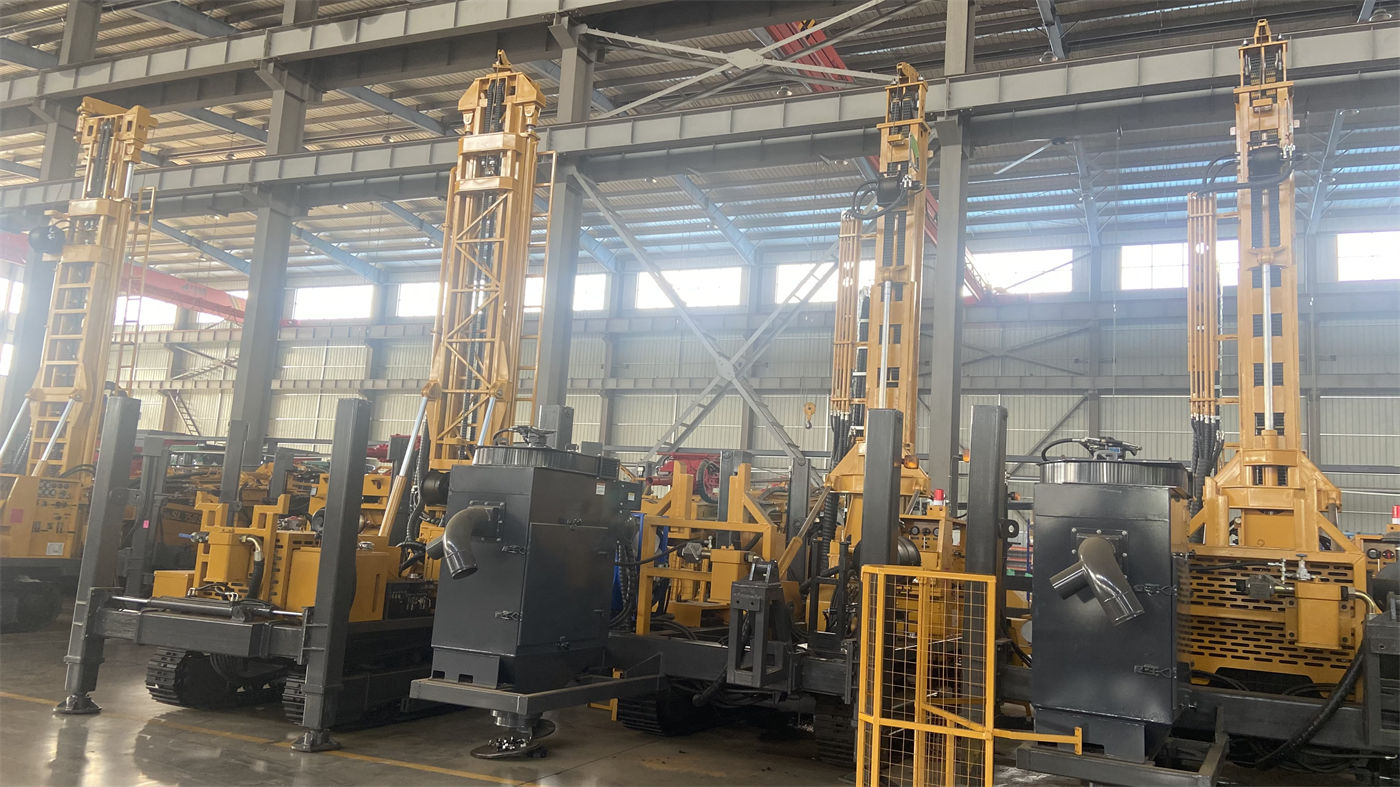
Rotary torque is directly related to hole diameter. The larger the hole diameter, the larger the crushing area and the higher the torque required. Hard rock and high-friction hole sections also require higher low-speed torque. The dual-condition rotary configuration appearing in this site's information is a starting point for understanding this parameter: the maximum rotary torque of the WR600RC-CS3 is 12000 / 6000 N·m, corresponding to rotary speeds of 75 / 150 r/min; the WR500RC-CS3 is 10000 / 5000 N·m, corresponding to 75 / 150 r/min; and the WR500RCE is 8000–12000 N·m, corresponding to 40–160 r/min.
The low-speed high-torque condition is used for large-diameter, high-resistance, and hard rock hole sections, while higher speeds are used for stable formations with lighter loads. The existence of dual conditions itself shows that a single torque figure is not enough to describe a machine's performance in different hole sections, and the switching conditions need to be confirmed with the manufacturer during procurement.
Mud Pump Displacement: Controls Cuttings Removal and Hole Wall Stability
Mud pump displacement affects whether cuttings can be continuously carried out of the hole opening, and also affects hole wall stability. When displacement is insufficient, cuttings tend to accumulate at the bottom of the hole and be re-crushed, and the hole wall may also become unstable due to insufficient mud wall-building capability. In the information, the WR500RC-CS3 can be optionally equipped with a mud pump, centrifugal pump, generator, and foam pump, indicating that the pump group is a part selected according to process and formation rather than a fixed configuration.
It is particularly important to distinguish that air-lift reverse circulation and mud direct circulation have different requirements for pumps and air compressors. Air-lift reverse circulation uses compressed air to establish return flow in the inner pipe, while mud direct circulation relies on the displacement and pressure of the mud pump. The recommended working air pressure given for the WR500RCE in the information is 1.7–3.5 MPa with air consumption of 17–42 m³/min, and for the WR600RC-CS3 it is 1.6–6 MPa with 16–75 m³/min. These figures describe the requirements of pneumatic processes and cannot be directly applied to pump volume judgments for mud direct circulation.
What Different Configurations at the Same Drilling Depth Mean
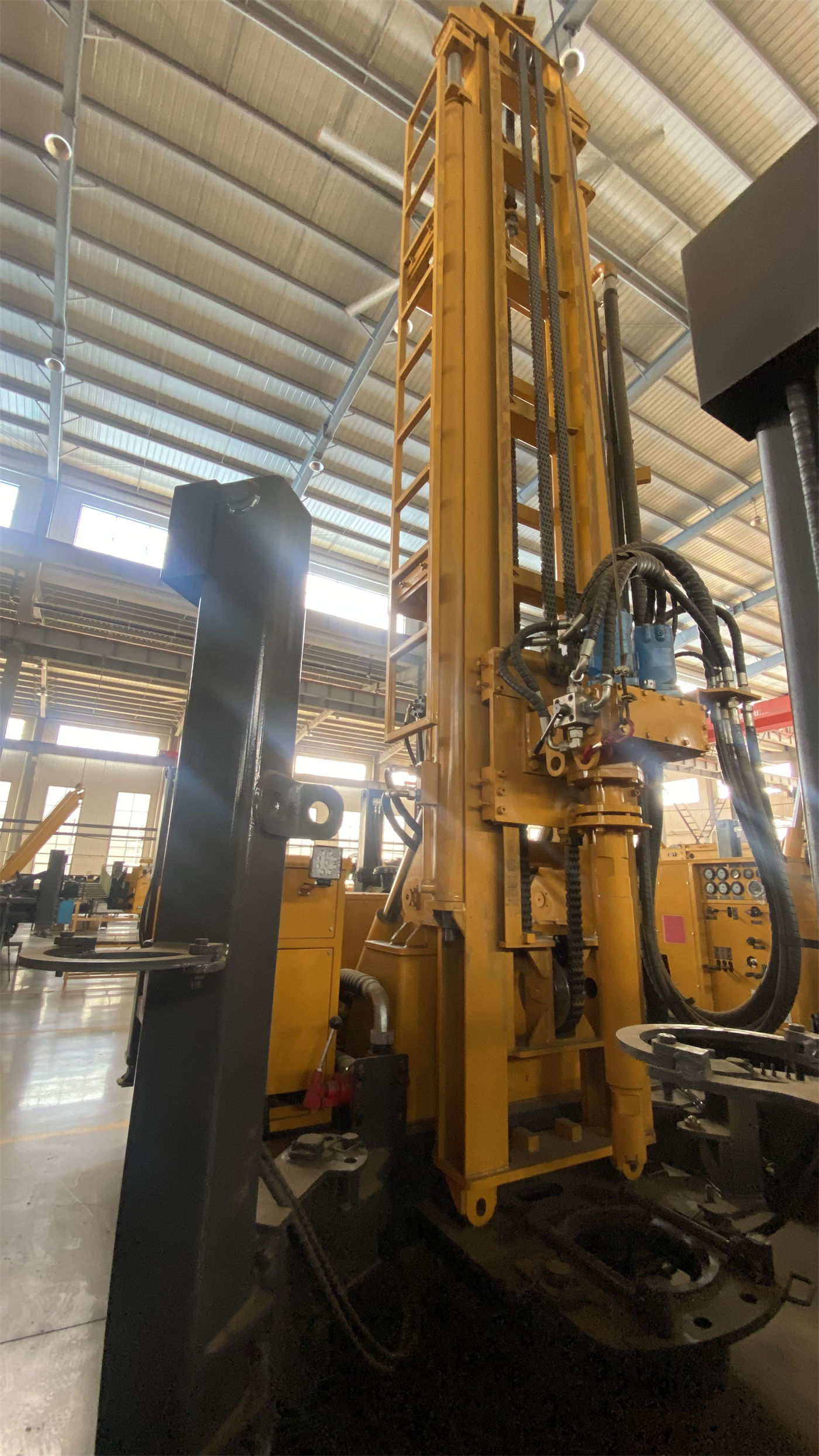
Putting the public parameters of the three machines on this site side by side makes it more intuitive to understand that "the same drilling depth does not mean the same configuration."
| Model | Maximum Drilling Depth | Hole Diameter Range | Lifting Capacity | Rotary Torque | Pneumatic Parameters |
|---|---|---|---|---|---|
| WR500RCE | 500 m | 140–400 mm | 300 kN (feed 150 kN) | 8000–12000 N·m, 40–160 r/min | 1.7–3.5 MPa, 17–42 m³/min |
| WR500RC-CS3 | 500 m | 105–400 mm | 25 T (axial pressure 7 T) | 10000 / 5000 N·m, 75 / 150 r/min | 1.6–6 MPa, 16–55 m³/min |
| WR600RC-CS3 | 600 m | 105–450 mm | 29 T | 12000 / 6000 N·m, 75 / 150 r/min | 1.6–6 MPa, 16–75 m³/min |
The table is not intended to judge which machine is better, but to illustrate one point: even when drilling depth grades are close, lifting capacity, torque grades, and pneumatic requirements each form their own parameter chain. Extracting any one of them alone for comparison during procurement may lead to one-sided conclusions.
Under Which Conditions the Three Parameters Are More Likely to Become Bottlenecks
- Large hole diameter with conservative torque: Large-diameter hard rock sections require low-speed high torque. If the machine only works in the high-speed grade, the rotary load can easily hit the upper limit.
- Hole depth close to the rated value with insufficient lifting force margin: Deep-hole drill strings are heavy, and after adding friction, normal tripping may consume most of the lifting capacity, compressing the space for accident handling.
- Cuttings removal capacity cannot keep up with penetration: The information explicitly mentions that common manifestations of insufficient air compressor volume include reduced sample return, delayed sample return, and cuttings accumulation at the bottom of the hole. The upper air consumption limit of the WR600RC-CS3 is 75 m³/min, higher than the 55 m³/min of the WR500RC-CS3, which is directly related to the longer sample return distance at a 600 m hole depth.
- Loose overburden and hard rock sections mixed in one well: The information shows that both RC models support mud rotary drilling, allowing the upper loose hole section to be stabilized first with mud and casing, then switching to RC or DTH processes after entering rock. At this point, pump volume, casing, and process switching sequence need to be confirmed together, rather than looking only at the main machine parameters.
Specific Items to Verify with Manufacturers During Procurement
The existing information on this site can explain the values and meanings of each parameter, but it does not provide reasonable matching ranges for lifting force, torque, and pump volume under different hole depths and diameters. The following questions fall outside the information covered and should be clearly raised with manufacturers during procurement:
- For the target combination of hole depth, hole diameter, and rock formation, what are the recommended matching ranges for lifting force, rotary torque, and pump volume/air volume, and what is the basis for judgment?
- Under what hole section conditions are the dual-condition torques switched, and what are the on-site judgment indicators for switching?
- When the same machine switches between mud direct circulation and air-lift reverse circulation, what changes are required in the matching of pumps, air compressors, drill tools, and hole opening equipment?
- When selecting optional mud pumps, centrifugal pumps, and foam pumps, which type of configuration corresponds to different formation combinations, and is there a clear configuration list?
- Actual drilling depth varies with hole diameter, drill pipe weight, air compressor capacity, and formation. Under what conditions was the rated drilling depth calculated?
Drilling depth is the starting point of selection, not the end point. Only by checking lifting force, rotary torque, and pump volume or air volume together with hole diameter and hole depth in the same table can one judge during procurement whether a machine can cover all the hole types in a project, rather than only the smoothest one.