












In coring projects in mountainous, forested or roadless mining areas, holes are often scattered along exploration lines with no formed roads between them. In such projects, the value of a portable split core drilling rig is not mainly reflected in a single drilling figure but in whether it can be quickly disassembled after a hole is completed, moved away, reassembled and positioned at the new collar. If hole-to-hole moves are poorly organized, no matter how capable the equipment itself is, waiting time between holes will hold back progress along the entire exploration line.
The following analysis is based on public product information for a 600 m-class portable split fully hydraulic core drilling rig, and examines applicable conditions, corresponding equipment features and items to confirm before purchase around the hole-to-hole move stage. It does not involve specific customer cases; the scenarios described are condition analyses.
What actions make up a hole-to-hole move
Moving a split rig from one collar to the next usually involves several stages: drill-string removal and collar cleanup, module separation, module transport, site preparation and base positioning at the new collar, module reassembly and hose connection, mast angle adjustment, and trial operation. The time for each stage depends on transport distance, slope, module weight, crew size and proficiency.
The direct effect of a portable split structure is to divide the whole-machine weight into several independently transportable units, reducing dependence on large transport vehicles and road construction. But the more times the rig is split, the more steps are needed for reassembly and hose connection. Therefore, judging whether a split rig suits a project requires more than asking whether it can be taken apart and moved; it also requires checking whether the weight of each unit after splitting, the on-site reassembly time and the crew configuration match the project rhythm.
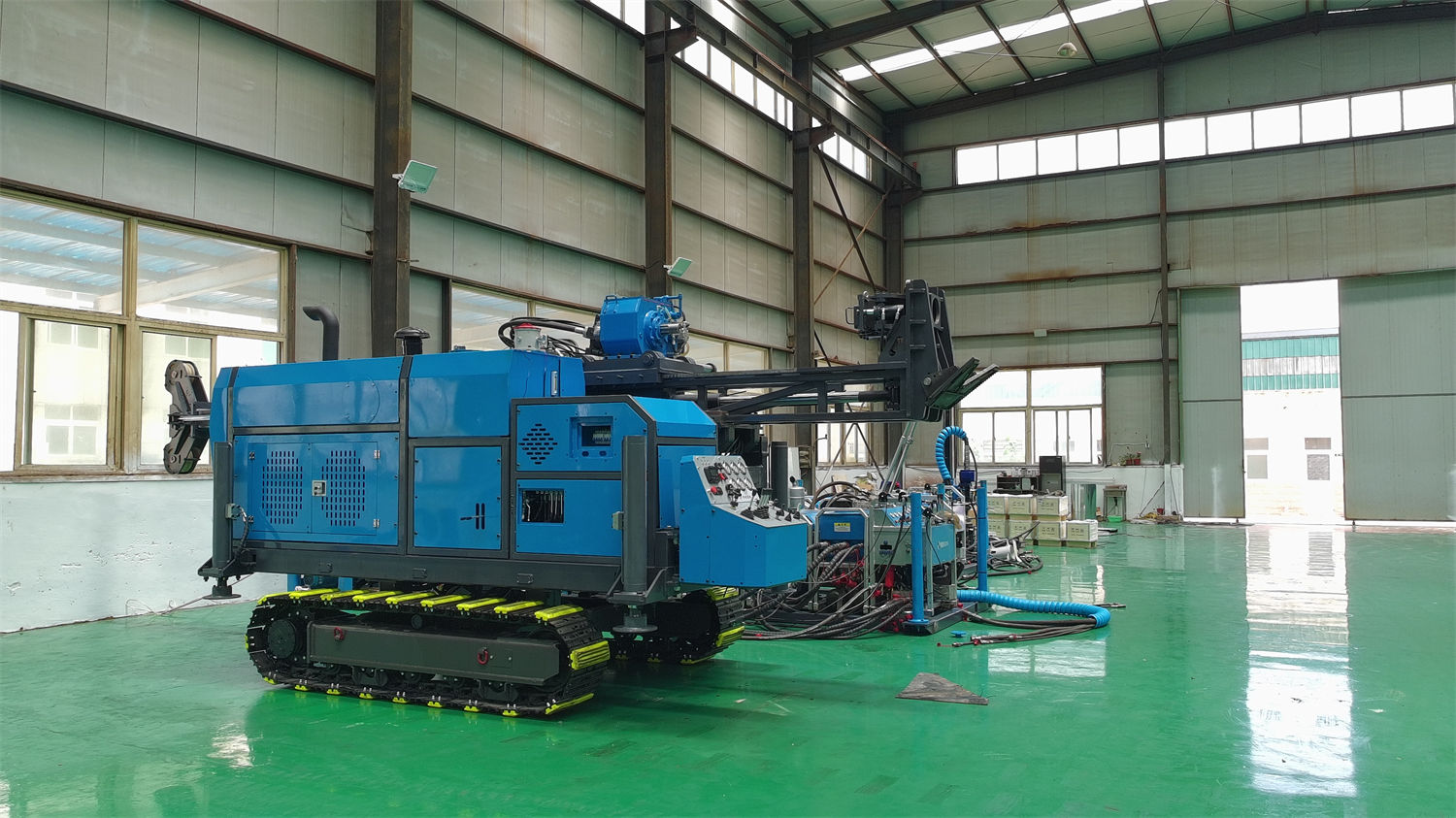
Several features in the documentation directly related to hole-to-hole moves
Module division and reference weights
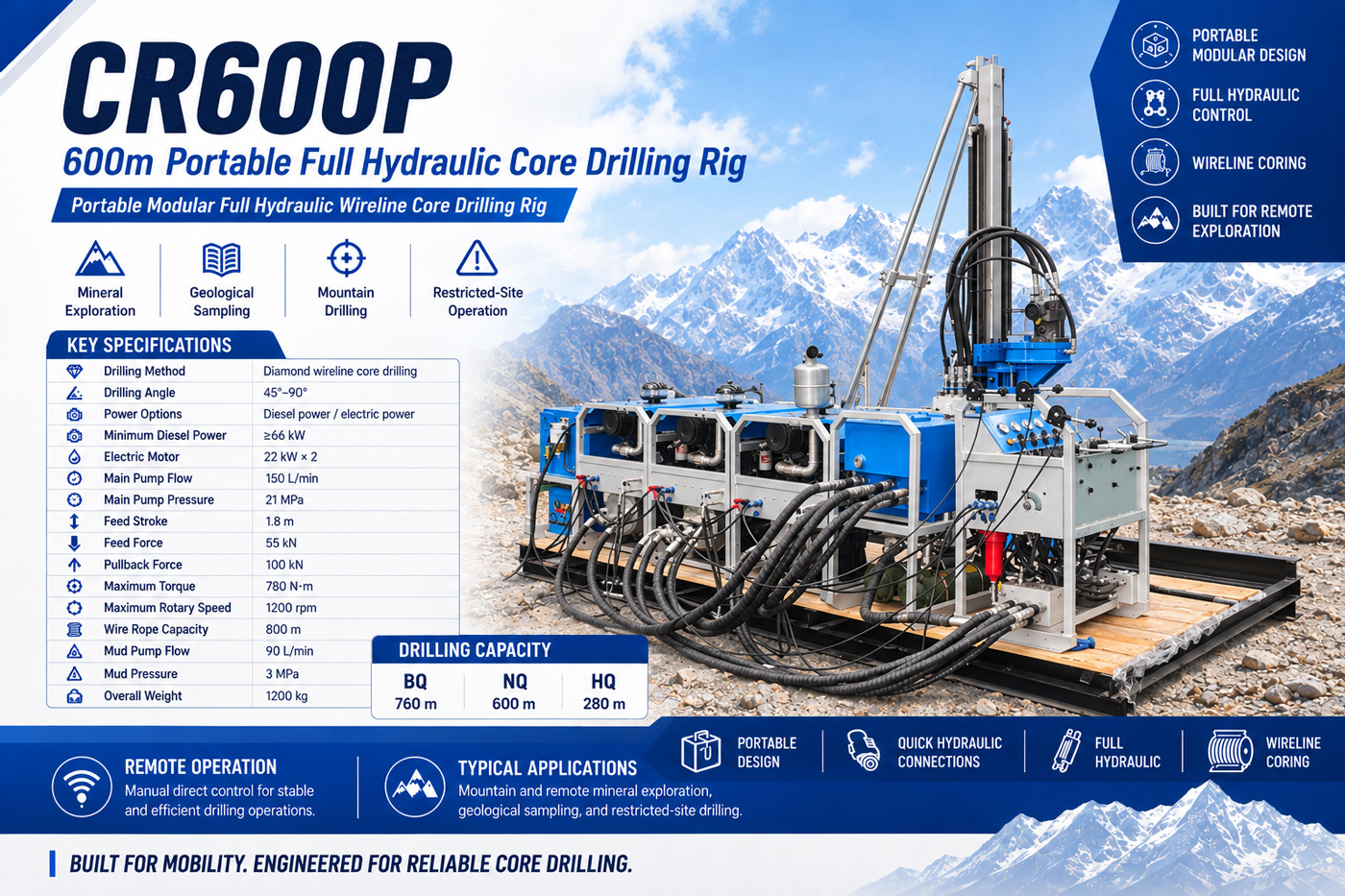
This model divides power, hydraulics, operation, mud and drilling mechanisms into multiple functional units. The reference module weights given in the documentation include: power unit 180–260 kg, operation unit 125 kg, hydraulic oil unit (including oil) 140 kg, mud unit 86 kg, and overall machine weight 1200 kg. These weights determine the transport method: some units can be moved short distances by manual labor with simple tools, while the power unit usually requires small transport equipment, cableways or other auxiliary means. Before purchase, the actual transport plan for each module should be verified against the terrain and transport distance between collars.
Assembly time and influencing factors
The documentation states that assembly can be completed in as little as about 30 minutes. This value should be understood as a reference under conditions of level ground, modules in place, a proficient crew and a complete set of matching tools; actual time is also affected by transport distance, slope, rain or snow, and the condition of quick-change couplings. For exploration lines with scattered collars and shallow single-hole footage, assembly time will account for a noticeably larger share of total auxiliary time, and this should be estimated separately in construction planning.
Drilling angle range and collar alignment
This model supports drilling at 45°–90°. When drilling inclined holes, mast angle adjustment and base stability are steps that must be reconfirmed after each hole-to-hole move; on exploration lines where collar attitudes vary greatly, the angle may need to be reset at every collar, which increases move time. The documentation also notes that before inclined-hole drilling, the mast and base must be stable, which means site preparation at the new collar cannot be simplified.
Drill rod length and rod handling rhythm
The applicable drill rod length is 1 m or 1.5 m. At 600 m-class hole depths, rod length directly affects the number of rod connections and disconnections and the organization of each run. During hole-to-hole moves, transporting and laying out rods also takes auxiliary time. Before purchase, the number of rods and the transport arrangement should be calculated against the target hole depth, coring size and rod specification.
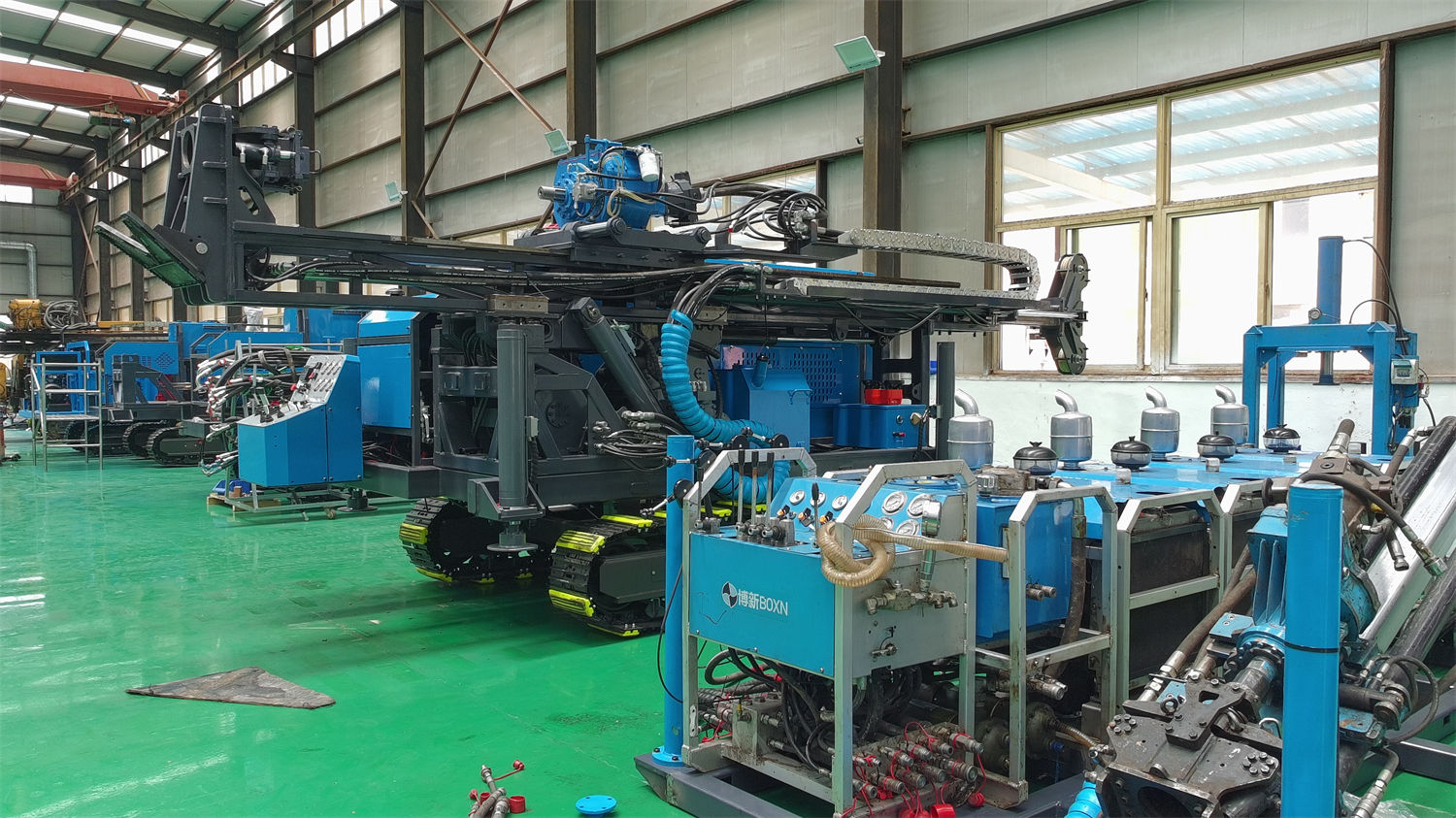
Which site conditions offset the hole-to-hole advantage of a split structure
The split design solves the problem of getting the rig in, but it does not automatically solve the problem of moving fast. The following conditions should be assessed in advance:
- Large elevation differences and unstable slopes between collars: module transport becomes harder and preparing the new collar platform takes longer;
- Short spacing but many collars: the total number of splits, transports and reassemblies is high, and assembly time accumulates noticeably;
- High proportion of inclined holes: the mast angle must be readjusted and base stability confirmed at every collar;
- Insufficient crew or unclear division of labor: module reassembly and hose connection are prone to waiting and rework;
- Rainy season or soft ground in forest areas: transport routes and the bearing capacity of temporary platforms require extra treatment.
These conditions do not affect whether the equipment can be used, but they do affect the actual time required for hole-to-hole moves. Project assessment should consider the move organization plan together with equipment selection.
Relationship between power form and hole-to-hole move organization
This model can use diesel or electric power. The diesel engine power requirement is ≥66 kW, or a combination of 22 kW×2 electric motors can be used. In mountainous areas with scattered collars and no stable power supply, diesel power reduces the work of laying power lines and transporting generators; in mining areas with an existing stable power supply, the electric option may reduce fuel replenishment and some transport work. The choice of power form changes the supporting items that must be handled during hole-to-hole moves and should be determined before purchase based on on-site power supply conditions.
Documentation and conditions to verify before purchase
| Check item | What to confirm |
|---|---|
| Collar conditions | Collar spacing, elevation difference, slope stability, temporary platform size and bearing capacity |
| Transport method | Transport tools, crew configuration and shortest routes corresponding to each module weight |
| Assembly organization | Division of labor, condition checks for quick-change couplings and hydraulic hoses |
| Drilling angle | Proportion of inclined holes, angle adjustment and base fixing method at each collar |
| Drill-string matching | Rod length, quantity, coring size and compatibility with the wireline winch |
| Power conditions | Power supply, fuel replenishment and maintenance conditions for diesel or electric options |
| Mud and borehole wall | Mud properties and casing measures for formation integrity, loss or collapse risk |
All items in the table should be based on actual site information. The documentation does not give actual drilling depth and coring results under different formations; these values must be confirmed during construction in combination with downhole tools, drilling angle and operating method, and cannot be inferred from nominal drilling depth alone.
Beyond move efficiency, equipment capability must still be checked item by item
Hole-to-hole move organization is the focus for split rigs, but the capability conditions of the coring task itself cannot be omitted. This model has reference drilling depths of 760 m for BQ, 600 m for NQ and 280 m for HQ; maximum head rotation speed 1200 rpm and maximum torque 780 N·m; feed force 55 kN and pull force 100 kN; maximum chuck clamping force 120 kN and through-hole capacity 54–127 mm; wireline winch rope capacity 800 m (6 mm wire rope); mud pump flow 90 L/min and pressure 3 MPa. These values are used to judge whether the equipment can cover the target hole depth, coring size and rock formation conditions; specific applicability still needs to be confirmed against the project's geological data.
Project information to provide when requesting a quotation
For hole-to-hole moves and the coring task, the following can be provided together with an inquiry: drilling purpose (reconnaissance, detailed exploration or orebody verification), target hole depth and coring size, drilling angle, number and spacing of collars, terrain and transport conditions between collars, formation overview, preferred power form, drill rod and coring tool matching requirements, and on-site power supply and transport conditions. The more complete the information, the easier it is to judge whether the split structure's move organization is feasible for the project and what supporting arrangements need to be added.