












In hard rock shallow hole projects, one recurring judgment bias appears: the holes are not deep and the diameters are not large, but the rock formation is intact and hard, yet the contractor configures the main machine based on the thinking of "deep hole equipment." As a result, equipment access is difficult, air supply and drilling tools do not match, and the process is delayed instead. For holes such as slope anchoring, foundation pre-drilling and quarry short holes, the single-hole footage is limited, and the focus of work is on numerous hole positions, frequent relocation, changing drilling attitudes and hard rock fragmentation efficiency. This follows a different logic from deep water wells, which pursue completed well depth.
First distinguish the work objectives of engineering holes and water wells
The objective of an engineering hole is usually to form a hole that meets design requirements, such as anchor bolt holes, anchor cable holes, drainage holes, equipment foundation pre-drilled holes or short pile pre-drilled holes. The depth of such holes is determined by design drawings, the diameter is determined by anchoring or installation requirements, and there are clear requirements for hole inclination and orientation. The objective of a water well is to complete a well and extract water; hole depth, diameter, wall protection and well washing form a complete set of procedures, and the equipment needs to drill continuously for a long time and handle a relatively long drill string.
Confusing the two easily leads to two misjudgments: first, assuming that shallow holes do not require DTH impact and switching to ordinary rotary drilling in hard rock, which limits efficiency; second, conversely, using deep well equipment for shallow holes, where equipment size, access conditions and supporting costs exceed the actual needs of the work. The starting point for judgment should be rock hardness, hole diameter, hole direction requirements and hole position distribution, rather than focusing only on maximum drilling depth.
Engineering scenarios corresponding to the 30-meter-class positioning
The DTH30C is a 30-meter-class crawler hydraulic DTH drilling rig. The information gives a maximum drilling depth of 30 m, a drilling diameter of 76–280 mm, a maximum rotary torque of 3500 N·m, and suitable rock hardness of approximately f = 8–24. These data indicate that its design scenario is short holes and shallow-to-medium engineering holes in medium-to-high hardness rock formations, rather than deep water wells or deep exploration holes.
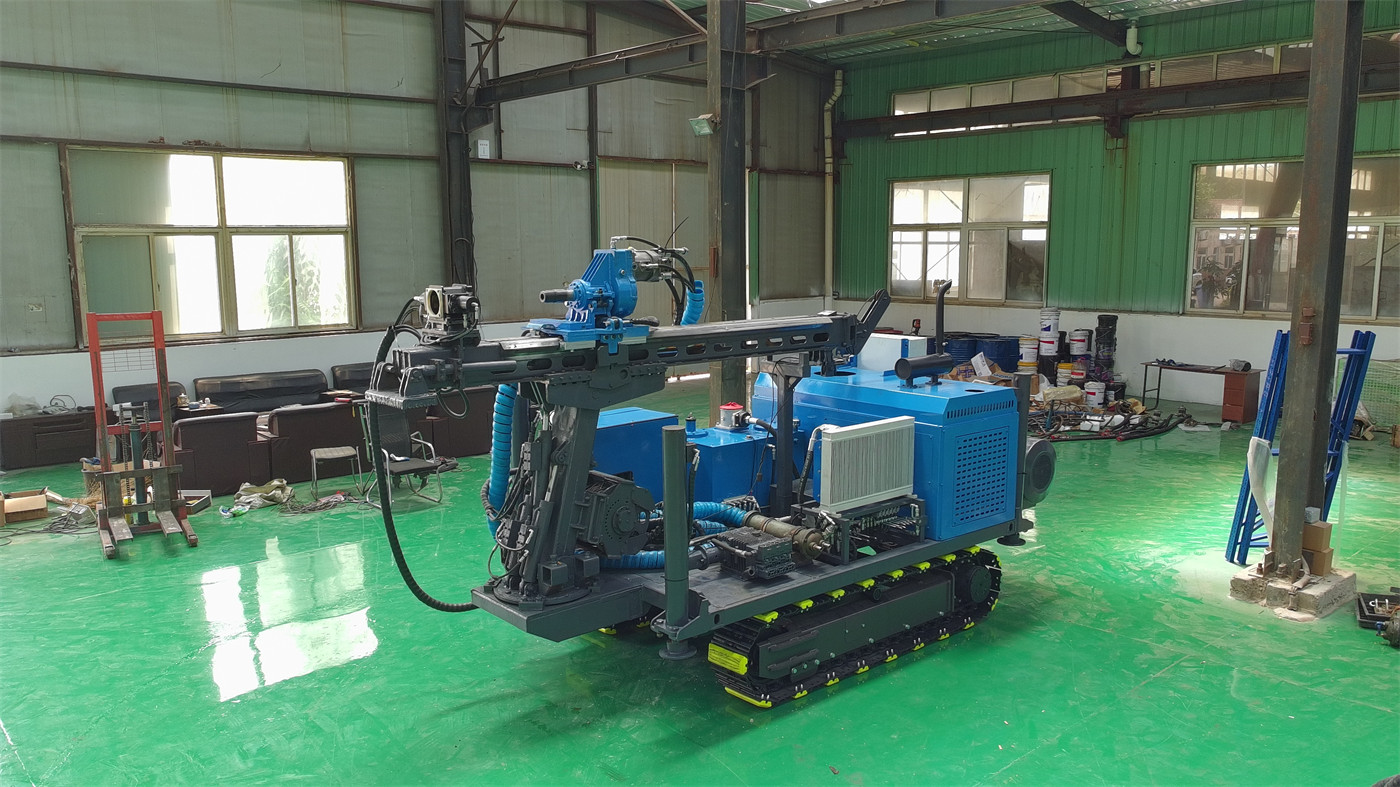
The difference from deep hole equipment is not only in the numbers. The compact body, rubber crawler chassis and 18–180° swing angle point to construction environments such as slopes, plant areas and road projects where space is limited, hole positions are numerous and hole directions vary. For such projects, whether the equipment can be positioned quickly and adjusted to the design hole direction often affects process scheduling more than maximum drilling depth.
Correspondence between needs and equipment features
Slope anchoring: changing hole directions and platform conditions
Anchor bolt holes, anchor cable holes and drainage holes on highway, railway, foundation pit and retaining wall slopes are often arranged at design inclinations. The DTH30C has an 18–180° swing angle and inclination adjustment function and can be used for vertical holes, inclined holes and some lateral holes. However, the original information only states that it "has an inclination adjustment function" and does not give a specific angle range. Actual projects should be based on the final production configuration and technical confirmation documents.
Slope construction has another constraint: before equipment positioning, platform stability, rockfall risk and support conditions must be confirmed. Rubber tracks have good adhesion on crushed stone, compacted soil and generally uneven ground, and are relatively friendly to paved surfaces, but this cannot replace judgment of platform bearing capacity and slope stability.
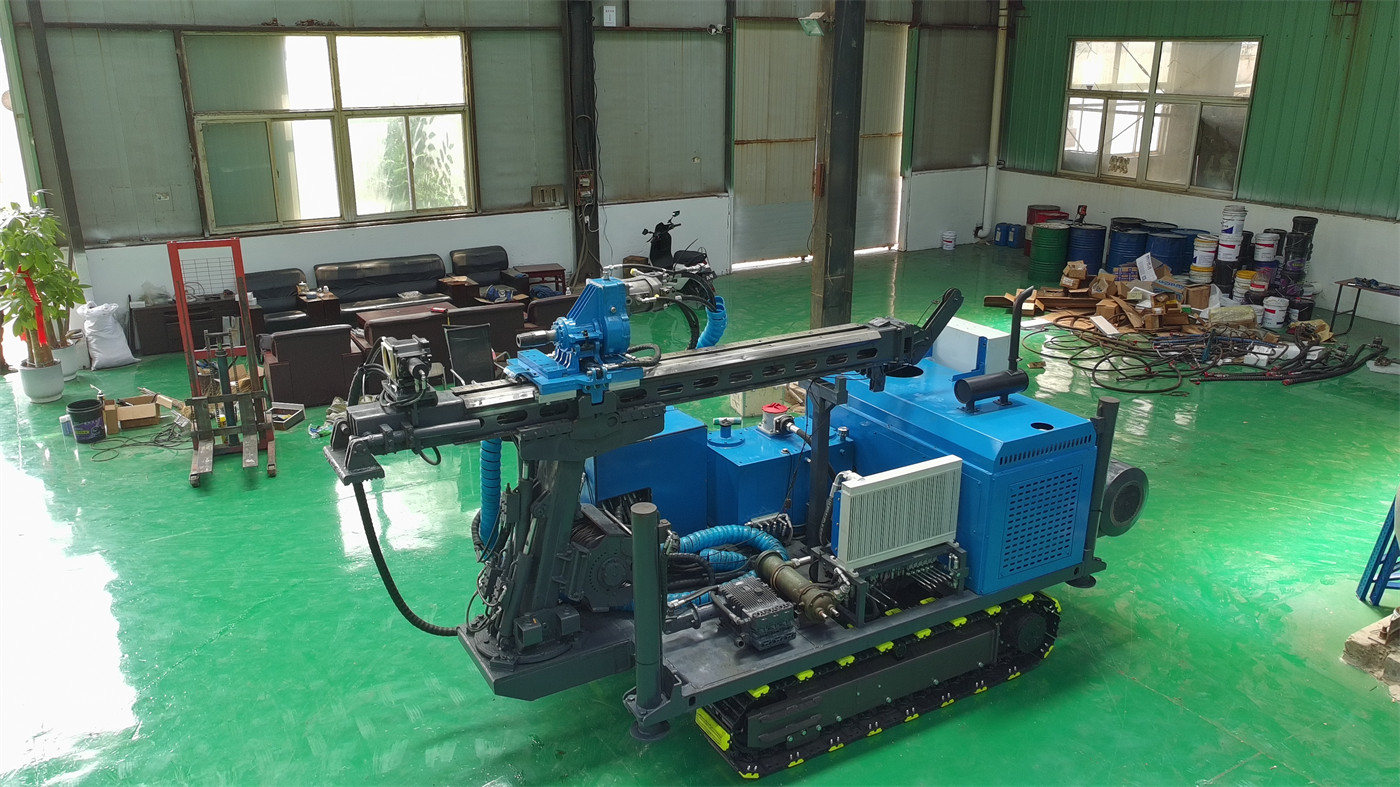
Foundation pre-drilling and short pile pre-drilling: body dimensions and stroke
In equipment foundations, guardrail piles, short piles and hard rock foundation construction, pre-drilling can be carried out first when intact rock formations are encountered, reducing resistance in subsequent piling or installation. The DTH30C has overall dimensions of approximately 3200 × 1200 × 1850 mm, a width of approximately 1.2 m and an overall weight of approximately 2500 kg, making it suitable for some plant areas, enclosed construction sites and narrow passages. The 3.2 m mast stroke and 2.2 m effective stroke correspond to the rhythm of medium-short drill rods and short pile construction.
Before entering such construction points, turning space, ground bearing capacity, underground pipelines and surrounding structures must still be checked. A narrow body solves the passage problem in some restricted sites, but it does not mean that any enclosed site can be entered directly.
Quarries and road projects: relocation and hard rock efficiency
Bench holes and auxiliary rock breaking holes in quarries, as well as slope reinforcement, drainage and rock excavation preparation in road projects, usually have limited hole depth but scattered hole positions. The DTH30C has a travel speed of 5–10 km/h, and the crawler chassis facilitates short-distance movement along construction access roads. Compared with large equipment that requires separate transport arrangements, the relocation step is simpler. The 53 m/min in the information is the rapid movement speed of the feed mechanism, used for non-drilling actions such as power head return and drill rod handling, and cannot be understood as the actual penetration rate in rock formations.
Supporting conditions determine whether DTH drilling can be established
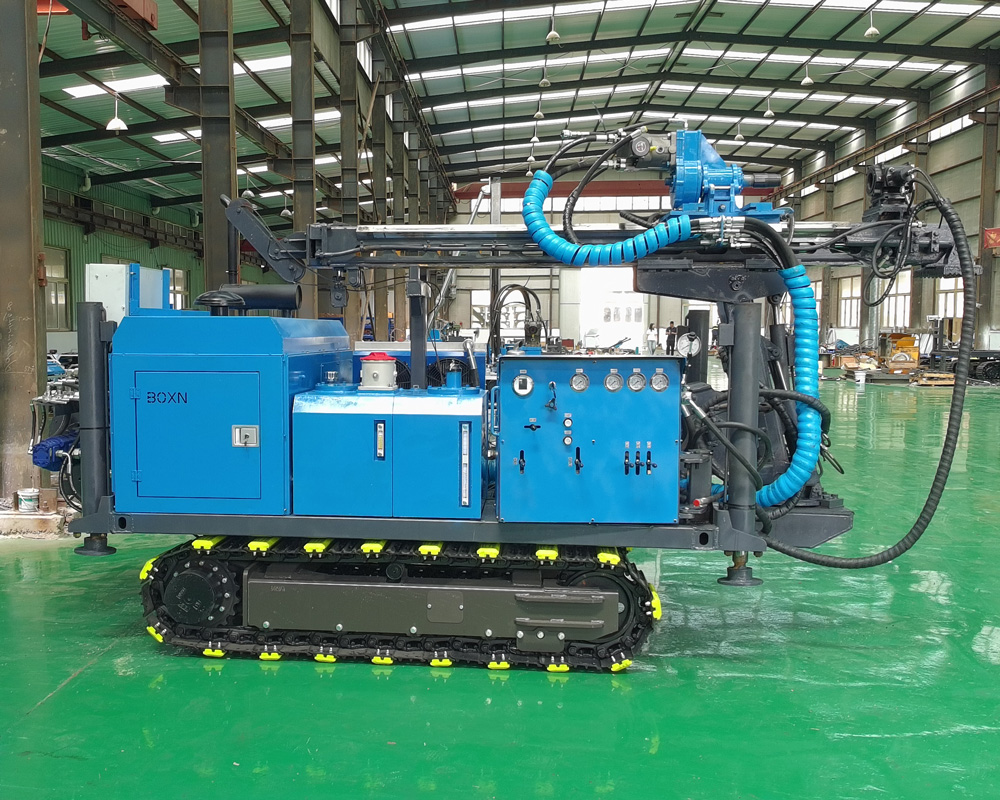
DTH drilling relies on compressed air to drive the DTH hammer and discharge cuttings, and matching the air compressor is a prerequisite for the plan to be viable. The reference air consumption in the information is approximately 8 m³/min, but the original table actually marks it as 8 m²/min. This article understands it as m³/min according to the commonly used unit for compressed air flow, and the final value should still be confirmed with formal technical documents. When actually selecting an air compressor, pressure and flow must also be calculated in combination with the DTH hammer specifications, drilling diameter and hole depth, rather than looking at only one number.
Under hard rock conditions, DTH hammer lubrication and drill bit wear inspection need to be included in daily work arrangements. Dust is obvious in dry hard rock, and a dust collector or water mist dust suppression system can be configured according to the project. Common supporting items also include drill rods, casing tools, high-pressure air hoses and oil mist lubricators; if used for short piles or specific foundation pre-drilling, corresponding accessories can be selected according to the project. These supporting items should be checked item by item against the main machine interfaces and air circuit parameters; there is no default conclusion that they are directly interchangeable with any main machine.
Applicable boundaries and conditions that need to be stated in advance
- 30 m is the nominal maximum drilling depth and does not mean it can be achieved in any formation and with any hole diameter; actual capability is affected by rock formation, hole diameter, DTH hammer and air compressor capability.
- The information does not give the specific angle range for inclination adjustment. For projects involving large-angle inclined holes or lateral holes, the final configuration should first be confirmed with the supplier.
- Hole walls in weathered rock, soil-rock mixed layers and upper loose overburden are prone to instability. Feed speed should be reduced, and casing or other upper hole stabilization methods should be used as appropriate.
- In fractured zones and formations with developed fissures, priority should be given to preventing stuck drills, hole collapse and air leakage. If abnormal air circuit pressure or interrupted cuttings return occurs, drilling should be stopped first for inspection.
- Deep water wells and deep exploration holes are not applicable scenarios for this type of equipment; specialized equipment should be selected according to the corresponding process.
Information to prepare before inquiry
If the project is a hard rock shallow-to-medium hole project, it is recommended to state the following when making an inquiry: drilling purpose (anchoring, foundation pre-drilling, quarry or road project), rock type and approximate hardness, target hole depth and diameter, hole direction requirements, number and distribution of hole positions, access roads and site dimensions, power or air supply conditions, and whether dust collection or dust suppression configuration is required. The more specific this information is, the easier it is to judge whether a 30-meter-class DTH drilling rig matches, and the clearer the supplier can be about which parameters need to be based on technical confirmation documents.