












In deep-hole air-lift reverse circulation drilling, one of the most common disputes on site is this: the air compressor has enough pressure and no small displacement, yet cuttings at the hole bottom return poorly. The problem is often not any single figure but whether the combination of figures can meet the cuttings return conditions at that moment. Pressure is responsible for delivering the air stream into the hole, displacement determines how many cuttings can be carried away per unit time, and beyond that one must also consider the annulus formed by the hole diameter, the sealing of the drill pipe inner tube, the resistance caused by hole depth, and whether the formation leaks air. If these items are not matched, looking at the pressure gauge or displacement parameter alone cannot explain conditions inside the hole.
First distinguish what pressure and displacement each govern
The cuttings return path in air-lift reverse circulation is: compressed air enters the drill pipe inner tube, mixes with cuttings at the hole bottom to form a return flow, and travels up the inner tube to the surface. If pressure is insufficient, the air stream cannot reach the mixing point at the hole bottom; if displacement is insufficient, the return flow velocity is too low and cuttings will settle in the inner tube. Therefore, when selecting a matched air compressor, pressure and displacement must both be satisfied; one cannot compensate for the other.
Taking the data for this site's 500 m class crawler air-lift reverse circulation water well rig as a reference, the recommended working air pressure is 1.7–3.5 MPa and air consumption is 17–42 m³/min. This range is the scope the equipment sets for the matched air source, not a fixed consumption for any specific hole depth. The deeper the hole, the higher the liquid column above the mixing point and the greater the required pressure; the larger the hole diameter, the more air is needed for the same return flow velocity; the harder the rock formation, the greater the amount of cuttings produced per unit of advance.
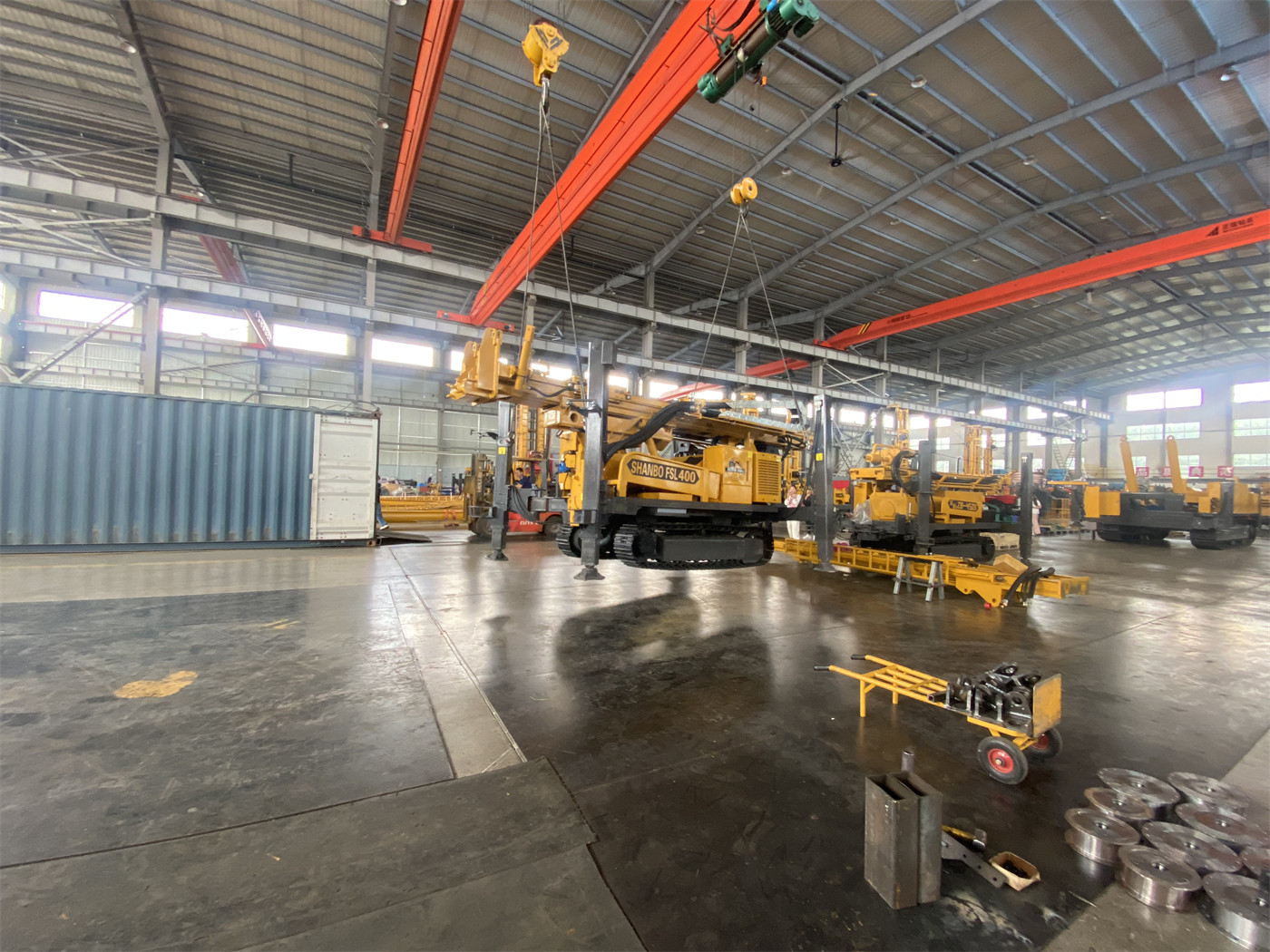
Cuttings return conditions involve more than one air compressor figure
Only by looking at the other parameters in the equipment data together can one judge whether the basic conditions for cuttings return are present.
- Hole diameter: This model drills 140–400 mm. With the same air volume, return flow velocity is higher in a small hole and lower in a large hole; when deep holes are paired with large diameters, the displacement requirement increases noticeably.
- Drill pipe sealing: If the inner tube joint is not tightly sealed, air will enter the annulus through the leak point and the return flow at the hole bottom will be weakened. This is why the data lists drill pipe sealing as a daily inspection item.
- Hole depth: Maximum drilling depth is 500 m. The deeper the hole, the greater the air stream loss along the way and the liquid column back pressure; shallow-hole parameters cannot be directly applied to deep holes.
- Lifting force: The 300 kN lifting force corresponds to the need to handle the 500 m class drill string, casing weight and borehole wall friction. When poor cuttings return leads to increased sediment and higher tripping resistance, lifting margin is one handling measure, but it is not a solution to cuttings return itself.
- Rotation and feed: Rotation torque of 8000–12000 N·m, rotation speed of 40–160 r/min and feed force of 150 kN need to be adjusted in coordination with changes in cuttings return volume and torque; if cuttings return is poor and feed is increased further, repeated crushing and bit wear will worsen.
Formation changes rewrite the meaning of the same set of figures
Intact hard rock sections, fractured zones, weathered overburden and aquifers affect air-lift reverse circulation in different directions. Relatively intact rock formations such as granite, basalt and limestone can be drilled with a DTH hammer, and impact, rotation, feed and air volume need to be coordinated; after entering faults and fractured zones, the risks of block falling, hole shrinkage, air loss and sticking increase. The data recommends reducing feed speed, maintaining continuous hole cleaning, and using casing or foam assistance according to borehole wall stability.
Open fissures, karst caves and highly permeable formations may cause severe air loss; if only pressure is raised while displacement is insufficient, the hole bottom still cannot obtain an effective air stream. The handling directions given in the data include increasing air compressor displacement, using foam, running casing or adjusting the drilling method. These are conditional measures, and whether they apply to a particular hole section must be judged in light of the degree of air loss and borehole wall conditions.
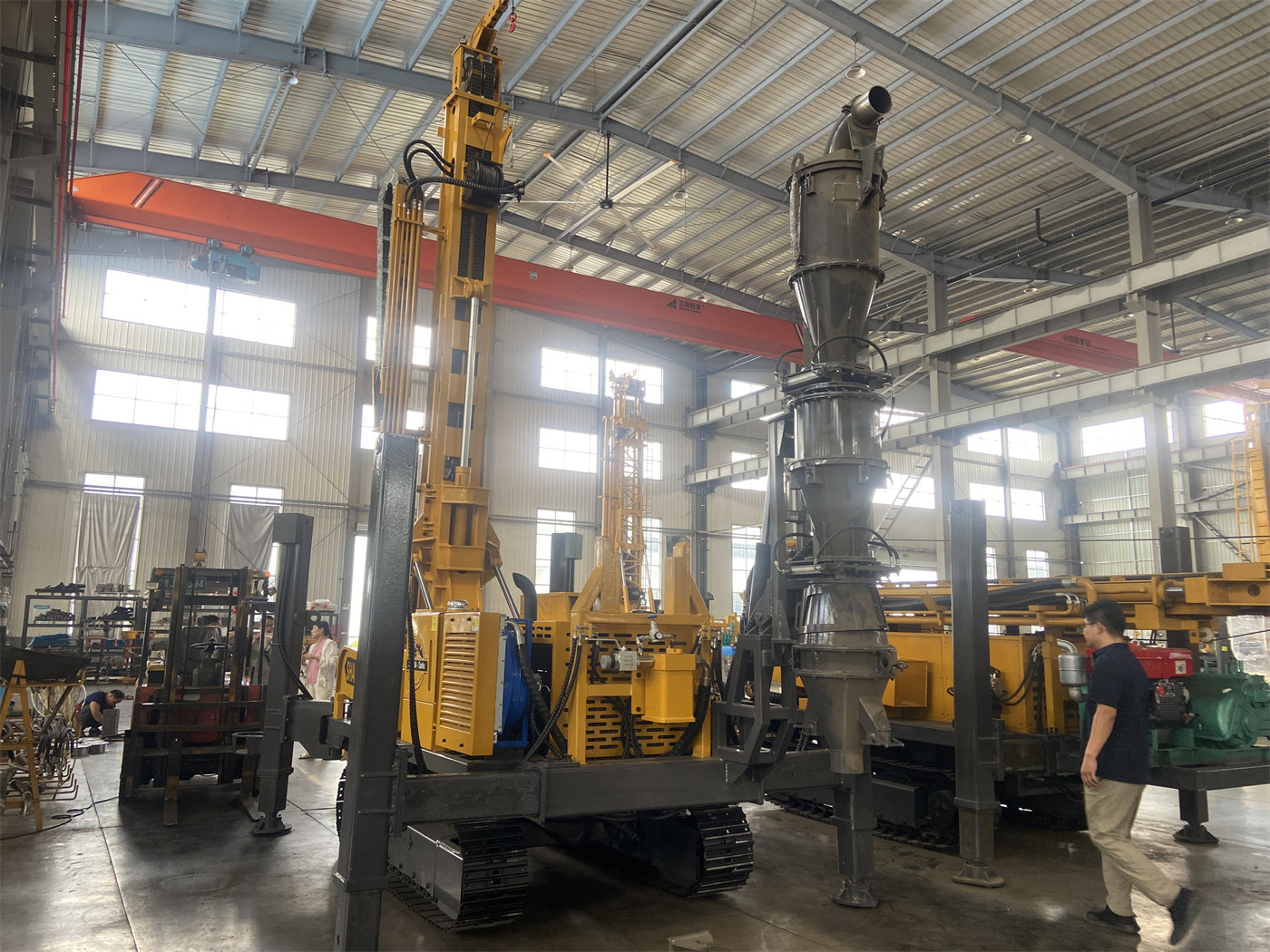
The problem in the upper loose overburden is not inability to drill but borehole wall instability. The data mentions that casing, mud or other hole-stabilizing methods can first be used to establish a stable hole section before entering relatively intact rock for pneumatic reverse circulation drilling. At this point air compressor parameters are not yet the main contradiction; stabilizing the hole first and then discussing cuttings return better follows the process sequence.
How to use a set of equipment data to check matching
On the basis of this article's data alone, it is impossible to give a definite air volume and pressure for a specific project, because the data does not provide graded consumption for different hole depths, hole diameters and formations, nor does it give correction coefficients for air-leaking formations. What can be confirmed are the constraints on the equipment side: 132 kW diesel power, rated speed 2400 r/min, overall weight about 12 T, transport dimensions about 6300 × 2100 × 2500 mm, working dimensions about 4000 × 2900 × 6800 mm, walking speed about 2.5 km/h, and reference gradeability 30°. These data relate to the entry and layout of matched equipment such as air compressors and high-pressure air hoses, not to cuttings return capacity itself.
The data also states that reverse circulation DTH hammers, bits, drill pipes of different specifications, casing tools, air compressors, high-pressure air hoses, oil misters, foam pumps and generators can be configured. Not all configurations are needed for different formations. Before purchase, the intended hole diameter, hole depth, formation type and drilling method should be submitted together so that the matched air source can be calculated according to actual working conditions, rather than matching an air compressor only to the rig's nominal capacity.
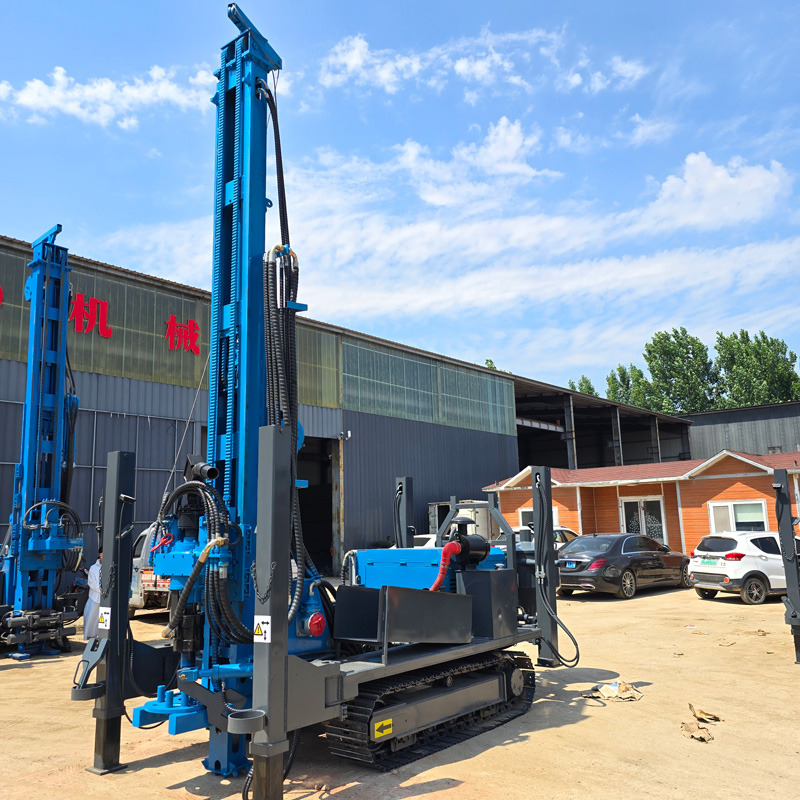
Conditions to provide before inquiry and spudding
If the project targets deep water wells, agricultural irrigation or mine water supply, when inquiring about equipment and air supply matching, it is advisable to prepare at least the following information:
- Drilling purpose: water supply well, dewatering hole or other, as well as target well depth and final hole diameter.
- Formation data: overburden thickness, main lithology, approximate depth of fractured zones and aquifers, and whether karst caves or strongly air-leaking sections exist.
- Drilling method: whether DTH hammer pneumatic reverse circulation is used, and whether foam or casing is planned.
- Entry conditions: road width, height limit, ground bearing capacity, slope conditions, and layout space for matched equipment such as air compressors.
- Site conditions: power supply, water supply, drill pipe and casing specifications, and drilling tool connections.
Among the above conditions, the degree of formation air loss, aquifer water inflow and hole diameter design often directly affect the cuttings return plan and are parts that need to be verified before spudding rather than replaced by data judgment. Equipment parameters provide the capability boundary; whether air-lift reverse circulation can stably return cuttings must ultimately be verified by the actual return conditions in the hole.