












Irrigation well construction for contiguous farmland, orchards, or nurseries often involves drilling multiple wells in the same area rather than finishing one well and stopping. Each well has a similar hole depth, and the process is repetitive; auxiliary actions such as connecting and disconnecting drill rods and tripping the drill string are repeated over and over. Reducing this auxiliary time is the first issue worth considering at the equipment level for such projects.
This article discusses where rod connection auxiliary time can be reduced without changing the well completion structure or sacrificing downhole safety, and why a 300-meter-class long-stroke crawler water well drilling rig is worth including in comparisons for this goal. It does not involve specific customer projects; the conditions listed are verification directions for solution analysis.
Breaking Down the Demand: Where Auxiliary Time Goes in Irrigation Wells
The hole depth of irrigation wells is mostly within the conventional water well range; single-hole depth may not be extreme, but there are many wells and the pace is continuous. Beyond drilling time, auxiliary actions are roughly concentrated in several areas:
- Connecting and disconnecting each drill rod and checking threads;
- Non-drilling travel such as power head return and raising/lowering the drill string;
- Handling and aligning drill rods from ground to hole collar;
- Mast raising/lowering and rig repositioning when moving between holes.
Among these four, the first three are directly related to "how deep one drill rod can drill." The shorter the drill rod, the more connections are needed for the same hole depth; the shorter the single feed length, the more times the power head must return after completing one rod. Combined, auxiliary time accumulates multiplicatively across multiple wells. Therefore, the approach to reducing rod connection time is not a single indicator; it requires that single feed length, available drill rod length, and lifting capacity be matched together.
Three Conditions Must Be Met Simultaneously
Single Feed Length Must Cover Drill Rod Length
If the mast stroke is shorter than the drill rod used, the advantage of long drill rods cannot be realized, and segmented handling is still required. Therefore, the judgment order should be: first check the equipment's nominal single feed length, then compare it with the available drill rod lengths to confirm whether they match.
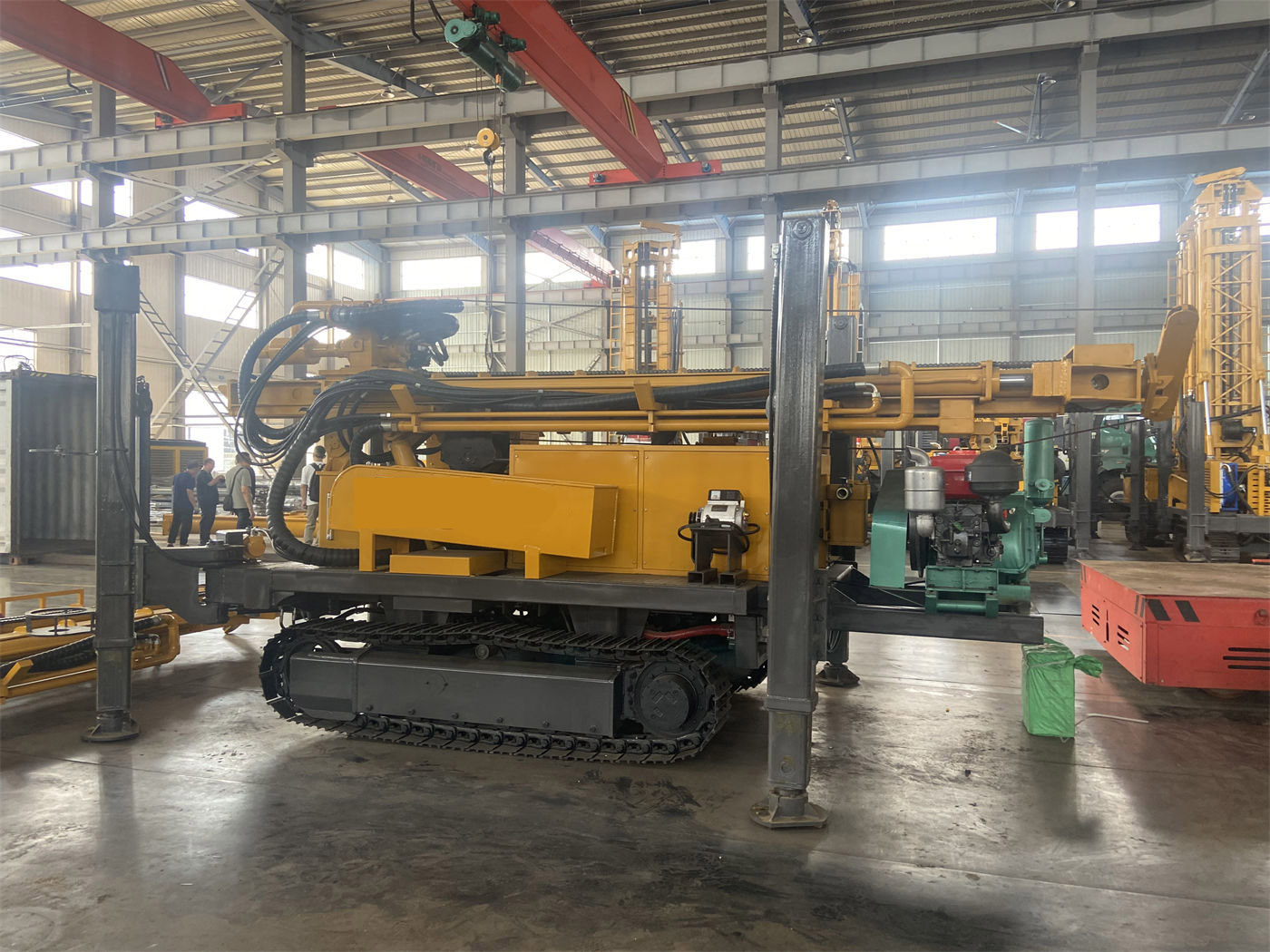
Taking the WR300SEL associated with this article as an example, its data specifies a 6.6-meter single feed and compatibility with 1.5m, 2m, 3m, and 6m drill rods, with drill rod diameters of 76, 89, and 102 mm. The 6.6-meter stroke still has margin after covering a 6-meter drill rod, which is the prerequisite for "using long drill rods to reduce connection frequency" to hold true.
Short Drill Rods Must Still Have Application Space
Long drill rods are not convenient on all sites. When space is tight, transportation is restricted, or the drill string assembly needs adjustment, 1.5m, 2m, and 3m drill rods still have value. Whether the equipment is compatible with multiple drill rod lengths determines whether construction organization can switch between different well locations rather than being locked into one length.
Lifting Force Must Keep Up with Heavier Drill Strings
As drill rods lengthen, the weight of each rod and the self-weight of the entire drill string increase, and the lifting demand during tripping rises accordingly. The WR300SEL data specifies a lifting force of 18 tons, higher than standard-stroke economical configurations, and can be used for normal tripping and some casing operations. Note here: lifting force is the margin for normal operations, not a means to handle downhole incidents. The data itself also suggests that in case of stuck drill, hole shrinkage, or wall caving, the hole should be cleaned first, lifting should be slow, and the process adjusted; it is not advisable to directly pull with maximum lifting force.
Why the 300-Meter-Class Long-Stroke Model Is Worth Including in Comparisons
Putting the above three conditions into the typical hole depth of continuous irrigation wells: the WR300SEL has a maximum drilling depth of 300 meters and a drilling diameter of 140–325 mm, covering the conventional water well range for rural domestic water wells, agricultural irrigation wells, and livestock water use. For most irrigation well projects that do not require ultra-deep drilling, 300-meter-class equipment is a comparable tier in terms of equipment cost, transport weight, and construction capability.
The significance of its long-stroke structure is not that the mast itself is longer, but that when completing a 300-meter-class borehole, using 6-meter drill rods can significantly reduce the number of connections. The data describes this as "reducing rod connection frequency and lowering auxiliary time," and this judgment holds when the hole depth, formation, and drill string assembly are all within the equipment's applicable range.
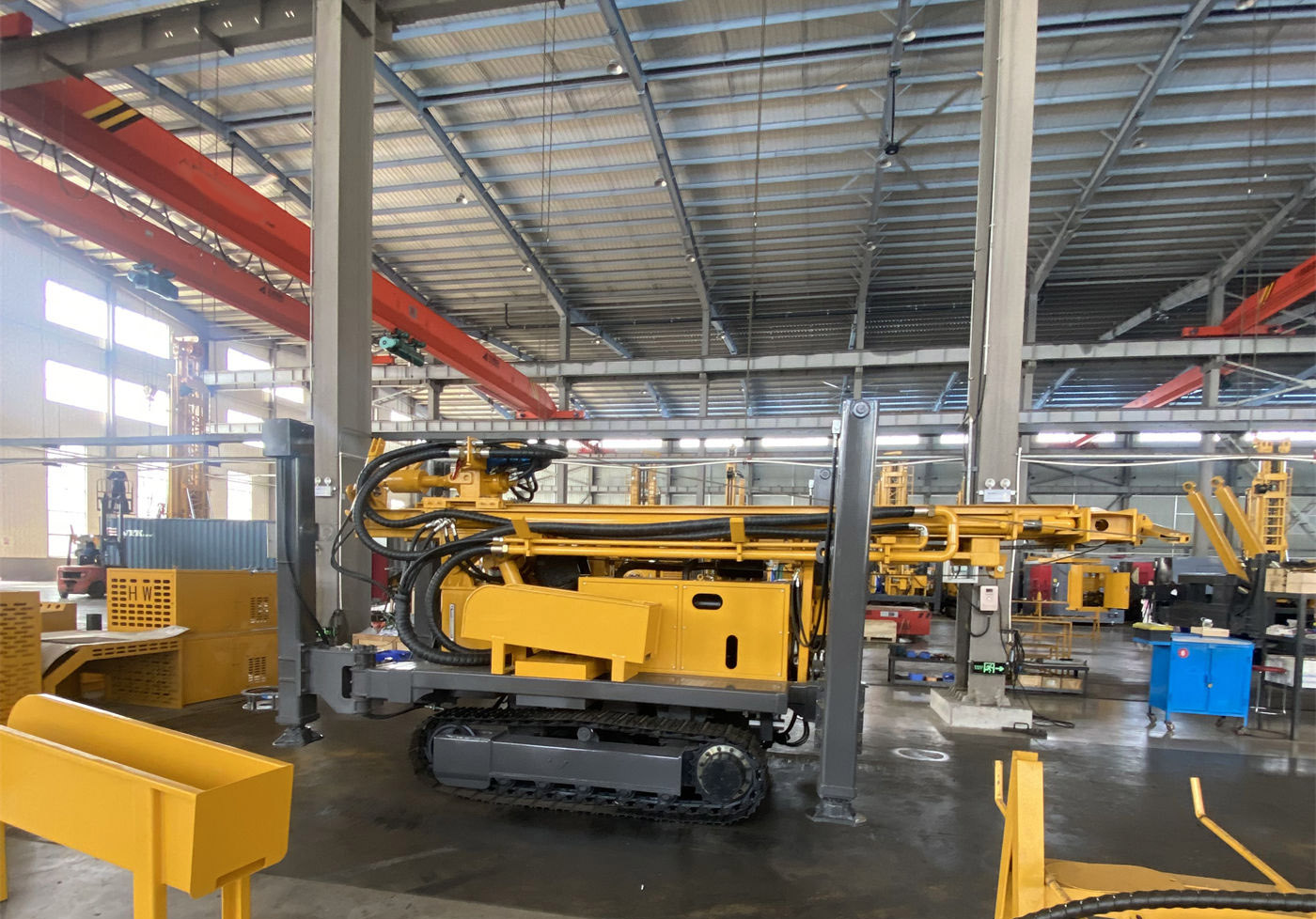
Other whole-machine conditions available for verification include:
- Crawler chassis, travel speed approximately 2.5 km/h, reference maximum gradeability 30°, suitable for general rural roads and unpaved ground;
- 85 kW diesel engine, providing power for hydraulics, rotation, feed, and travel; the data also offers optional configurations such as generator and electric motor power;
- Reference whole-machine weight approximately 8 tons, dimensions approximately 5900×1850×2200 mm;
- Rotation torque 5700–7500 N·m, rotation speed 40–70 r/min;
- Fast lifting 22 m/min, fast feed 40 m/min, mainly for non-drilling actions;
- Auxiliary winch lifting force 2 tons, usable for handling DTH hammers, drill rods, and casing tools.
It is important to distinguish: fast lifting and fast feed compress idle travel and do not equal actual penetration rate in rock. The reference drilling efficiency given in the data is 15–35 m/h, which is affected by formation, bit, DTH hammer, and air compressor, and cannot be taken as a commitment for a specific project.
Supporting Conditions and Application Boundaries
Pneumatic Drilling Requires Simultaneous Verification of Pressure and Displacement
If irrigation wells encounter relatively intact hard rock and DTH pneumatic drilling is used, the WR300SEL data specifies a working pressure of 1.7–3.0 MPa and air consumption of 17–36 m³/min. Air compressor selection cannot rely on pressure alone; if displacement is insufficient, even with adequate pressure, there may be insufficient impact and difficult cuttings removal; more margin is needed when hole diameter increases, rock hardens, or altitude rises.
Loose Overburden Requires Hole Stabilization First
Soil, sand, and gravel layers require more attention to hole wall stability. Such sections may require mud, casing, or other stabilization methods to treat the upper part before entering rock. If the project area has thick loose layers, mud pump and casing plans should be considered together during the supporting stage; equipment cannot be configured solely based on hard rock impact efficiency.
Site and Transport Conditions Brought by Long Stroke
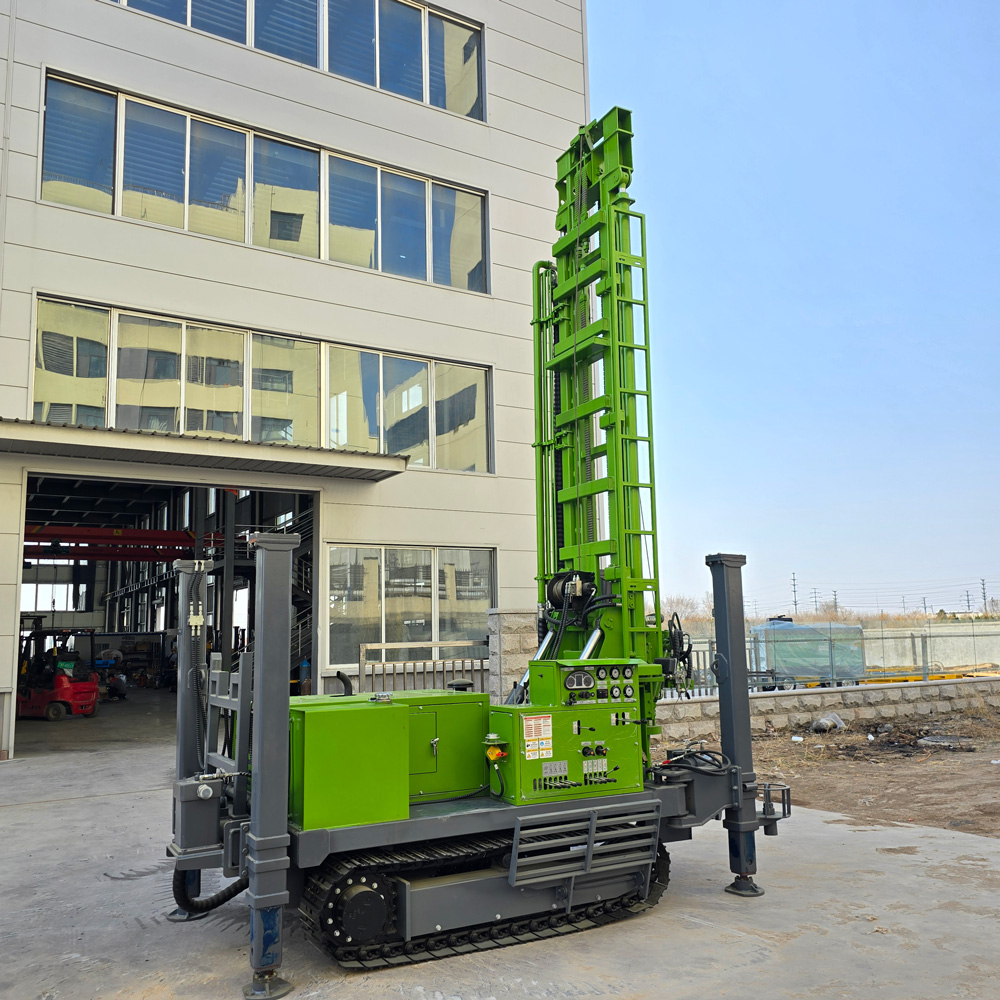
Six-meter drill rods and a long-stroke mast compress rod connection time but also raise site requirements: mast extension requires clearance, the ground must have sufficient bearing capacity, and outrigger loading must be confirmed in advance; lateral forces should be avoided when using long drill rods. For transportation, the 8-ton whole machine and approximately 5.9-meter overall length require verification of vehicle length, loading fixation points, and turning space near the well location. The data specifically notes these precautions for the long-stroke version, which are conditions that must be implemented during model selection.
Well Depth Is Still Determined by Hydrogeology
300 meters is the equipment's nominal drilling depth; it does not mean every irrigation well must be drilled to that depth, nor does it mean any formation within that depth can be successfully drilled. Actual well depth, diameter, well casing, and screen structure should be determined separately based on local hydrogeological data and water extraction targets; when encountering aquifers and strong water inflow sections, air supply and hole cleaning methods should be adjusted according to inflow conditions, and the depth of main water-producing layers should be recorded.
Information Recommended to Prepare Before Inquiry
If you are comparing construction equipment for continuous irrigation wells, organize the following information clearly before verifying configuration correspondence with the supplier:
- Drilling purpose and expected number of wells, target depth and diameter per well;
- Formation data, especially overburden thickness, bedrock type, and fracture zone conditions;
- Planned drilling method, whether DTH hammer and corresponding air compressor are needed;
- Roads between well locations, site clearance, ground bearing capacity, and relocation distance;
- On-site power supply conditions, to determine diesel or electric optional configuration;
- Drill rod length and casing plan, confirming match with mast stroke and lifting force.
Whether rod connection auxiliary time can be reduced ultimately depends on whether single feed length, drill rod length, and lifting force hold together in the same solution, and whether formation and site conditions allow normal operation with long drill rods. When any of these data are missing, it is advisable to supplement data before making a tier judgment rather than concluding solely based on nominal drilling depth.