












"Buy a bit more drilling depth, and you'll always be safe." This is a common judgment in rural small-diameter water well procurement. It treats the equipment's nominal drilling depth as a guarantee of well completion results. In reality, nominal drilling depth only indicates the upper limit of hole depth the equipment can reach under design conditions. Whether a well can be completed and how much water it can yield also depends on aquifer location, hole diameter, drilling tool assembly, and whether the air compressor matches. Only by separating these layers can selection be well-founded.
Nominal drilling depth answers how deep the equipment can drill, not how deep this well should be drilled
The maximum drilling depth in equipment specifications is the capability upper limit given specific drill pipes, drilling methods, and supporting conditions. It does not mean that this depth can definitely be reached in a certain geology at a certain location, nor does it mean water will be found if that depth is reached. The completion depth of rural small-diameter water wells is first determined by local hydrogeological conditions: aquifer burial depth, number of layers, water richness, and thickness of upper overburden all change the actual hole depth.
Therefore, when seeing a figure like "200 m," three questions should be asked first: What is the common completion depth of existing local wells? At what depth is the target aquifer roughly located? Does the upper loose layer require casing? Having depth margin is good, but it addresses "whether there is capability to continue drilling deeper," not "where the water is."
"The bigger the more stable" ignores three variables
Matching of hole diameter with well casing and water pump
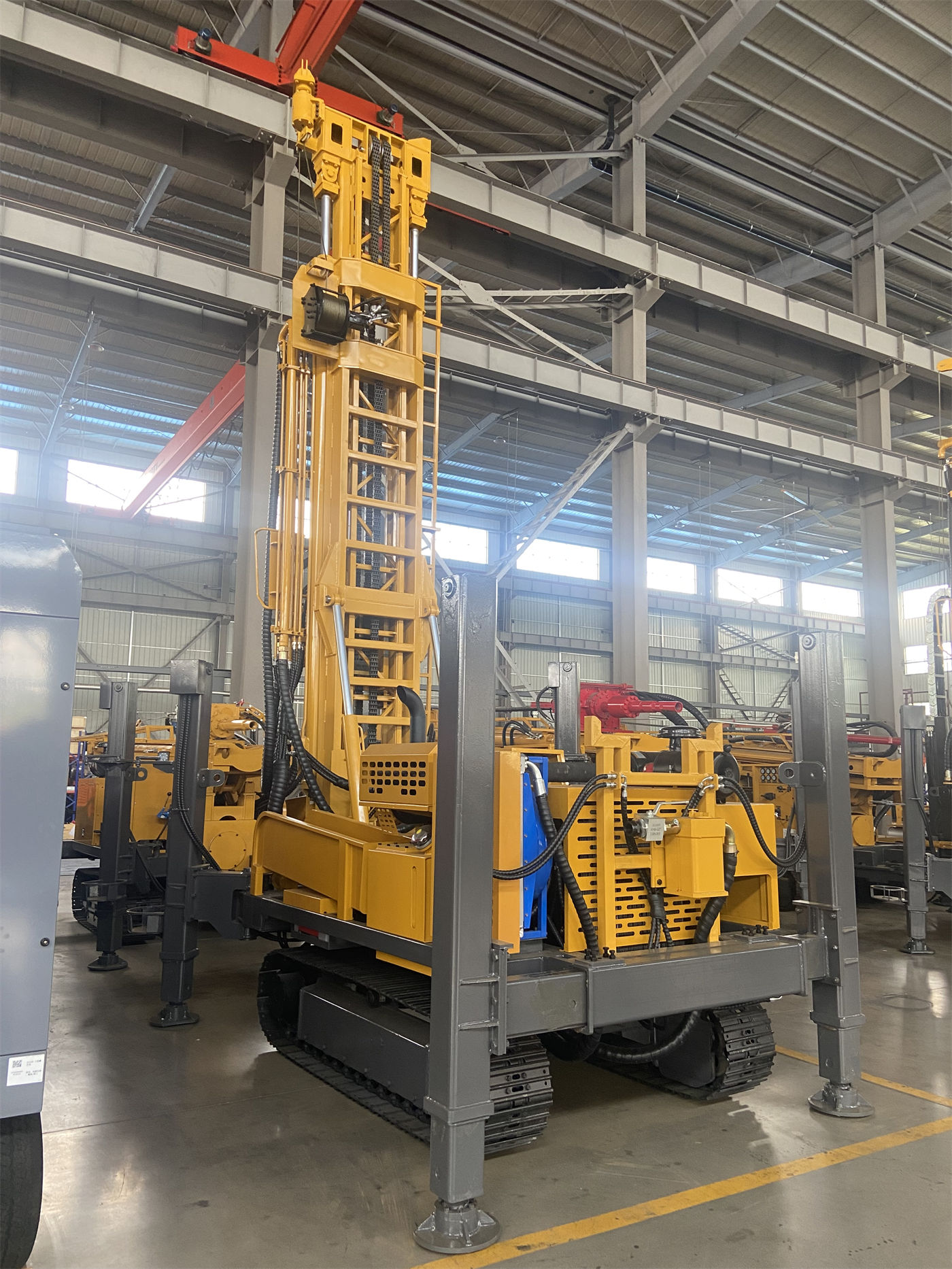
Hole diameter is not better the larger it is. After the hole diameter is enlarged, the air volume required per unit footage, drilling tool load, and cuttings discharge volume all change, and well casing, filter material, and pump type must also be adjusted accordingly. Taking a 200-meter-class crawler water well rig as an example, its drilling diameter is 140–254 mm, a range that covers common well casing and water pump configurations for rural water supply and farmland irrigation. Before construction, well diameter, filter pipe, and pump type should be determined based on expected water yield, rather than planning first around the maximum hole diameter.
Selection of drilling method based on formation
Directly using a down-the-hole hammer to drill through upper soil, clay, sand, and gravel layers is not necessarily the most suitable approach. Loose overburden is prone to hole collapse and drilling tool burial, so casing, mud, or other hole-stabilizing methods should usually be considered first for the upper hole section before entering stable rock. Only in weathered rock or intact hard rock is it more suitable to match a down-the-hole hammer and bit for pneumatic drilling. In fractured zones and fissured formations, attention must also be paid to air leakage, block falling, and sticking, with simultaneous casing if necessary.
Matching of air compressor with downhole tools
In pneumatic drilling, the air compressor's capability directly affects impact, cuttings discharge, and downhole cleanliness. The reference working pressure for this class of 200-meter equipment is 1.7–2.5 MPa, with air consumption of 17–31 m³/min. When hole diameter increases, rock becomes harder, or working altitude rises, a more sufficient displacement is usually required. Insufficient air supply will be reflected in poor cuttings discharge and penetration rate, and cannot be compensated for by increasing the drilling depth figure.
Under what conditions a 200-meter-class rig is worth considering
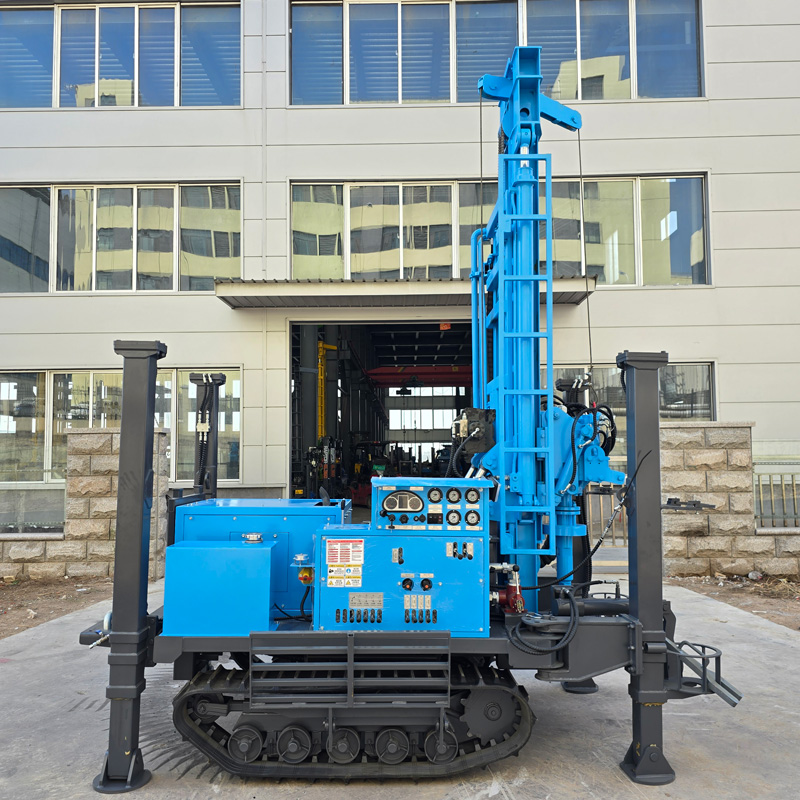
Taking the WR200SE as an example, it is a crawler water well rig with a maximum drilling depth of 200 m, equipped with 58 kW diesel power, using a telescopic mast with a single feed length of 3.3 m, compatible with 1.5 m, 2.0 m, and 3.0 m drill pipes, rotary torque of 3400–4700 N·m, rotation speed of 45–70 r/min, and lifting force of 13 T. These specifications correspond to a type of working scenario: rural water supply, farmland irrigation, orchard and livestock water wells where the groundwater level is relatively deep and a certain depth margin for water exploration is needed.
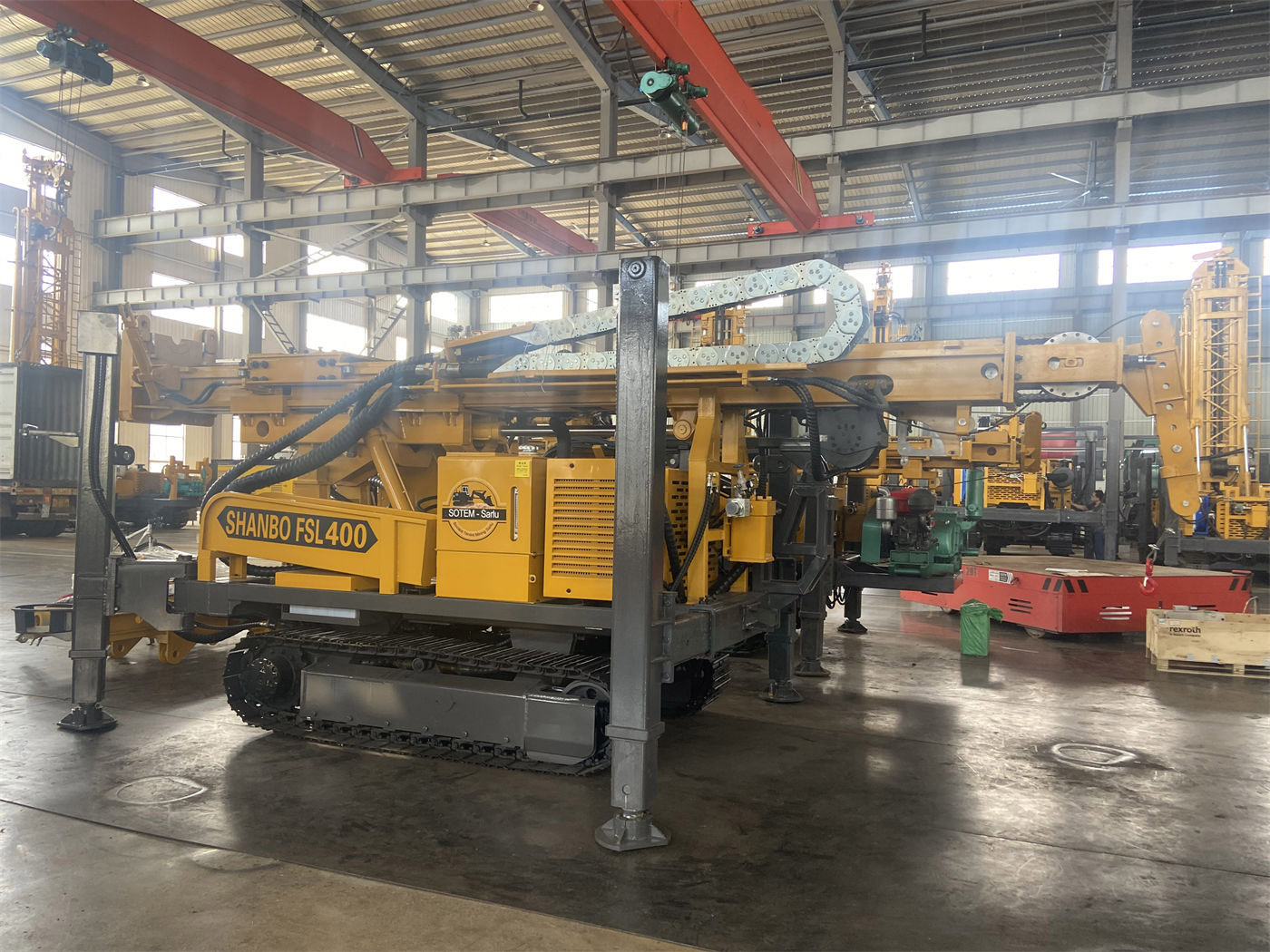
The situations in which this class of equipment is worth considering are roughly: target well depth between the hundred-meter and two-hundred-meter range; site is rural roads, farmland, or general unpaved ground accessible to a crawler chassis; no stable power supply on site, requiring self-sustained diesel operation; multiple hole locations requiring relocation, with the whole machine at about 4.7 T and dimensions of about 3950×1750×2250 mm, making transport arrangements somewhat easier than larger-class equipment. These are condition descriptions supported by equipment specifications, not conclusions about a specific project.
Conversely, if existing local wells are generally completed within tens of meters, choosing 200-meter-class equipment will not automatically bring better water yield, but will only increase equipment investment and relocation burden. If the target depth clearly exceeds 200 m, or if thick fractured zones or strong water inflow must be handled, the equipment class and process should be re-evaluated rather than forcing extra margin onto this class.
Conditions to confirm item by item before procurement
- Hydrological data: Depth, aquifer location, water yield, and completion structure of nearby existing wells.
- Hole depth and diameter: Target completion depth, well casing specifications, whether casing is needed, and casing length.
- Formation composition: Overburden thickness, lithology, and whether fractured zones or strong water inflow sections exist.
- Drilling method and tools: Whether down-the-hole hammer pneumatic drilling is used, whether drill pipe diameter is 76 mm or 89 mm, and bit specifications.
- Air compressor matching: Determine air pressure and displacement based on hole diameter, rock formation, and target depth; do not rely only on nominal equipment values.
- Access and site: Road width, turning radius, site leveling, and outrigger pad conditions; the mast should be retracted when moving on slopes.
- Water and power conditions: Whether stable power is available on site, and auxiliary water arrangements beyond diesel power.
There is another set of correspondences in the equipment parameters that is easily overlooked: lifting force 13 T, fast lifting speed 30 m/min, and fast feed speed 60 m/min. These values mainly affect tripping, drill pipe handling, and power head movement in non-drilling states. When sticking or hole diameter shrinkage occurs, the downhole condition should be judged first and resolved through hole cleaning, pulling out for inspection, or casing treatment; it is not advisable to rely solely on lifting force to pull forcefully. This part belongs to construction organization judgment, and during procurement, the supplier can be asked to confirm the matching range of drilling tools and casing.
Put drilling depth back in its proper place
For rural small-diameter water wells, drilling depth is one of the entry conditions, but it is not a single indicator where "the bigger the more stable." A more practical approach is: first use local hydrological data and completion targets to determine the required hole depth, hole diameter, and drilling method; then check whether this class of equipment's drilling depth, rotation, lifting, mast travel, and air compressor matching range cover these conditions; finally confirm access roads, site, water and power, and drilling tool matching. Having depth margin is acceptable, but it cannot replace judgment about formation and well completion process.
When requesting a quotation, provide together: drilling purpose (domestic water supply, irrigation, or livestock), conditions of nearby existing wells, target hole depth and diameter, upper overburden and bedrock type, proposed drilling method, site access conditions, whether stable power is available, and supporting equipment such as air compressors, so that the supplier can judge whether this class of equipment matches and which conditions still require on-site verification.