












When laying out holes for a reverse circulation sampling project, two figures often end up being compared side by side: the drilling angle and the maximum drilling depth. Both look like "equipment capability," but they answer different questions. Angle data determines where the hole goes and how the rig is positioned; depth data determines how deep a hole section the machine can cover under matched conditions. Reading the two together can lead to invalid judgments at the planning stage.
The two figures point to different kinds of decisions
Drilling angle is first proposed by the geological design: orebody attitude, structural zone dip and target location determine whether the hole is vertical or inclined. The equipment data gives two working angles, 45° and 90°, meaning it can cover these two hole directions, but the specific hole direction still needs to be confirmed against the geological design.
Maximum drilling depth is the reference capability of the equipment under a typical configuration. Taking the RC400 associated with this article as an example, the data specifies a maximum drilling depth of 400 m and a hole diameter of 105–305 mm. This figure is not a hole depth achievable in any formation and at any hole diameter; actual depth is also affected by drill pipe, air compressor capacity, formation conditions, hole deviation and drilling tool wear.
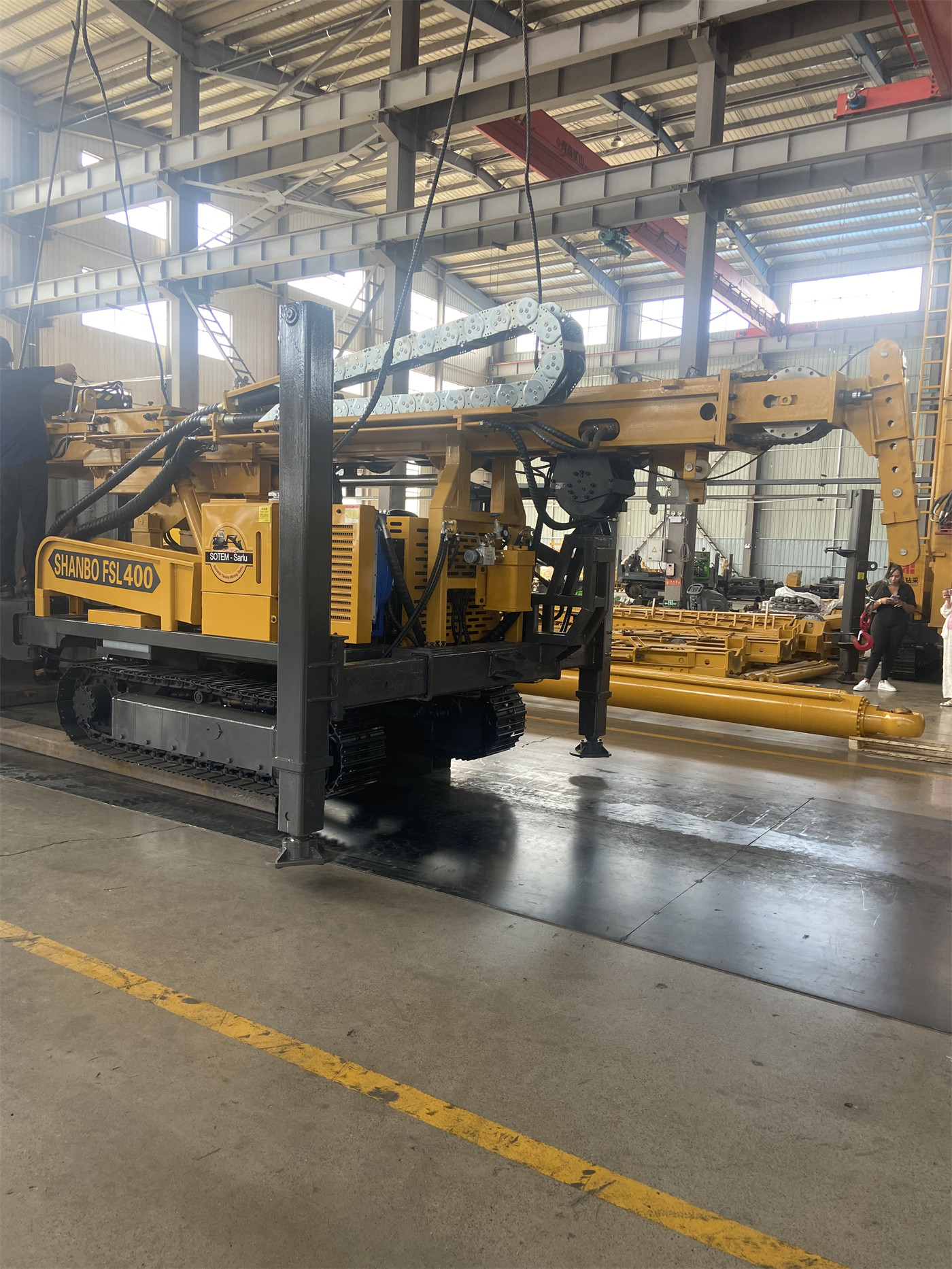
Angle data relates to hole layout and positioning, not drilling parameters
45° inclined holes are often used for inclined orebodies, structural zones or specific target verification; 90° near-vertical holes are common in groundwater and overburden investigations and some mineral exploration. For the equipment, a change in angle means work on outrigger leveling, chassis stability and hole direction control.
The RC400 is equipped with 1.6 m hydraulic outriggers for leveling and drilling support. During inclined hole work, equipment stability directly affects hole direction control; on soft ground, additional bearing plates should be used to prevent outrigger sinking during prolonged high-load drilling. This shows that angle capability only becomes meaningful when tied to site and support conditions.
Depth data must first be read together with drill pipe and air supply
Reverse circulation drilling relies on dual-wall drill pipe to establish an independent return channel, with cuttings returning to the surface through the inner tube. The deeper the hole, the more critical channel sealing, air supply pressure and cuttings discharge continuity become. The RC400 is recommended to use 89/102 mm RC drill pipe with a pipe length of 3 m; working air pressure is 1.2–3.5 MPa and air consumption is 16–55 m³/min.
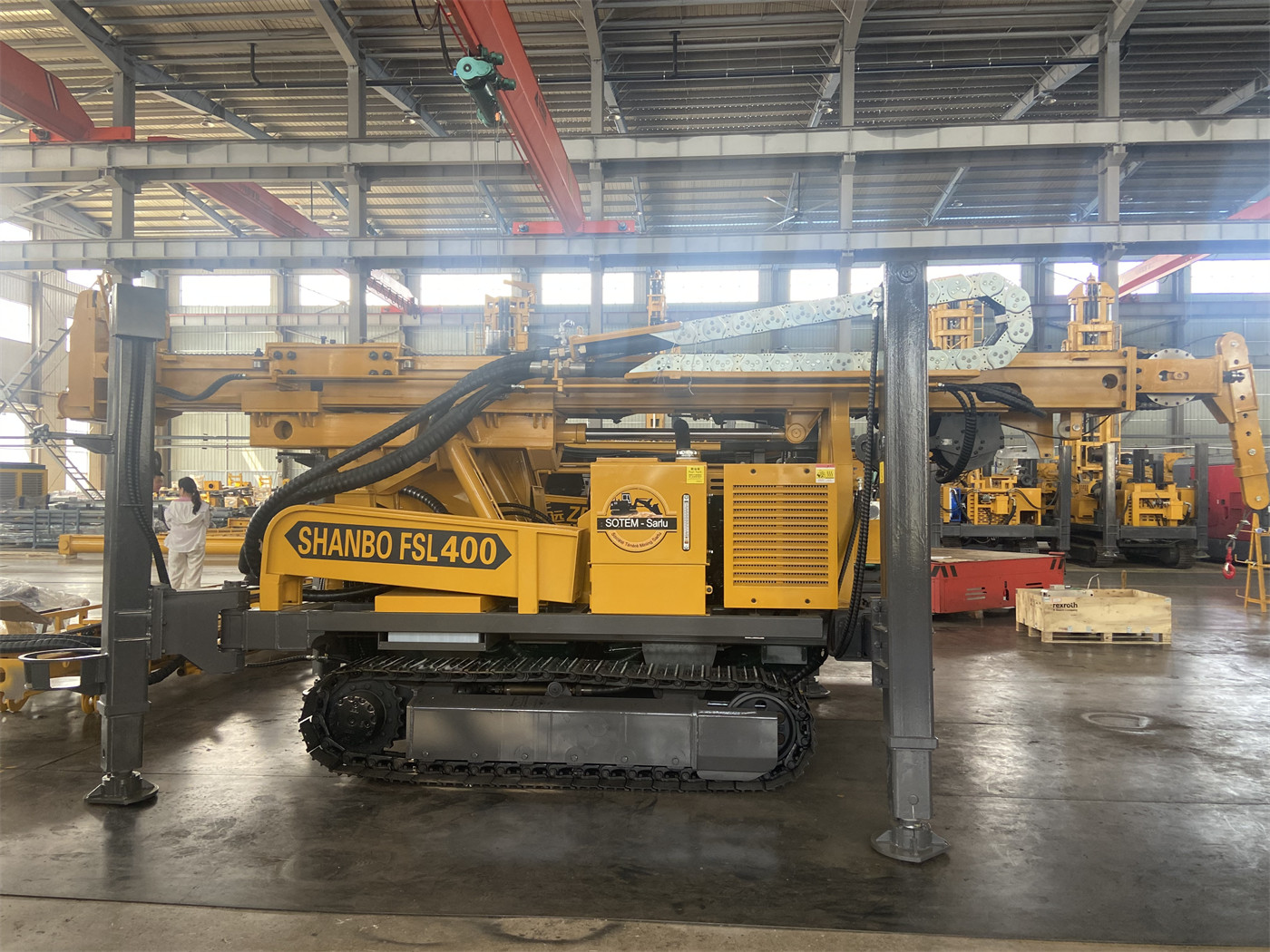
These are matched conditions, not an independent depth commitment. As hole depth increases, hole diameter grows or rock hardens, insufficient air volume will reduce cuttings return speed and may affect sampling continuity and hole-bottom cleanliness. Before purchase, the target hole depth should be checked together with the planned air compressor, drill pipe specifications and hole diameter.
| Data item | Question it addresses | To be confirmed separately |
|---|---|---|
| 45°/90° working angles | Inclined or vertical hole, and how hole direction is set | Geological design hole angle, outrigger bearing plates and site slope |
| Maximum drilling depth 400 m | Reference coverage depth under typical configuration | Target hole diameter, formation, air compressor displacement and drill pipe wear |
| 105–305 mm hole diameter | Matching sample volume to hole requirements | Actual drilling depth and cuttings discharge status at each hole diameter |
Why this type of equipment gives both angle and depth
The RC400 is a 400-meter crawler-mounted reverse circulation rig, positioned in the data for mineral exploration, geological sampling and deep water well construction. It specifies both angle and depth because reverse circulation sampling projects vary widely in hole layout: the same machine must serve inclined hole verification, vertical hole investigation and water well completion. The equipment uses 22 T lifting force and 8000/4000 N·m dual-condition torque to support 400-meter-class drill string handling and different hole diameter loads, but these are whole-machine capability items and cannot be taken to mean the nominal depth is achievable in any formation.
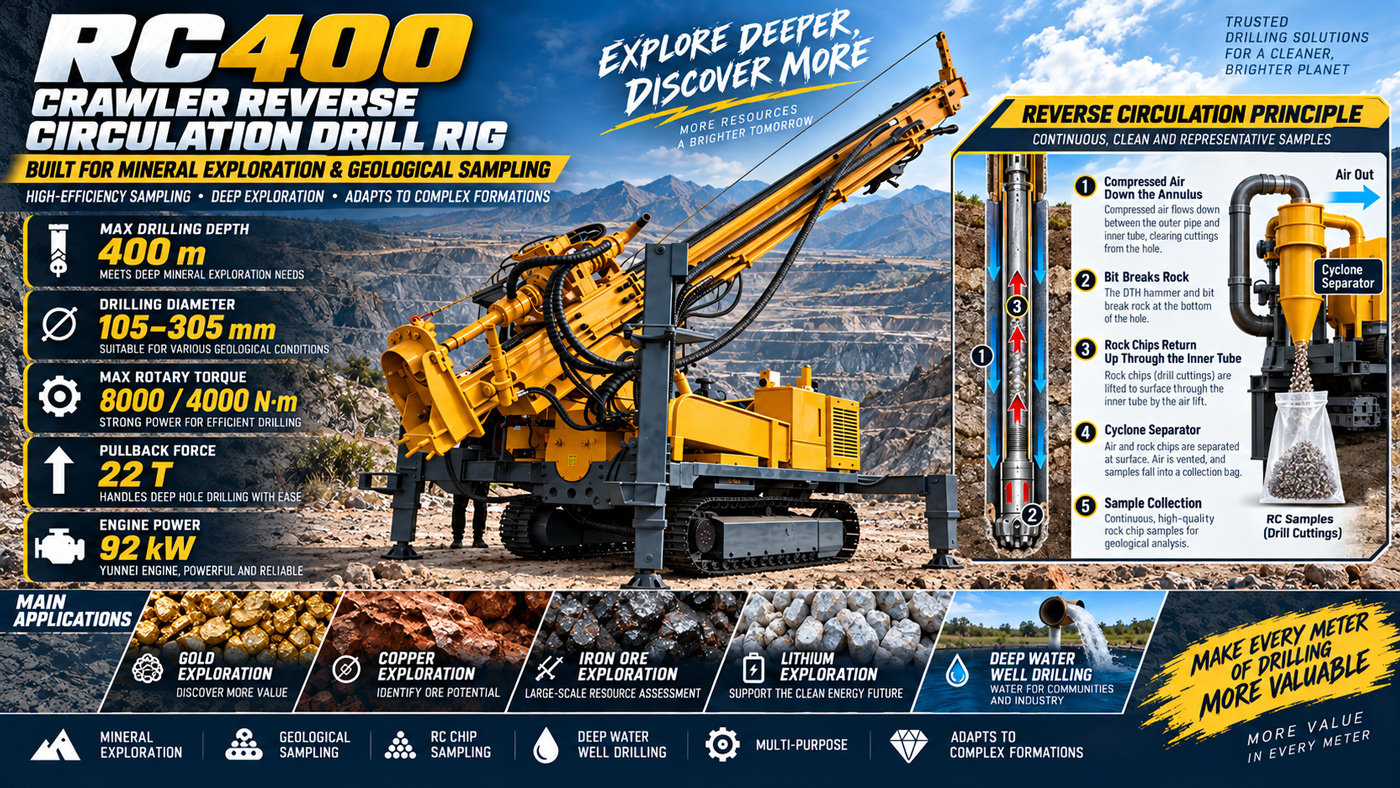
In other words, angle is the question of "where to drill," and depth is the reference for "how deep to drill"; each governs a different part of the plan, and one figure cannot be used to draw conclusions for the other.
Conditions to settle before purchase
- The hole direction and hole angle given by the geological design, and the stability requirements for inclined hole sections.
- Target hole depth, hole diameter by section, and the formation in each hole section.
- Whether the planned air compressor's pressure and displacement cover the 16–55 m³/min air consumption range.
- On-site inspection arrangements for RC drill pipe specifications, joint sealing and inner tube wear.
- The crawler chassis entry route, ground bearing capacity and transport conditions for the whole machine at about 11 T.
- The on-site process for numbering, weighing and sealing samples by depth.
The data does not provide actual drilling depth comparisons for different formations and hole diameters, nor measured data on inclined hole deviation control. These need to be further confirmed by the supplier against the configuration when requesting a quote, based on the drilling purpose, formation data, target hole depth and diameter, drilling method, entry and transport conditions, and water, power and air supply conditions.