












When an underground coring project faces equipment that cannot get in or cannot be positioned, the common advice is "just choose a modular unit." But transport and rig-site layout are two different stages: the first concerns whether each individual module can pass through the cage, inclined shaft or roadway; the second concerns whether the modules can be assembled, secured and connected to power and water at the rig site. Separating these two threads is the only way to judge which stage modular design actually addresses.
First, distinguish the two types of constraints
The first constraint in underground coring is the access route. Roadway width, height, turning radius, cage dimensions and track conditions determine the form in which equipment can enter the work point. The second constraint is the rig site. Available space, roof and floor support, power connection and lifting capacity determine whether the equipment can be assembled and run continuously. Modular split transport mainly addresses the first constraint, while also moving installation work forward under the second.
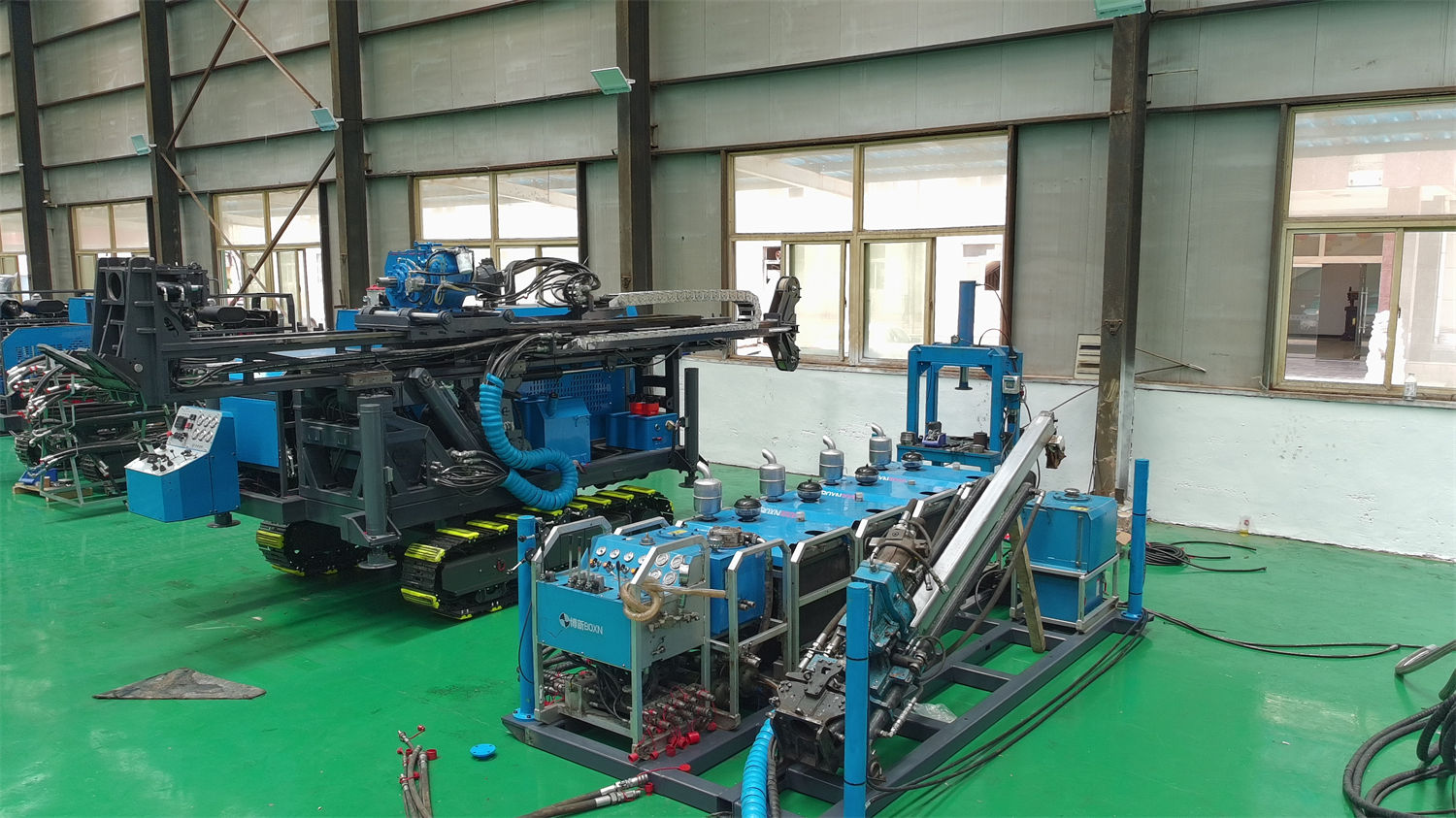
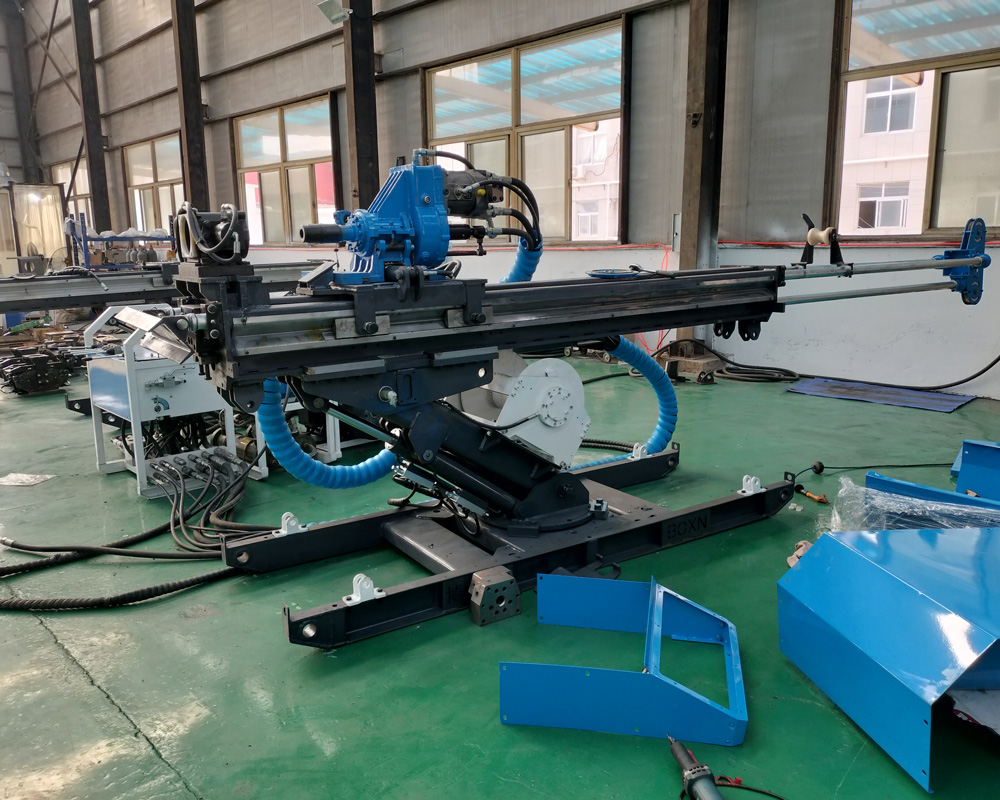
Taking an underground electric fully hydraulic core drill as an example, its modular structure transports the power station, feed mechanism, drill base frame, oil tank and control unit separately, then assembles them at the underground rig site. This design targets roadways, crosscuts, strike drifts and mining-area rig sites that a large complete unit cannot enter directly.
Transport stage: module weight and access conditions
Whether split transport is feasible depends on whether the weight and dimensions of each individual module match the on-site transport method. The reference module weights for this equipment are: power station 240/270 kg, main feed mechanism 130 kg, drill base frame 120 kg, oil tank unit 120 kg, control unit 90 kg (other materials list 130 kg; the formal technical confirmation document prevails). These figures are used to judge whether cage load capacity, mine car loading and manual handling organization are adequate; they do not by themselves mean the transport plan is viable.
- Confirm whether the cage's inner diameter, load capacity and floor dimensions can accommodate the largest module.
- Confirm whether the inclined shaft gradient, track conditions and turning radius allow the modules to pass.
- Confirm on-site lifting capacity and handling routes, so modules can still be turned or positioned after arrival.
Rig-site layout: process changes brought by on-site assembly
Modularity does not eliminate installation work; it moves assembly to the underground rig site. Before installation, the rig-site roof, walls and floor support must be inspected; the drill base frame must be reliably secured to prevent displacement from drilling reaction forces; cables and hydraulic hoses should avoid transport routes and sharp rock faces. These tasks are more concentrated when rig-site space is limited, placing higher demands on on-site organization.
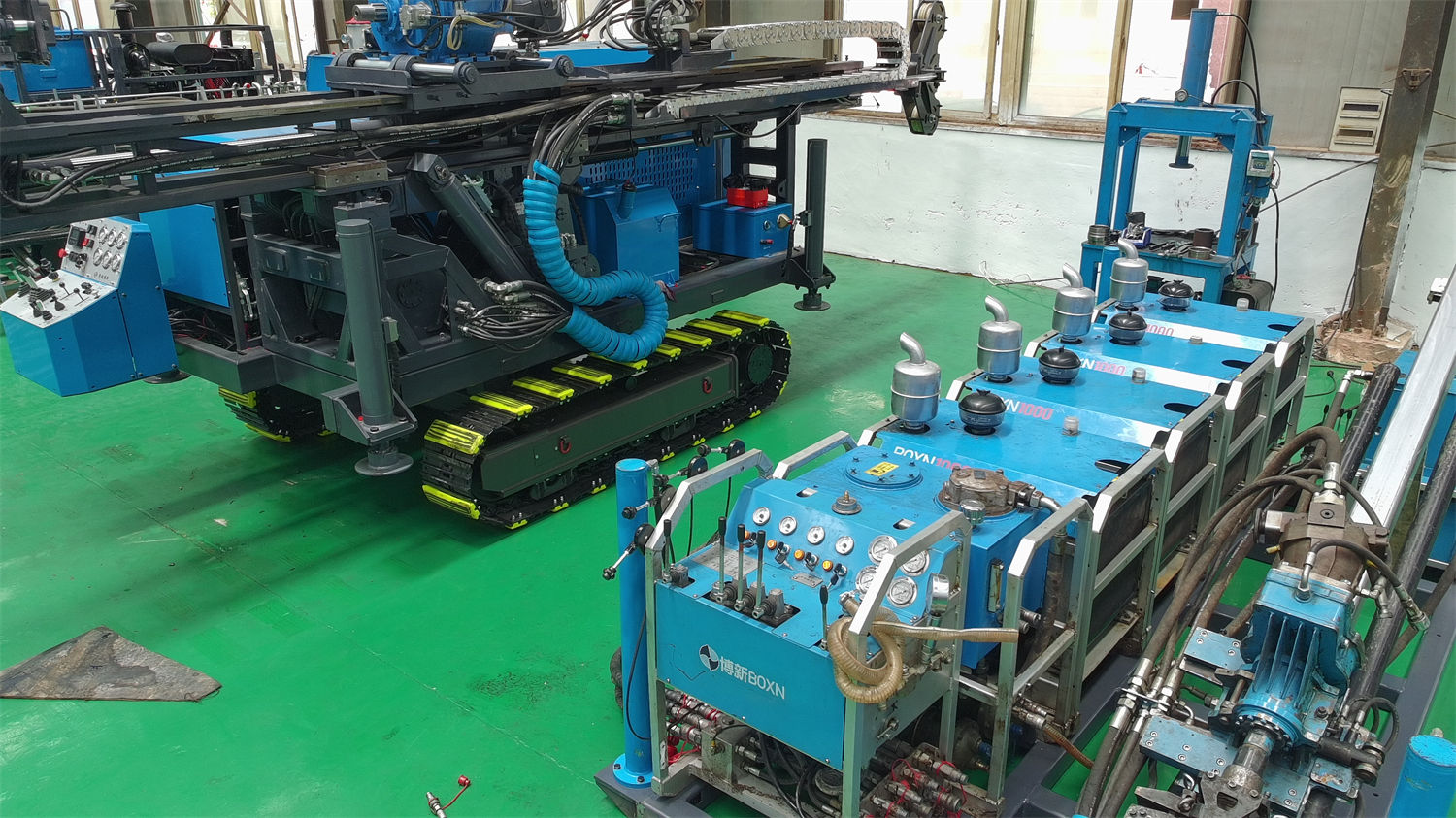
For power, the equipment uses a 22 kW × 3 or 30 kW × 2 motor configuration, with main system flow of 200 L/min and pressure of 210 bar, and auxiliary pump flow of 10 L/min and maximum pressure of 150 bar. The motor option suits underground mines that already have a stable power supply; the actual configuration must be confirmed against mine voltage, frequency, cable length and starting method. A standard motor configuration cannot be regarded directly as explosion-proof; areas with explosion-proof requirements must be confirmed separately.
Drilling capability boundaries corresponding to modularity
Modularity addresses entry and layout form; it does not change drilling capability itself. Under the 90° reference condition, the equipment's reference drilling depths are 920 m for BQ, 800 m for NQ and 380 m for HQ; under the 0° reference condition they are 600 m, 400 m and 200 m respectively; under the -90° reference condition they are 350 m, 200 m and 150 m. These are capability ratings under reference conditions; different mines may define the positive and negative angle signs differently, so the on-site installation orientation and design drawings should prevail before formal operation.
| Drilling direction | BQ reference depth | NQ reference depth | HQ reference depth |
|---|---|---|---|
| 90° | 920 m | 800 m | 380 m |
| 0° | 600 m | 400 m | 200 m |
| -90° | 350 m | 200 m | 150 m |
The feed mechanism is driven by a hydraulic cylinder, with a stroke of 1800 mm, thrust of 65 kN and pull force of 130 kN; the power head has a speed of 0–1500 rpm and torque of 600–1480 N·m; the wireline winch has a rope capacity of 800 m. Horizontal, downward and upward holes subject the drill string to different forces, so actual parameters must be adjusted according to hole depth, friction and downhole conditions.
Conditions to verify before purchase
The suitability of modular design cannot be judged by the structural name alone; the following should be confirmed item by item before purchase:
- Actual dimensions and load limits of roadways, cages and the transport system.
- Space, support condition, lifting conditions and drainage conditions of the underground rig site.
- Mine power supply voltage, frequency, cable length and whether explosion-proof requirements apply.
- The correspondence between target drilling direction, coring size and reference drilling depth.
- Cooling water supply and water quality conditions, and the hydraulic oil cleanliness management plan.
- Discrepancies in control unit weight data, subject to the formal technical confirmation document.
When requesting a quotation, provide the drilling purpose, formation data, target hole depth and diameter, coring size, drilling direction, roadway transport conditions, power and water supply conditions, and supporting requirements. This information determines whether the modular solution mainly addresses transport problems or also changes how rig-site layout is organized.