












When reverse circulation exploration holes reach medium to deep depths, drilling itself often still proceeds as planned, but the sample end is frequently the first to fail: as the return distance lengthens, cuttings take longer to reach the surface; air leakage in the hole causes intermittent sample return; and residual material in the cyclone and hoses during section changes can mix into the next bag. The bit advances, but the depths on the sample bags start to mismatch, undermining subsequent assay and logging. This article discusses why sample management exposes problems earlier than drilling pace in such deep-hole RC sampling scenarios, and under what conditions a crawler-mounted RC drill with an integrated three-in-one cyclone sampling system is worth including in the plan.
Several Site Constraints of Deep-Hole RC Sampling
RC drilling obtains cuttings samples, not complete cores. Sample information comes from the path along which cuttings return to surface from the hole bottom through the inner tube of dual-wall drill pipes, so whether the path is continuous, whether residuals are cleaned, and whether numbering is synchronized directly determine whether a sample represents a given depth interval. As hole depth increases, the following constraints become more pronounced.
- Longer sample return distance. The travel of cuttings from hole bottom to surface increases, amplifying the effects of air volume loss, drill pipe sealing condition, and in-hole air leakage on sample recovery.
- Intermittent sample return. Fractured zones and large fissures cause air leakage; cuttings are retained in the hole and return in bursts, degrading the correspondence between samples and actual depths.
- Cross-run residuals. If the cyclone, splitter, and return hoses are not cleaned promptly, cuttings from the previous sampling interval may mix into the next.
- Disconnect between numbering and records. If drilling, sample return, splitting, and bagging are performed by different personnel at different times, the hole number, start/end depths, and shift on sample bags easily become inconsistent with site records.
These constraints do not disappear automatically as drilling speed increases. On the contrary, the faster the pace, the shorter the window for cleaning, verification, and recording, and the more likely sample management fails first.
What Linking the Sampling Process Can Mitigate and Cannot Replace
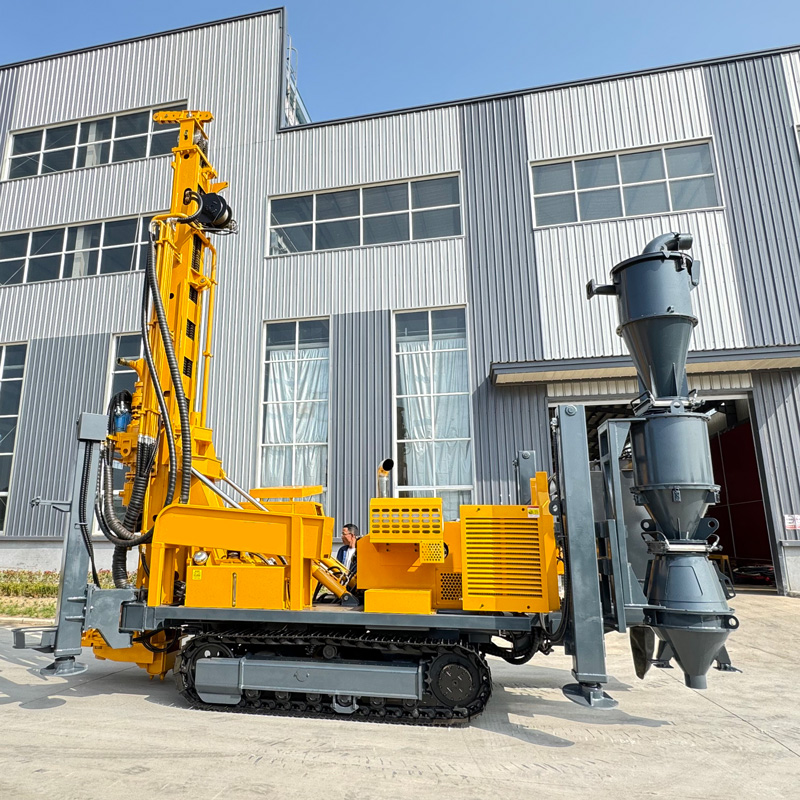
The three-in-one cyclone sampling system aims to consolidate cuttings return, cyclone separation, representative splitting, and sample bagging into one continuous process at the drill site. Cuttings return to surface through the inner tube of dual-wall drill pipes, enter the cyclone system for gas-solid separation, and then proceed to splitting and bagging. Compared with manual sample transfer and secondary handling, this arrangement reduces exposure and confusion during intermediate steps, which is more meaningful for exploration projects with large daily sampling volumes.
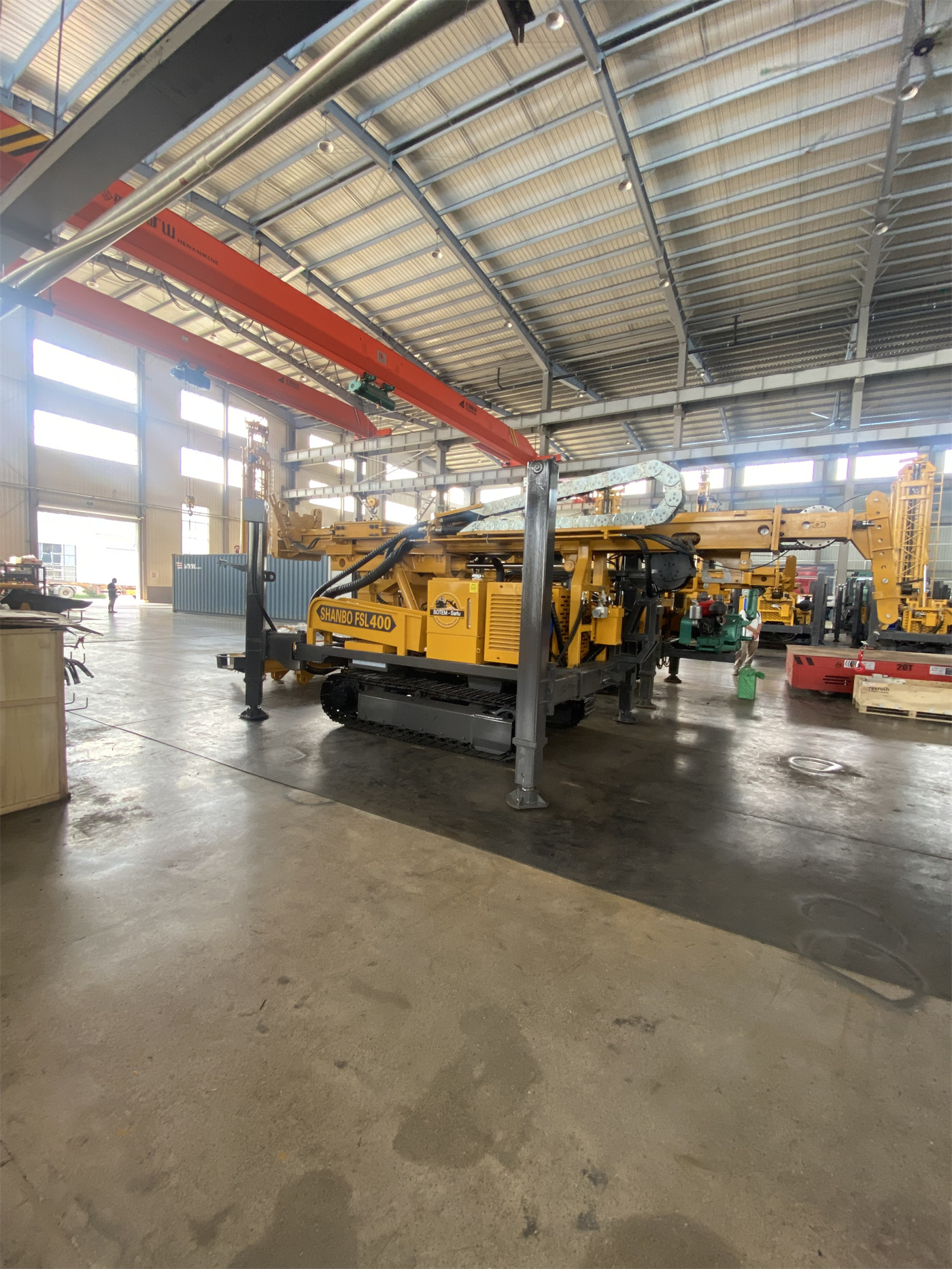
However, process consolidation does not automatically guarantee sample representativeness. Sampling intervals, sample bag labeling, cleaning during section changes, and insertion of QA/QC samples must still be executed separately according to project protocols. Equipment can make return, splitting, and bagging more tightly linked, but the correctness of sample attribution ultimately depends on whether site records and cleaning actions are properly performed.
Sampling Conditions for a 600 m Class Crawler RC Drill
Taking the RC600-CS3 associated with this article as an example, several features in its documentation are directly relevant to deep-hole RC sampling requirements. The machine is a 600 m class crawler reverse circulation drill with a maximum drilling depth of 600 m, hole diameter of 105–450 mm, working angles of 45°/90°, and an integrated three-in-one cyclone sampling system, suitable for mineral exploration such as gold and copper and deep water well construction.
| Site Requirement | Corresponding Item in Documentation | Conditions Still to Confirm |
|---|---|---|
| Continuous cuttings return to surface in deep holes | Recommended working air pressure 1.6–6 MPa, air consumption 16–75 m³/min | Whether actual air compressor output covers target hole depth, diameter, and altitude |
| Continuous separation, splitting, and bagging after sample return | Three-in-one cyclone sampling system | Sampling interval, sample numbering protocol, and QA/QC arrangements |
| Reduced cross-contamination between mineralized sections | Cyclone, splitter, and return hoses require regular cleaning | Responsible persons and frequency for cleaning during section changes, drilling stops, and hole changes |
| Angled and vertical holes covering different occurrences | Working angles 45°/90° | Hole angle per geological design; outrigger and platform stability to be verified on site |
| Deep-hole dual-wall drill pipe tripping | 29 T lifting force, 2.5 T winch | Total drill string weight, friction, and contingency plans for stuck pipe risk |
The correspondences in the table only indicate which items in the documentation can be used to address site requirements; they do not mean identical results can be achieved in any formation and hole diameter. The documentation also explicitly states that actual drilling depth varies with hole diameter, dual-wall drill pipe weight, air compressor capacity, and formation conditions.
Sample Return Continuity Depends First on Air Supply
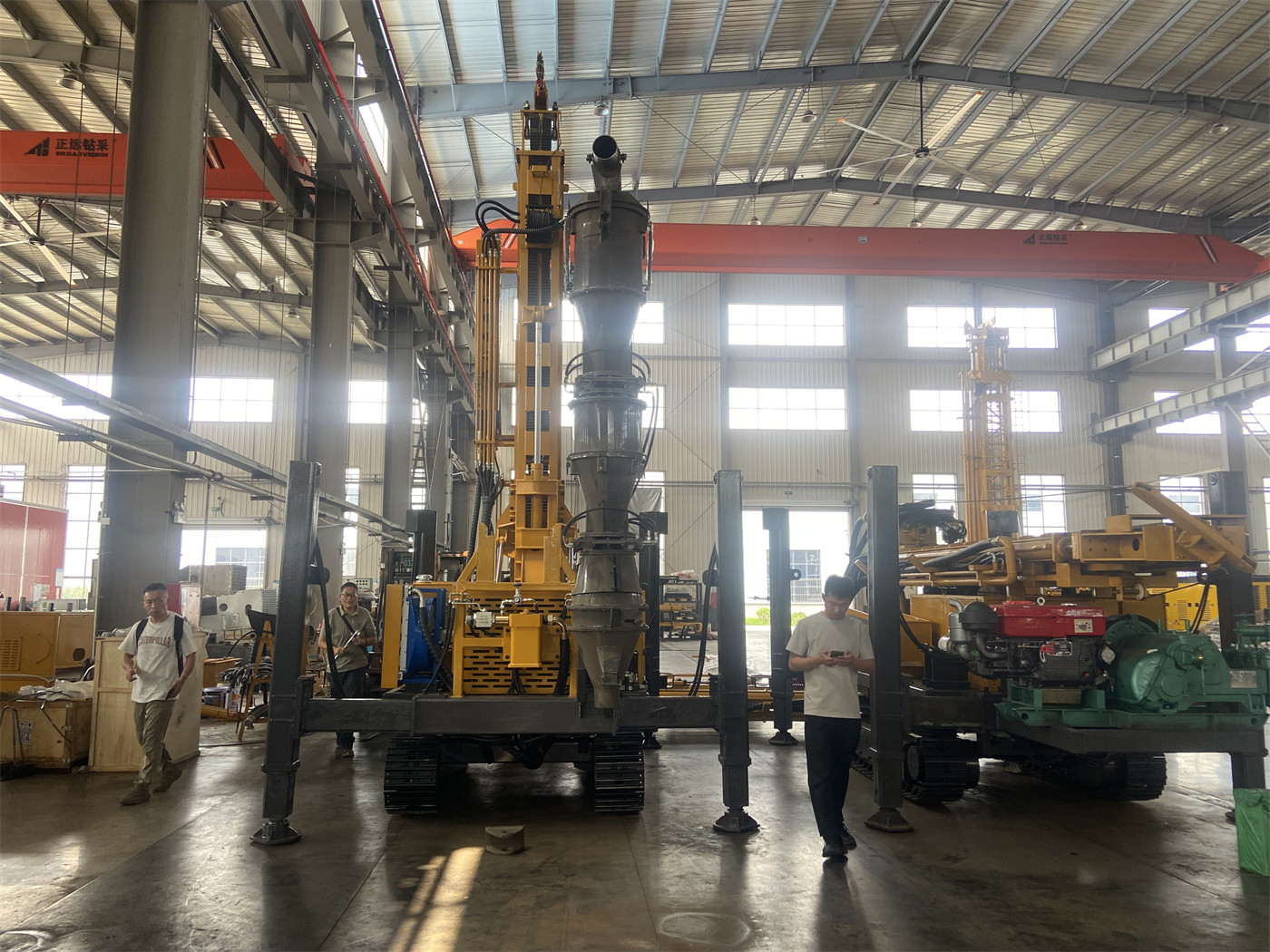
In 600 m class RC holes, the air compressor must not only provide impact energy but also transport cuttings from hole bottom to surface. The recommended air consumption reaches 16–75 m³/min; if air volume is insufficient, common symptoms include reduced sample return, delayed return, and cuttings accumulation at hole bottom. Therefore, selection should not focus only on the drill rig; air compressor displacement, pressure, and altitude correction must be calculated together.
Sample Numbering and Depth Recording Remain Manual Steps
The documentation recommends setting fixed sampling intervals according to project requirements, for example collecting one bag per 1 m or per 2 m, and simultaneously recording hole number, start/end depths, and sample number. The three-in-one system makes drilling, sample return, splitting, and bagging more tightly linked, but sample bag labeling, shift report recording, and sample handover still require site personnel. If the project implements a QA/QC program, duplicate, standard, and blank samples should also be set as required.
Formation Changes Affect Sample Return Quality
In intact rock formations, an RC hammer or DTH hammer can be used; soil, clay, sand, and gravel layers are prone to hole collapse and may not be suitable for direct high-pressure RC drilling. The documentation mentions stabilizing the upper hole section with mud and casing first, then switching to RC or DTH after entering rock. Fault fracture zones and large fissures cause air leakage, and cuttings may be retained in the hole and return in bursts; in such cases, reduce penetration, maintain hole cleaning, and keep dedicated records in anomalous sections. If necessary, use foam, casing, or other leakage treatments, with specific measures determined by site conditions.
Impact of Site Entry and Layout on Sample Management
The machine has an overall weight of approximately 12.5 T, dimensions of approximately 7 × 2.1 × 2.9 m, crawler travel speed of approximately 3.5 km/h, maximum climbing angle reference of 21°, and outrigger stroke of 1.7 m. In addition to the drill rig, the site must accommodate the air compressor, cyclone sampling system, sample bags, and transport vehicles. The sample area is usually close to the drill and cyclone; layout should ensure smooth sample return lines, safe personnel access, and prevent lifted loads from entering the sampling personnel's work area.
Before relocation, confirm road load capacity, slope, and soft ground conditions. These conditions affect both equipment positioning and whether samples can be collected continuously as planned.
Information Recommended to Prepare Before Inquiry
If the project involves deep mineral exploration or high-volume sampling requiring continuous sample return, the following information can be provided to the supplier during inquiry to help them judge whether the configuration matches:
- Drilling purpose: mineral exploration, deep water well, or mine dewatering; whether the full sampling system needs to be enabled;
- Target hole depth and diameter range, and whether 45° angled holes are included;
- Expected formations: distribution of overburden, intact rock, fracture zones, or air-leakage formations;
- Drilling method: switching arrangements among RC, DTH, or mud rotary;
- Air supply conditions: planned air compressor displacement, pressure, and site altitude;
- Sampling protocol: sampling interval, numbering rules, QA/QC requirements;
- Site entry conditions: transport roads, platform area, power supply, and fuel replenishment arrangements.
Whether sample management can keep up with drilling pace depends on whether equipment processes and site protocols are both in place. In deep-hole RC sampling, clarifying sample return continuity, cross-run cleaning, and numbering records at the planning stage before discussing drill rig configuration is usually more reliable than the reverse.