












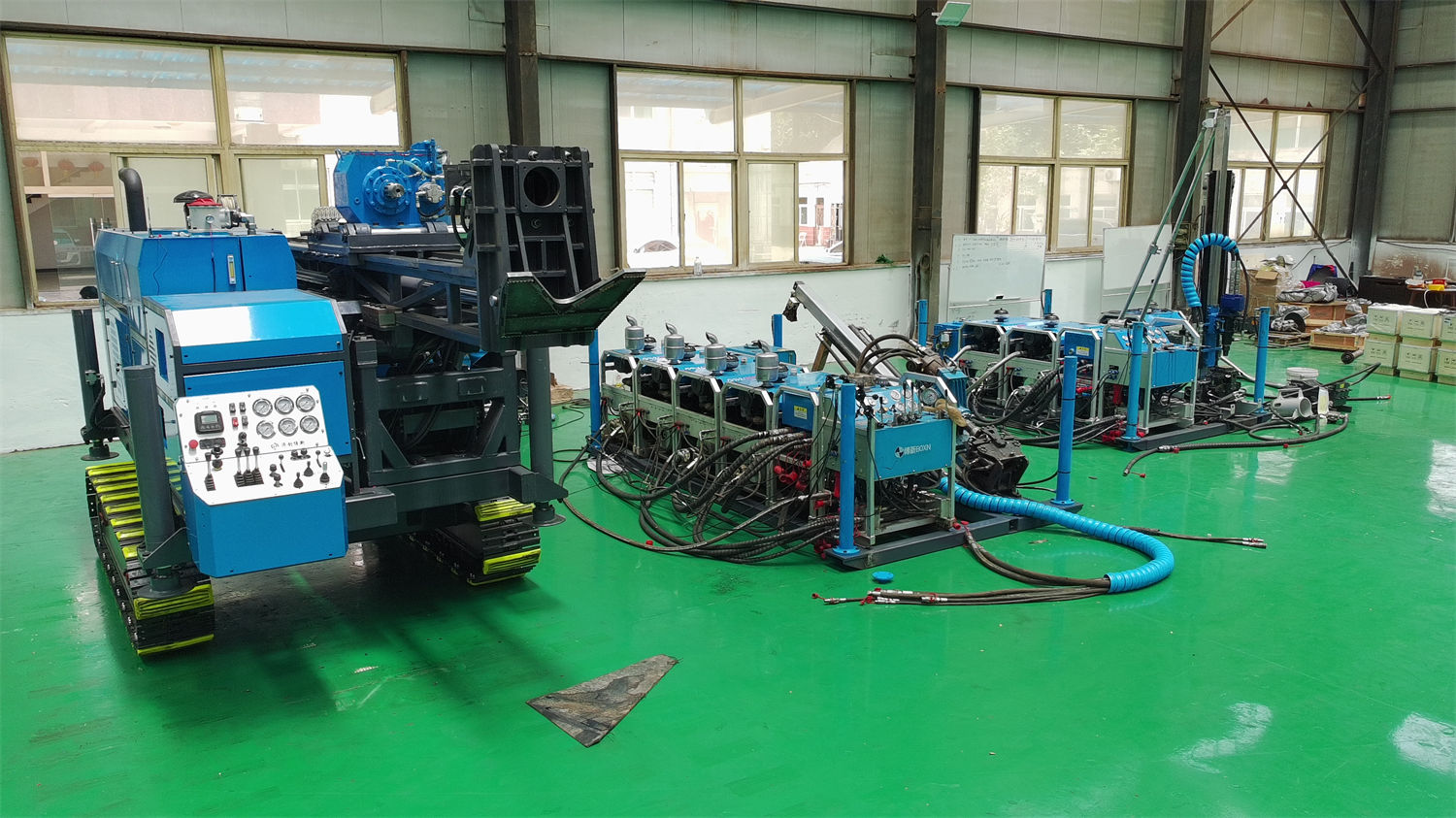
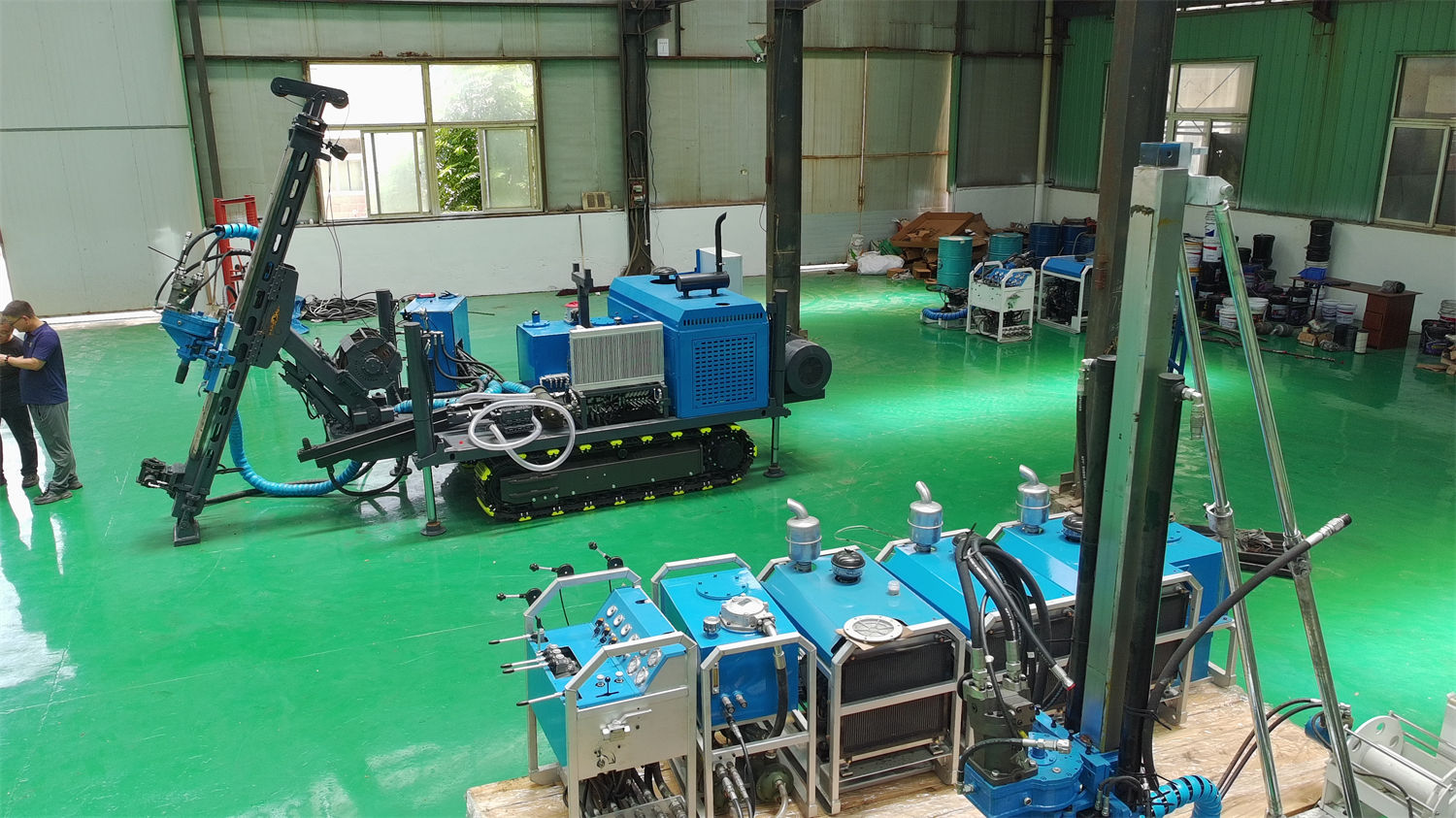
When purchasing a 1200 m-class deep hole core drill such as the CR1200I, drill string compatibility is often more critical than drilling depth alone. The CR1200I has a chuck through-hole diameter of 150 mm, and the manufacturer lists applicable drill rod systems including NQ, HQ, PQ, NTW, and HTW. When verifying compatibility, the key is not to confirm whether the chuck can grip the rod, but to determine whether the selected hole diameter sequence, drilling depth, casing, winch wireline, and hole mouth tools form a complete and implementable configuration chain.
First Clarify a Premise: Which Drill String Specification Does the Reference Drilling Depth Correspond To?
The CR1200I's published reference drilling depths vary by specification: approximately 1600 m for B size, approximately 1200 m for N size, and approximately 700 m for H size. The same drill can achieve different depths with different hole diameters. As the hole diameter increases, drill rod self-weight, annular return velocity requirements, and torque load increase, so the reference depth typically decreases accordingly. Therefore, during procurement, "1200 meters" cannot be directly equated with "all drill string specifications can drill to 1200 meters." It is necessary to first clarify which specification is used for the main hole section of the project, whether the diameter will be changed after passing through overburden, and then assess the equipment margin.
Where Do PQ and NQ Fall?
From the manufacturer's reference drilling depths, N size corresponds to approximately 1200 m, and H size corresponds to approximately 700 m. PQ has a larger hole diameter than HQ and belongs to a larger wireline coring diameter. The reference drilling depth for PQ size is not separately provided in the materials, so the specific depth achievable with PQ on the CR1200I cannot be calculated from the available parameters. This point should be determined after requesting the corresponding PQ drill string drilling depth and load calculation data from the manufacturer.
What Drill String Aspects to Check for the 150 mm Chuck Through-Hole
The chuck through-hole diameter of 150 mm is a quantifiable interface dimension. When verifying, it is recommended to confirm the following items one by one, rather than only checking whether the drill rod outer diameter is less than 150 mm:
- Whether the outer diameter of the selected drill rod and the outer diameter of the joint fall within the effective clamping range of the chuck;
- Whether the passage for running and retrieving the wireline coring inner tube assembly is unobstructed;
- Whether the clearance for the casing program and hole mouth equipment matches the through-hole;
- Whether there is a clear specification for the drill string weight range corresponding to the wooden horse wedge self-weight anti-drop structure;
- Whether the chuck requires replacement jaws or adjustment parts when changing between different specifications.
The materials specify that the clamping method is hydraulic clamping plus wooden horse wedge self-weight anti-drop, but do not provide a jaw configuration list for each specification. During procurement, the manufacturer should be asked to provide chuck adaptation instructions based on the final drill string assembly.
The Winch and Wireline System Must Be Verified Together with the Drill String System
In deep hole wireline coring, the frequency of inner tube retrieval increases with hole depth, and winch parameters directly affect auxiliary time. The CR1200I has a rope capacity of 1200 m, a hoisting speed of 116 m/min, a hoisting force of 13.5 kN, and a wireline diameter of 6 mm. When verifying, note that the rope capacity of 1200 m numerically coincides with the N size reference drilling depth of 1200 m, but the wireline in the hole also passes through the crown block, drum winding layers, and other factors, so the actual deployable depth must be confirmed according to the system layout.
Wireline Load Under the PQ System Needs Separate Confirmation
As the hole diameter increases, the weight of the inner tube assembly and core increases. The available materials do not provide a comparison of allowable wireline loads for the 6 mm wireline under different hole diameters, nor do they provide a specification list for the overshot and inner tube assembly. If the main hole section is planned to use PQ size, the matching conditions and safety range of the wireline and overshot system should be verified with the manufacturer, and the configuration assumptions for N size should not be directly applied.
Constraints of the Power Head and Pull-Up Parameters on Drill String Selection
The CR1200I power head uses gear transmission, with a maximum torque of 2200 N·m, a maximum speed of 1500 rpm, and two gear ratios of 1:2.2 and 1:3.3; feed force is 55 kN, pull-up force is 160 kN, and drill rod handling length is 1.5 m. These parameters determine the usable working conditions for large-diameter drill strings in deep holes: large-diameter bits require greater torque and larger flushing volume, while lifting the drill string is limited by pull-up force.
| Item | Parameter |
|---|---|
| Reference drilling depth | B size approx. 1600 m, N size approx. 1200 m, H size approx. 700 m |
| Drilling angle | 45°–90° |
| Chuck through-hole diameter | 150 mm |
| Applicable drill rods | NQ, HQ, PQ, NTW, HTW |
| Maximum torque | 2200 N·m |
| Maximum speed | 1500 rpm |
| Feed force / pull-up force | 55 kN / 160 kN |
| Winch rope capacity / hoisting speed | 1200 m / 116 m/min |
| Mud system | 150 L/min, 7 MPa |
The data in the table can be used for preliminary comparison, but drill strings are consumables, and the actual drill string weight is also related to drill rod wall thickness and joint type. The materials do not provide drill string weight for each specification, so the purchaser should calculate separately based on the intended drill string manufacturer's catalog.
The Hydraulic and Mud Systems Need to Be Confirmed in Sync with the Flushing Process
This model has a main pump flow of 300 L/min at 28 MPa, an auxiliary pump flow of 120 L/min at 21 MPa, and uses air cooling plus water cooling. The mud system has a flow of 150 L/min at 7 MPa. For larger diameter drill strings, the annular return velocity and cuttings carrying capacity depend on the combination of pump volume and hole diameter. The available materials do not provide recommended mud pump volumes for different hole diameters. Whether it meets the flushing requirements for PQ size deep holes should be confirmed with the manufacturer based on hole diameter, drill rod inner and outer diameters, and planned return velocity.
Checklist Recommended for Confirmation with the Manufacturer Before Purchase
- The intended main hole diameter specification and its corresponding reference drilling depth and allowable drill string weight;
- The jaw and replacement part configuration for the 150 mm through-hole under NQ, HQ, and PQ specifications;
- Wireline load specifications for the 6 mm wireline in deep holes and larger hole diameters;
- Recommended mud pump volume, return velocity, and general principles for lost circulation control and wall protection for each hole diameter;
- The adjustment range of the chuck, winch, and hole mouth tools when changing hole diameters;
- The list of parts related to drill string interfaces in the standard accessories.
The above verification cannot replace actual validation of on-site geological conditions and downhole tools. The final achievable drilling depth, drilling efficiency, and core recovery performance of the CR1200I should be based on specific geological conditions, drill string assembly, drilling angle, and operating methods. Price, delivery time, certification, and training content not covered in the materials must be confirmed separately with the manufacturer.