












Once a deep hard-rock well reaches a certain depth, the drilling speed is often no longer determined by the bit but held back by whether cuttings can come out. Cuttings accumulating at the hole bottom cause the bit to re-crush material, increase rotational resistance and, in severe cases, lead to stuck drill string. The reason air-lift reverse circulation appears in deep-hole applications such as deep water wells and mine water supply is that it changes the return path from the annulus to the inside of the drill pipe, giving cuttings a shorter and more controllable channel.
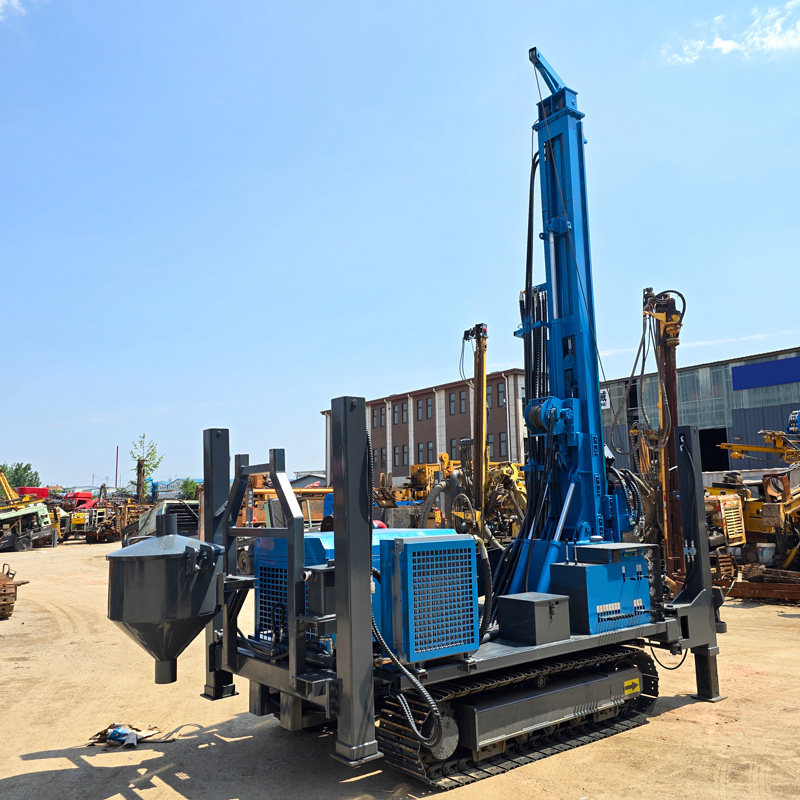
The following uses a 500 m-class crawler-mounted air-lift reverse circulation water well drilling rig as an example to explain what conditions this cuttings-removal approach requires and which on-site variables still need separate confirmation.
Why cuttings removal is difficult in deep hard-rock wells
In conventional direct circulation, cuttings must travel all the way up the annulus between the drill pipe and the borehole wall. The deeper the hole and the larger the diameter, the longer this journey and the harder it is to maintain the upward velocity. In relatively intact hard rock such as granite, basalt and limestone, the penetration rate itself is not high and the cuttings particles tend to be coarse; once the upward velocity is insufficient, coarse particles settle in some section of the hole.
Settled cuttings have two consequences: first, the bit continues to work on already crushed rock powder, wasting energy; second, friction increases when lifting the drill string, slowing tripping. The cuttings-removal problem in deep hard-rock holes is essentially the combined result of a return path that is too long and insufficient upward driving force.
Where air-lift reverse circulation redirects the return path
Air-lift reverse circulation uses compressed air to establish an upward return flow inside the drill pipe, carrying cuttings from the hole bottom back to the surface along the inner pipe. Compared with annular return, this path has a more fixed cross-section, the return velocity is easier to maintain, and the residence distance of cuttings in the hole is correspondingly shortened.
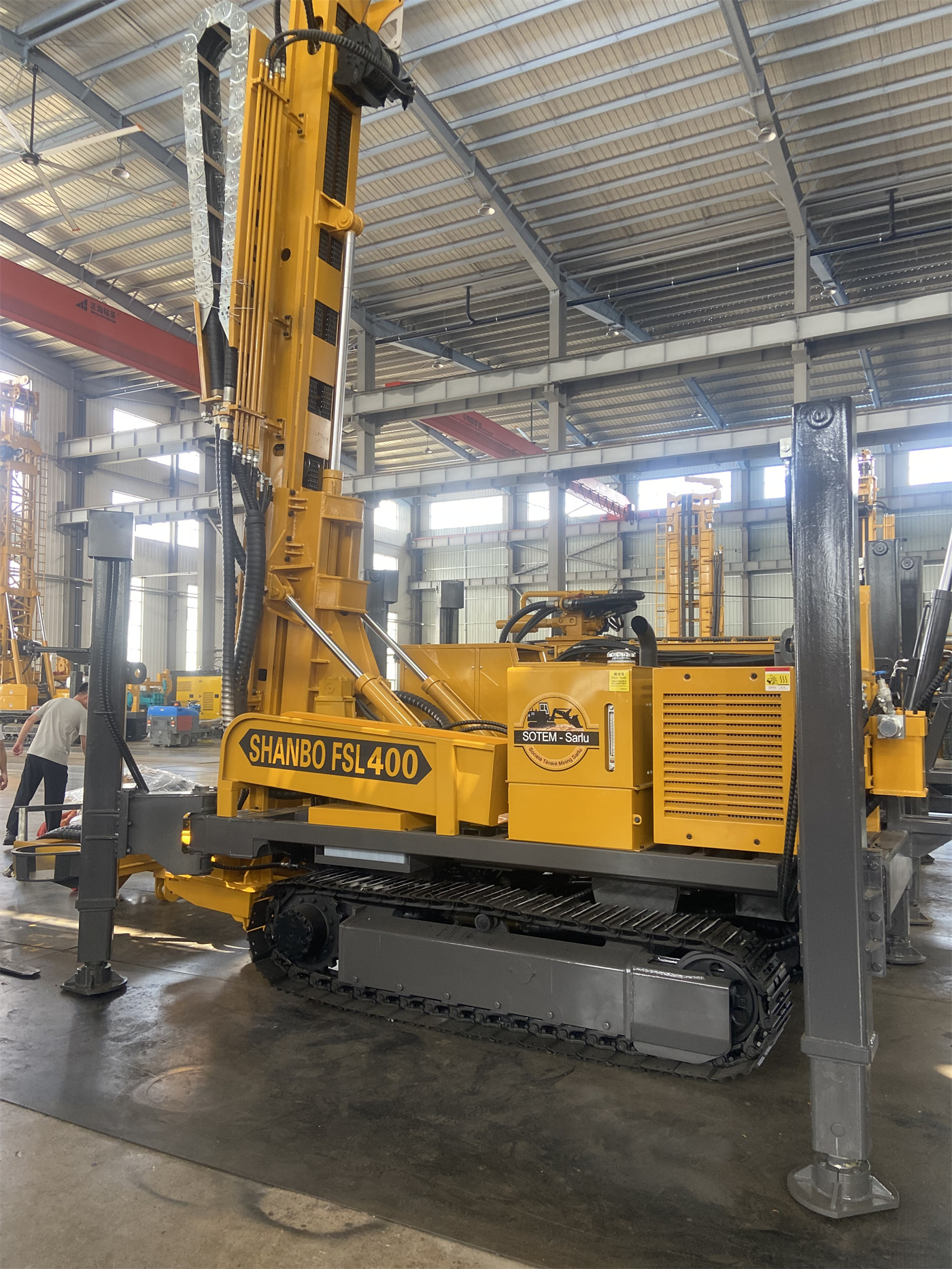
For deep hard-rock holes, the direct significance of this change is that hole-bottom cleanliness is easier to maintain, and the problems of re-crushing and settled cuttings can potentially be reduced. But changing the path is only a necessary condition; whether the return of cuttings can continue still depends on whether the following sets of conditions are all in place.
The sets of conditions this cuttings-removal approach must satisfy
Air supply: pressure and volume must be considered together
The power of air-lift reverse circulation comes from compressed air. Taking this model's data as an example, the recommended working air pressure is 1.7–3.5 MPa and the air consumption is 17–42 m³/min. As hole depth increases, hole diameter grows, rock becomes harder or construction altitude rises, the required volume will increase.
One point that is easily misunderstood: raising only the pressure without sufficient volume may still fail to provide effective airflow at the hole bottom. Open fissures, karst cavities and highly permeable formations may also cause air leakage; in this case simply increasing pressure cannot restore cuttings return, and measures such as foam, casing or adjusting the drilling method are needed. The air compressor is not an accessory in this system; its combination of volume and pressure directly determines whether cuttings return can be established.
Drill pipe and inner pipe: sealing determines whether the return flow goes through the inner pipe
Air-lift reverse circulation requires the return flow to travel up the inner pipe, so the sealing condition of the drill pipe joints is critical. When sealing fails, airflow and returning cuttings short-circuit at the joints, the inner-pipe return path is broken and cuttings removal performance declines. In daily inspection, drill pipe sealing and high-pressure line wear should be fixed check items.
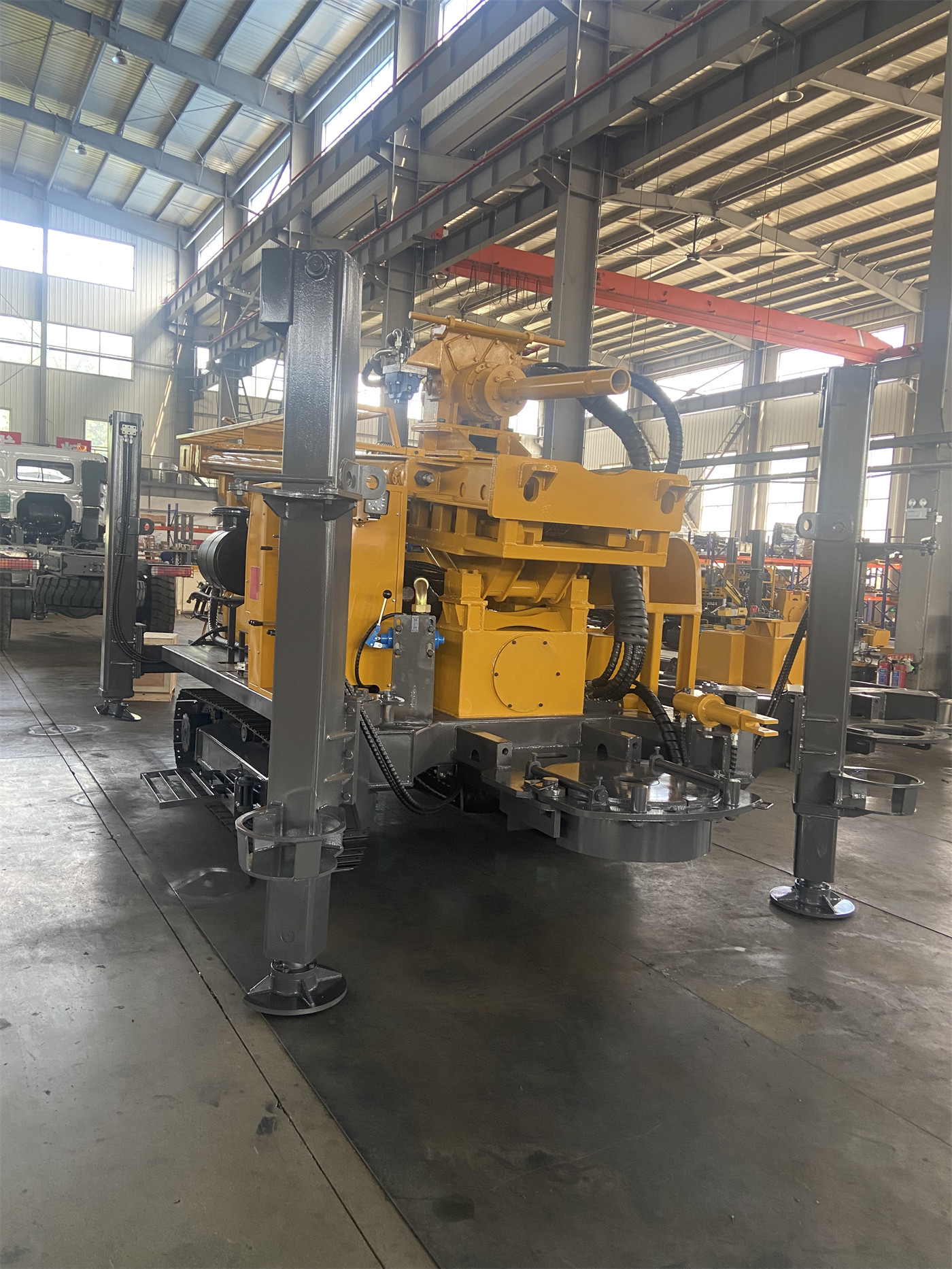
This model supports multiple drill pipe specifications of 1.5 / 2 / 3 / 6 m, and the feed stroke can be configured as 3.3 m or 6.6 m. The long-stroke configuration reduces the number of pipe connections and helps continuous drilling in deep holes; but fewer connections do not mean sealing checks can be relaxed—a change in the number of joints only changes the inspection frequency, not the importance of inspection itself.
Borehole wall: broken zones and loose layers must be stabilized first
Deep hard-rock wells are not intact throughout. Faults and broken zones are prone to block falling, hole shrinkage and stuck drill string; the difficulty in upper weathered rock and loose overburden lies in borehole wall stability rather than inability to drill. Such hole sections usually require casing, mud or other wall-stabilizing methods to establish a stable section before entering relatively intact rock for pneumatic reverse circulation drilling.
An unstable borehole wall directly interferes with judging cuttings return: increased tripping resistance may come from falling blocks or from settled cuttings, so the hole condition should be judged first rather than directly increasing lifting force. This model has a lifting force of 300 kN and a feed force of 150 kN, with margin for normal tripping and tool recovery; when abnormal resistance occurs, cleaning the hole and judging the condition is safer than pulling hard.
Aquifer: water inflow changes the cuttings return state in the hole
After the borehole enters the main aquifer, groundwater will change the cuttings return and the working state of the down-the-hole hammer. At this point the depth of the main water-yielding layers should be recorded, and air supply, hole cleaning and casing methods adjusted according to the water inflow. In the well-completion stage, filter pipes and water-stop sections should also be arranged according to aquifer positions. Smooth cuttings return does not mean the well-completion design is in place; these are tasks at different stages.
What to watch on site to tell whether cuttings return is normal
During drilling, changes in air pressure, returning cuttings, returning water and torque are direct signals for judging the hole condition. A sudden decrease in returning cuttings, abnormal returning water or continuously rising torque all suggest a possible problem in the hole. This model has a rotary torque of 8000–12000 N·m and a rotation speed of 40–160 r/min; low speed and high torque are more suitable for large-diameter, hard-rock and high-friction conditions; in stable sections with lower resistance, rotation speed can be increased. Rotation speed and torque should be adjusted according to cuttings return and drill string condition, not fixed at one setting throughout.
| Observation item | Normal tendency | Situations requiring further judgment |
|---|---|---|
| Returning cuttings volume | Continuous, particles consistent with the rock formation | Marked decrease or carrying large amounts of fine powder |
| Air pressure | Relatively stable within the set range | Large fluctuations or persistently low |
| Torque | Adjustable with changes in hole section | Continuously rising and not falling after hole cleaning |
| Tripping resistance | Smooth tripping | Localized increase in resistance |
The table only indicates directions for on-site observation and does not constitute a basis for fault determination. The specific cause of downhole abnormalities must be judged together with formation records, drill string condition and operating parameters.
What conditions this solution suits and what it does not
According to the data, this model is intended for deep water wells, agricultural irrigation, mine water supply and dewatering holes, with a maximum drilling depth of 500 m and a hole diameter of 140–400 mm, and can perform down-the-hole drilling in relatively intact formations such as granite, basalt, limestone and sandstone. Projects involving deep hard-rock wells, relatively fixed hole positions and on-site availability of air compressors with the corresponding volume and pressure are the main application scope of this air-lift reverse circulation solution.
The boundaries that need to be stated include: the maximum nominal drilling depth does not equal the actual completed hole depth under any formation; the final well depth should still be determined by hydrogeological data and the actual water-yielding layers; formations with severe air leakage and loose sections with extremely unstable borehole walls require additional wall-stabilizing or leakage-plugging measures, and the equipment itself cannot replace these treatments; the hole position, well diameter, filter pipes and pump capacity of dewatering wells must be determined based on hydrogeological calculations, and the drilling rig is only the drilling platform.
Information to verify before purchase
- Drilling purpose: deep water well, agricultural irrigation, mine water supply or dewatering hole; different purposes require different well-completion procedures and matching requirements.
- Formation data: main lithology, degree of integrity, and whether broken zones and air-leakage layers exist directly determine the cuttings-removal method and wall-stabilizing measures.
- Target hole depth and diameter: how to select the diameter within the 140–400 mm range should correspond to the well casing, submersible pump and expected water yield.
- Air supply conditions: whether an air compressor meeting 1.7–3.5 MPa and 17–42 m³/min can be matched, and whether the on-site air source is stable.
- Site access and space: the overall weight is about 12 T, transport dimensions are about 6300 × 2100 × 2500 mm, and working dimensions are about 4000 × 2900 × 6800 mm; road height limits, ground bearing capacity and mast erection space must be confirmed.
- Drill string and accessories: reverse circulation DTH hammer, bit, drill pipe, casing tools, high-pressure air hose, oil mist lubricator, foam pump, etc. are selected according to the project, and interfaces and specifications must match the main machine.
After these conditions are confirmed item by item, judging whether air-lift reverse circulation is a suitable cuttings-removal method for the current hole section is more meaningful than looking only at the drilling depth figure.