












DTH drilling is common in engineering hard rock, but "can drill DTH holes" and "can complete a deep water well" are two different things. Readers often face this situation: they have a batch of slope anchor holes and foundation pre-drill holes to complete, while a nearby village also needs a water supply well of tens or even hundreds of meters. They want one machine to handle both. Whether this works depends on whether depth rating, hole diameter range, positioning method and air supply all align, not merely on whether the equipment has DTH impact capability.
Below, using a 30 m-class crawler hydraulic DTH rig as the subject, engineering hard-rock shallow-hole tasks and deep water well completion tasks are compared separately to explain under which conditions this type of equipment is worth considering and under which conditions other arrangements should be made.
First, separate the equipment requirements of the two task types
Engineering hard-rock shallow holes refer to slope anchor bolt holes, anchor cable holes, drainage holes, equipment foundation pre-drill holes, guardrail post holes, quarry bench short holes and similar work with limited depth, scattered hole positions and frequent posture adjustment. The core requirements are fast positioning, adjustable posture, continuous drilling in medium-to-high hardness rock, and minimal site disturbance.
Deep water well completion is a different process: hole depth often far exceeds 30 m and involves crossing multiple formations, well completion structure, casing running, well washing and pumping tests. The equipment needs matching depth capability, lifting and drill string handling capability, and complete well completion support. Although both may use a DTH hammer, the task objectives differ, and equipment cannot be swapped just because the process names are similar.
Work range corresponding to the 30 m-class rating
Verified data for this equipment shows a maximum drilling depth of 30 m, hole diameter of 76–280 mm, maximum rotary torque of 3500 N·m, and applicable rock hardness of approximately f = 8–24. These figures point to short and medium-shallow hole construction in medium-to-high hardness rock, not deep well completion.
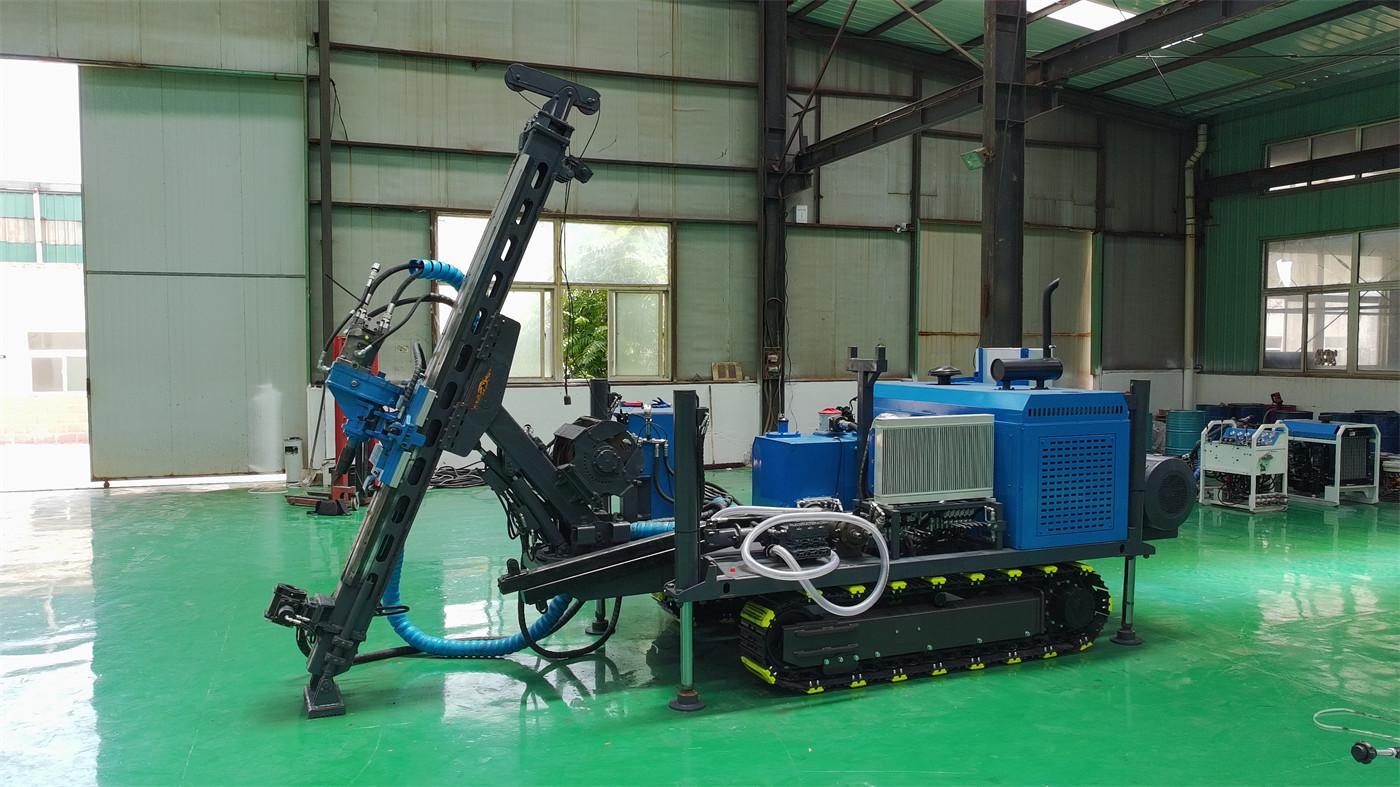
Typical uses listed in the data include slope anchoring, foundation pre-drilling, quarry bench holes and road engineering auxiliary holes. What these tasks share is that hole depth falls within the equipment's rated range, hole positions need adjustment according to design, and work points are often close to completed structures or traffic areas. For these tasks, the 30 m-class rating is not a shortcoming but a choice matched to a compact body and flexible relocation.
It should be emphasized that 30 m is the nominal maximum drilling depth and does not mean stable achievement in any formation or at any hole diameter. Actual drillable depth is affected by rock hardness, degree of fragmentation, hole diameter, DTH hammer specifications and air compressor capacity. These conditions should all be stated before purchase.
Hard-rock shallow holes depend on positioning and posture, not just torque
Hole positions for slope anchoring and foundation pre-drilling are usually laid out according to design drawings, with requirements for vertical, inclined or even near-horizontal hole directions. Whether the equipment can quickly align with the hole position directly determines whether the work sequence runs smoothly. The data gives a swing angle range of 18–180° and tilt adjustment capability, usable for vertical holes, inclined holes and some lateral holes. The original data does not give a clear tilt angle value range, so for specific project design, the final production configuration and technical confirmation documents should prevail.
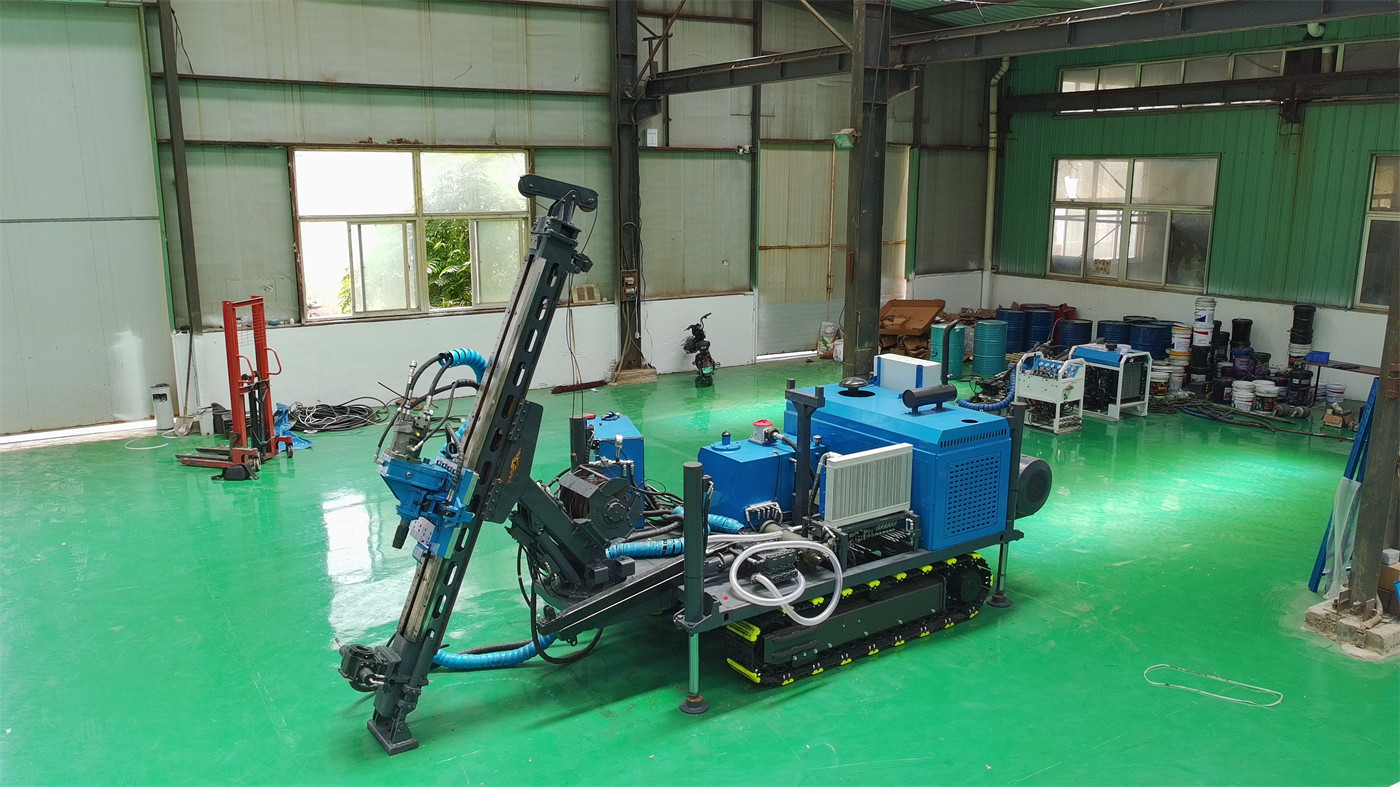
Regarding the body, overall dimensions are approximately 3200 × 1200 × 1850 mm, width approximately 1.2 m, overall weight approximately 2500 kg, using an engineering rubber track chassis. These features correspond to access needs in factory areas, fenced construction sites, narrow construction passages and paved surfaces: rubber tracks are relatively friendly to finished ground, and a track chassis has better traction than wheeled equipment on gravel, compacted soil and generally uneven ground. Before entry, however, turning space, ground bearing capacity and underground pipeline locations must still be confirmed; size alone does not guarantee access.
Why this type of equipment cannot take on deep water well tasks
Deep water wells usually exceed 30 m in depth, and completion operations require the equipment to perform lifting, casing running and well washing under long drill string conditions. The data for this equipment clearly positions it as an engineering DTH drilling rig with a maximum drilling depth of 30 m, mast stroke of 3.2 m and effective stroke of 2.2 m, matched to medium-short drill rods and short-pile-type construction rhythms. Using such stroke and depth capability for deep water wells would encounter limitations in drill string length and work sequencing from the outset.
Therefore, when the project target is a water supply well of 200 m, 300 m or more, evaluation should turn to dedicated water well drilling rigs rather than treating this equipment as deep water well equipment. This does not mean DTH processes cannot be used for water wells, but that this specific equipment's depth rating and supporting conditions do not support such tasks. Conversely, if the task itself is hard-rock engineering holes within 30 m, using deep water well equipment would incur unnecessary costs in positioning flexibility and access to narrow sites.
DTH hammer efficiency and air supply conditions must be settled before purchase
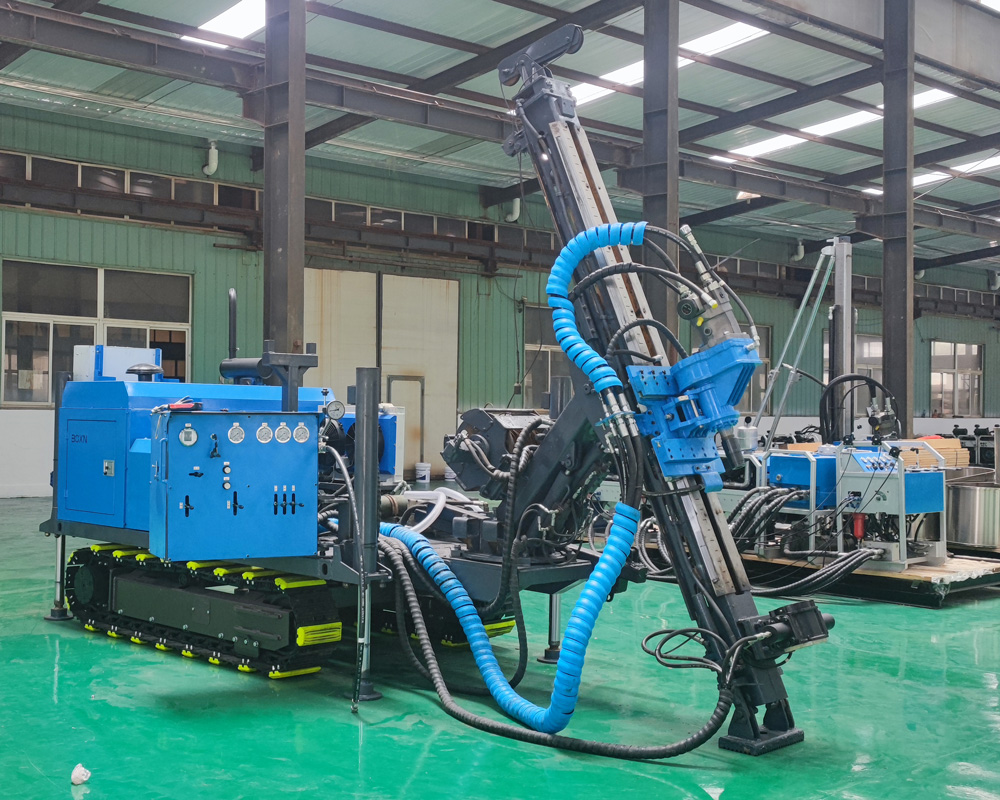
DTH drilling relies on compressed air to drive the DTH hammer and discharge cuttings. The reference air consumption in the data is approximately 8 m³/min, but the original table actually states 8 m²/min. This article interprets it as m³/min according to the common unit for compressed air flow, and final confirmation should still be based on formal technical data. This value is the starting point for evaluating air compressor matching, not a fixed air consumption under any working condition.
In actual construction, hole diameter, DTH hammer specifications and rock hardness all affect the required air volume and pressure. Under hard-rock conditions, compressed air supply and DTH hammer lubrication must especially be ensured; if rotational resistance continues to increase, cuttings return decreases or the drill bit jumps noticeably, parameters should be adjusted promptly and the hole cleaned. Before purchase, the intended DTH hammer interface, required air volume and pressure, air compressor displacement and on-site power or fuel supply conditions should be checked together; do not configure the machine based on a single reference value.
Applicability boundaries when formation and site conditions change
The data gives applicable rock hardness of approximately f = 8–24, covering medium-to-high hardness formations such as limestone, granite, sandstone and basalt. But a single project often does not involve only one formation:
- Upper loose overburden, weathered rock and soil-rock mixed layers are prone to unstable hole walls, requiring reduced penetration speed and, depending on conditions, casing or other upper-hole stabilization methods.
- Fractures and broken zones are prone to block falling, air leakage and sticking, so excessively fast penetration should be reduced and continuous hole cleaning maintained; if high-pressure air line pressure is abnormal or cuttings return suddenly stops, drilling should be stopped first for inspection.
- When hole diameter approaches the 280 mm upper limit, required air volume and drilling tool specifications both change, and supporting capability should be confirmed separately rather than directly applying small-diameter experience.
These conditions show that the 30 m-class rating is only one dimension of equipment capability; formation integrity, abrasiveness and hole diameter also affect actual construction organization. The data does not give penetration data for different formations, so this article makes no inference about drilling efficiency.
What else to confirm when putting this equipment into a plan
If the project involves slope anchoring, foundation pre-drilling, quarry short holes or road engineering auxiliary holes, and hole depth is within the rated range, this compact crawler DTH rig is worth including in the comparison. The following order is recommended for verification:
| Check item | Content to confirm |
|---|---|
| Drilling task | Whether the use is anchor bolt holes, anchor cable holes, drainage holes, foundation pre-drilling or quarry short holes; whether design hole depth and diameter fall within the nominal range of 76–280 mm and 30 m |
| Formation data | Rock type, hardness, integrity, distribution of broken zones and weathered layers, and whether close to the applicable range of f = 8–24 |
| Air supply matching | Intended DTH hammer interface and air volume requirements, air compressor displacement and pressure, pipeline length; the reference air consumption of approximately 8 m³/min must be confirmed with formal data |
| Site and relocation | Turning space at work points, ground bearing capacity, underground pipelines, transport vehicle load capacity and loading/unloading conditions |
| Posture and hole direction | Whether design hole direction falls within the 18–180° swing angle coverage; specific tilt range must be confirmed with production configuration |
When requesting a quotation, it is recommended to provide drilling purpose, formation description, target hole depth and diameter, intended drilling method and DTH hammer specifications, entry transport conditions, and on-site power or fuel supply conditions. The more specific this information, the better the judgment of whether this equipment matches and what drilling tools, air compressor and dust suppression devices are needed. Configuration items not covered by the data should be settled item by item during technical confirmation; conclusions should not be drawn from model names or a single parameter.