












A trailer-mounted water well drilling rig places a diesel generator, mud pump, and rotary table drilling system on the same chassis, which is easily understood as "drilling can start as soon as the equipment arrives at the wellsite." In reality, the integrated layout compresses the degree of dispersion of equipment and auxiliary components, but it does not complete the preparation of the wellsite space, access roads, mud circulation, and drilling tool matching for the construction party. This article focuses on this common misunderstanding, explaining under what conditions such equipment is worth considering, what problems the integrated parts solve, and what items still need to be implemented one by one before starting work at each wellsite.
Integrated layout changes auxiliary organization, not the entry threshold
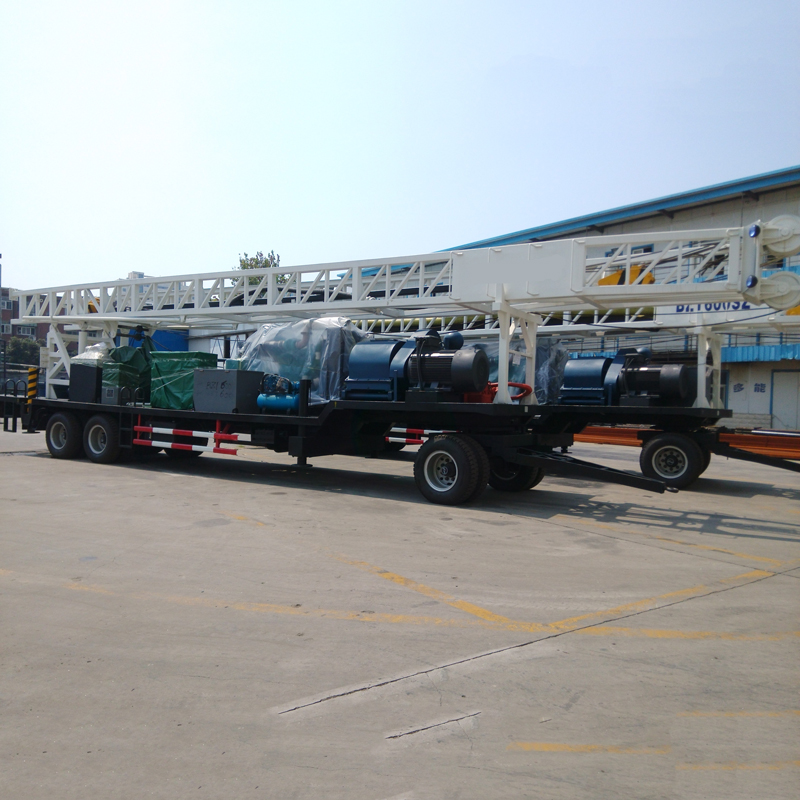
Taking a 600-meter class trailer-mounted rotary table water well drilling rig as an example, the equipment centrally arranges a 200 kW diesel generator, 3NB-130 mud pump, rotary table, double winch, mast, outriggers, and auxiliary breakout mechanism on a trailer chassis. For projects such as village and town water supply, agricultural irrigation, geothermal surveys, and continuous construction across multiple sites, this layout reduces the links of scattered transportation and separate positioning of power, mud, and mast systems.
However, it also means the entire machine must be transported as a whole in a trailer-mounted manner. The short mast version has transport dimensions of approximately 15100 × 2480 × 4100 mm, and the long mast version approximately 16630 × 2480 × 4100 mm. Whether the passage width, turning radius, bridge load capacity, and height restrictions between wellsites are met needs to be checked against actual roads before starting work, rather than assuming the equipment can freely enter and exit every field-edge plot.
The wellsite still must meet trailer positioning and outrigger load-bearing conditions
After the trailer chassis arrives at the wellsite, suitable towing vehicles are needed for cooperation, and space must be reserved for outrigger deployment and mast erection. The following items must be implemented before starting work at each wellsite, regardless of whether the equipment is integrated:
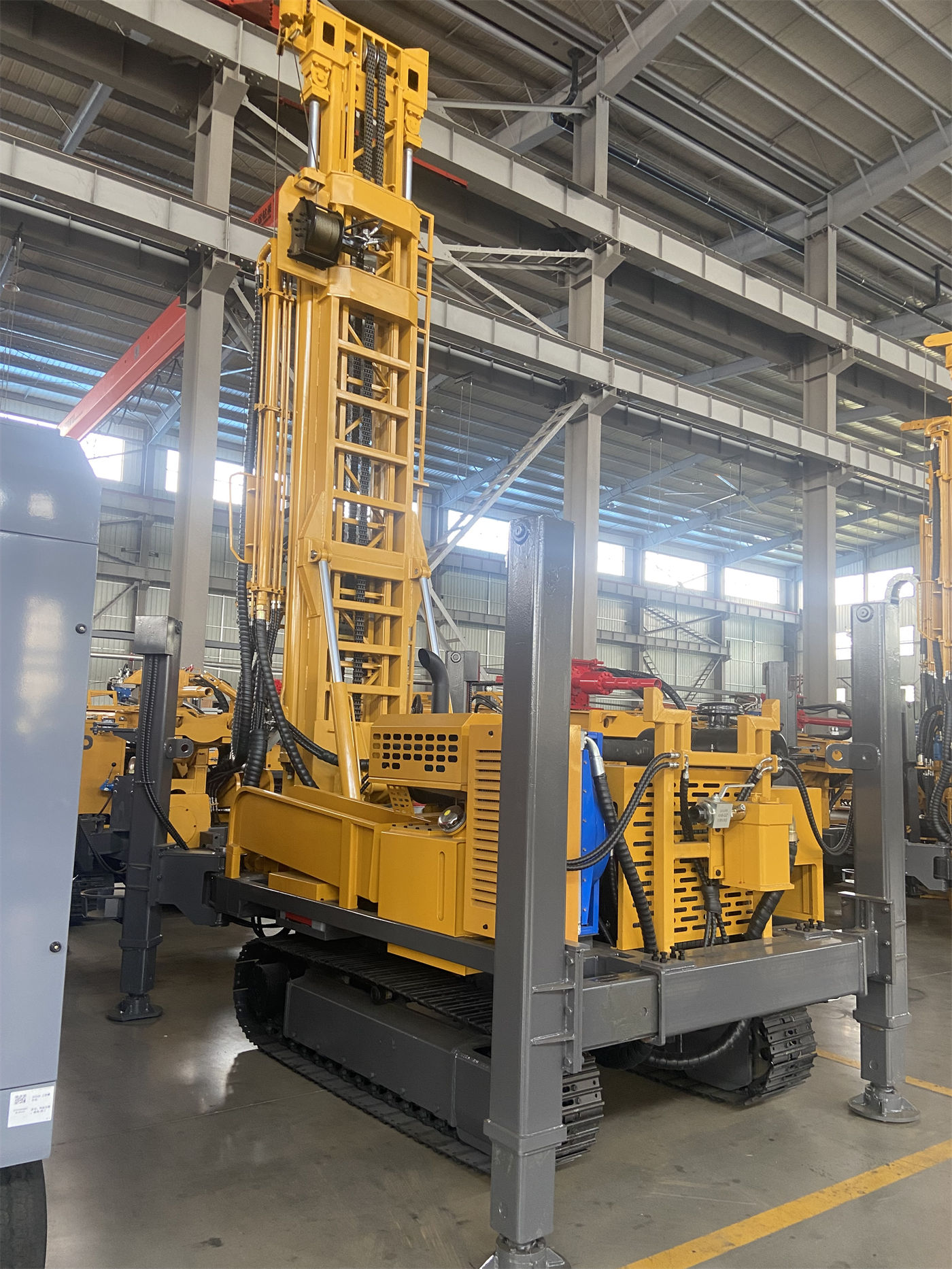
- Whether the access road can bear the passage of the towing vehicle and the entire machine, and whether there is sufficient turning space at corners;
- Whether the area around the wellsite avoids overhead lines and obstacles, and whether the erection radius is cleared;
- Whether the ground can support the outriggers and the weight of the entire machine, and whether soft soil or backfilled areas require additional treatment;
- Whether positions are reserved for mud pits, circulation ditches, and cuttings discharge sites according to hole diameter and displacement;
- Whether the water source meets the needs of mud preparation and circulation replenishment.
If these conditions are not met, no matter how high the equipment integration level is, the wellsite cannot directly enter the drilling state.
The mud pump is integrated on the chassis, but the circulation system still must be configured according to the formation
The 3NB-130 mud pump has a specified displacement of 8.4–16.6 L/s, a rated working pressure of 5–10 MPa, and is driven by a 90 kW motor. Mud circulation carries drill cuttings, cools the drill bit, maintains borehole wall stability, and controls downhole pressure. Integrating the pump on the chassis solves the problem of pump transportation and power connection, but does not change the fact that mud performance must be adjusted according to the formation.
In soil layers, clay, and soft overburden, mud viscosity needs to be adjusted according to permeability, hole diameter, and return conditions; sand layers, gravel layers, and loose overburden are prone to collapse and mud loss, and temporary casing or staged casing installation is often required to establish a stable hole section. Therefore, carrying the mud pump with the entire machine does not mean the circulation plan has been determined; mud materials, mixing ratios, and wall protection measures still must be prepared according to the actual formation at the wellsite.
Integrated generator solves power connection, not fuel and electricity arrangements
The integrated diesel generator set has a rated power of 200 kW, rated voltage 380 V, rated current 360 A, and frequency 50 Hz. It can supply power to the mud pump, hydraulic oil pump, and auxiliary electrical equipment, and is suitable for remote areas and projects lacking a stable power grid. The integrated layout reduces the links of external power connection and separate transportation of the generator set.
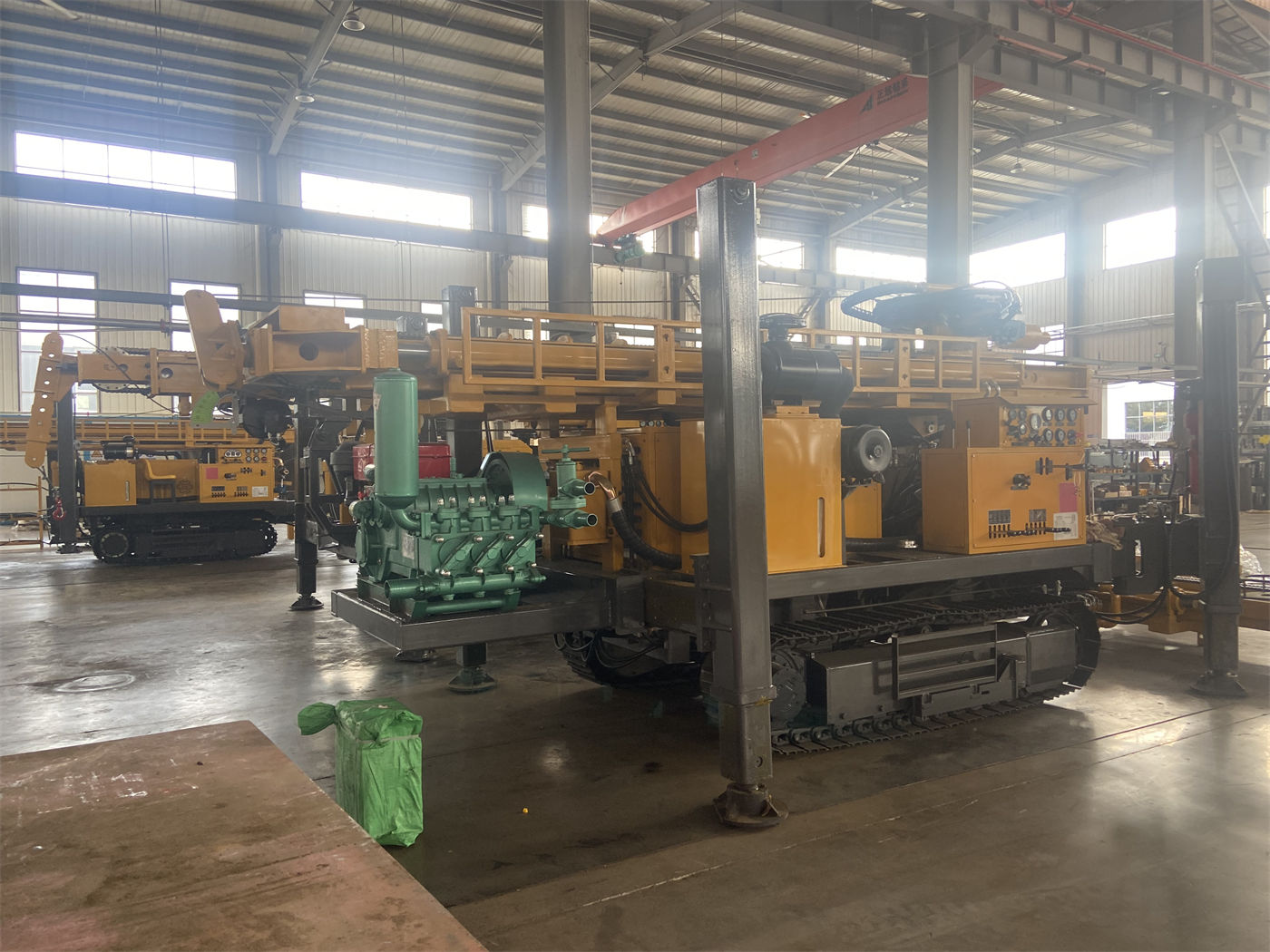
However, diesel generator operation requires fuel storage and replenishment arrangements. The on-site electrical system still needs to check load matching according to rated voltage, current, and frequency, and cable layout, grounding, and protection must also be included in the pre-drilling inspection. For wellsites with a stable power grid, whether to use the onboard generator set and how to connect with on-site power supply are project condition issues that need to be confirmed based on actual conditions.
Mast type and drilling tool matching determine the workload of wellsite preparation
This equipment offers two options: short mast and long mast. The short mast has an effective height of 12 m and is equipped with a 7.5 m kelly and 5.5 m drill pipe; the long mast has an effective height of 15 m and is equipped with a 10.5 m kelly and 9 m drill pipe. The short mast is more conducive to transportation and site adaptability, while the long mast can reduce the number of pipe connections. The working dimensions of the two mast types are approximately 15100 × 2480 × 14170 mm and 15100 × 2480 × 17170 mm, respectively. The clearance above the wellsite and ground layout must be reserved according to the selected mast type.
The rotary table provides three speed ranges of 38 / 57 / 85 r/min, corresponding to theoretical torques of approximately 13.8 / 9.2 / 6.2 kN·m; the main winch has a single-line pull of 40 kN, and the auxiliary winch has a single-line pull of 30 kN; the swivel has a maximum load of 30 T and an inner diameter of 63.5 mm. These capabilities form the basis for drilling and drilling tool handling within the nominal range of 600 m maximum drilling depth and 500 mm maximum borehole diameter, but actual drilling depth and hole diameter will be affected by formation, drilling tools, mud circulation, casing design, and downhole resistance, and cannot be directly used as the completion depth and hole diameter for each wellsite based on nominal values.
Which projects are suitable for considering this type of trailer-mounted integrated solution
Based on the equipment information, this type of trailer-mounted rotary table water well drilling rig is more suitable for projects where the following conditions are generally met simultaneously:
- Wellsites are distributed across multiple construction sites or villages and towns, requiring the entire set of equipment to relocate across projects;
- Roads near the wellsites meet trailer passage conditions, and the site can accommodate the entire machine positioning and outrigger deployment;
- The project mainly uses mud positive circulation rotary drilling, with targets being medium-deep groundwater, agricultural and industrial water wells, or some geothermal survey and geological exploration holes;
- The site lacks a stable power grid and requires onboard power generation;
- The project party can independently arrange mud materials, water sources, casing, and wellsite preparation.
If the wellsites are scattered in mountainous areas without roads, the site is extremely narrow, or the project requires continuous high-quality rock cores, other equipment types should be evaluated separately and cannot be directly applied just because the name or purpose is similar. The information does not provide completion performance data for specific formation combinations, so selection should not be based on this to infer water yield or drilling efficiency.
Information to prepare before inquiry
When inquiring about this type of trailer-mounted rotary table water well drilling rig, it is recommended to provide the following at the same time: drilling purpose (water supply, irrigation, geothermal survey, or geological exploration), expected hole depth and target hole diameter, formation overview, proposed drilling method and circulation method, number and distribution of wellsites, access road and site conditions, on-site power supply and fuel replenishment conditions, casing and completion design requirements, and whether short mast or long mast configuration is needed. Only when the above information is complete can the supplier provide targeted explanations on mast type, drilling tool matching, and transportation plan; when formation and site data are lacking, only conditional judgments can be made first, and the configuration should not be directly determined.