












The CR800UG is an electric fully hydraulic core drill designed for underground mine tunnels and drill sites, with a reference NQ drilling depth of 800 m. It uses a modular structure that allows the power station, feed mechanism, drill base frame, oil tank, and control unit to be transported separately and then assembled underground at the drill site. When purchasing this equipment, what really needs to be calculated in advance is not the total machine tonnage, but whether these split modules can pass through the mine's existing transport routes and whether the underground drill site can complete assembly and subsequent relocation. This article only uses verified product information to explain the items that should be confirmed with the manufacturer and site; specific disassembly steps, transport load capacity, labor allocation, and cost figures must be confirmed jointly by the mine site and the manufacturer.
1. How is the CR800UG modular split transport divided?
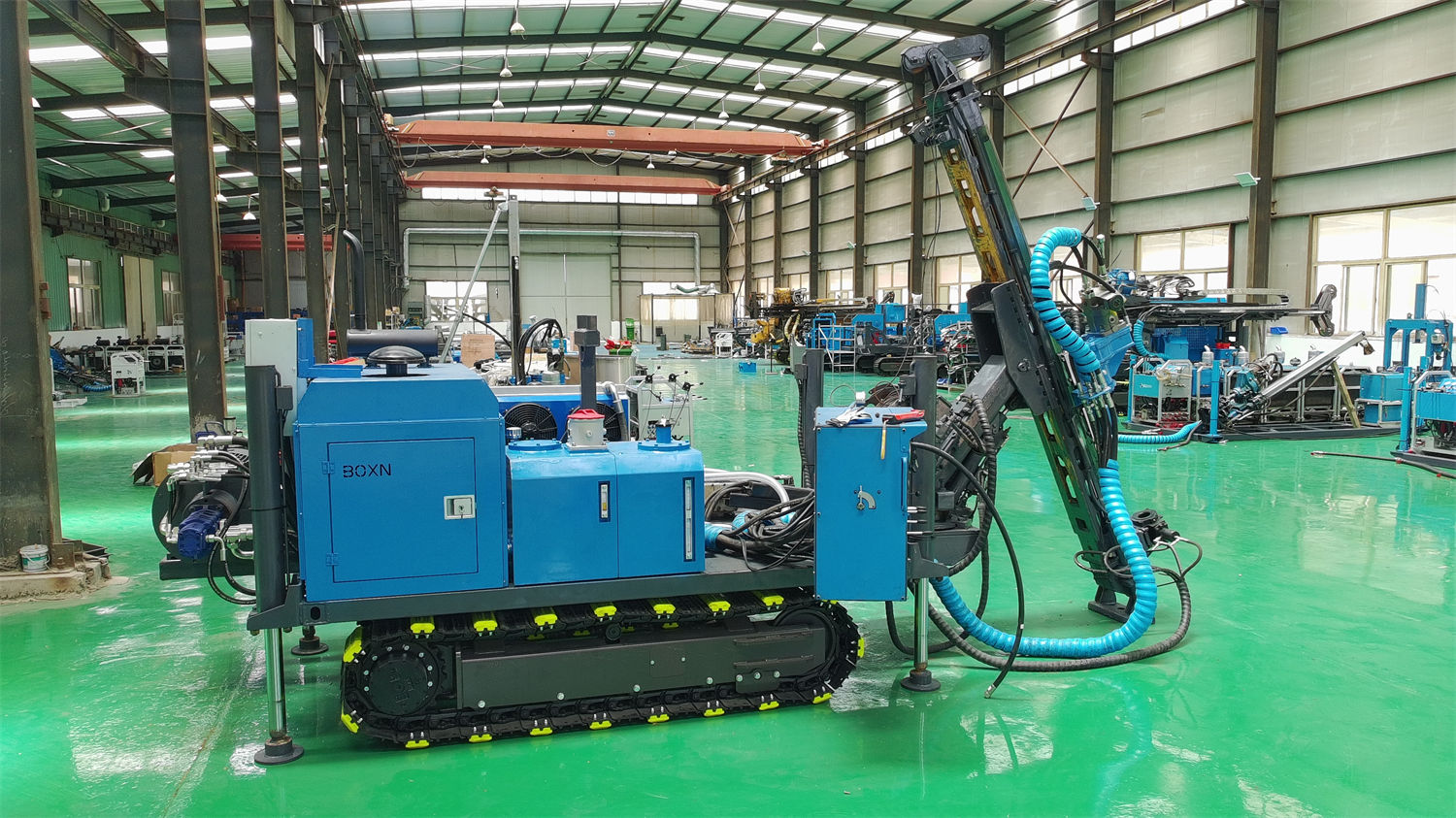
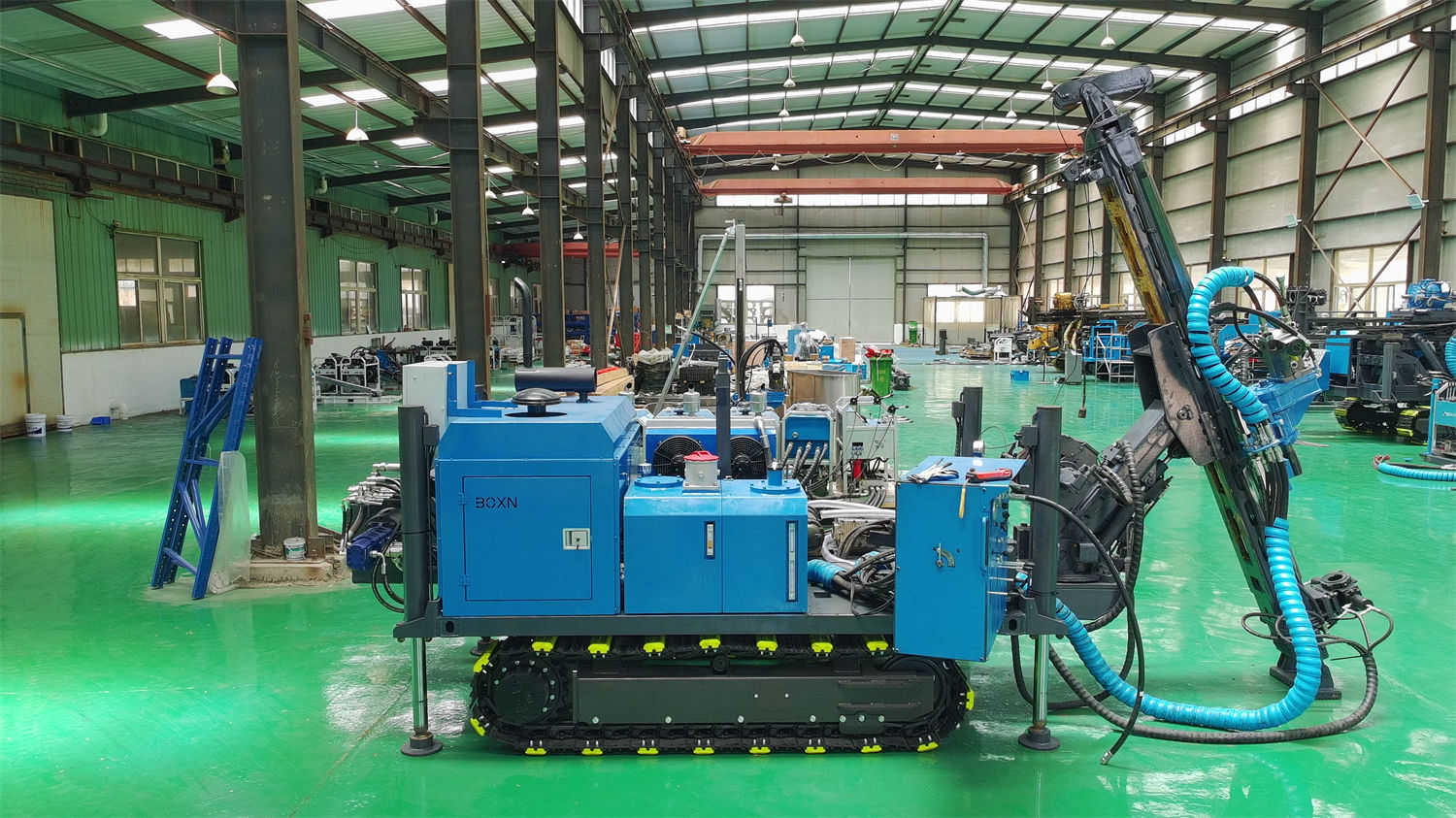
CR800UG information shows that the equipment uses a modular design, where the power station, feed mechanism, drill base frame, oil tank, and control unit can be transported separately and then assembled underground at the drill site. This design is mainly aimed at tunnels, crosscuts, drifts, and mining area drill sites that large surface drills cannot directly enter.
The verifiable main module reference weights are as follows:
| Module | Reference Weight |
|---|---|
| Power station | 240 / 270 kg |
| Main feed mechanism | 130 kg |
| Drill base frame | 120 kg |
| Oil tank unit | 120 kg |
| Control unit | 90 kg or 130 kg (two different figures appear in the source) |
It should be particularly noted that the original parameters contain two different figures for "control unit weight": 130 kg in the control unit table and 90 kg in the main module weight summary. This article retains both figures as given in the source. The final supply configuration and actual weight should be based on formally confirmed technical documentation. When requesting quotations, the manufacturer should be required to specify in writing the final weight and dimensions of each module.
2. Under tunnel transport constraints, what passage conditions should be verified before procurement?
The information states that the CR800UG split modules can be transported in batches to the working point via inclined shafts, cages, mine cars, or tunnel transport systems, reducing the space constraints of bringing in a large complete machine. However, the information does not provide module dimensions, cage compatibility specifications, or minimum tunnel turning radius, so these must be confirmed item by item based on the mine site.
Transport conditions to confirm with the site and manufacturer
- The maximum allowable single-piece weight and dimensions for inclined shafts, cages, mine cars, or tunnel transport systems;
- Whether the tunnel width, height, and turning radius along the transport route can accommodate the largest split module;
- Whether track conditions, tunnel slope, and on-site lifting capacity can support module handling;
- Whether there are reliable fixing and protection methods after module splitting to avoid damage to hydraulic and electrical components during transport;
- How transport batches should be arranged and whether temporary underground storage space is needed for batch shipments.
These conditions determine whether the equipment can enter the site, not the drilling capability itself. If only drilling depth and hole diameter are checked before procurement while ignoring transport routes, the equipment may not be able to reach the drill site after arriving at the mine.
3. What conditions are involved in underground drill site assembly?
The information mentions that the CR800UG modules need to be assembled underground at the drill site. Before equipment installation, the drill site roof, walls, and floor support should be inspected; the drill base frame needs to be reliably fixed to prevent equipment displacement caused by drilling reaction forces; cables and hydraulic hoses should avoid transport routes and sharp rock walls. When drilling upward and horizontal holes, special precautions should be taken against safety risks from drill rods, core barrels, and high-pressure fluids.
The information does not provide the minimum drill site dimensions, assembly time, personnel numbers, or special tool lists, so the following items should be verified with the manufacturer during procurement:
- The minimum length, width, and height to be reserved at the drill site, and whether they accommodate structural components such as the 2800 mm feed beam and 2000 mm extension mast;
- The lifting points, rigging, and auxiliary personnel required for underground assembly;
- Whether the manufacturer provides clear instructions for module docking sequence and hydraulic line and cable connection interfaces;
- The power supply, cooling water, and hydraulic oil conditions required for functional checks after assembly;
- Whether the drill site support conditions meet equipment installation and drilling reaction force requirements; this part should be confirmed by the mine according to on-site regulations.
4. Electrical scheme and explosion-proof requirements must be confirmed separately
The CR800UG uses electric motor power. The configurations listed in the information are 22 kW × 3 or 30 kW × 2, with main system flow of 200 L/min and pressure of 210 bar, and auxiliary pump flow of 10 L/min and maximum pressure of 150 bar. Compared with diesel power, electric motors do not produce combustion exhaust at the drill site, making them more suitable for underground mines with a stable power supply system. The actual configuration should confirm the electrical scheme based on mine voltage, frequency, cable length, and starting method.
The information also notes that a standard motor configuration cannot be directly regarded as an explosion-proof configuration. In coal mines, gas mines, or underground environments with combustible dust, motors, electrical control boxes, cables, and protection systems with the corresponding explosion-proof rating should be selected according to local mine safety regulations. They must not be used directly in areas with explosion-proof requirements without confirmation. This item must be confirmed jointly with the manufacturer and the mine safety department before procurement and is not an operational conclusion that this article can provide.
5. From what conditions should relocation costs be calculated, rather than just looking at unit price?
The direct result of modular split transport is an increase in transport batches, but in exchange for adaptability to tunnel conditions. When calculating relocation costs, verifiable conditions can be listed as checklist items rather than applying uniform figures:
- The number of modules and batches to be transported per relocation;
- The time each batch of modules occupies in inclined shaft, cage, or mine car transport;
- The labor and auxiliary equipment shifts required for underground drill site assembly and disassembly;
- The workload of disconnecting, reconnecting, and inspecting cables, hydraulic hoses, and cooling water pipes during relocation;
- The time required for drill site support, base frame fixing, and resetting;
- Whether equipment movement between drill sites requires splitting again.
The information does not provide assembly hours, relocation hours, or labor quotas, so specific costs cannot be calculated from it. The purchaser can request a module weight list, dimensions, and installation instructions from the manufacturer, and then the mine can calculate based on its own transport and labor conditions.
6. Drilling parameters that should be checked simultaneously during selection
Disassembly, assembly, and relocation are only part of the procurement decision. Whether the equipment can meet drilling tasks also requires checking the following listed parameters:
| Parameter Item | Listed Value |
|---|---|
| Reference coring capacity for different drilling directions | BQ (90°) 920 m; NQ (90°) 800 m; HQ (90°) 380 m; BQ (0°) 600 m; NQ (0°) 400 m; HQ (0°) 200 m; BQ (-90°) 350 m; NQ (-90°) 200 m; HQ (-90°) 150 m |
| Power system | 22 kW × 3 / 30 kW × 2 |
| System flow, pressure | 200 L/min, 210 bar |
| Auxiliary pump flow, maximum pressure | 10 L/min, 150 bar |
| Feed stroke | 1800 mm |
| Feed beam length | 2800 mm |
| Extension mast length | 2000 mm |
| Thrust / pull force | 65 kN / 130 kN |
| Fast moving speed | 0.9 m/s |
| Power head | Hydraulic top drive, speed 0–1500 rpm, torque 600–1480 N·m, equipped with 107 variable motor |
| Drill rod holder | Maximum applicable drill rod size 108 mm, through hole 128 mm, holding force 80 kN |
| Wireline winch | Rope capacity 800 m, 6 mm wire rope, minimum lifting force at full drum 800 N, maximum lifting force at empty drum 1800 N, lifting speed 1.8–4.8 m/s |
| Hydraulic oil tank | 100 L, water-cooled |
Different mines may define the positive and negative signs of angles differently. Before formal construction, the on-site installation direction and design drawings should prevail. Due to differences in actual geological conditions, downhole tools, drilling angles, and operating methods, the final drilling efficiency, drilling depth, and core recovery results should be based on on-site working conditions.
7. Confirmation checklist recommended before procurement
Regarding the question "how to account for disassembly, assembly, and relocation costs under tunnel constraints with modular split transport," the items to be confirmed before procurement can be summarized into the following categories:
- Module list: final weight, dimensions, and splitting boundaries of each module;
- Transport routes: allowable single-piece weight and dimensions for inclined shafts, cages, mine cars, or tunnels;
- Drill site conditions: minimum space dimensions, support conditions, lifting capacity, and power and cooling water conditions;
- Assembly instructions: module docking sequence, pipeline and cable connections, and functional check requirements;
- Electrical and explosion-proof: mine voltage and frequency, cable length, starting method, and whether explosion-proof configuration is required;
- Relocation arrangements: transport batches, disconnection and reconnection workload, and whether further movement requires splitting;
- Supply confirmation: parameters with two different figures, such as control unit weight, should be based on formally confirmed technical documentation.
The information does not provide disassembly and assembly hours, relocation costs, or on-site cases, and this article does not make estimates for these. Purchasers should organize the above items into a checklist, have the manufacturer and mine site fill them in separately, and then use them to judge whether the CR800UG split transport scheme matches their own tunnel conditions.