












When purchasing a 1,000 m-class water well drilling rig such as the WR1000S, a common misjudgment is to compare only the rig's own lifting force, torque, and drilling depth while leaving the matching drilling tools and air compressor for later. The result is that the main machine parameters meet the target, but after the hole is actually started, insufficient cuttings removal, reduced impact efficiency, or a mismatch between drill pipe specifications and the power head or rotary system appears in large-diameter hard rock sections. To avoid this kind of mismatch, the key is to check hole diameter, hole depth, drill pipe, DTH hammer, and air compressor pressure and displacement along the same parameter chain, rather than splitting them into several isolated checklists.
First Confirm the Parameter Boundaries of the WR1000S Itself
The WR1000S is a 1,000 m-class crawler-mounted water well drilling rig with a telescopic mast. Its main parameters are as follows:
| Item | Parameter |
|---|---|
| Maximum drilling depth | 1,000 m |
| Drilling diameter | 105–800 mm |
| Lifting force | 52 T |
| Axial pressure | 8 T |
| Rotary torque | 26,000 / 13,000 N·m |
| Corresponding maximum speed | 70 / 140 r/min |
| Diesel power | 194 kW |
| Recommended working air pressure | 1.6–8 MPa |
| Air consumption | 16–96 m³/min |
| Drill pipe | 6 m, recommended diameter 114 mm |
| Fast lift / fast feed | 30 m/min / 61 m/min |
| Travel speed | Approx. 5 km/h |
| Maximum climbing angle | Reference 21° |
| Hydraulic outrigger stroke | 1.7 m |
| Auxiliary winch lifting force | 2.5 T |
| Overall weight | Approx. 17.8 T |
| Dimensions | Approx. 7.3 × 2.25 × 2.75 m |
These parameters show that the WR1000S has 1,000 m-class depth reserves and a maximum hole diameter capacity of 800 mm, but 105–800 mm is a diameter range and does not mean that every diameter can be routinely drilled at the maximum diameter in any hole depth and any formation. The larger the hole diameter, the higher the requirements for the air compressor, drilling tools, casing, and overall machine load. This layer of limitation must be included in the judgment at the selection stage.
Where Mismatches in Large-Diameter Deep Holes Usually Appear
Mismatches between drilling tool and air compressor capacity are often not a single parameter error, but several links constraining each other:
- As hole diameter increases, the annular area in the hole and the amount of rock cuttings rise, and the air volume required for cuttings removal increases accordingly.
- As hole depth increases, the transport distance for bottom-hole cuttings becomes longer. If cuttings removal is insufficient, sediment and regrinding are likely to form, further increasing torque and energy consumption.
- The DTH hammer has its own working pressure range. Insufficient air pressure directly affects impact energy and impact frequency.
- When air compressor displacement is insufficient, impact and cuttings removal efficiency both decline, drilling speed slows, and drilling tool wear and fuel consumption per unit footage actually rise.
- If the drill pipe diameter, thread specification, and power head interface do not match, the actual transmission of torque and lifting force will be limited.
Therefore, at the purchasing stage, the WR1000S's 52 T lifting force and 26,000/13,000 N·m torque should be treated as capacity ceilings, and then the requirements under the actual hole diameter, hole depth, and formation combination should be calculated back to confirm that the requirements fall within these ceilings.
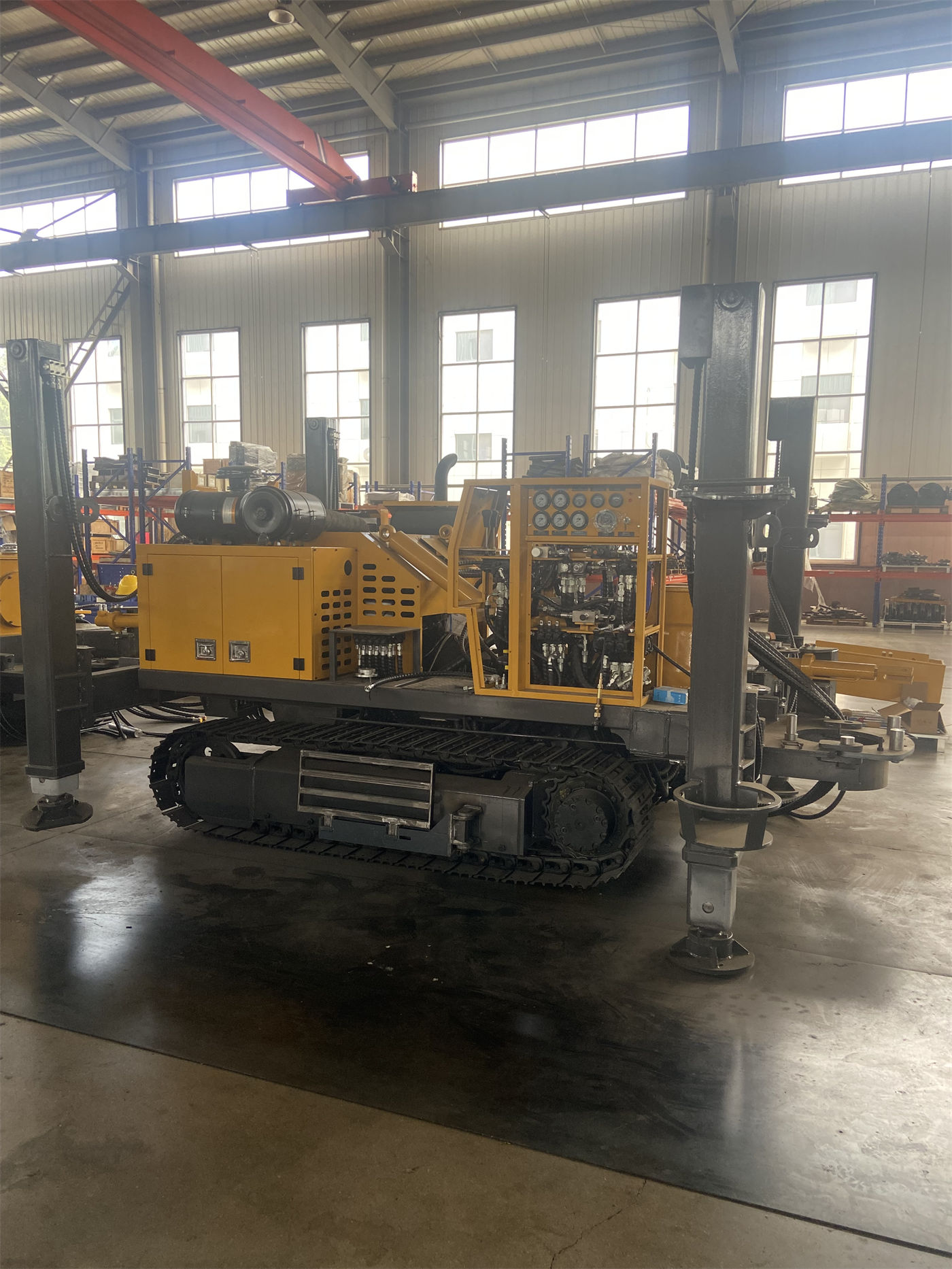
Link Hole Diameter, Hole Depth, Drill Pipe, DTH Hammer, and Air Compressor into One Parameter Chain
Hole Diameter and Hole Depth
Hole diameter determines the annular cuttings removal channel and the amount of rock cuttings generated, while hole depth determines the upward return distance of cuttings and the self-weight of the drill string. The WR1000S's 105–800 mm diameter range is relatively wide. During purchasing, the project's main construction diameter and maximum diameter should be clearly defined, and it should be stated at what hole depth the maximum diameter is planned to be used and for how many meters it will continue. Treating "800 mm" only as an equipment capacity parameter and treating "800 mm used at what hole depth" as a construction condition are two different things.
Drill Pipe Specifications
The WR1000S uses 6 m drill pipes, with a recommended drill pipe diameter of 114 mm. Drill pipe specifications need to match the power head interface, rotary torque transmission, and lifting system. Drill pipe threads, straightness, and fatigue condition should be included in continuous inspection. At 1,000 m-class hole depths, if the drill pipe specification is too small, torque transmission and drill string strength may become limiting factors; if too large, compatibility with the power head, chuck, and lifting tools must also be checked. For the specific matching range in this part, the manufacturer should be consulted for a compatibility list.
DTH Hammer and Working Air Pressure
In intact hard rock, the WR1000S can be equipped with medium- and high-pressure DTH hammers for DTH drilling, with a recommended working air pressure of 1.6–8 MPa. The DTH hammer has its own required pressure range. During selection, the DTH hammer's rated working pressure should be aligned with the air compressor's output pressure, rather than looking only at the air compressor's nominal maximum value. Increased altitude reduces the air compressor's actual output capacity, so plateau projects need to include altitude correction in pressure and displacement calculations.
Air Compressor Displacement
The air consumption range given in the WR1000S documentation is 16–96 m³/min. This range is very wide, indicating that air consumption varies with hole diameter, hole depth, DTH hammer model, and drilling process. During purchasing, the displacement requirement under the corresponding working conditions should be confirmed with the manufacturer and air compressor supplier based on the combination of "main construction diameter + maximum hole depth + target rock formation + altitude." It is not acceptable to size the machine only by the minimum value, nor to assume that 96 m³/min applies to all working conditions.
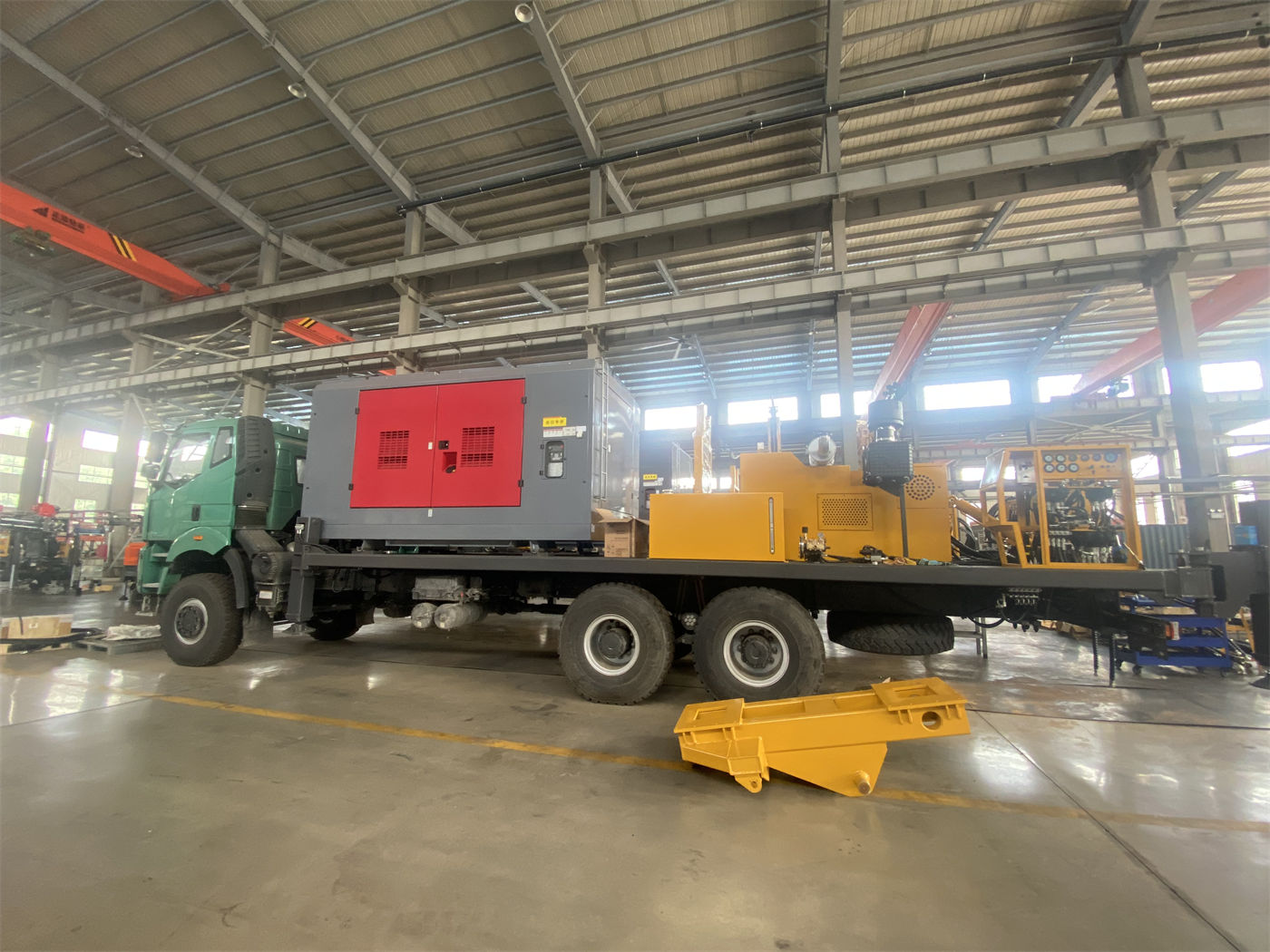
Items Recommended to Be Confirmed in Writing with the Manufacturer Before Purchase
- The recommended air compressor pressure and displacement range for the WR1000S under the planned main construction diameter and maximum diameter.
- The intended DTH hammer model, rated working pressure, and air consumption, as well as their matching relationship with the WR1000S's recommended air pressure range.
- Whether alternative specifications to the recommended 6 m, 114 mm drill pipe are compatible with the power head and lifting system, and what the compatibility boundaries are.
- How the upper hole section's wall protection method and casing scheme should be matched when the large-diameter hole section switches from mud rotary to the DTH process.
- Correction for the effect of project altitude and ambient temperature on the air compressor's actual output pressure and displacement.
- Handling principles for complex hole sections such as air leakage, water inflow, and fractured zones, as well as hole stabilization measures that need to be prepared in advance.
Not all of these questions can be answered from the equipment parameter table; some require judgment based on the project's hydrogeological data. The equipment provides hole completion and drill string control capability, but it cannot replace aquifer evaluation, water supply design, or dewatering design.
Typical Signs That the Rig's Capacity Is Sufficient but the Matching Equipment Cannot Keep Up
If the following situations occur, priority should be given to checking the matching drilling tools and air compressor, rather than only adjusting the rig's operating parameters:
- Drilling speed in the large-diameter section is noticeably lower than expected, and the amount of cuttings returning at the collar is small or intermittent.
- Torque and energy consumption rise rapidly as hole depth increases, with signs of regrinding.
- The DTH hammer has weak impact or abnormal frequency, but the pressure gauge reading is still within the nominal range.
- Frequent hole cleaning or tripping is required to handle sediment.
These signs are related to the long transport distance for bottom-hole cuttings and insufficient cuttings removal. The documentation also indicates that deep hard rock holes require more stable air volume, good lubrication, and continuous hole cleaning. Specific diagnosis and handling should be judged by on-site technical personnel according to actual working conditions. What can be done at the purchasing stage is to check the matching parameters clearly, so as to avoid discovering only after the equipment arrives on site that the air compressor displacement or drilling tool specifications are unsuitable.
Summary
When purchasing the WR1000S for large-diameter deep holes, the 52 T lifting force and 26,000/13,000 N·m torque address drill string control and rotary capability, but they cannot replace the matching calculation for the air compressor and drilling tools. Aligning hole diameter, hole depth, drill pipe specifications, DTH hammer working pressure, and air compressor displacement item by item along the same parameter chain, and making corrections for altitude, formation, and water inflow conditions, is the feasible path to avoid "the main machine meets the target while the matching equipment holds it back." Specific air compressor models, DTH hammer models, and alternative drill pipe compatibility ranges not covered in the documentation must be verified in writing item by item with the manufacturer during the purchase confirmation stage.