












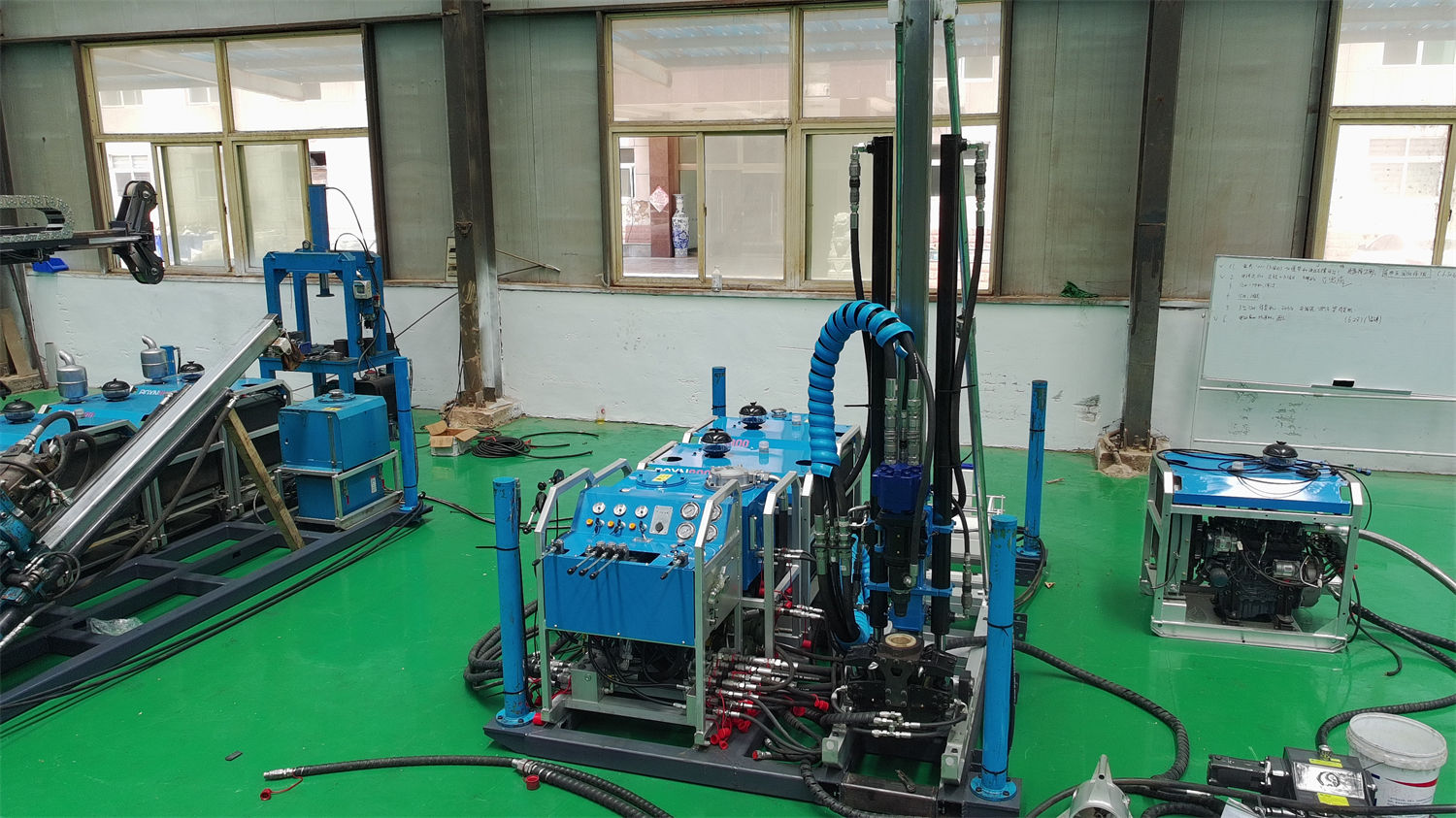
The CR1000P is positioned for deep exploration scenarios that require 1000 m-class coring capability but where a large complete rig cannot reach the hole location. It uses a modular split design, allowing the power, hydraulic, mud, and control systems to be transported separately and then assembled on site. Therefore, what really needs to be verified before mobilization is not whether the complete rig can drive up, but whether each module and transport unit can safely pass along the road, be lifted into position, and whether there is enough space on site for assembly and placement.
The following sections explain what needs to be confirmed in four areas: roads, lifting, site, and assembly. The module weights and parameters in this article come from the CR1000P product information on this site; for data not provided in the materials, the manufacturer's final confirmation or on-site verification by the transport provider should prevail.
First Break Down Transport Units by Module Weight
To assess road and lifting conditions, the first step is to break the equipment down into verifiable transport units rather than looking only at the total weight of 1640 kg. The reference module weights provided in this site's materials are as follows:
| Module | Reference Weight |
|---|---|
| Power unit | 180–260 kg |
| Control unit | 145 kg |
| Hydraulic oil unit (including oil) | 160 kg |
| Mud unit | 95 kg |
| Total weight | 1640 kg |
The materials only list the weights of some modules. The individual weights of the remaining components (such as the mast, power head, chuck, winch, drilling tools, etc.) are not provided. A component weight list or shipping list must be obtained from the manufacturer and checked item by item. The total weight of 1640 kg alone cannot determine whether the single heaviest component exceeds the bearing capacity of a certain access road, a certain crane, or a certain transfer platform.
What to Verify for Road Access Conditions
The CR1000P's split design allows it to reach the site via narrower routes, but "can pass along narrower routes" does not mean any mountain access road is passable. When verifying road conditions, it is recommended to confirm the following point by point along each section:
- Transport method: whether each route section relies on vehicles, cableways, winches, or manual carrying, and whether transfer is needed midway.
- Single-piece weight and dimensions: judge based on the heaviest and largest single component in the shipping list, not the total weight.
- Road surface conditions: subgrade bearing capacity, slope, turning radius, road width, and weight/height limits of bridges and culverts must be verified on site by the transport provider.
- Climate and seasonal effects: the impact of rainfall, snow accumulation, and freeze-thaw on access road passability must be confirmed in conjunction with the project schedule.
- Final access road section: when vehicles cannot reach the hole location, the carrying distance, elevation difference, and carrying method from the unloading point to the collar.
This site's materials do not provide the transport dimensions of CR1000P components, nor specific limits for road width, slope, or bearing capacity. Therefore, these data cannot be inferred from the total weight and should be confirmed with the manufacturer before checking with the transport provider.
Lifting and Unloading Methods Must Be Clarified in Advance
Split transport means multiple lifting and unloading operations will occur on site. The materials mention that "before construction, manual, mechanical, or lifting plans should still be arranged according to module weight," but do not specify the lifting equipment specifications or lifting point locations. During procurement and construction preparation, the following need to be verified:
- Whether each module and major component has clear lifting points or lifting marks, and whether special lifting gear is required.
- The rated capacity and working radius of lifting equipment available at the unloading point and near the collar, and whether they match the heaviest single component.
- Whether the lifting work surface is level, whether there is enough space for outriggers or standing, and whether temporary leveling is needed.
- Who is responsible for the lifting plan, and how lifting personnel and equipment are organized.
These matters involve on-site safety organization and should be arranged by the project owner in accordance with local regulations and the manufacturer's technical requirements. Lifting capacity should not be estimated solely from equipment weight.
What Site and Sequence Are Needed for On-Site Assembly
The CR1000P uses a modular structure, with the main systems transported separately and then assembled on site. The materials only state that it "can be transported separately" and "assembled on site," without providing the specific floor area required for assembly, foundation treatment methods, or assembly man-hours. Therefore, the following items need to be confirmed with the manufacturer and project owner before mobilization:
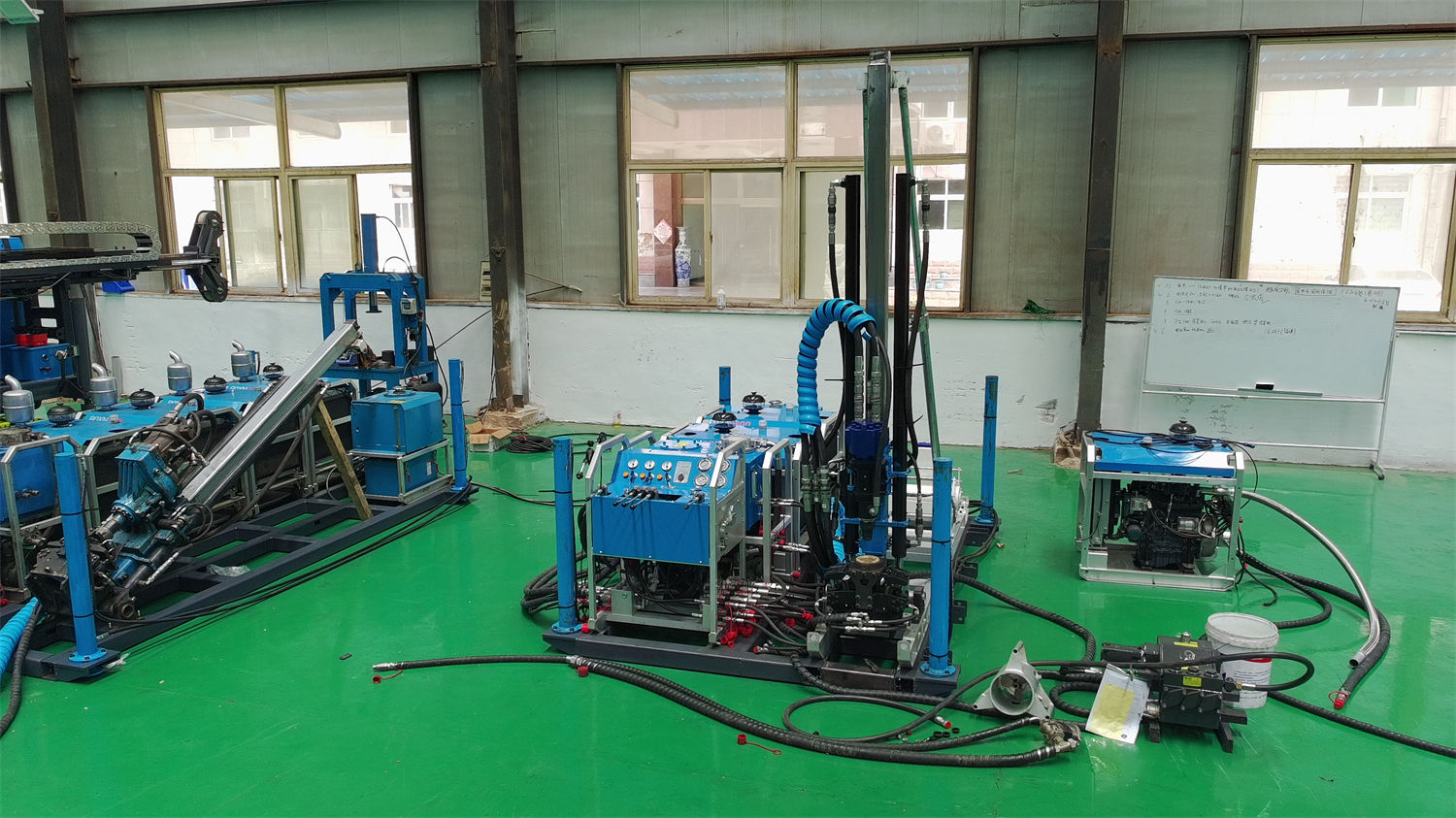
- The area of the collar platform or assembly site, and whether it can simultaneously accommodate the power unit, control unit, hydraulic oil unit, mud unit, and components awaiting installation.
- Site leveling and bearing treatment methods, and whether local hardening or additional pads are needed.
- The assembly sequence and the hydraulic, electrical, and mud pipeline connections between modules, as well as the parts that need to be checked item by item after assembly.
- Inspection items for hydraulic interfaces, chucks, and power head status after assembly is completed. The materials already note that "after equipment assembly, confirm the status of hydraulic interfaces, chucks, and power head item by item."
Assembly man-hours are affected by site conditions, number of workers, and weather. This site's materials do not provide a quotable assembly duration. The purchaser should not schedule subsequent processes based on a fixed time and should allow leeway.
Supporting Materials and Supply Routes Also Affect Mobilization Planning
In addition to the main rig, deep-hole projects require supporting drill rods, core barrels, drill bits, wireline, and mud materials. The materials explicitly note that in mountainous areas, fuel, power, water, and spare parts supply also need to be planned. Therefore, when verifying road conditions, it is not enough to consider only the main rig modules; the transport volume of the following materials should also be included:
- Drill rods: applicable drill rod lengths are 1 m / 1.5 m. Deep-hole projects use large quantities, so it is necessary to determine whether to transport in batches or in a concentrated manner.
- Mud materials and water: the mud pump has a flow rate of 100 L/min and pressure of 7 MPa. Whether the consumable supply route is feasible for long-term construction.
- Fuel or power: the diesel engine power requirement is ≥132 kW, and a 30 kW × 3 electric motor configuration is also available. Projects far from the grid need to plan fuel supply, while platforms with stable power supply need to confirm power capacity and connection conditions.
- Spare parts and consumables: in remote projects, preventive maintenance is more important than waiting for parts after a failure. Spare parts reserves and supply cycles need to be confirmed.
Recommended Confirmation Checklist Before Procurement
Based on the above, before finalizing the CR1000P mobilization plan, it is recommended to verify the following items with the manufacturer, transport provider, and project site respectively:
- Complete component weight list and transport dimensions for road and lifting verification.
- Lifting point locations and lifting requirements for each module.
- Required site area, bearing requirements, and recommended assembly sequence for on-site assembly.
- Weight and width limits for bridges, culverts, and narrow sections along the transport route, to be confirmed on site by the transport provider.
- Overall supply plan for drill rods, mud materials, fuel, or power supply.
- Other conditions not covered in the materials but necessary for the project, such as work permits, communications, and emergency arrangements, should be handled separately by the project owner.
The CR1000P has a BQ reference drilling depth of 1150 m, NQ reference drilling depth of 1000 m, and HQ reference drilling depth of 550 m. The power head has a maximum torque of 1100 N·m and a pull-up force of 130 kN. These capabilities can only be brought into play after the equipment has been safely mobilized and reliably assembled. Due to differences in actual roads, lifting resources, and site conditions, the final mobilization plan should be based on the manufacturer's technical data and on-site verification results; any data not provided in this article should be treated as items requiring separate confirmation.