












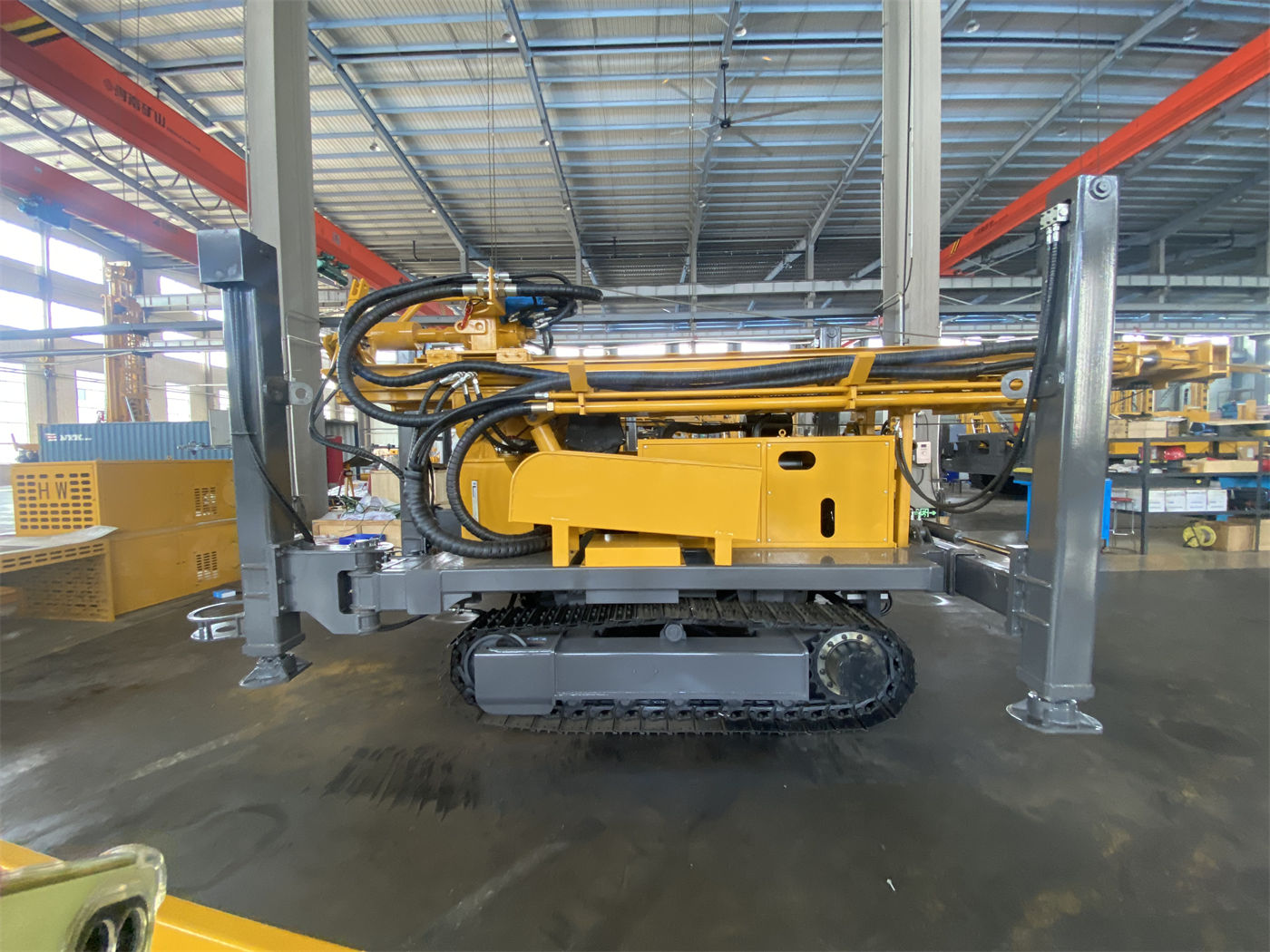
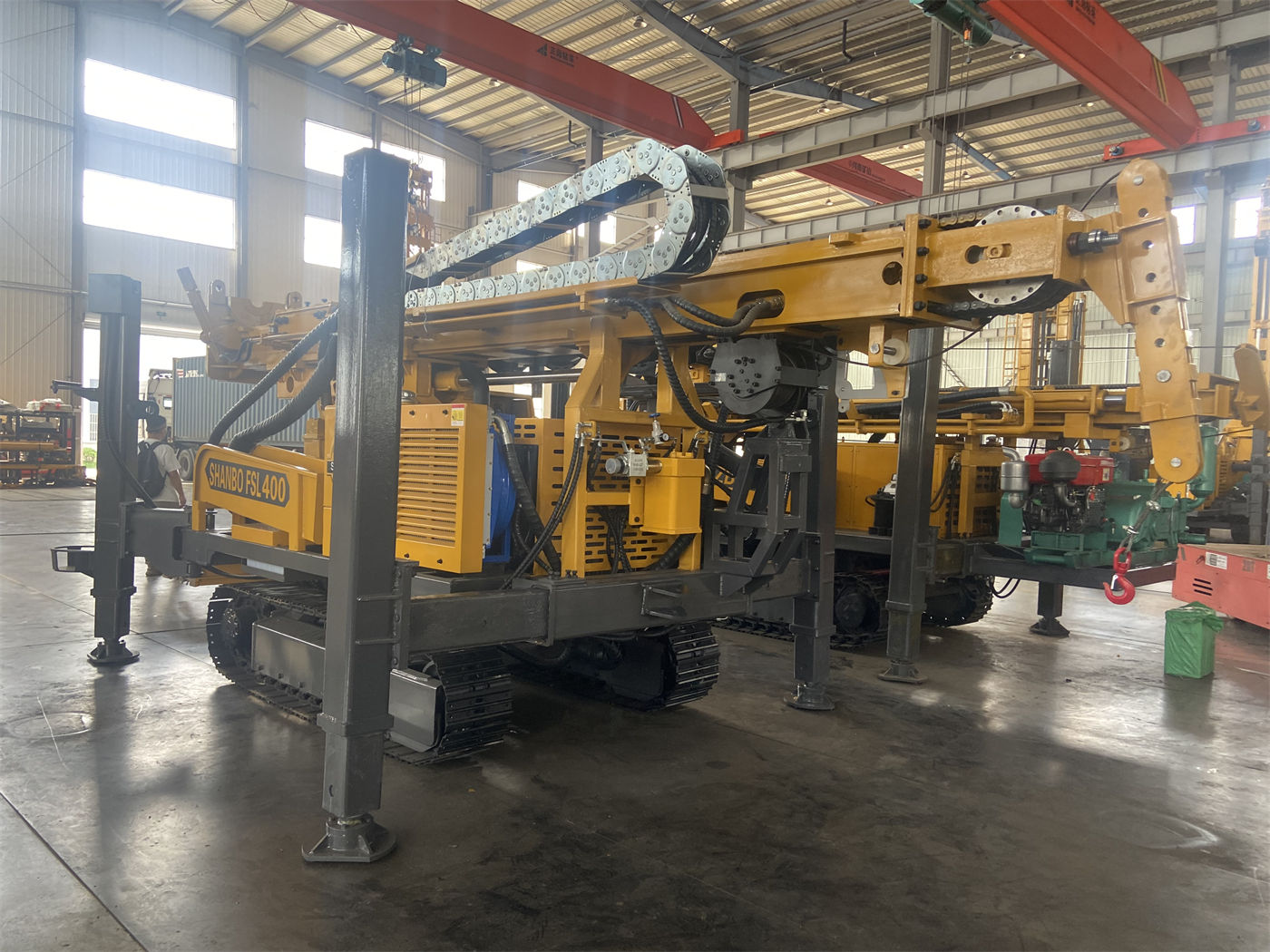
The WR180E is positioned as a 180m-class small crawler water well drill, equipped with a 28HP Changchai diesel engine, 16T lifting force, 1.5m mast, an overall weight of approximately 1.8T, and a drilling diameter of 90–230mm. It is suited for shallow-to-medium water well projects such as rural water supply, farmland irrigation, orchards, and livestock farms. Whether it is worth purchasing depends not on the equipment's list price, but on whether the project conditions fall within its capability range and whether the per-hole workload can amortize mobilization, auxiliary, and supporting expenses.
First, check whether the four working conditions match
Hole spacing density and mobilization distance
With an overall weight of approximately 1.8T, dimensions of about 3000 × 1300 × 1700mm, and a travel speed of 2.5km/h, it can be transported by small trucks. For projects with scattered hole locations, average rural road conditions, and small per-hole workloads, the lighter body reduces loading, unloading, and mobilization difficulty. Conversely, if the per-hole workload is large and holes are far apart, frequent mobilization itself takes time, and labor and vehicle costs for mobilization must be included in the calculation.
Designed well depth
The maximum drilling depth of 180m covers shallow-to-medium groundwater projects, offering more depth margin for water exploration than 120m-class small rigs. The actual completed well depth still depends on local groundwater level, aquifer location, hole diameter, and construction technique, and is not determined solely by the equipment's nominal drilling depth. If a project consistently approaches 180m or requires deeper drilling, the drill tools, power, and equipment class should be re-evaluated for suitability.
Coordination of hole diameter with well casing and submersible pump
The drilling diameter of 90–230mm can be selected based on well casing size and submersible pump specifications. Increasing the hole diameter generally means higher cuttings removal volume and drilling load per unit footage. Under the 28HP power condition, the hole diameter selection should be considered together with the designed well depth, rather than looking only at the maximum value.
Formation conditions
The applicable formations listed in the materials include soil, clay, sand, gravel, as well as weathered rock and alternating soft-hard formations. The main risks in loose formations are hole collapse, diameter reduction, and drill burial, requiring appropriate drill tools and hole stabilization methods while maintaining normal cuttings removal. If the project is mainly in intact high-hardness rock, the power and rotary configuration of the WR180E may not be a suitable choice. The rotary speed of 40–70rpm and working pressure of 1.7–3.0MPa should be adjusted according to the drill pipe, drill bit, and formation conditions.
Examining this machine's configuration within the cost structure
The E series emphasizes low investment and daily practicality, not high power and extremely large hole diameters. This orientation directly affects the ROI calculation method:
- Drill pipe diameters of 50/60/76mm and lengths of 1.5m and 2.0m are optional. Short drill pipes facilitate manual operation and transport in narrow sites, but the 1.5m mast means pipe changes are more frequent than with long-stroke models, and auxiliary time for adding pipes becomes part of the per-hole work hours.
- The 16T lifting force is used for routine drill pipe tripping and drill tool recovery. If abnormal pulling resistance, hole wall diameter reduction, or poor cuttings removal occurs, the formation and downhole conditions should be assessed first; it is not recommended to rely solely on maximum lifting force to force a solution.
- Diesel power eliminates dependence on a fixed power grid, making it suitable for remote agricultural and livestock sites; correspondingly, fuel supply and on-site refueling conditions must be included in daily arrangements.
When calculating ROI, it is recommended to list accounts in three categories
One-time investments
The transaction terms of the equipment itself, included accessories, the complete scope of drill tools and supporting tools, transport and loading/unloading arrangements, and preparation expenses before operators are in place. The product materials on this site do not provide prices, included accessory lists, or specific delivery scope; these must be confirmed item by item with the manufacturer and cannot be inferred from the model.
Expenses that vary with project volume
Drill tool and wear part consumption, fuel, consumables, labor, transport, and mobilization. Among these, fuel consumption rate, drilling efficiency, and per-hole completion cycle are not provided in the materials on this site, so unit footage cost cannot be calculated from them. This part can only be accumulated through actual records of similar projects, rather than converted from nominal drilling depth.
Hidden costs that are easily overlooked
- Auxiliary time for adding pipes due to the 1.5m mast, which accumulates in projects with many holes and relatively deep single holes.
- Handling time and tool wear caused by downhole abnormalities (hole collapse, diameter reduction, drill burial).
- Downtime for maintenance and inspection. The materials require checking tracks, mast, hydraulic lines, drill pipe connections, and power system before starting work; observing rotary resistance, cuttings removal, and equipment temperature during construction; and after completion, cleaning mud and debris and checking drill pipe threads, hydraulic joints, and wear parts.
- Component damage caused by inadequate fixation during mobilization and inadequate transport protection.
Main technical parameters
| Parameter | Value |
|---|---|
| Product model | WR180E |
| Equipment type | Cost-effective small crawler water well drill |
| Maximum drilling depth | 180 m |
| Drilling diameter | 90–230 mm |
| Mast height | 1.5 m |
| Engine type | Diesel power |
| Engine brand | Changchai |
| Engine power | 28 HP |
| Drill pipe diameter | 50 / 60 / 76 mm |
| Drill pipe length | 1.5 / 2.0 m |
| Rotary speed | 40–70 rpm |
| Lifting force | 16 T |
| Working pressure | 1.7–3.0 MPa |
| Travel speed | 2.5 km/h |
| Dimensions | 3000 × 1300 × 1700 mm |
| Overall weight | 1.8 T |
Judging the approximate applicable boundaries by project type
- Rural domestic water wells and small village public water intake wells: hole diameter can be selected within 90–230mm according to well casing and submersible pump specifications, suitable for projects sensitive to mobility and construction cost.
- Irrigation wells for farmland, orchards, greenhouses, and nurseries: many hole locations and scattered sites; the crawler chassis moves conveniently on field roads and general unpaved sites.
- Water supply for livestock farms and ranches: diesel power does not rely on a fixed power grid, allowing small-scale groundwater development in remote sites.
- Small engineering water wells, farms, and general groundwater development: can match the size of this model.
If the project is mainly in intact high-hardness rock, or construction consistently approaches the maximum drilling depth, the 28HP power and 16T lifting force of the WR180E may not be sufficient. In that case, the evaluation focus should shift to a larger-class model, rather than imposing work requirements beyond its configuration boundaries on this model.
Content not covered in the materials and requiring separate confirmation
The existing product materials on this site only describe the model, parameters, applicable scenarios, and maintenance points. They do not provide equipment price, fuel consumption, drilling efficiency, per-hole completion cycle, per-well unit price, accessory prices, or warranty terms. Therefore, actual ROI or investment payback period cannot be calculated from them. Before procurement, confirm with the manufacturer the transaction scope and included accessories, drill tool and consumable supply, transport and training arrangements; at the same time, use your own project records (work hours per meter, fuel and consumable consumption, per-hole completion time) to establish a calculation basis, then compare with the configuration conditions for judgment.
In addition, actual drilling efficiency, drilling depth, and well completion results are affected by geological conditions, downhole tools, drilling angle, and operating methods, and should be based on on-site working conditions. This page uniformly uses the confirmed model WR180E, maximum drilling depth of 180m, and drill pipe lengths of 1.5m and 2.0m.