

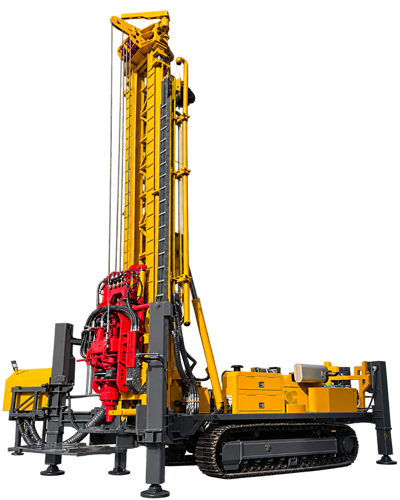
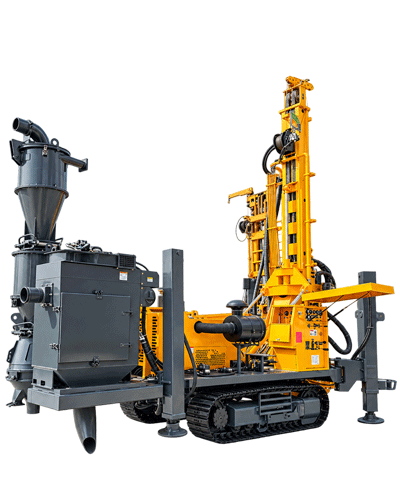
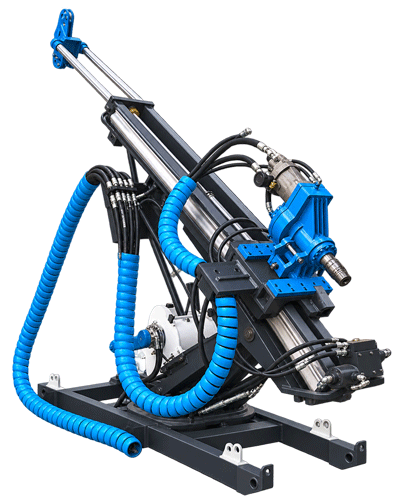
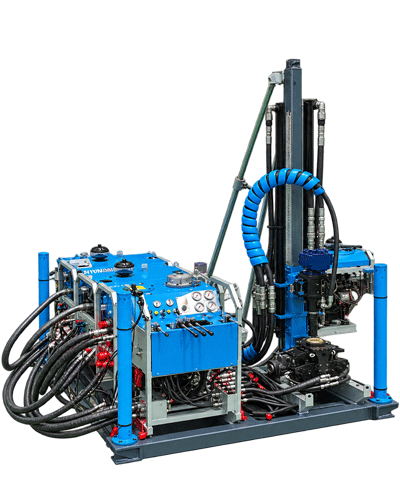
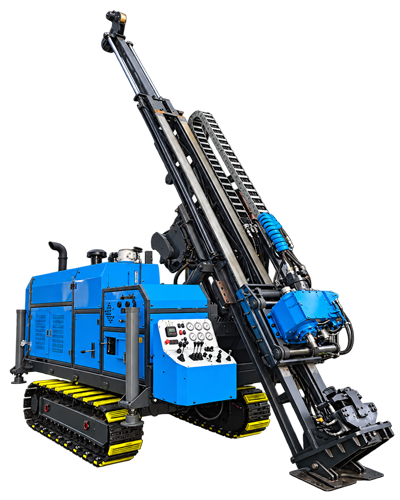
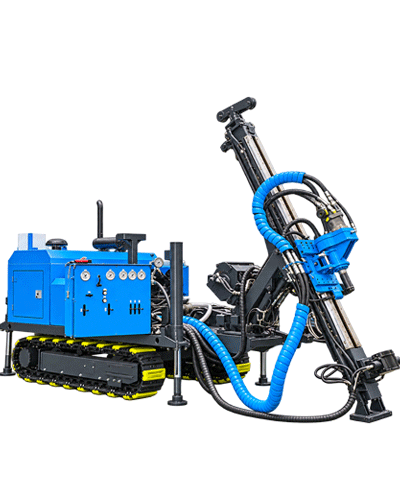
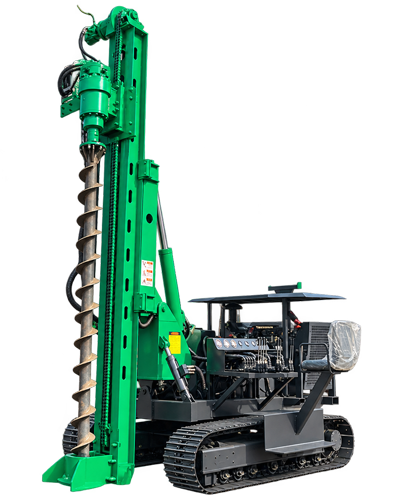
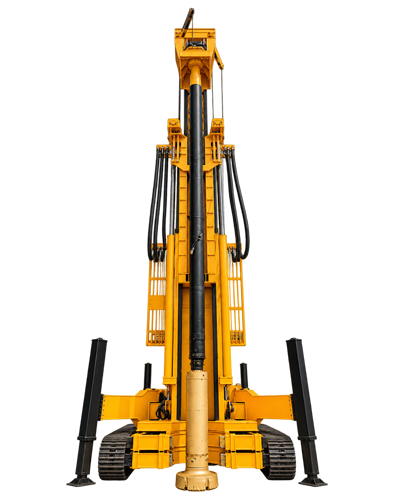
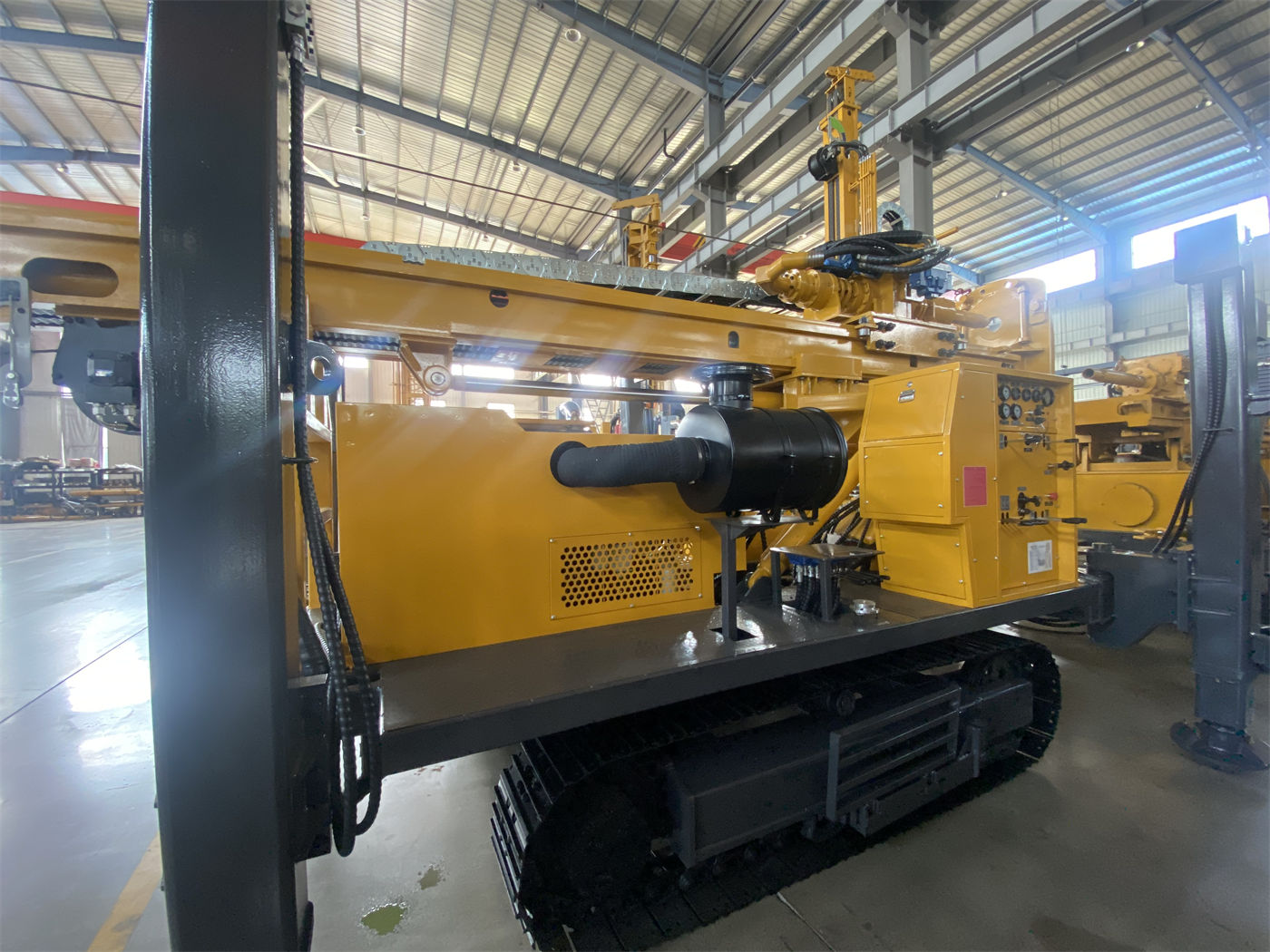
The WR220SE is a 220m-class mini crawler water well drill with overall dimensions of approximately 3950×1750×2250mm and a weight of about 4.7T. It is equipped with a Yuchai 48kW engine, supports water-air dual drilling, and has a drilling diameter of 140–254mm. It is positioned for relatively narrow sites such as farmland irrigation, orchards, rural water supply, and farms. Before purchasing, the practical question of whether the machine can be used is not only about drilling depth and hole diameter, but more importantly: can this machine get from the transport road to the hole position and stand stably? Based on product data, the following sections break down the access conditions that need to be confirmed item by item before entry.
1. First, check the hard dimensions for roads and transport
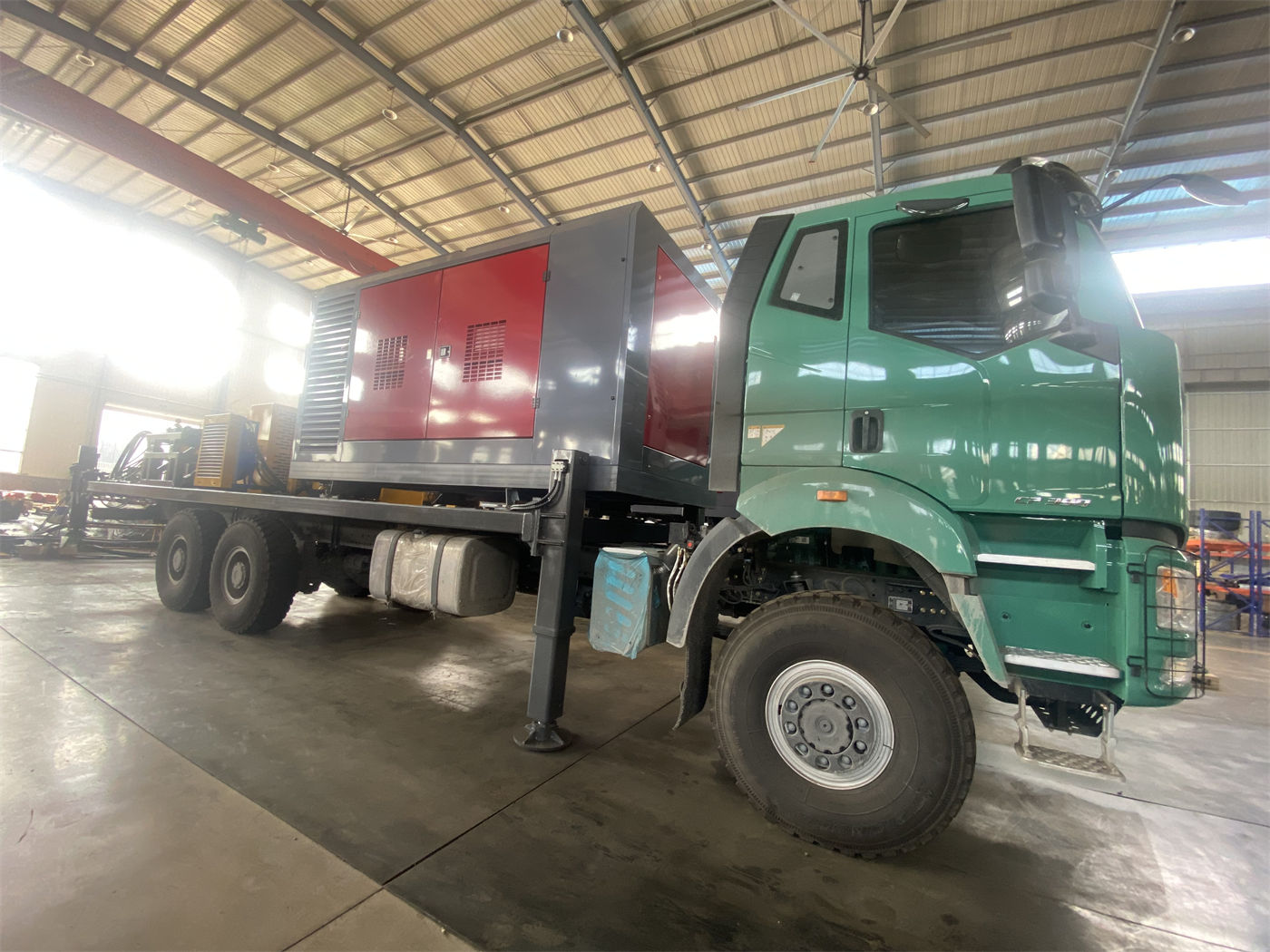
The WR220SE has a crawler chassis, but before entry it still involves a segment of transport by truck. Product data gives a loading width of 2.6m, overall width of 1750mm, length of 3950mm, and height of 2250mm. Buyers need to match these dimensions against conditions along the route.
- Whether the total width, height, and length after loading onto the transport vehicle exceed the width limits, height limits, and turning radii of the roads along the route;
- Whether the clear width of village roads, orchard paths, courtyard wall entrances, and enclosure openings leaves enough margin, and whether the middle of the vehicle body might scrape at curves;
- Whether the load capacity of bridges, culverts, and temporary access roads meets the combined weight of the transport vehicle plus equipment; this cannot be judged only by the drill's own weight of 4.7T;
- Whether there is enough space near the unloading point for the crawler to drive off the truck onto the road, and whether the route from the unloading position to the hole position is continuously passable.
The loading width of 2.6m is a figure that must be communicated to the transport provider in advance. If the on-site road width is close to this value, it is advisable to measure first before deciding on the transport plan rather than estimating from experience.
2. For the crawler self-travel segment, confirm width, slope, and ground
After the equipment leaves the transport vehicle, it enters the hole position by crawler self-travel. Product data gives a travel speed of about 2.5km/h and a maximum gradeability reference of 30°. These two figures reflect the upper limits of equipment capability, not access conditions that can be achieved on any site.
Width and turning
The overall width is 1750mm, and during crawler travel, clearance on both sides must also be considered. If orchard paths, farmland ridges, or courtyard alleys are just close to this width, steering, avoiding obstacles, and adjusting the hole position will become difficult. It is recommended to check on site the passage width, turning radius, and the actual occupied width after the crawler presses over the ground.
Slope and ground condition
30° is a reference gradeability. Whether it can actually climb depends on whether the ground is dry soil, wet mud, or gravel, whether it slips, and whether the slope surface is level. Wet, slippery mud and soft field ridges will significantly reduce traction. The data also notes that before actual climbing and moving, judgment should be based on ground wetness, slope, and center-of-gravity status, and the mast should be in a safe transport position.
Soft ground, paddy fields, and sites after rain
Crawlers have good traction on dirt roads, gravel roads, orchards, and generally uneven sites. However, soft ground, paddy fields, and sites after rain may sink, and settlement at the outrigger positions directly affects leveling and hole deviation. For such sites, it should be determined in advance whether matting or relocating the point is needed.
3. Site clearance and the space occupied by the mast and outriggers
Once in position, the equipment still needs space to unfold for operation. Relevant data from product information includes: mast height 2.6m, single feed length 3.3m, and high outrigger stroke 1.4m.
- Whether there are branches, sheds, power lines, or other obstacles above the hole position restricting mast raising and lowering;
- Whether space is left around for drill pipe handling, pipe connection, and cuttings discharge;
- Whether the outrigger deployment range and the support positions corresponding to the 1.4m stroke fall on firm ground;
- Whether mats are prepared for soft ground to prevent outrigger sinking from affecting machine stability and hole deviation.
The data mentions that before formal drilling, the stability of the whole machine and the mast direction should be confirmed. This work occupies site floor space, and on narrow sites especially, the relationship between hole position and equipment orientation should be planned in advance.
4. Supporting equipment also affects access judgment
The WR220SE supports water-air dual use. If the formation requires DTH hammer drilling, the air compressor is important supporting equipment that determines efficiency, with a reference working pressure of 1.7–2.5MPa and air consumption of 17–31m³/min. The air compressor itself also has volume and weight, so it is necessary to consider whether it can enter the same site, where it will be placed, and how the air hose will be routed. When the hole diameter increases, the rock formation hardens, or altitude rises, the demand for air compressor displacement will be higher, and it should be selected according to the actual DTH hammer specifications.
Common supporting items also include Φ76 or Φ89 drill pipes, DTH hammers, bits, casing, air hoses, oil mist lubricators, and water drilling related accessories. The transport and on-site storage of these materials are also part of access and site conditions.
5. Items recommended to verify and measure before purchase
| Confirmation item | Corresponding data | What needs on-site verification |
|---|---|---|
| Loading and transport | Loading width 2.6m, overall weight 4.7T | Width and height limits along the route, bridge and culvert load capacity, unloading point space |
| Crawler entry | Travel speed 2.5km/h, gradeability reference 30° | Actual passage width, slope, ground wetness and traction |
| Overall dimensions | 3950×1750×2250mm | Clear width of entrances and exits, turning radius, overhead clearance |
| Operation deployment | Mast 2.6m, single feed 3.3m, outrigger stroke 1.4m | Space around the hole position, ground bearing at outrigger points |
| Pneumatic support | Air pressure 1.7–2.5MPa, air consumption 17–31m³/min | Air compressor entry route, placement position, air hose layout |
6. Why these conditions should be confirmed before purchase
One of the selling points of the WR220SE is its compact body suitable for narrow sites, but "suitable for narrow sites" does not mean it can enter any narrow site. The 4.7T overall weight, 1750mm body width, 2.6m loading width, 2.6m mast height, and 1.4m outrigger stroke are all specific figures that can be measured and matched in advance. If buyers focus only on the 220m drilling depth and 140–254mm hole diameter while ignoring the entry path, the equipment may arrive on site but be unable to enter or stand stably, affecting project progress.
In addition, the maximum drilling depth of 220m is a model positioning; actual well depth should still be determined based on local hydrogeological data and aquifer location. Similarly, final drilling efficiency, drilling depth, and well completion results should be based on on-site working conditions, and access conditions also need to be judged against actual measurements.
The data does not provide specific passage cases under different road conditions, nor actual measured data for climbing and soft ground bearing. Therefore, any conclusions involving on-site access capability should be confirmed by the buyer after on-site measurement and communication with the manufacturer, and should not be inferred solely from the parameter table.