












Whether the WR350SE configuration is sufficient cannot be judged by the single figure of "350m drilling depth" alone. Instead, it should be broken down into several sets of correspondences that directly affect construction: well depth and lifting force, hole diameter and rotary torque, drill pipe length and rod connection efficiency, formation and air compressor and process, and optional accessories and actual project type. As long as these sets of relationships do not conflict in the project, this E-series-positioned configuration is usually considered matched; when there is an obvious gap, what needs to be supplemented is the corresponding link, not the entire machine type.
The Correspondence Between 350m Drilling Depth and 16T Lifting Force
The WR350SE has a maximum drilling depth of 350 m, a lifting force of 16 T, and an overall weight of about 7.5 T. The greater the drilling depth, the higher the weight of the drill string itself and the friction of the borehole wall, making the lifting force margin more critical. When judging, the actual well depth of the project can be compared with the 350 m upper limit: if most hole positions are concentrated in a shallower range and only a few holes approach 350 m, a 16 T lifting force is still a conventional configuration among 350m-class equipment; if long-term operation is planned in hole sections close to the maximum drilling depth and frequent casing running and pulling is required, then the lifting force margin and auxiliary winch capacity should be calculated together.
It should be noted that as hole depth increases, when abnormal pulling resistance is encountered, the hole should first be cleaned, the drill pipe checked, and the borehole wall condition assessed, rather than directly relying on the maximum lifting force to pull back forcefully. During procurement, the manufacturer can be asked to confirm: under typical well diameter and drilling tool combinations, roughly what range the drill string weight at 350 m hole depth falls into. This is more useful for judging whether it is sufficient than looking only at the lifting force value.
How 105–350mm Hole Diameter Matches Dual-Condition Torque
The WR350SE has a drilling diameter of 105–350 mm, and the rotary system has a maximum torque of 8500 / 4250 N·m, corresponding to maximum rotary speeds of 80 / 160 r/min. The two operating conditions are not simply high and low gears: the lower-speed, high-torque condition is more suitable for larger hole diameters, higher resistance, or hard rock drilling; the higher-speed condition is suitable for drilling stages with lower resistance.
- For construction teams mainly completing small-diameter wells, with formations dominated by loose layers and soft rock, the 4250 N·m gear combined with higher speed can usually cover the main working sections.
- For projects often using hole diameters close to 350 mm, or with harder rock layers and alternating soft and hard formations, the value of the 8500 N·m gear is more obvious. The proportion of large-diameter and hard-rock workload in the total footage should be used as the basis for judgment.
A wide hole diameter range means the same machine can adapt to various well completion designs, but the final well diameter should be determined in combination with well casing, submersible pump, and expected water yield, and it is not advisable to construct simply according to the machine's maximum capability.
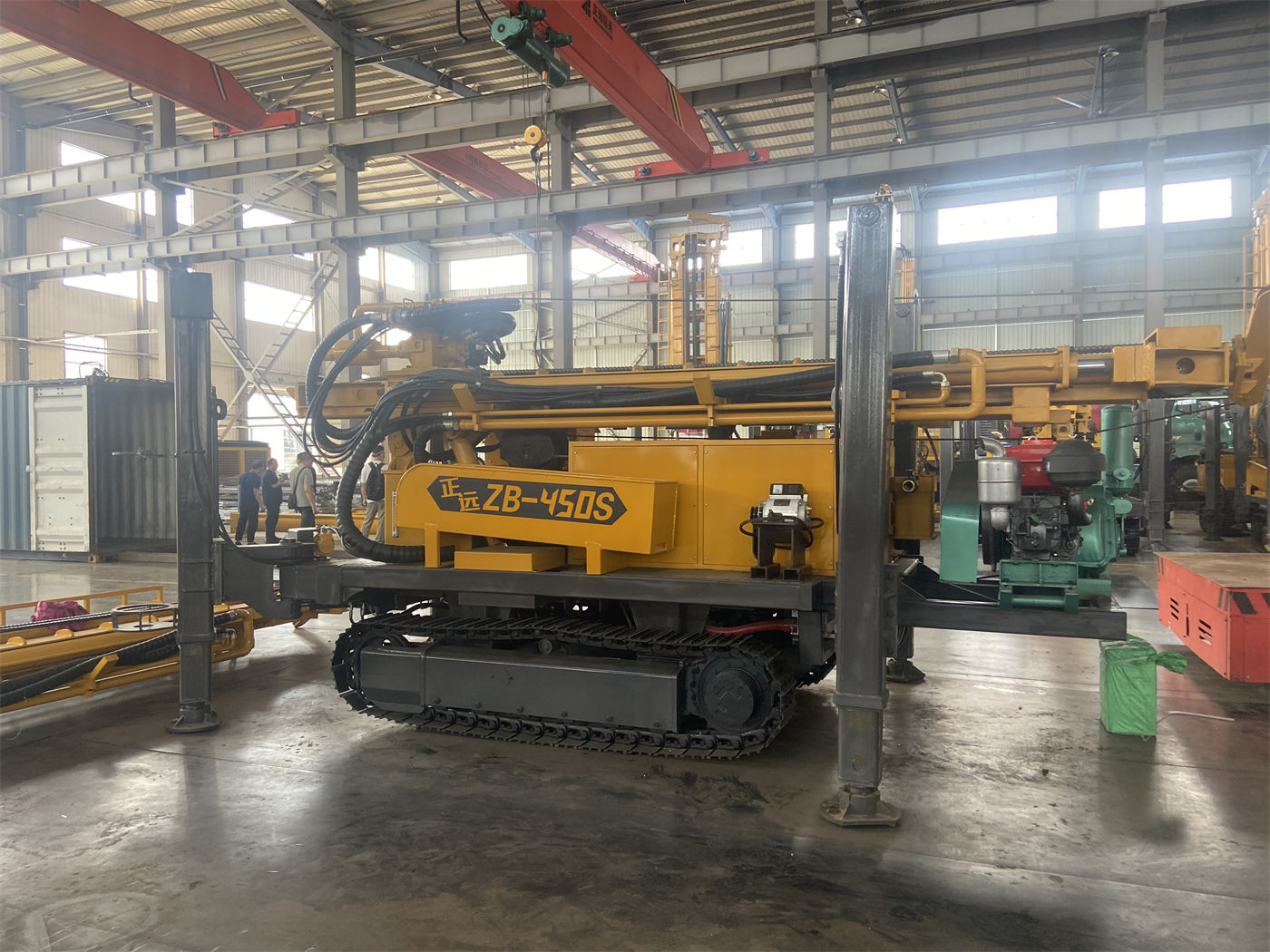
3m/6m Drill Pipe Compatibility Affects Rod Connection Efficiency
The WR350SE supports 3 m and 6 m drill pipes, with recommended drill pipe diameters of 89 / 102 mm. This compatibility directly relates to two types of projects:
- In areas with ordinary transportation conditions and limited construction sites, 3 m drill pipes are more flexible in relocation and wellsite layout.
- For construction teams that need to complete longer footage within a day and hope to reduce the number of drill pipe connections and disconnections, 6 m drill pipes can compress auxiliary time and improve effective equipment utilization.
The benefit of "reducing the number of rod connections" depends on hole depth and construction pace: for shallow holes and projects with small single-hole footage, the difference is limited; for continuous construction and projects with deeper single holes, the difference in cumulative auxiliary time is more noteworthy. During procurement, the difference in the number of rod connections under the two drill pipe lengths can be estimated according to one's typical daily footage and single-hole well depth, to judge whether to specially adjust the configuration for 6 m drill pipes.
When 91kW Power Is Sufficient
The WR350SE is equipped with a 91 kW power system, providing power for hydraulic rotation, feed, crawler travel, and auxiliary actions. Compared with lower-power models, it has more ample power margin for large hole diameters, hard rock, and continuous construction, while still maintaining the cost-control approach emphasized by the E series. To judge whether this power is sufficient, three points can be referenced:
- Whether the project will use hole diameters close to the upper limit and hard rock conditions for a long time;
- Whether multiple auxiliary actions need to be driven simultaneously (such as travel, outriggers, winch, and mud system);
- Whether operating environment conditions such as altitude and temperature will affect power output performance—such adaptability configurations need to be verified item by item with the manufacturer and cannot be directly extrapolated under plain and normal-temperature conditions.
For Air Drilling, Air Compressor and Air Pressure and Volume Must Also Be Calculated
When using DTH hammer drilling, the recommended working air pressure given in the materials is 1.2–3.5 MPa, with air consumption of 16–55 m³/min, and medium- and high-pressure DTH hammers can be equipped. This is the link most easily overlooked when judging whether the WR350SE configuration chain is complete: even if the main machine parameters are suitable, choosing an air compressor that is too small or too large will cause problems.
| Item | Material Parameters | Procurement Judgment Point |
|---|---|---|
| Working air pressure | 1.2–3.5 MPa | Determined in combination with DTH hammer specifications and rock hardness |
| Air consumption | 16–55 m³/min | Check against the air compressor's actual displacement, leaving margin for altitude and pipeline losses |
| Applicable formations | Loose formations and rock layers | Process switching is required for upper soil layers, sand and gravel layers, and after entering rock |
Insufficient air volume will cause poor cuttings removal, while excessive configuration increases equipment and fuel costs. The final matching of the air compressor should be confirmed item by item in combination with hole diameter, drill pipe, DTH hammer specifications, rock hardness, and construction altitude.
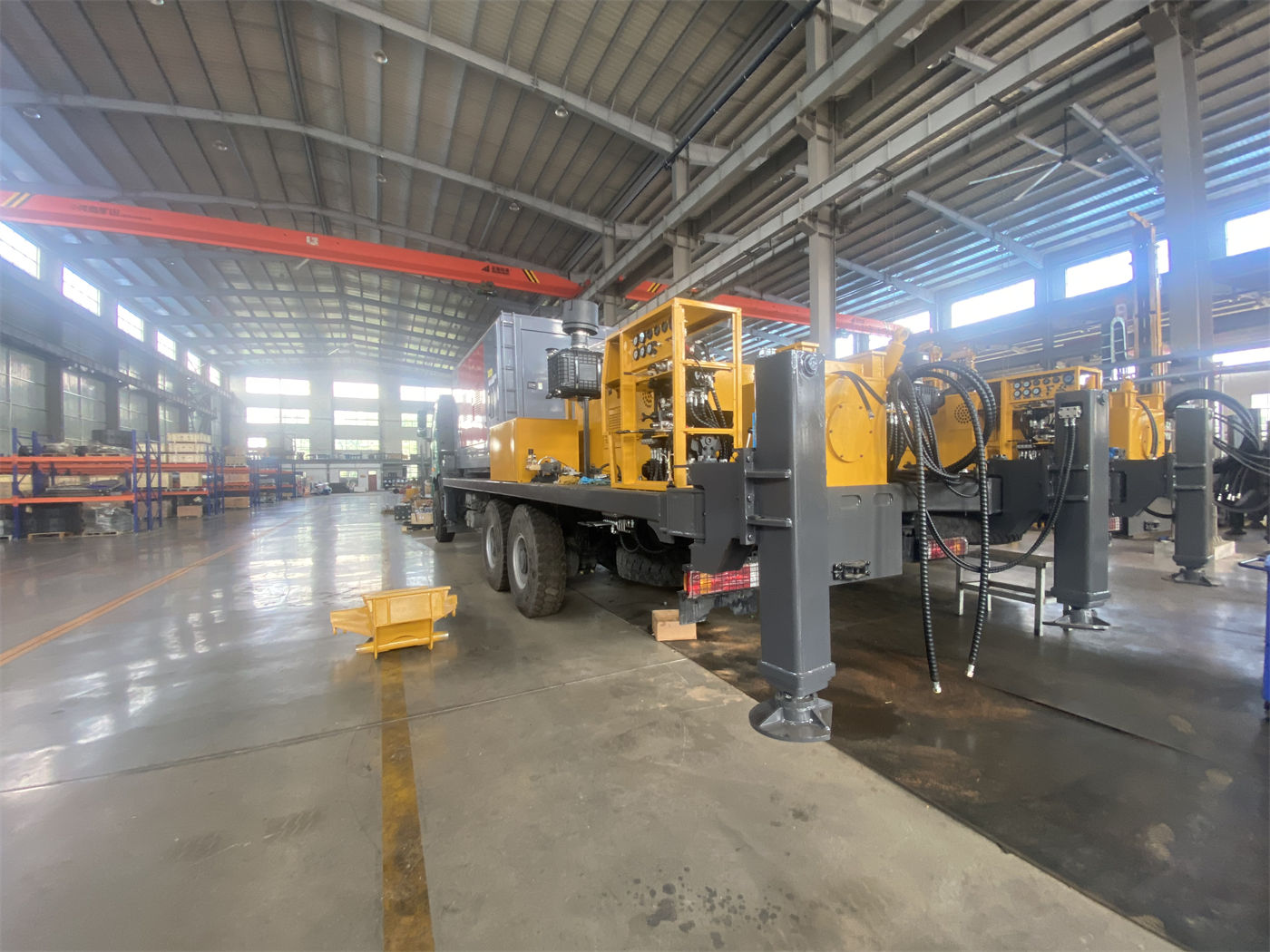
Optional Accessories Should Be Selected According to Project Type
The WR350SE can be optionally equipped with a mud pump, centrifugal pump, generator, and foam pump; the standard auxiliary winch has a lifting force of 1.1 T, with 2.5 T optional. The selection approach is relatively clear:
- For projects with a high proportion of loose layers and requiring mud rotary or hole stabilization, the focus is on the mud pump and centrifugal pump;
- For projects mainly involving hard rock and DTH hammers, the focus is on the air compressor and DTH hammer, and the mud system can be simplified;
- For projects with more air leakage, fractured formations, and possible use of foam assistance, then consider a foam pump;
- Consider a generator when there is no stable power supply on site;
- When there are many casing, DTH hammer, or on-site lifting needs, then evaluate the 2.5 T winch.
Selecting options according to working conditions is often closer to the cost-control approach emphasized by the E series than buying all accessories at once.
The Impact of Relocation and Site Conditions on Configuration
The overall weight is about 7.5 T, the dimensions are about 5.78 × 1.7 × 2.25 m, the crawler travel speed is about 2.5 km/h, the maximum climbing angle reference is 21°, and the hydraulic outrigger stroke is 1.5 m. These values indicate that the equipment is suitable for relocation between rural roads, construction sites, gravel ground, and general uneven sites, but travel risks should still be reduced on wet and slippery roads and in soft soil areas; in soft ground construction, pads need to be used to avoid settlement affecting hole deviation and mast stability. If the project site is generally narrow with many slopes, the conditions for entry and leveling are themselves part of the selection judgment.
Information Recommended to Confirm with the Manufacturer Before Purchase
The materials on this site do not provide measured footage data, transaction prices, or case information for the WR350SE under specific formations. The following items need to be confirmed one by one and should not be extrapolated on one's own:
- The recommended air compressor displacement and pressure level for your main hole diameter and rock formation;
- The drilling tool combination, drill string weight, and lifting force margin when approaching 350 m hole depth;
- Whether 6 m drill pipes require additional preparation for transportation and mast layout;
- The specific specifications and matching relationships of optional mud pumps, generators, and foam pumps;
- Adaptability configurations of the 91 kW power system under plateau, high-temperature, or cold environments;
- Standard accessories, delivery scope, and training service content.
The reference drilling efficiency given in the materials is 10–35 m/h, which is a reference value. Actual results are related to lithology, drilling tools, air compressor, and operating experience, and cannot be used as the sole basis for acceptance or revenue calculation. The final drilling efficiency, drilling depth, and well completion effect should be based on on-site working conditions.