












Whether the WR450SE is worth buying depends on whether it can drill holes to the required depth in specific farmland irrigation or rural water supply projects, reduce auxiliary time for single-well construction, and whether equipment relocation and operating costs can be amortized by project volume. This article only uses verified WR450SE parameters and applicable descriptions to outline the working conditions that must be checked before purchase and the approach to return calculation. Specific revenue figures cannot be inferred from the available information.
First, look at what depth and borehole diameter this equipment can cover
The WR450SE has a maximum drilling depth of 450 m and a borehole diameter of 105–400 mm, positioned as a 450m-class crawler water well drilling rig. The information also states that it uses an S-series 6m drill pipe configuration and an E-series lower equipment investment positioning, suitable for areas with deep groundwater levels, unstable aquifer distribution, or projects that wish to reserve a larger drilling depth margin.
Before purchase, the most common well depths, completed well diameters, and final hole diameters in the project should be listed clearly. If the final depth of most wells is close to 450 m and the diameter is near the 400 mm upper limit, the equipment is being used near its design boundary. This should be confirmed separately with the manufacturer based on formation and drilling tool conditions, rather than assumed to be feasible by default.
What problems do the 6m drill pipe and 20T lifting force solve respectively?
The WR450SE supports 6m drill pipes, with recommended drill pipe diameters of 89 / 102 mm. As hole depth increases, the number of drill pipe connections and disconnections significantly affects effective construction time. Longer drill pipes can reduce connection frequency, making them suitable for continuous drilling and multi-well medium-to-deep well projects, while reducing manual handling and auxiliary operation time.
The 20T lifting force is used for tripping conventional drill pipes at the 450m level, recovering down-the-hole hammers, and some casing operations. As hole depth increases, the self-weight of the drill pipe and borehole wall friction both rise. The information notes that when abnormal tripping resistance is encountered, the borehole wall, cuttings removal, and drilling tool condition should first be assessed, and then measures such as hole cleaning, slow lifting, or casing should be taken. Whether these two parameters are sufficient should be checked together with the actual final hole depth, drill string assembly, and whether casing is required.
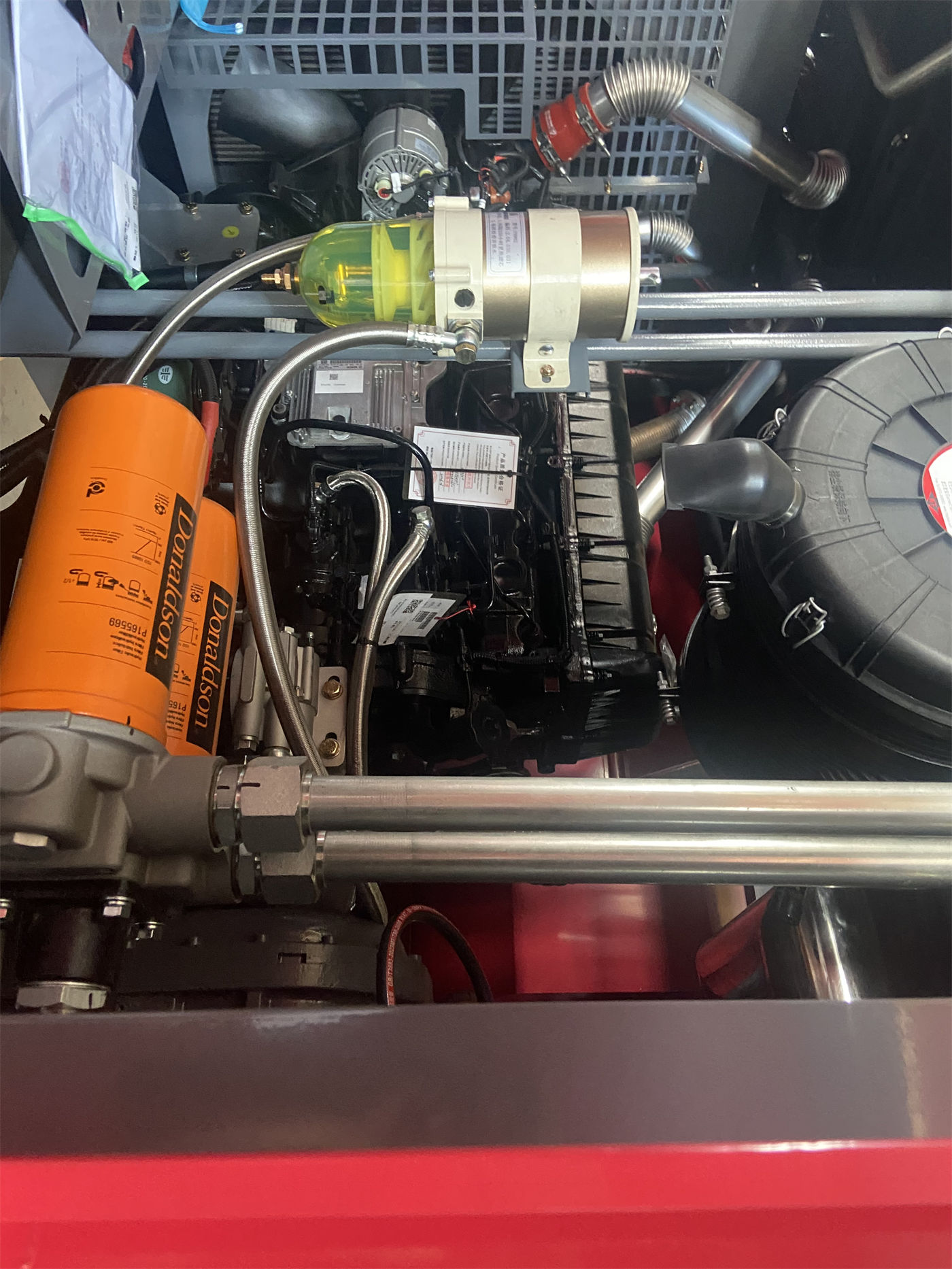
Handling margin for rotation, feed, and auxiliary actions
| Item | Parameter |
|---|---|
| Maximum rotation torque | 9000 / 4500 N·m |
| Maximum rotation speed | 90 / 180 r/min |
| Lifting force | 20 T |
| Fast lifting speed | 30 m/min |
| Fast feed speed | 55 m/min |
The low-speed high-torque state is more suitable for large-diameter, hard rock, or high-resistance hole sections, while the higher-speed state is suitable for drilling stages with relatively lower resistance. Actual use should be adjusted according to changes in drilling tools and formations. Fast lifting and fast feed are mainly used for auxiliary actions such as power head return and drill pipe handling, which can reduce non-drilling time, but they cannot be equated with actual rock penetration rate.
Supporting conditions for pneumatic DTH hammer and mud rotary drilling
Pneumatic DTH drilling recommends a working air pressure of 1.2–3.5 MPa and air consumption of 16–55 m³/min, and can match medium and high-pressure DTH hammers. The information clearly notes that when borehole diameter increases, rock formations harden, or altitude rises, higher air compressor displacement is required. When selecting an air compressor, both pressure and flow should be considered.
Mud rotary drilling can be used for soil, clay, sand, and gravel layers, and the mud pump can be selected according to project formation and construction method. When the upper overburden is thick, a stable borehole wall should first be established before entering rock layers and switching to the DTH hammer. Fractured zones and formations with developed fissures may cause block falling, air leakage, and drill sticking. Excessive fast feed should be reduced, hole cleaning should be strengthened, and foam or casing should be used according to borehole wall and air leakage conditions.
Regarding accessories, the information lists optional mud pumps, centrifugal pumps, generators, and foam pumps, and notes that they should be combined according to the main working conditions to avoid unnecessary costs from excessive configuration. Therefore, when comparing quotations, the accessory list should be viewed together with the main machine, rather than only comparing the main machine price.
Impact of 92 kW power and 8.5 T overall weight on relocation
The WR450SE uses a 92 kW power system to provide power for rotation, feed, crawler travel, and auxiliary hydraulic functions. The information positions it as a practical and cost-balanced configuration for 450m-class conventional medium-to-deep hole projects, and notes that engine cooling and air filter maintenance should be strengthened during continuous hard rock construction.
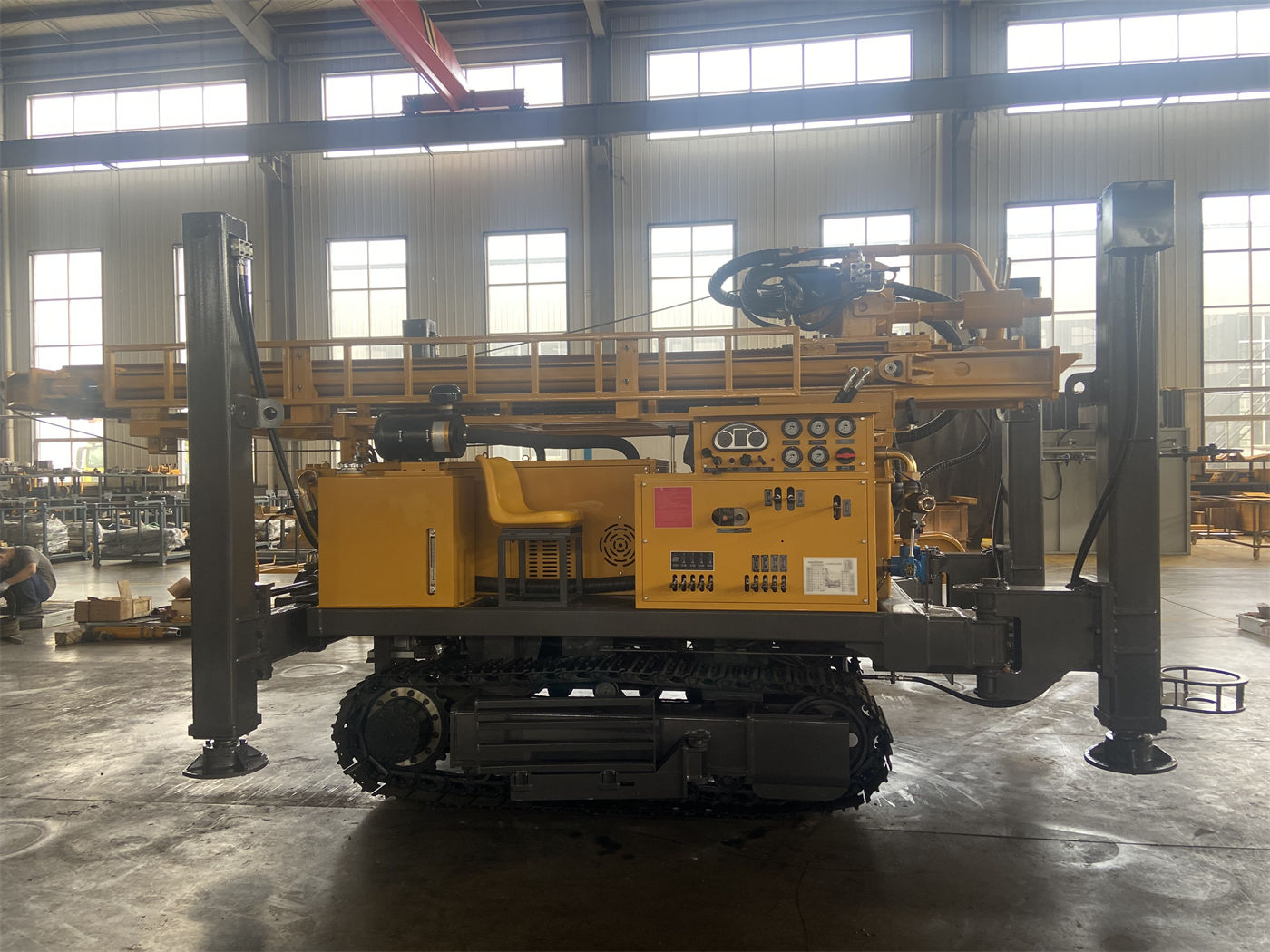
The overall weight is approximately 8.5 T, dimensions are approximately 5.85 × 1.8 × 2.4 m, travel speed is approximately 2.5 km/h, and the maximum climbing angle reference is 21°. The crawler structure is suitable for village roads, gravel ground, and generally uneven ground. The information also notes that because the overall weight is approximately 8.5 T, ground bearing capacity and slope conditions should be confirmed before relocation, and movement should be cautious in soft soil and wet slippery areas.
The hydraulic outrigger stroke is 1.6 m, which can help level and stably support the equipment on mildly uneven sites; on soft ground, pads should be used to prevent outrigger settlement. The auxiliary winch has a standard lifting force of 1.1 T, with an optional 2.5 T configuration. Upgrading can be considered when accessories are heavy.
Four prerequisites for return calculation in farmland irrigation and rural water supply projects
- Single-well design depth and diameter: Actual well depth and diameter should be designed according to the aquifer, expected water yield, and pump type. The information notes that maximum drilling depth should not be pursued without basis.
- Aquifer location and well completion structure: The depth of the main water-producing layer should be recorded, and during well completion, filter pipes and sealing sections should be reasonably set according to the aquifer location.
- Supporting equipment conditions: Hard rock projects rely more on air compressors and DTH hammers, projects with many loose layers require more mud pumps, and sites lacking stable power may require generators.
- Number of wells constructible per year: The convenience of equipment relocation, auxiliary winch configuration, and accessory combination will affect the number of holes that can be completed in the same construction season and the relocation time.
Drilling depth, lifting force, and torque are equipment capability parameters; drilling efficiency is affected by formation, drilling tools, air compressor, and operation. The reference drilling efficiency given in the information is 10–35 m/h. Single-well cost, annual equipment output value, and payback period need to be calculated separately by the purchaser using their own project's formation conditions, well depth and diameter, number of holes, labor, and energy consumption data. The information in this article is insufficient to provide specific return figures.
Items to confirm with the manufacturer before inquiry
It is recommended to include the following questions in the inquiry list: when the target final hole depth is close to 450 m, how should the upper diameter limit and drill string assembly be matched; whether the project's main formations require a mud pump, air compressor, foam pump, or generator, and how they should be selected; whether the auxiliary winch needs to be upgraded to 2.5 T; how the recommended diameters of 89 / 102 mm for 6m drill pipes should be selected according to borehole diameter; and how standard accessories, wear parts, and training scope are defined. The information does not provide price, delivery cycle, warranty terms, or specific customer cases, which need to be verified separately.
The information also states that due to differences in actual geological conditions, downhole tools, drilling angle, and operating methods, the final drilling efficiency, drilling depth, and well completion effect should be based on on-site working conditions. Therefore, whether the WR450SE is suitable for a specific farmland irrigation or rural water supply project should first be checked using the project's geological and well-type data before discussing the purchase decision.