












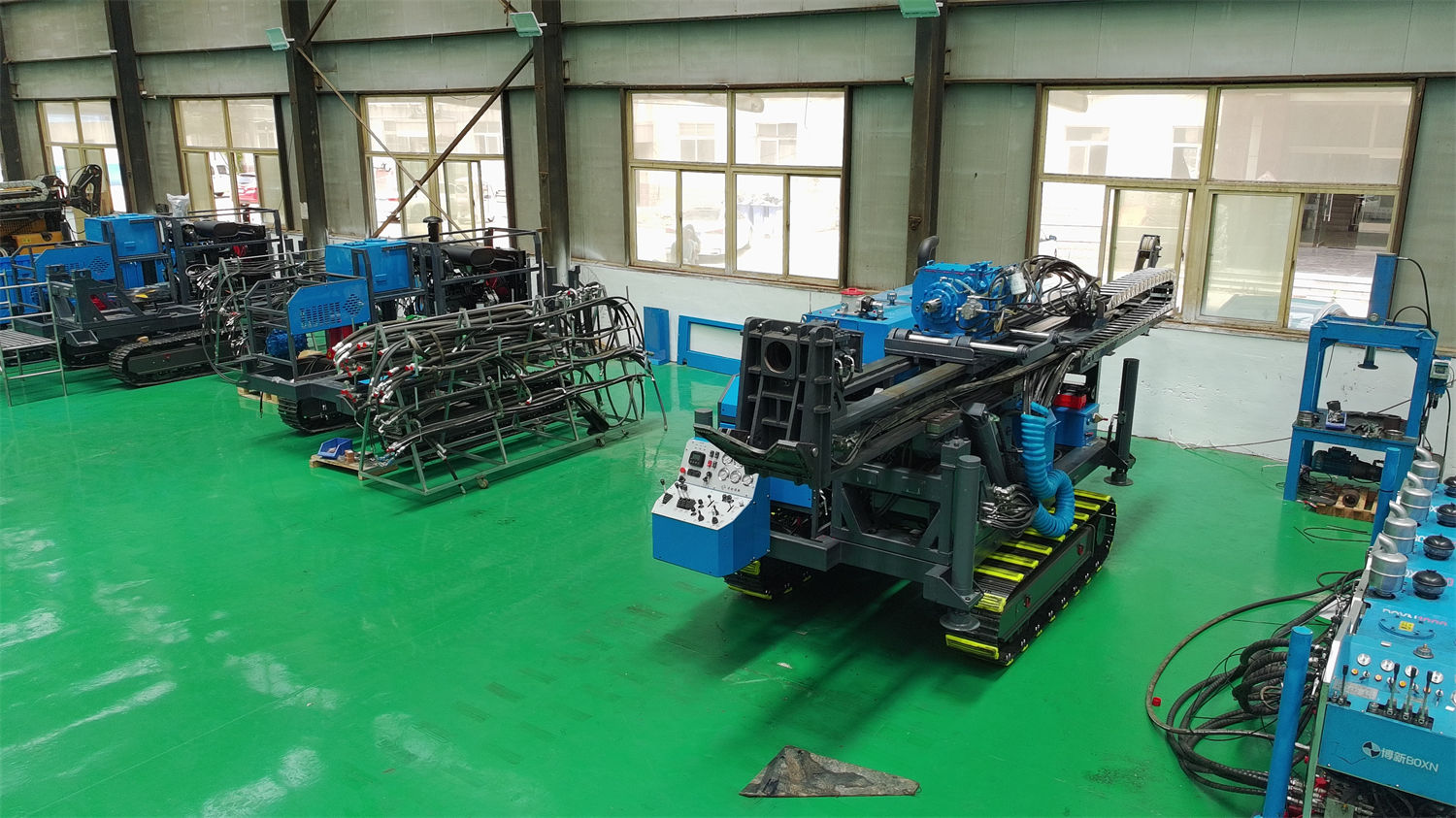
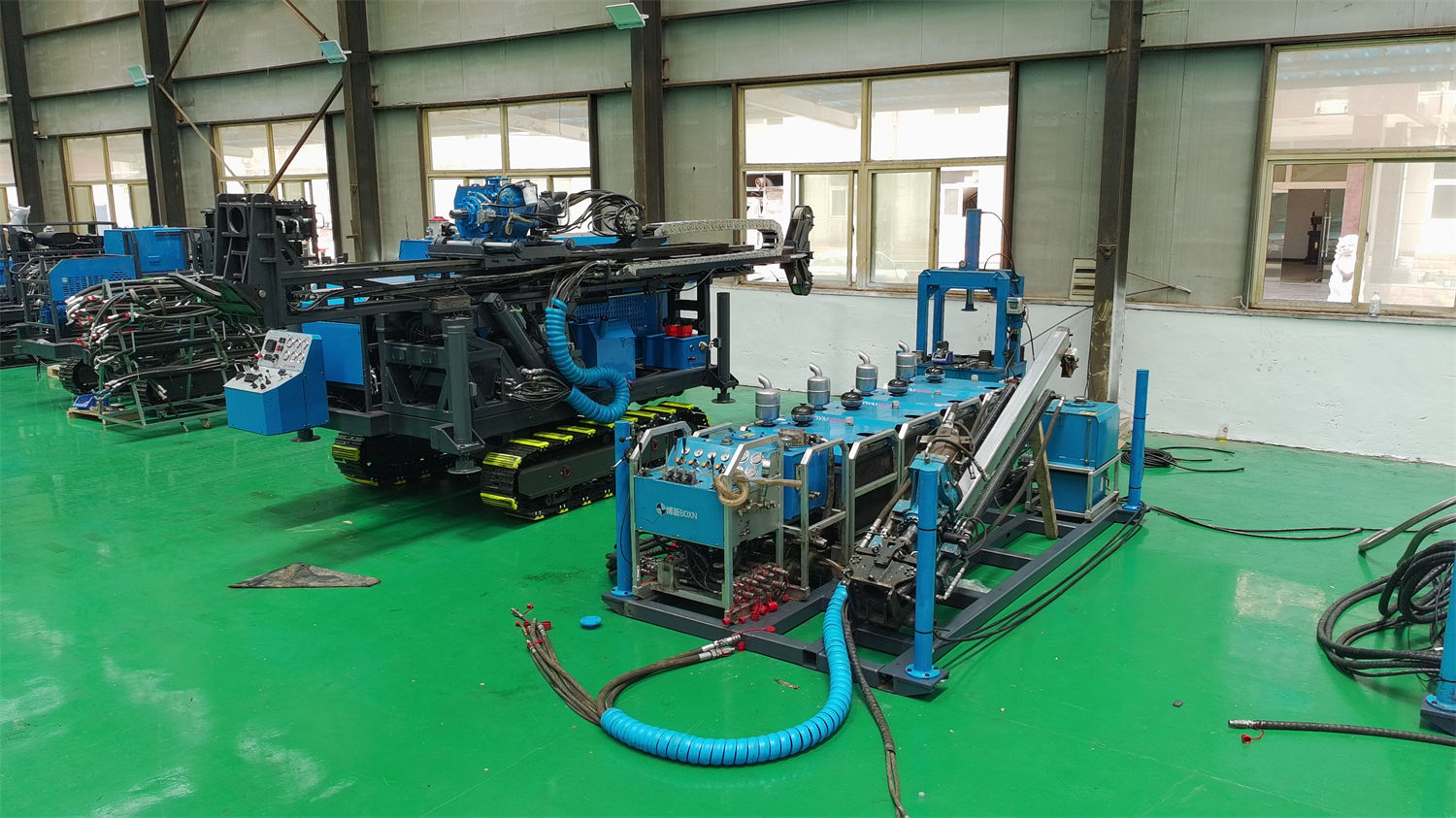
The CR1200P is a 1200m-class portable modular fully hydraulic core drill. According to the information on this site, it has a BQ reference depth of 1500 m, NQ reference depth of 1200 m, HQ reference depth of 700 m, maximum torque of 1360 N·m, maximum rotation speed of 1500 rpm, feed force of 67 kN, pull-up force of 130 kN, and wireline hoist rope capacity of 1400 m (6 mm wireline). These figures describe equipment capability and do not mean that every hole can reach them. Before the equipment is mobilized, the purchaser needs to verify transport, power, water supply, hydraulic, and hoist maintenance conditions item by item; otherwise, deep-hole capability will be constrained by site conditions.
Why This Equipment Should Be Discussed in Terms of Mobilization Conditions First, Not Footage
The CR1200P is intended for high mountains, forests, and remote mining areas. It uses a modular split structure with a total weight of 1880 kg: power unit 180–260 kg, control unit 160 kg, hydraulic oil unit (including oil) 160 kg, and mud unit 210 kg. The purpose of the split design is to allow the equipment to be mobilized in batches according to site transport capacity. But being able to separate the modules does not mean any mountain road can accommodate them. What needs to be verified before mobilization is not just the single figure of “maximum module weight,” but whether the slope, curves, road bearing capacity, lifting points, and unloading area along the transport route allow each module to pass safely and be positioned.
Items to Verify Before Mobilization
1. Transport and Site Conditions
- Whether the dimensions and weight of each module can be loaded in a single trip by existing transport vehicles, or whether further splitting or multiple transfers are required;
- Whether the slope, curve radius, and road bearing conditions along the transport route allow loaded vehicles to pass;
- Whether the hole platform has enough space to unload and assemble the modules, and whether lifting point locations are clear;
- The drilling angle range is 45°–90°; whether the platform layout can meet the actual orientation requirements for inclined or vertical holes.
2. Power Conditions and Fuel Supply
Diesel power requires a diesel engine power of ≥147 kW, with Kubota, Cummins, Yunnei, and Yuchai listed as options; the electric option is a 30 kW × 4 motor combination. Remote field projects usually rely more on independent power and fuel support, while only mines with stable power on fixed platforms are more likely to choose the electric configuration. Before mobilization, confirm: whether the site has a stable power supply and whether its capacity meets the electric option; if the diesel option is chosen, whether fuel transport distance, storage conditions, and replenishment cycles can sustain continuous operation.
3. Water Supply and Mud Materials
The mud pump has a flow rate of 150 L/min and pressure of 7 MPa; the agitator has a speed of 1500 rpm and mixing capacity of 1.2 m³/min. In deep holes, mud provides cooling, lubrication, and wall protection. Before mobilization, confirm water source distance, water supply volume, and water storage conditions, as well as the transport volume and replenishment cycle of mud materials. When deep leakage, water-bearing fractures, or broken zones are encountered, the information recommends adjusting mud properties according to changes in return water and pump pressure, and if necessary combining casing, lost circulation treatment, or staged wall protection.
4. Hydraulic System and Oil Maintenance
The main pump has a flow rate of 250 L/min and pressure of 25 MPa; the auxiliary pump has a flow rate of 10 L/min and pressure of 17 MPa; the main oil tank capacity is 250 L; and the control method is manual plus pilot-operated. A relatively large hydraulic flow rate supports continuous deep-hole operation, and at the same time requires the site to pay attention to hydraulic oil filtration, temperature control, and high-pressure line maintenance. Before mobilization, confirm the reserve plan for consumables such as hydraulic oil, filter elements, and seals, and whether the site has the necessary inspection and replacement conditions.
5. Wireline Hoist and Wireline Management
The rope capacity is 1400 m of 6 mm wireline, the hoisting speed is 116 m/min, the empty-drum pull is 14.5 kN, and the full-drum pull is 5.6 kN. In deep holes, the inner tube must be lifted over long distances, and the wireline is used frequently. The purchaser should confirm whether the manufacturer can provide record requirements for wireline inspection and replacement, whether the site can perform periodic checks for broken wires, wear, indentations, and rope-end connections, and whether inspection results are kept on file.
6. In-Hole Management During the Deep-Hole Stage
The information clearly notes that for 1200m-class boreholes, controlling hole deviation, maintaining borehole wall stability, and reducing drill rod friction are more important than simply increasing pull-up force. After entering the deep-hole stage, torque, pump pressure, return water, and pull-out resistance should be recorded continuously, and trend anomalies should be addressed promptly. If pull-out resistance continues to increase, circulation, pull-out inspection, or borehole wall treatment should be carried out in a timely manner. Before mobilization, the purchaser should confirm with the construction party: who is responsible for recording these parameters, how often they are recorded, and at what level of abnormality treatment is triggered.
Quick Overview of Main Technical Parameters
| Item | Parameter |
|---|---|
| Drilling capability | BQ reference depth 1500 m; NQ reference depth 1200 m; HQ reference depth 700 m |
| Drilling angle | 45°–90° |
| Applicable drill rod length | 1 / 1.5 m |
| Power | Diesel engine power ≥147 kW (Kubota/Cummins/Yunnei/Yuchai optional); or 30 kW × 4 motor combination |
| Main pump | Flow rate 250 L/min; pressure 25 MPa |
| Auxiliary pump | Flow rate 10 L/min; pressure 17 MPa |
| Main oil tank | 250 L |
| Feed system | Feed stroke 1.8 m; feed force 67 kN; pull-up force 130 kN |
| Power head | Maximum rotation speed 1500 rpm; maximum torque 1360 N·m; maximum applicable drill rod diameter 114 mm |
| Wireline hoist | Rope capacity 1400 m (6 mm wireline); hoisting speed 116 m/min |
| Clamp | Maximum clamping force 130 kN; through-hole capacity 54–127 mm |
| Mud unit | Flow rate 150 L/min; pressure 7 MPa |
| Module weight | Power unit 180–260 kg; control unit 160 kg; hydraulic oil unit (including oil) 160 kg; mud unit 210 kg; total weight 1880 kg |
Information Gaps to Confirm with the Manufacturer Before Purchase
The information on this site does not list the external dimensions of each CR1200P module, the maximum single-piece dimensions in transport configuration, wireline replacement cycles, hydraulic oil filtration accuracy requirements, spare parts lists, or specific training service content. These are matters the purchaser needs to confirm in writing with the manufacturer and should not be inferred from the parameter table alone. The information also does not provide any customer cases, transaction records, or actual drilling efficiency data. Final drilling efficiency, drilling depth, and core recovery results are subject to site conditions.
Maintenance and Spare Parts Directions for Remote Projects
The information suggests that in remote mining areas, the time cost of waiting for parts after a shutdown is relatively high. The site should prepare commonly used seals, filters, quick-change couplings, wireline wear parts, drilling tools, and mud materials, and establish regular maintenance plans for power, hydraulics, hoist, and clamp. Before formal drilling begins, confirm platform stability, borehole orientation, drill rod reserves, water source, and power supply; after module assembly, check hydraulic interfaces and mechanical connections item by item. These matters fall within construction organization, and specific methods should be determined based on site conditions and manufacturer guidance.