












The WR500SE is positioned as a 500m-class telescopic mast crawler water well drilling rig, with a maximum drilling depth of 500m and a hole diameter of 140–350mm. The 6.6m long stroke can directly work with 6m drill pipes, which has practical significance for judging crew size: with fewer pipe connections, continuous single-hole operation depends more on stable coordination among the rig, air compressor, drill pipes, and personnel, rather than relying on more manpower to make up for auxiliary time.
Therefore, it is more suitable for crews that already have or plan to equip DTH hammers and matching air compressors and can organize continuous 400–500m-class water well drilling, rather than entry-level configurations that only drill shallow wells, small-diameter holes, or scattered single holes. The following explains the basis for this judgment according to the parameters verified in the materials.
First Look at 500m-Class Capability: The Combination of Drilling Depth, Hole Diameter, and Lifting Force
The core parameters given for the WR500SE include: maximum drilling depth 500m, hole diameter 140–350mm, lifting force 26t, rotary torque 7500–10000N·m, rotary speed 45–130rpm, 118kW Yuchai power, overall weight about 9.5t, dimensions about 6150×2200×2600mm, travel speed about 2.5km/h, reference maximum gradeability 30 degrees, and outrigger stroke 1.6m.
| Parameter | Data |
|---|---|
| Maximum drilling depth | 500m |
| Hole diameter | 140–350mm |
| Lifting force | 26t |
| Rotary torque | 7500–10000N·m |
| Rotary speed | 45–130rpm |
| Power | 118kW Yuchai |
| Feed stroke | 6.6m |
| Drill pipe diameter | 102/108/114mm |
| Drill pipe length | 1.5/2/3/6m |
| Overall weight | About 9.5t |
It should be noted that 500m is the nominal capability of the equipment, not that every project must drill to 500m. Actual well depth should be determined by the aquifer location and local hydrogeological data, and well diameter and depth should also be designed in conjunction with expected water yield, well casing, and pump specifications.
6.6m Stroke with 6m Drill Pipe: What Fewer Pipe Connections Means
Impact of Long Stroke on Continuous Drilling Rhythm
The materials clearly state that the 6.6m long stroke can directly work with 6m drill pipes. For 400–500m-class drilling, the more pipe connections, the more obvious the accumulated auxiliary time; the long-stroke structure reduces repeated power head return and drill pipe connection frequency, which is more valuable in projects with continuous drilling, fewer multi-person coordination requirements, or tight schedules.
Drill Pipe Specifications Can Be Combined According to Site and Efficiency
- Three drill pipe diameters—102, 108, and 114mm—with larger diameters more suited to 500m-class deep holes and higher-torque conditions.
- Drill pipe lengths are available in 1.5m, 2m, 3m, and 6m. 6m drill pipes are suitable for continuous drilling, while shorter drill pipes are better for space-restricted sites or limited transport conditions.
- The crawler chassis travel speed is about 2.5km/h, and the telescopic mast and crawler structure facilitate relocation between different job sites; however, because the equipment uses a 6.6m long-stroke configuration, vehicle length and road conditions should be confirmed before transport.
From the perspective of crew size, the combination of 6m drill pipes and 6.6m stroke is more suitable for crews already organized for continuous drilling; if projects are mainly shallow holes with small single-hole workloads, the efficiency advantage of the long stroke is not easily realized.
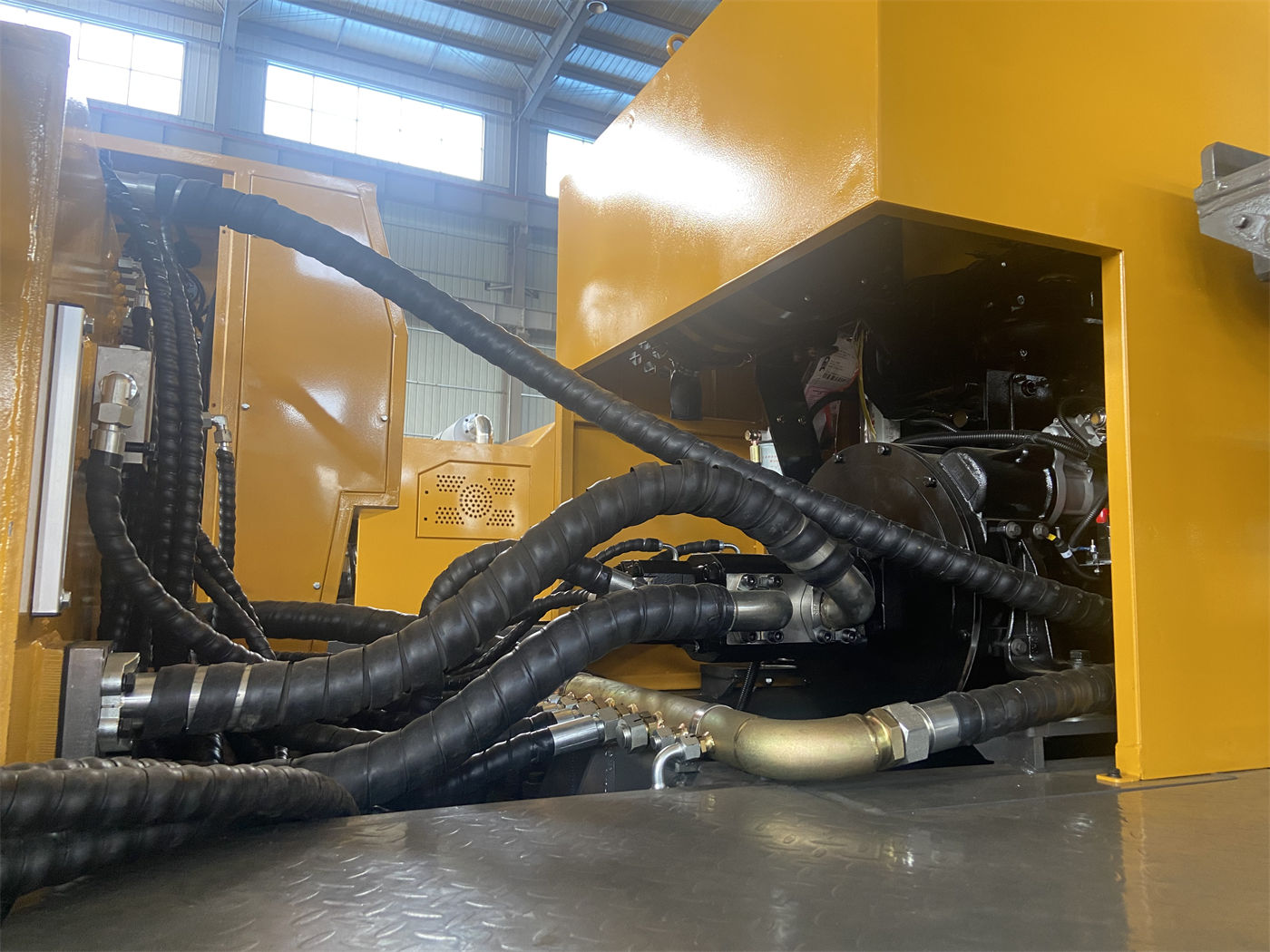
Dependence of DTH Hammer Drilling on Air Compressor and Supporting Equipment
The DTH drilling support requirements given for the WR500SE are: recommended working pressure 1.7–3.5MPa, air consumption 17–42m³/min. When hole diameter increases, rock formations harden, hole depth increases, or altitude rises, more sufficient air flow is needed; rated pressure alone should not be the only consideration.
This air consumption range indicates that crews choosing the WR500SE need to simultaneously confirm the matching relationship among air compressor specifications, drill pipe diameter, and DTH hammer model. The materials also mention that soil layers, sand layers, and loose overburden usually require more attention to hole stabilization, and casing, mud, or other wall protection methods can be used according to the project; for projects with thick loose layers, the mud system should be considered in advance during the equipment matching stage. These are supporting matters judged according to project conditions.
Looking at Crew Size and Project Types by Application Scenario
Rural Deep Wells and Small Community Water Supply
The applicable directions listed in the materials include rural deep wells, farmland irrigation wells, industrial water wells, mining area water supply, and general medium-to-deep groundwater projects. They can also be used for groundwater development for villages, schools, clinics, and small communities. Such projects often have large single-hole depths but not necessarily dense well counts, requiring both continuous drilling capability and relocation convenience.
Farmland Irrigation and Large-Scale Agricultural Projects
Large farmland, orchards, and greenhouse projects often require continuous drilling of multiple water wells. The 6.6m long stroke and 6m drill pipes can reduce the number of pipe connections and improve continuous single-hole drilling efficiency. Actual well diameter and depth should be designed according to expected water yield, irrigation area, well casing, and pump specifications.
Mining Area Water Supply and Industrial Park Water Supply
Domestic water for mining areas, equipment cleaning, dust suppression, and auxiliary production water sources, as well as independent water sources for industrial parks, factories, and construction camps, are all covered directions in the materials. The crawler chassis is suitable for gravel ground in mining areas and general field roads, and the 118kW power and 26t lifting force are also more suitable for water well drilling in mining areas with a higher proportion of hard rock and greater hole depths.
Formation Conditions Determine the Supporting Approach, Not Whether Drilling Is Possible
The materials state that the WR500SE is suitable for relatively intact rock formations such as granite, basalt, limestone, and sandstone; weathered rock and alternating soft-hard formations are prone to wall caving and hole shrinkage, so parameters should be adjusted during construction according to changes in rotary torque, feed resistance, and cuttings return, and casing should be used for upper unstable hole sections when necessary. Fracture zones may cause caving, air leakage, sticking, and abnormal cuttings return. The equipment is equipped with an auxiliary foam pump function, which can improve cuttings removal in some dry, fractured, and air-leaking formations; if air leakage is severe, it should be handled comprehensively with foam, casing, and air compressor displacement rather than simply increasing pressure.
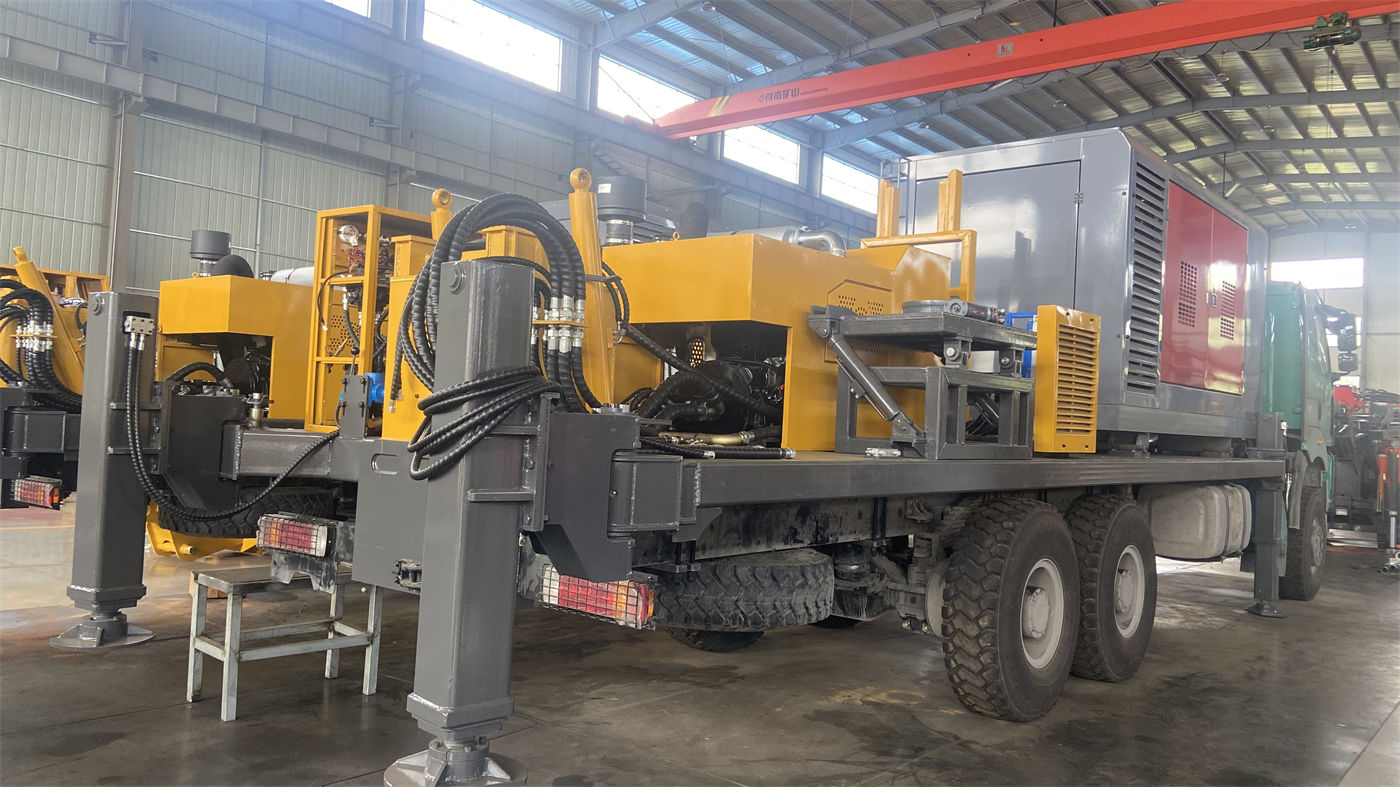
After entering the main aquifer, groundwater will change the cuttings return and DTH hammer working state in the hole. The depth of the main water-producing layer should be recorded, and air supply, hole cleaning, and casing methods should be adjusted according to water inflow. During well completion, filter pipes and sealing sections should be set according to the aquifer location. These contents are used to judge whether the crew has the corresponding process experience, not as a unilateral promise of the equipment itself.
On-Site Maintenance Configuration and Operating Boundaries
Configurations related to on-site maintenance in the materials include: auxiliary foam pump function, dual quick couplings, ladder, and optional welding support. Dual quick couplings facilitate connection and maintenance of the auxiliary hydraulic system; during use, the interfaces should be kept clean, and seals and locking status should be checked. The long-stroke mast requires more frequent inspection of slideways, cylinders, pins, and top structures, and high-altitude work should be carried out with the equipment stopped and the mast reliably secured.
Optional welding support can be used for some on-site repairs and auxiliary work, but welding operations must be performed by qualified personnel and kept away from fuel, high-pressure air lines, hydraulic hoses, and combustibles. The outrigger stroke is 1.6m, allowing support and leveling on mildly uneven ground; on soft ground, additional pads should be used to avoid outrigger sinking after prolonged construction, which could cause mast tilt and increased hole deviation. The travel speed is about 2.5km/h and the reference maximum gradeability is 30 degrees; actual climbing and relocation should consider the overall center of gravity, ground slipperiness, and mast transport state.
Which Crews Are More Suitable, and Which Need Further Confirmation
Based on the available parameters, the WR500SE is more suitable for crews with the following characteristics:
- Main projects are 400–500m-class medium-to-deep water wells, requiring a crawler chassis for relocation on rural roads, mining areas, and generally uneven ground.
- Already equipped or planning to equip an air compressor and DTH hammer system matching 1.7–3.5MPa and 17–42m³/min air consumption.
- Projects are mainly continuous drilling, hoping to use the 6.6m stroke and 6m drill pipes to reduce pipe connections.
- Need the auxiliary foam pump function to handle some dry, fractured, and air-leaking formations.
Conversely, if projects are mainly shallow wells, small-diameter holes, or scattered single holes, or if supporting conditions such as air compressor, drill pipes, and wall protection methods have not yet been determined, the working condition data and supporting confirmation should be completed first before judging whether the WR500SE matches.
The materials do not provide specific customer cases, transaction prices, delivery cycles, certification information, or actual construction data for different regions, so these cannot be given in this article. Before procurement, it is recommended to verify with the manufacturer the overall transport dimensions and vehicle requirements, the specific matching method of the air compressor and drill pipes, the usage conditions of the foam pump system, and the scope of standard accessories and training services.