












The WR750S is a 750 m-class crawler-mounted fully hydraulic water well drilling rig with a telescopic mast, a nominal maximum drilling depth of 750 m, a hole diameter of 105–450 mm, a 40 T lifting force, and a 176 kW Weichai engine. It supports direct operation with 6 m drill pipe and 6 m casing. Deep-hole projects require far more pipe connections than shallow holes, and the drill string's self-weight, borehole wall friction, thread condition, and rotary torque all compound simultaneously. Therefore, when procuring the rig, in addition to drilling depth and lifting force, drill string management-related items must be clarified one by one. The following content is based only on the existing WR750S information on this site; items not covered are marked as requiring further confirmation.
First Determine Whether the 750 m Drilling Depth Is Actually Needed for the Project
750 m is the model's maximum reference capability, not a requirement that every project must drill to this depth. The applicable working conditions given in the information include deep water wells, agricultural irrigation, industrial water supply, and mining area water supply, as well as areas with deep groundwater burial depth, unstable shallow aquifers, and the need for greater drilling depth margin. Before procurement, the target horizon should be determined based on regional hydrogeological data, rather than directly setting the well depth according to the maximum drilling depth.
Compared with 600 m-class equipment, the WR750S expands the scope of deep groundwater construction, but construction at this level involves longer cycles and possibly a higher proportion of hard rock, which accordingly raises requirements for drill string specifications, pipe connection organization, and continuous construction stability. If the project's target depth is significantly lower than 750 m, whether this class of equipment is worth selecting must be judged together with hole diameter, formation, and drilling tool plan.
Significance of the Telescopic Mast and 6 m Drill Pipe Combination for Deep Holes
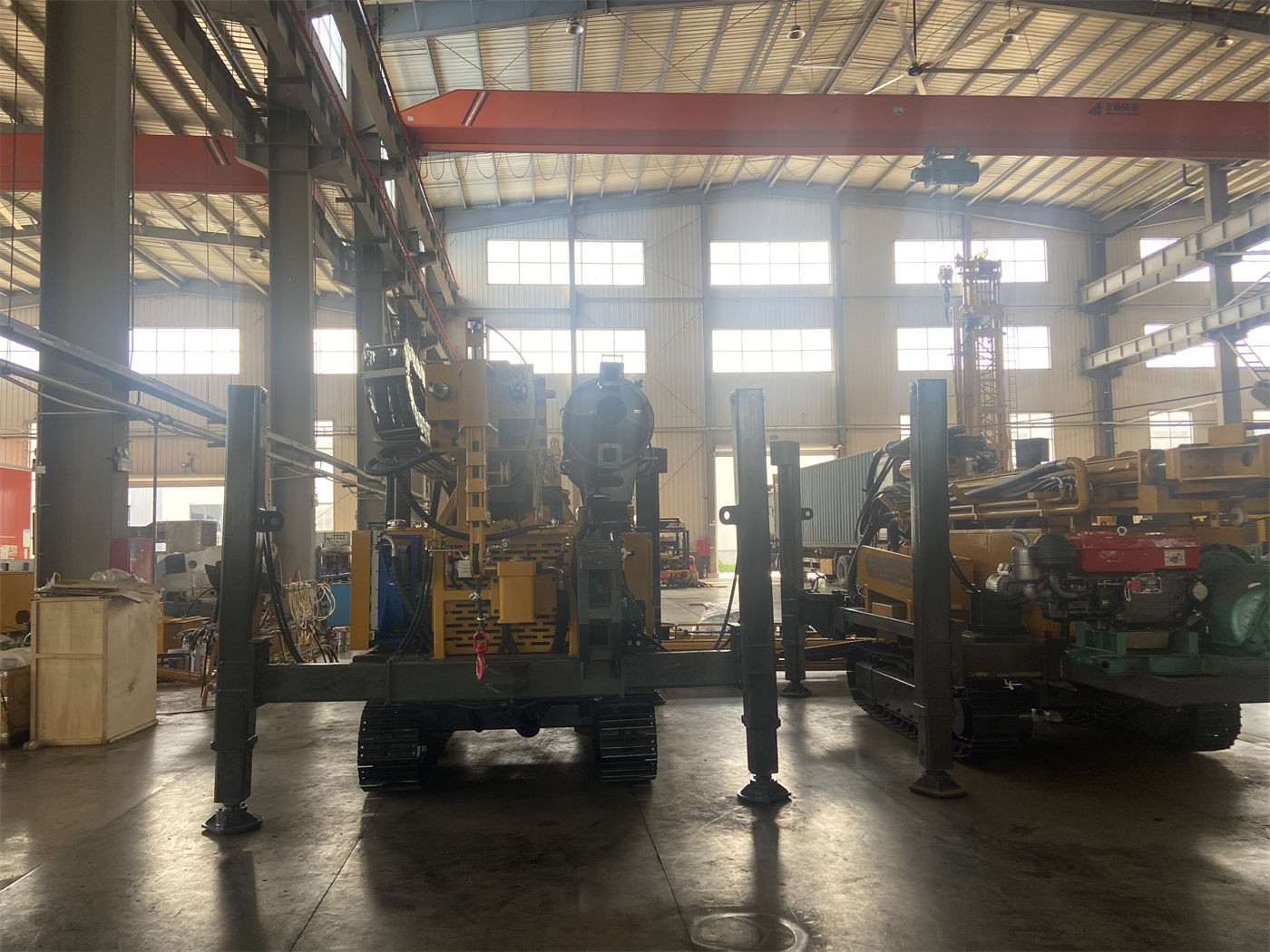
The S in the model designation represents the telescopic mast. The information states that in the transport state, the mast can improve the overall transport profile, while in the working state it still supports direct operation with 6 m drill pipe and 6 m casing. A hole depth of 750 m means a very large number of pipe connections, and the auxiliary time for each connection and round trip accumulates into a noticeable difference in construction period. Therefore, the value of 6 m drill pipe in deep-hole projects is mainly reflected in reducing the number of pipe connections.
The telescopic mast involves switching between transport and working states. During procurement, the manufacturer should be asked to confirm the mast locking state, transport fixation method, and pre-operation inspection points. The information does not provide the specific stroke of the telescopic mechanism or its maintenance cycle; these must be confirmed separately.
Drill String Specifications, Inspection, and Rotation Must Be Agreed in Advance
The information recommends 102 mm drill pipe and supports a 6 m drill pipe length. At a hole depth of 750 m, the drill pipe must withstand greater self-weight and also face borehole wall friction, rotary torque, and possible local sticking. Therefore, drill pipe strength, thread condition, and straightness are all critical. The information explicitly states that a drill pipe inspection and rotation system should be established during construction.
For the purchaser, it is recommended that the following items be clarified during the procurement stage: drill pipe specifications and material requirements, thread form and matching standards, weight per drill pipe, who provides inspection and rejection criteria, and whether graded use or rotation recommendations exist for deep-hole drill strings. These items do not have specific values in the existing information and cannot be set on behalf of the manufacturer in procurement documents.
Application Limits of the 40 T Lifting Force
The WR750S has a lifting force of 40 T and a feed force of 6 T. As hole depth increases, the weight of the entire string and friction rise significantly. A greater lifting force helps with normal round trips, DTH hammer recovery, and partial casing handling. The information also notes that if abnormal pull-out resistance occurs, it should first be addressed through hole cleaning, slow lifting, and judgment of in-hole conditions, and the maximum lifting force should not be treated as the only solution.
What needs to be clearly distinguished during procurement is the difference between the equipment's rated lifting force and the actual usable lifting force, for example whether it includes the weight of the drill string and drilling tools, and whether it is limited by the mast structure and outrigger state. The information does not provide these conversion relationships, so they are items requiring confirmation with the manufacturer.
Two Rotary Configurations Correspond to Different Load Conditions
The rotary system can use either the 13000 / 6500 N·m or 15000 / 7500 N·m configuration, with maximum rotary speeds of 95 / 190 r/min respectively. The information states that the larger torque reserve is more suitable for large-diameter, hard rock, and high-friction hole sections, while higher rotation speed is suitable for drilling stages with relatively lower resistance. The final rotary configuration should be determined based on hole diameter, drilling tools, and the main rock formation.
| Configuration Item | Torque | Maximum Rotary Speed | Applicable Direction Given in the Information |
|---|---|---|---|
| Rotary Configuration 1 | 13000 / 6500 N·m | 95 / 190 r/min | Must be judged based on hole diameter, drilling tools, and rock formation |
| Rotary Configuration 2 | 15000 / 7500 N·m | 95 / 190 r/min | Larger torque reserve, suitable for large-diameter, hard rock, and high-friction hole sections |
How to choose between the two configurations: the information gives the basis for judgment as hole diameter, drilling tools, and the main rock formation, but does not provide a table directly matching hole diameter to configuration. Therefore, this article cannot replace the manufacturer in specifying the configuration.
Power, Fast Actions, and Auxiliary Systems
- Power: 176 kW Weichai engine, providing power for rotation, feed, crawler travel, outriggers, and auxiliary hydraulic systems; the information recommends focusing maintenance on the air filter, radiator, fuel system, and hydraulic oil temperature.
- Speed: fast lifting speed 31 m/min, fast feed speed 65 m/min, used for drill pipe handling, power head return, and auxiliary actions.
- Auxiliary winch: lifting force 2.5 T, can be used for DTH hammers, drill pipe, casing tools, and on-site accessory handling; rated load and lifting safety requirements must be observed.
- Travel and site: travel speed approximately 3 km/h, maximum climbing angle reference 21°, overall weight approximately 14 T; road and platform bearing capacity should be confirmed before relocation.
- Outriggers: hydraulic outrigger stroke 1.6 m, used for equipment leveling and stabilization; sufficient-area pads should be used on soft ground.
Air Pressure, Air Compressor Matching, and Formation Adaptability
The information recommends a working air pressure of 1.6–6 MPa and an air consumption of 16–75 m³/min, compatible with medium- and high-pressure DTH hammers. In deep-hole, large-diameter, and high-altitude working conditions, whether the air compressor displacement is sufficient is especially important: if pressure meets the requirement but displacement is insufficient, insufficient impact and difficult cuttings removal may still occur.
According to formation, relatively intact hard rock such as granite, basalt, and limestone can use medium- and high-pressure DTH hammers; weathered rock and alternating soft-hard formations require timely adjustment of rotation, feed, and hole cleaning frequency; upper soil layers, clay, sand layers, and gravel layers can use mud rotary drilling, first addressing wall protection and cuttings carrying; broken zones, fractures, and air-loss formations should reduce feed, maintain continuous hole cleaning, and use casing, foam, or other auxiliary methods as appropriate. After entering the main aquifer, the depth of the main water-producing layer should be recorded, and air supply, hole cleaning, and casing methods should be adjusted according to water inflow.
Transport, Relocation, and Optional Accessories
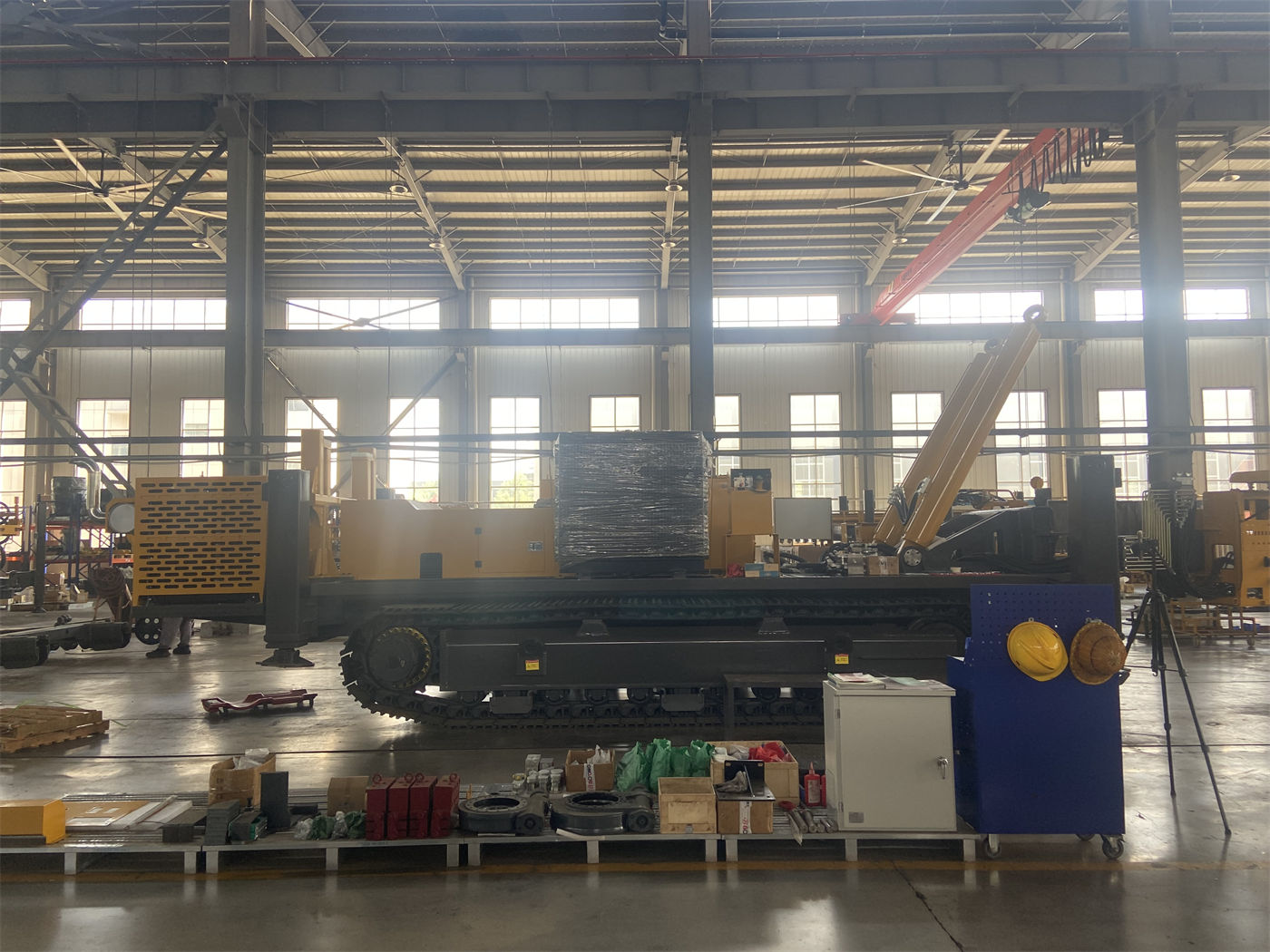
The overall weight is approximately 14 T, and the overall dimensions are approximately 6.64 × 2.25 × 2.67 m. For cross-project transport, the flatbed load capacity, road width and height limits, and equipment fixation points should be confirmed. The telescopic mast must be in a reliably locked state, and 6 m drill pipe and casing should be secured separately. Optional accessories include mud pumps, centrifugal pumps, generators, and foam pumps. The information notes that projects with many loose layers rely more on mud systems, hard rock deep holes rely more on large-displacement air compressors and DTH hammers, and formations with severe air loss may require foam assistance. Reasonable configuration is more valuable than stacking all accessories.
Checklist to Confirm Item by Item Before Procurement
- Project target depth and target horizon, and whether 750 m is only margin rather than actual construction depth;
- Correspondence between design hole diameter and the drilling diameter range of 105–450 mm;
- Drill pipe specifications, thread form, and who provides the inspection and rotation system;
- Applicable conditions of the 40 T lifting force and 6 T feed force and their relationship to drilling tool weight;
- Whether the rotary system should use 13000 / 6500 N·m or 15000 / 7500 N·m, based on hole diameter, drilling tools, and main rock formation;
- Casing specifications, running method, and handling capacity limits for 6 m casing operations;
- Whether air compressor displacement and pressure can match the air consumption range of 1.6–6 MPa and 16–75 m³/min;
- Locking state of the telescopic mast, transport fixation method, and pre-operation inspection points;
- Transport plan for the 14 T overall weight, road width and height limits, and fixation points;
- Basis for selecting optional accessories such as mud pumps, centrifugal pumps, generators, and foam pumps.
This article is based on the existing WR750S information on this site, with model parameters of maximum drilling depth 750 m and drilling diameter 105–450 mm. Items not provided in the information, such as specific drill pipe material standards, detailed drill string management procedures, telescopic mast maintenance cycles, and rotary configuration recommendations corresponding to hole diameter, should be further verified with the manufacturer during procurement and should not be assumed.