












The core of WR500RCE procurement trade-offs is not how long the configuration list is, but whether five hard specifications—drilling depth, lifting force, rotary torque, air compressor matching, and hole cleaning capability—cover the project conditions. This 500m-class crawler-mounted air-lift reverse circulation water well drilling rig adopts 132 kW diesel power, 300 kN lifting force, 8000–12000 N·m rotary torque, and a drilling diameter of 140–400 mm. The E Series concentrates cost on capabilities directly related to hole formation rather than stacking additional functions. Therefore, to determine where the budget should be spent, first check whether the project can actually use these capabilities, then identify which components must be ordered together with the main machine and which can be added later according to formation conditions.
First Confirm Whether 500m Drilling Depth Is Really Needed
The WR500RCE has a nominal maximum drilling depth of 500 m, covering rural deep wells, high-flow agricultural water wells, industrial water wells, and mining water supply. However, maximum drilling depth does not mean every well is completed at 500 m; the final well depth should be determined by hydrogeological data and the actual water-producing layer. When the groundwater level is deep, shallow aquifers are unstable, or the mining area is far from the water supply network and requires greater depth margin for water exploration, the margin of 500m-class equipment becomes practically meaningful.
Before procurement, the expected well depth, common hole diameters, and main formations should be clearly listed. If most wells in the project are 200–300 m deep with smaller diameters, the budget can be directed more toward drilling tools and air compressor matching; if the depth is truly close to 500 m and the proportion of hard rock is high, the main machine capability cannot be compromised. This determines which projects the E Series is suitable for and which projects should choose a higher-configuration model.
How to Trade Off Lifting Force, Rotary Torque, and Feed Stroke
In 500m-class drilling, the self-weight of drill pipes, borehole wall friction, and casing weight all increase significantly. The WR500RCE's 300 kN lifting force and 150 kN feed force provide margin for tripping and tool recovery; the rotary torque of 8000–12000 N·m and rotation speed of 40–160 r/min are used to adapt to load variations under different hole diameters and friction. Large diameters, hard rock, and high-friction conditions require low speed and high torque, while stable hole sections with less resistance can use higher speeds. Actual drilling should be adjusted in real time based on torque changes, cuttings return volume, and drilling tool condition.
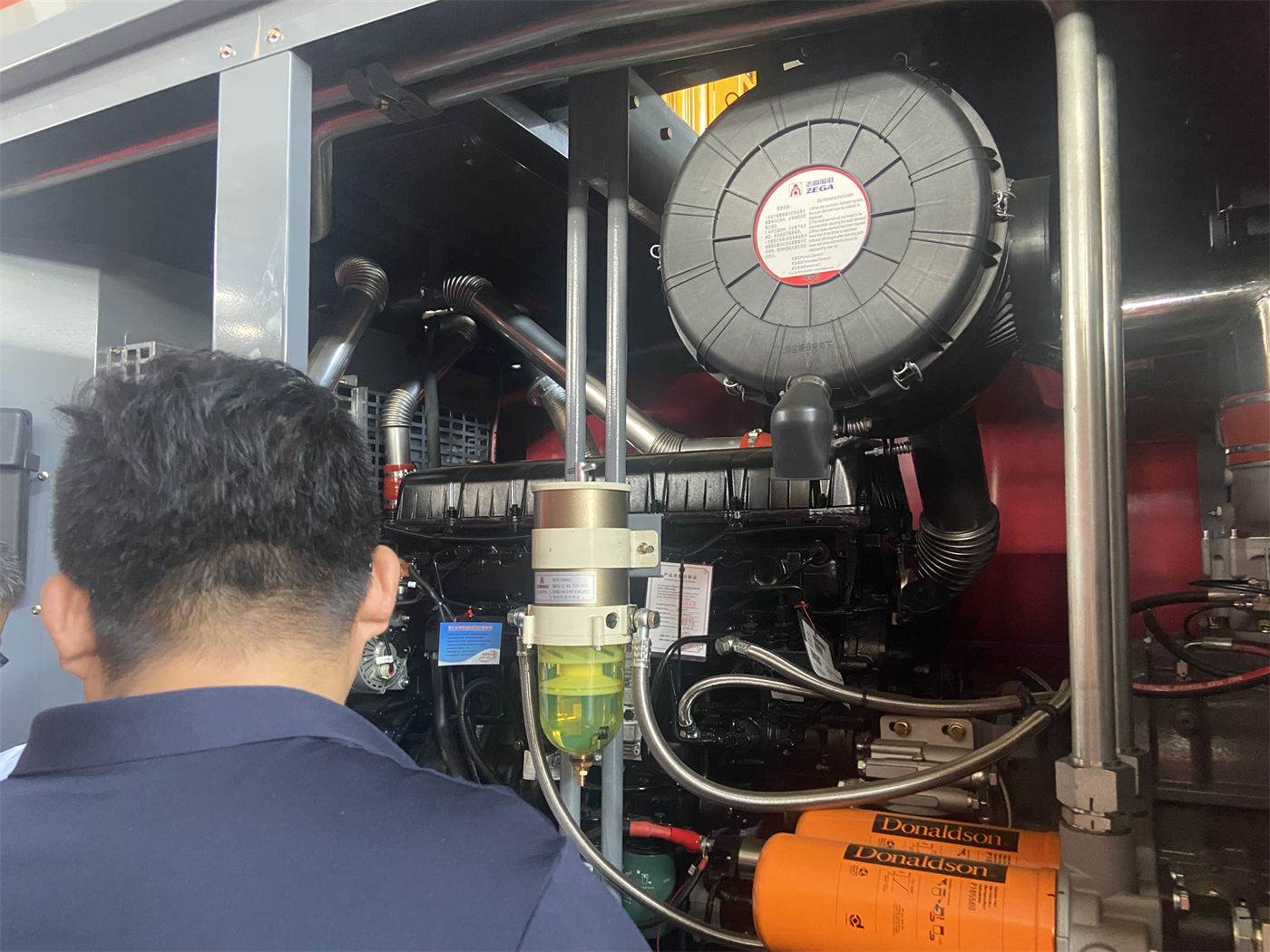
The feed stroke is available in 3.3 m or 6.6 m and supports 1.5 / 2 / 3 / 6 m drill pipes. The 6.6 m long stroke reduces the number of pipe connections and improves continuous drilling efficiency; the 3.3 m configuration is more conducive to controlling the overall working height and site adaptability. This trade-off is directly related to budget: the efficiency improvement of a long stroke depends on the single-hole depth and pipe connection frequency of the project, while site space, transportation conditions, and drill pipe length will in turn limit the choice.
| Parameter | WR500RCE Configuration |
|---|---|
| Maximum drilling depth | 500 m |
| Drilling diameter | 140–400 mm |
| Diesel power | 132 kW, rated speed 2400 r/min |
| Lifting force / feed force | 300 kN / 150 kN |
| Rotary torque | 8000–12000 N·m |
| Rotation speed | 40–160 r/min |
| Feed stroke | 3.3 m or 6.6 m |
| Auxiliary winch | 20 kN |
| Working air pressure | 1.7–3.5 MPa (recommended) |
| Air consumption | 17–42 m³/min |
| Travel speed / gradeability | Approx. 2.5 km/h / reference 30° |
| Overall weight | Approx. 12 T |
| Transport dimensions | Approx. 6300 × 2100 × 2500 mm |
| Working dimensions | Approx. 4000 × 2900 × 6800 mm |
Air Compressor Is the Key Matching Component for Air-Lift Reverse Circulation
Air-lift reverse circulation uses compressed air to create an internal pipe return flow, carrying rock cuttings and drill cuttings from the hole bottom back to the surface along the inside of the drill pipe. For deep hard-rock water wells, this cuttings discharge path can reduce the long-distance upward return of cuttings in the annulus, helping to keep the hole bottom clean and reducing repeated crushing and sediment problems. However, the actual effect depends on air compressor displacement, hole diameter, drill pipe sealing, and formation conditions.
The WR500RCE recommends a working air pressure of 1.7–3.5 MPa and air consumption of 17–42 m³/min. As hole depth increases, hole diameter enlarges, rock layers harden, or construction altitude rises, the required displacement increases. When selecting, both the DTH hammer and reverse circulation cuttings return requirements must be considered; the air compressor cannot be matched only according to the main machine parameters. If only pressure is increased but displacement is insufficient, effective airflow may still not be obtained at the hole bottom.
Open fractures, karst caves, and high-permeability formations may cause severe air leakage. In such cases, depending on the degree, increase air compressor displacement, use foam, casing, or adjust the drilling method to avoid large air losses that cause DTH hammer failure. These are process conditions matched to the formation, and during procurement, the displacement and pressure range of the matched air compressor should be verified with the manufacturer.
Which Drilling Tools and Accessories Can Be Added Per Project
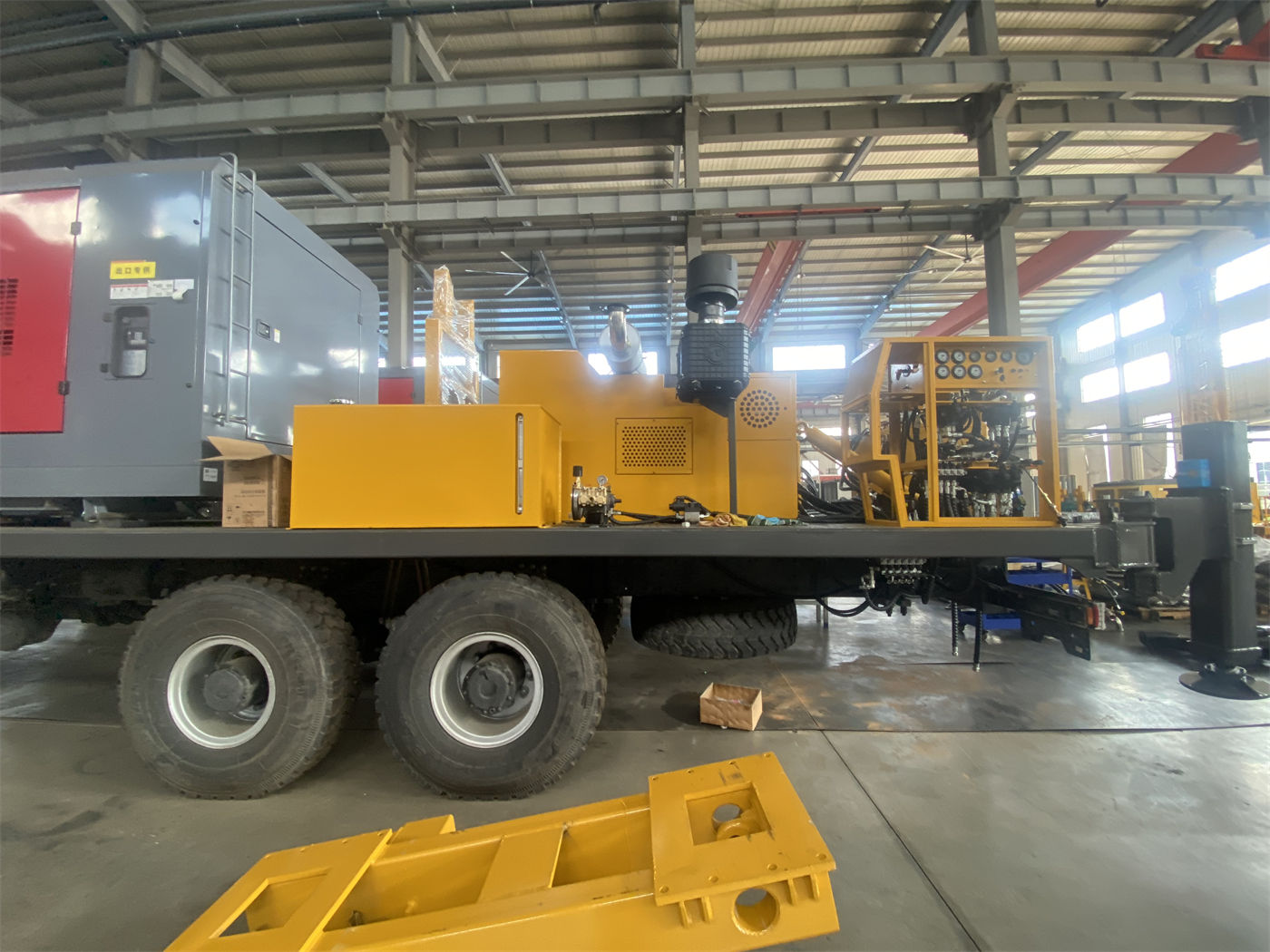
The complete construction system can be configured according to the project with reverse circulation DTH hammers, drill bits, drill pipes of different specifications, casing tools, air compressors, high-pressure air hoses, oil mist lubricators, foam pumps, and generators. Not all formations require the full set; reasonable optional selection can reflect the cost advantage of the E Series while ensuring construction capability. During procurement negotiations, the main machine should be listed separately from consumables and tools, clarifying which are supplied with the main machine and which are purchased separately, to avoid paying for unused accessories and to avoid site shutdowns due to missing casing or foam systems.
Components to Add Based on Formation Judgment
- Relatively intact granite, basalt, limestone, sandstone: DTH drilling can be considered, with emphasis on coordinated matching of DTH hammer impact, rotation speed, feed force, and air volume.
- Faults, fractured zones, fissured formations: prone to block falling, hole shrinkage, air leakage, and sticking. When entering such hole sections, reduce penetration speed, maintain continuous hole cleaning, and use casing or foam assistance depending on borehole wall stability.
- Weathered rock and loose overburden: soil layers, sand layers, gravel, and strongly weathered sections can first use casing, mud, or other hole stabilization methods to establish a stable hole section before entering more intact rock for pneumatic reverse circulation drilling.
- Main aquifers and strong water inflow sections: after entering the aquifer, groundwater will change the cuttings return and DTH hammer working state. Record the depth of the water-producing layer and adjust air supply, hole cleaning, and casing methods accordingly; during well completion, filter pipes and water-stop sections should be arranged according to the aquifer position.
Crawler Chassis, Transportation, and Site Conditions Cannot Be Ignored
The WR500RCE uses a crawler chassis with a travel speed of approximately 2.5 km/h and a reference gradeability of 30°, making it more suitable for gravel roads in mining areas, rural roads, and generally uneven ground. The overall weight is approximately 12 T. Before relocation, ground bearing capacity and slope conditions must be confirmed; movement on soft soil and wet slippery areas should be cautious.
Transport dimensions are approximately 6300 × 2100 × 2500 mm, and working dimensions are approximately 4000 × 2900 × 6800 mm. Before transportation, confirm vehicle load capacity, loading fixation points, and road height limits; after arriving at the site, reserve space for mast erection and a safe working range. If these conditions conflict with the project site, they will directly affect the choice of feed stroke and overall machine configuration, and are boundary conditions that should be verified before procurement.
Items Recommended to Confirm with the Manufacturer Before Procurement
- Whether the project's expected well depth, main hole diameters, and formation combination fall within the applicable range of 500 m and 140–400 mm.
- Whether the matched air compressor's displacement and pressure cover the 17–42 m³/min and 1.7–3.5 MPa range, and verify margin according to hole depth, hole diameter, and altitude.
- Whether the feed stroke should be 3.3 m or 6.6 m, and whether it matches drill pipe specifications, site height, and transportation conditions.
- Which items—DTH hammers, drill bits, drill pipes, casing tools, foam systems, etc.—are supplied with the main machine and which are separately optional.
- The passage conditions of crawler travel, gradeability, and the 12 T overall weight on mining roads and soft ground.
- The rated load of the auxiliary winch and lifting operation requirements, to avoid overloading and personnel working under suspended loads.
In high-pressure pneumatic and deep-hole construction, before daily start-up, check high-pressure air hoses, joints, safety ropes, swivel heads, tracks, mast, and hydraulic system; during drilling, continuously observe air pressure, cuttings return, water return, and torque changes; after completion, promptly clean drilling tools and the reverse circulation channel, and check DTH hammer lubrication, drill pipe sealing, and high-pressure pipeline wear. Actual geological conditions, downhole tools, drilling angles, and operating methods vary. The final drilling effect and configuration trade-offs should be verified and confirmed with the manufacturer based on the specific project. This article does not replace on-site investigation and selection plans.