












The WRTR1000 supports mud direct circulation, air foam, DTH hammer, and optional air-lift reverse circulation. The choice among these four methods is not based on equipment preference, but on whether the formation in the current hole section can be effectively broken, whether cuttings can be reliably returned to the surface, and whether the borehole wall can be maintained. When selecting, first determine the formation type, then verify the supporting conditions required by the corresponding method.
First, look at what process-switching foundation the complete rig provides
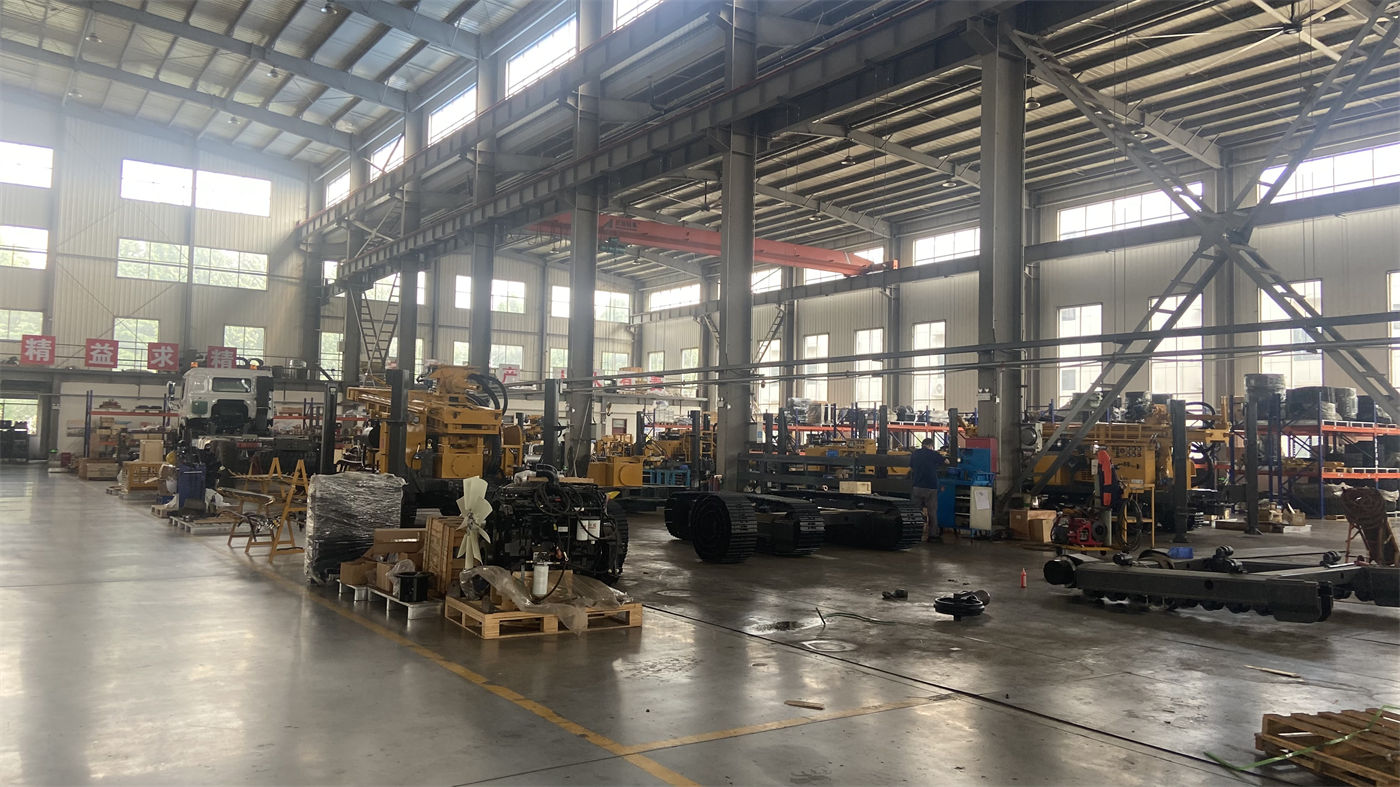
The WRTR1000 is a 1000-meter-class trailer-mounted rotary table water well drill rig. The complete rig integrates an independent diesel power unit, a 25 kN·m rotary table, a 60 T hydraulic telescopic K-type mast, dual winches, a BW1200/7 high-displacement mud pump, and a 50 kW auxiliary generator on a trailer chassis. The rotary table has a maximum torque of 25 kN·m and provides four speed ranges: 37 / 52 / 84 / 145 r/min; the mast has a total height of 19.5 m, an effective height of 18.482 m, and a maximum load of 60 T; the rotary table has a maximum through-hole diameter of 660 mm. These parameters form the shared rotary, lifting, and circulation foundation for the four methods.
It should be noted that the maximum drilling depth of 1000 m is the positioning of the complete rig. The actual drilling depth still needs to be determined in combination with hole diameter, drilling tools, formation, circulation method, and well completion design, and cannot be directly applied to all method combinations according to the nominal depth.
Mud direct circulation: the conventional choice for clay, silt, and soft formations
Clay, silt, and other soft formations can use mud direct circulation, stabilizing the borehole wall through mud properties and carrying drill cuttings back to the surface. The BW1200/7 mud pump has a maximum pressure of 7 MPa and a displacement of 1200 L/min, and can be used for cuttings carrying, wall protection, drill bit cooling, and downhole pressure control in deep-hole mud direct circulation. As hole depth increases, both circulation resistance and cuttings transport distance increase, and a high-displacement mud pump is more conducive to maintaining stable mud return.
In clay layers, bit balling and poor mud return should be prevented, and drilling conditions can be improved by adjusting rotation speed, bit type, and mud properties. After entering sand and gravel layers, loose formations are prone to hole collapse, mud loss, and hole enlargement, and temporary casing or staged casing may be required; the 660 mm rotary table through-hole and 60 T mast load provide operating space for casing operations, but the specific number of casing stages still needs to be determined according to formation design.
Air foam: for dry, lost-circulation, or insufficient cuttings-carrying sections
Air foam drilling can play a role in some dry, lost-circulation, or cuttings-carrying-improvement sections. It is not a universal replacement for mud direct circulation. Foam concentration, air volume, and injection method should be adjusted according to hole depth, hole diameter, and formation permeability, and uniform parameters cannot cover all formations.
Supporting items to be verified with the manufacturer during procurement include: the required pressure and displacement range of the air compressor, foam agent type and injection equipment, hole mouth sealing and return cuttings control method, and the actual applicability of this method at the target hole depth. These items are not given with specific parameters in the existing complete rig information and are part of what needs to be confirmed item by item during inquiry.
DTH hammer: the drilling method for intact hard rock sections
When the borehole enters relatively intact hard rock, a suitable air compressor, DTH hammer, and bit can be configured for DTH drilling. In deep hard rock holes, special attention should be paid to air compressor capacity, DTH hammer lubrication, and cuttings discharge status; if rock powder at the hole bottom cannot be discharged in time, drilling efficiency will be significantly reduced.
During selection, it is necessary to verify whether the air compressor pressure and air volume match the intended DTH hammer model and hole diameter, the specification series of the DTH hammer and bit, and the auxiliary conditions required for lubrication and cuttings discharge. The complete rig information does not list specific air compressor parameters, and this part needs to be confirmed separately according to the hole diameter and depth of the hard rock section.
Air-lift reverse circulation: an optional method requiring complete dual-wall drill pipes and sampling conditions
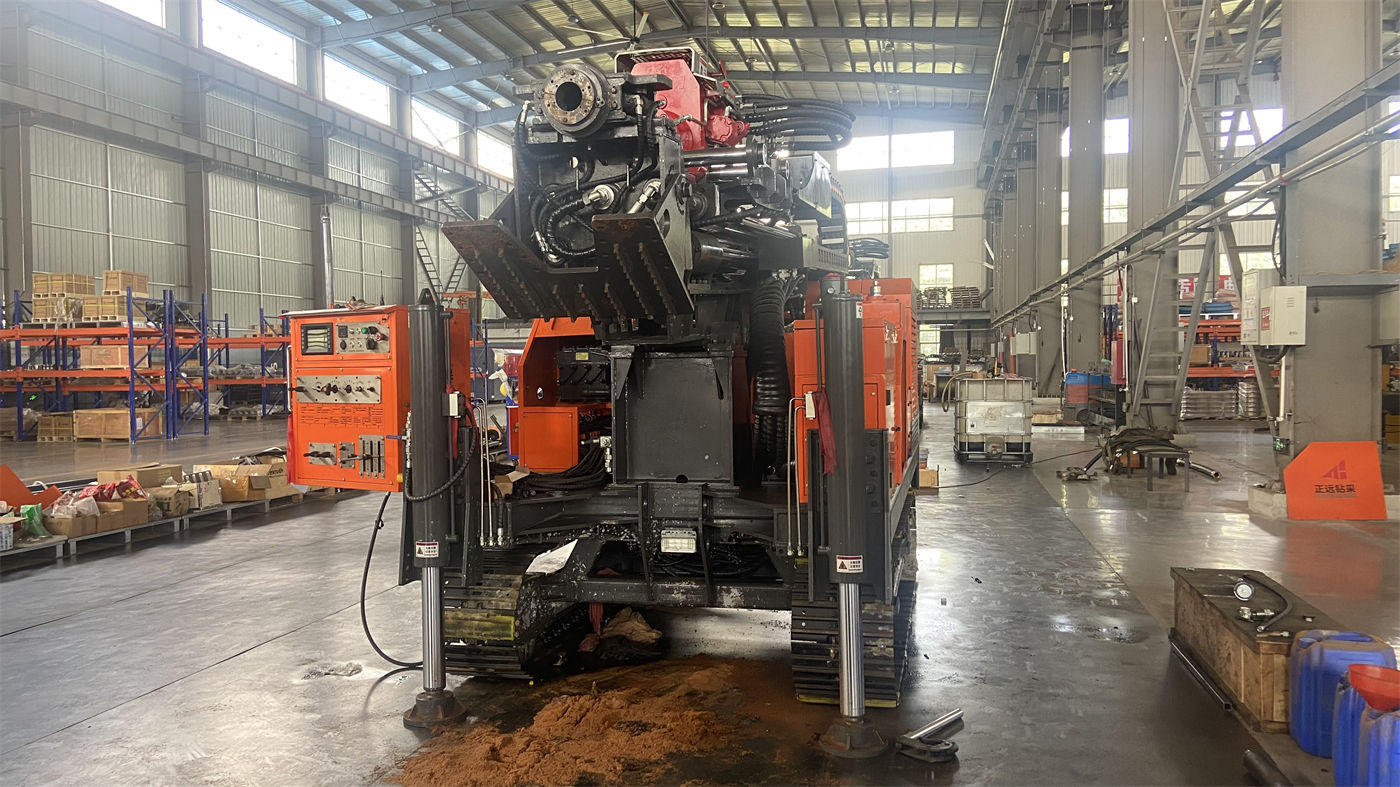
The WRTR1000 can be optionally equipped with air-lift reverse circulation for projects requiring rapid cuttings return or cuttings sampling. This is an optional drilling method, not a dedicated RC exploration rig; if the project has clear requirements for sample representativeness and splitting quality, matching dual-wall drill pipes, an air compression system, and sampling equipment should also be configured. In other words, choosing this method does not mean the equipment automatically has qualified sampling capability, and supporting tools and sampling procedures need to be included in the procurement scope.
Mixed formations: combine by hole section, rather than using only one method for the entire hole
Deep wells often pass through clay, sand layers, gravel, weathered rock, and bedrock at the same time. The WRTR1000 can use mud circulation and casing protection in the upper loose layers, and switch to DTH or air foam drilling after entering rock layers. This combination can reduce the need to frequently change rigs because a single method does not adapt to formation changes, but switching methods means preparing the mud system, air compression system, and corresponding drilling tools at the same time. Before procurement, the method sequence and supporting list for each hole section should be clearly listed.
After entering strong aquifers and high water inflow conditions, the circulation method, casing program, and hole cleaning method also need to be adjusted according to water inflow. The ultimate goal of deep water well construction is not simply to reach depth, but to form a stable borehole wall and effectively utilize the aquifer; screen pipes, water shutoff, and pump type design are equally important.
Comparison points for selection by formation
| Formation or condition | Optional method | To be verified during procurement |
|---|---|---|
| Clay, silt, soft formations | Mud direct circulation | Whether mud pump displacement and pressure match the planned hole depth; bit type and rotation speed range |
| Loose sand layers, gravel layers | Mud direct circulation, with temporary casing or staged casing | Number of casing stages and running procedure; treatment plan for hole collapse and mud loss |
| Dry, lost-circulation, or difficult cuttings-carrying sections | Air foam | Air compressor parameters, foam agent and injection equipment, hole mouth sealing method |
| Strongly weathered, decomposed rock | Rotary drilling, or switch to air foam etc. depending on mud return | Use plan for the four speed ranges under different resistances |
| Intact hard rock | DTH hammer | Matching of air compressor pressure and air volume with hole diameter; DTH hammer lubrication and cuttings discharge conditions |
| Requires rapid cuttings return or cuttings sampling | Optional air-lift reverse circulation | Whether dual-wall drill pipes, air compression system, and sampling equipment are complete; sample representativeness requirements |
Items to confirm with the manufacturer before procurement
- Under the combination of target hole depth, hole diameter, and intended method, the actual achievable drilling depth range, and the drill pipe diameter to be configured (optional 89 / 114 / 127 mm).
- Air compressor specifications required for air foam and DTH. The existing complete rig information does not give specific parameters, and they need to be verified separately according to hard rock or lost-circulation hole sections.
- For air-lift reverse circulation as an option, whether the corresponding dual-wall drill pipes, air compression system, and sampling equipment are included in the supply scope.
- The method switching sequence for each hole section in mixed formations, and the list of drilling tools, circulation materials, and consumables corresponding to each method.
- Factors related to well completion design: well casing, screen pipes, water shutoff, and pump type. These are not determined solely by the drill rig model.
If the project requires continuous high-quality cores, a dedicated core drill rig should be selected; the WRTR1000 is suitable for hydrogeological surveys and general deep geological drilling, judging formation changes through cuttings, mud return, water inflow, and drilling response, but it is not coring equipment. For transportation, road width, bridge load capacity, turning radius, and transportation height limits also need to be verified in advance.