












900 mm hole diameter is the upper limit of the WRT1200 drilling diameter range of 105–900 mm, but "the equipment can be marked as 900 mm" and "a specific project can complete a well at 900 mm" are not the same thing. Large hole diameters simultaneously increase drilling tool loads, casing weight, cuttings removal requirements, and air compressor loads. Therefore, before procurement, hole diameter, drilling depth, lifting force, rotary torque, air pressure and air consumption, drill pipe specifications, and complete machine relocation conditions should be confirmed segment by segment as a parameter chain, rather than judging by a single value alone.
Segment 1: First determine the combined target of hole diameter and drilling depth
The WRT1200 parameters provided on this site are: maximum drilling depth 1200 m, drilling diameter 105–900 mm. These two values should be understood in combination—the larger the drilling diameter, the higher the burden on the drilling tools in the hole and the annular cuttings removal. The actual depth combination that can be stably constructed needs to be evaluated in conjunction with the formation and supporting capacity. The materials do not provide "the specific drilling depth achievable at 900 mm hole diameter."
- The upper hole diameter limit of 900 mm usually corresponds to configuration requirements for large-flow well completion, larger well casing, and larger submersible pumps;
- After the hole diameter increases, casing weight, cuttings removal air volume, and air compressor displacement requirements will all rise accordingly;
- For a formal project, the reasonable hole diameter should be back-calculated based on target water yield, well casing specifications, and pump type, rather than directly designing according to the maximum value.
Matters to confirm: the recommended drilling depth range at 900 mm hole diameter, the matching drilling tool combination, and the minimum air compressor displacement are not provided in the materials and should be requested from the supplier as formal hole diameter–drilling depth matching information.
Segment 2: Whether lifting force and axial pressure can cover large-diameter loads
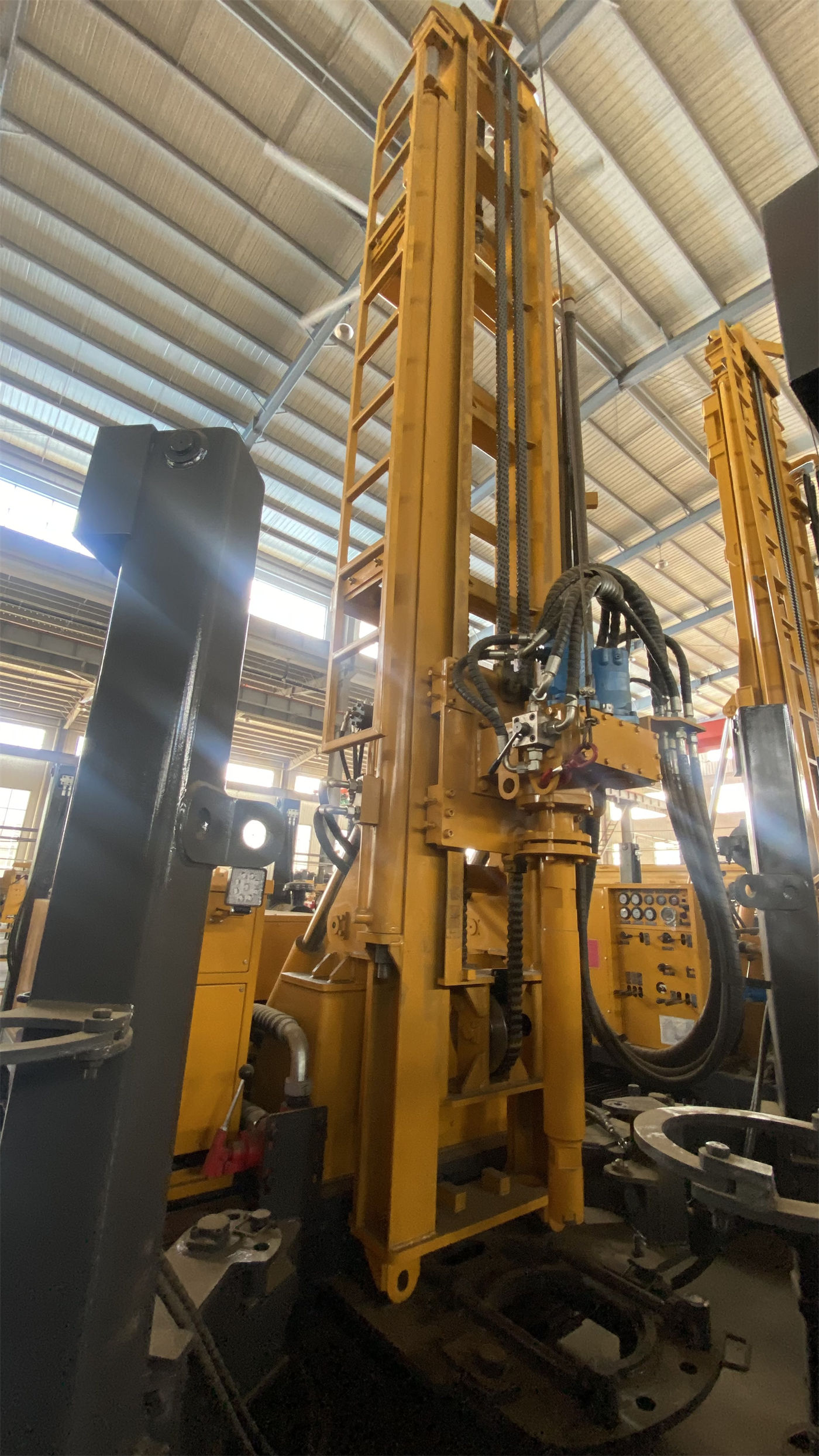
The WRT1200 has a lifting force of 61 T and an axial pressure of 13 T. As hole depth increases, drill pipe self-weight, casing weight, and borehole wall friction all rise significantly; increasing hole diameter further increases the loads on drilling tools, casing, and the cuttings removal system. The 61 T lifting force is one of the important bases for judging whether deep-hole tripping, DTH hammer recovery, and some casing operations are feasible.
The materials also note: if drill lifting resistance is abnormal, the hole should first be cleaned and the conditions of the borehole wall, drilling tools, and settled cuttings should be judged. The maximum lifting force should not simply be used to pull forcefully. This concerns the relationship between equipment capability and operating boundaries. During procurement, the lifting force should be checked together with the planned drill pipe and casing specifications.
Segment 3: Matching rotary torque with dual-speed working conditions
The WRT1200 rotary system has a maximum torque of 24000 / 12000 N·m, corresponding to a 75 / 150 r/min dual-speed configuration. Low speed and high torque are more suitable for large-diameter, hard rock, and high-friction borehole sections, while the high-speed gear is suitable for stable formations with lower resistance. The 900 mm large-diameter condition usually falls within the low-speed, high-torque side of the working range.
| Parameter | Value in materials | Focus for large-diameter design |
|---|---|---|
| Maximum torque | 24000 / 12000 N·m | Large diameter, hard rock, and high-friction sections tend toward the low-speed high-torque gear |
| Rotation speed | 75 / 150 r/min | Switch according to drilling tool load, cuttings return, and torque changes |
| Lifting force | 61 T | Deep-hole drill string, casing, and DTH hammer recovery |
| Axial pressure | 13 T | Match with drilling tools and rock formation |
Segment 4: Air pressure and air consumption under DTH conditions
When using DTH hammer drilling, the materials give a recommended working air pressure of 1.65–8 MPa and air consumption of 16–120 m³/min. The 900 mm large-diameter, deep-hole, and hard-rock conditions place high demands on both air compressor pressure and displacement; if pressure is sufficient but displacement is insufficient, it may still cause insufficient impact, difficult cuttings removal, and cuttings accumulation at the bottom of the hole.
- After drilling into relatively intact hard rock such as limestone, sandstone, and granite, medium- and high-pressure DTH hammers can be configured for DTH drilling;
- Soil layers, clay, sand layers, and gravel layers can use mud rotary, casing, or other hole stabilization methods;
- Weathered rock and fault fracture zones are prone to block falling, diameter reduction, air leakage, and sticking. When entering these borehole sections, excessively fast advancement should be reduced and hole cleaning should be strengthened.
Matters to confirm: the specific air compressor pressure and displacement combination required for 900 mm hole diameter at the target depth, and the matching DTH hammer model, are not provided in the materials and need to be specially confirmed according to the actual formation.
Segment 5: Drill pipe specifications and feed stroke
The materials recommend a drill pipe diameter of 127 mm, with drill pipe lengths supporting 3 m or 6 m. Larger-diameter drill pipes are more suitable for high-torque and deep-hole conditions; 6 m drill pipes can reduce the number of pipe connections, while 3 m drill pipes are more flexible in transportation, manual coordination, and restricted sites. The feed/advance stroke is 7 / 13 m and can be selected according to the final configuration. A longer stroke can reduce the frequency of power head return and drill pipe handling, while the 7 m configuration more easily balances complete machine structure and site adaptability. The formal configuration should be based on supplier technical confirmation materials.
Segment 6: Complete machine relocation and site conditions
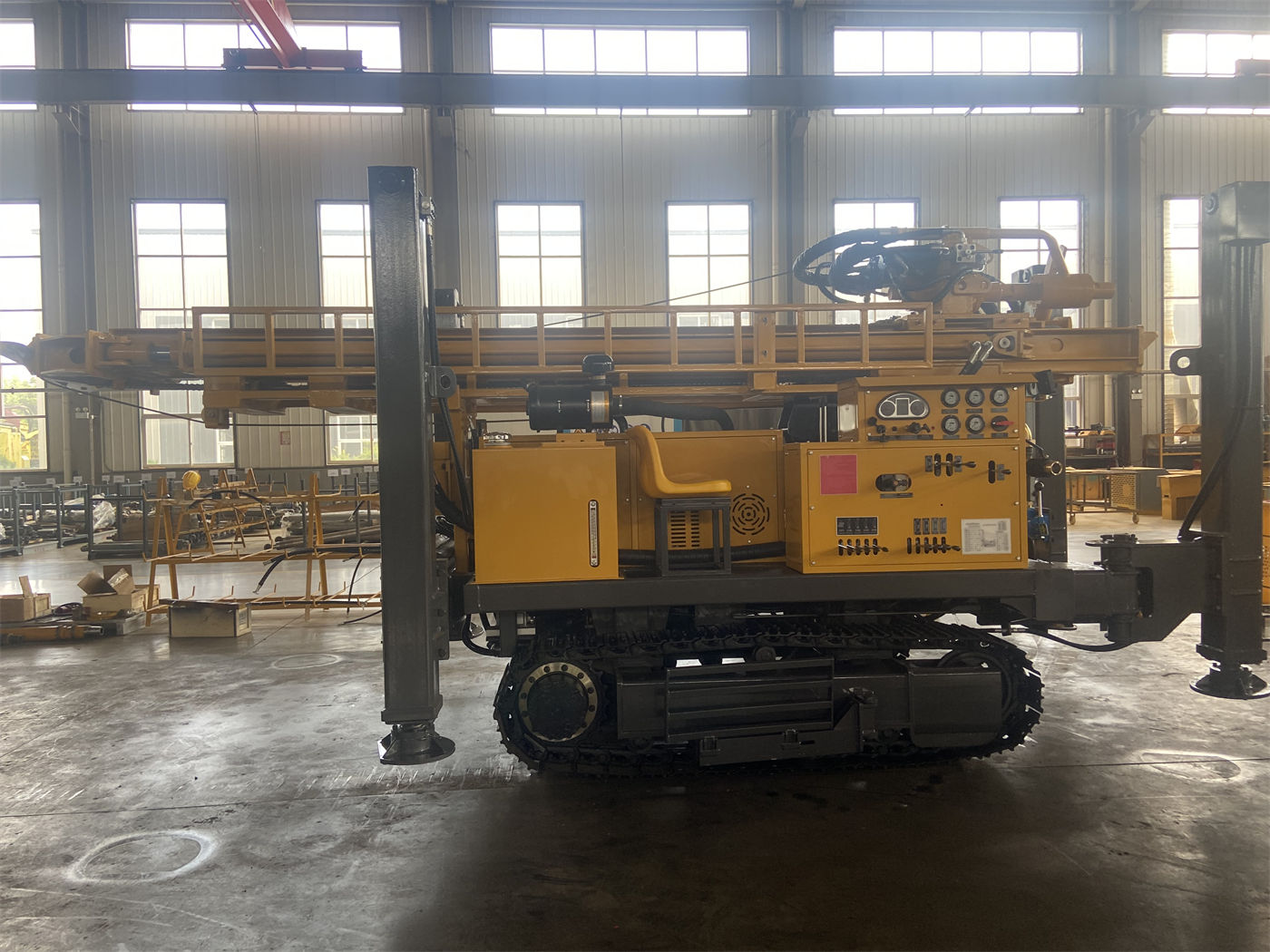
The WRT1200 complete machine weighs about 32 T, with transport dimensions of about 11.5 × 2.25 × 3.2 m. It adopts a straight mast structure rather than a telescopic mast, so the transport profile is relatively fixed. Before procurement, road height limits, entry space, and site clearance should be confirmed, while also verifying road width, bridge load capacity, turning radius, site bearing capacity, and overhead obstacles.
The straight mast structure is more suitable for long-term high-torque rotation, heavy drill string tripping, and casing operations, but the cost is a more fixed transport profile. This is directly related to the scale of casing and drilling tool support required for 900 mm large-diameter well completion and should be considered together during the project entry planning stage.
How to use this parameter chain in procurement confirmation materials
It is recommended to turn the above six segments into a checklist: first write down the target hole diameter of 900 mm and the target depth, then correspond item by item to lifting force, torque gear, air pressure and air consumption, drill pipe specifications, feed stroke, and relocation dimensions, and finally mark which values come from the materials and which need supplementary confirmation from the supplier. The values already confirmed in the materials include 1200 m drilling depth, 105–900 mm hole diameter, 61 T lifting force, 13 T axial pressure, 24000 / 12000 N·m torque, 75 / 150 r/min, 1.65–8 MPa air pressure, 16–120 m³/min air consumption, 127 mm recommended drill pipe, 7 / 13 m feed stroke, 220 / 264 kW diesel power, 4 T + 3 T dual auxiliary winches, about 32 T complete machine weight, and about 11.5 × 2.25 × 3.2 m transport dimensions.
The actual drillable depth at 900 mm hole diameter, matching air compressor selection, well casing and screen design, water stop section scheme, etc., are not given as specific conclusions in the materials. They are matters that must be verified with the supplier or designer before formal well completion design and should not be directly scheduled for production based only on equipment upper-limit parameters.