












The WRT600 is a 600-meter class truck-mounted direct tower fully hydraulic water well drilling rig with a maximum drilling depth of 600 m, borehole diameter of 140–450 mm, 37 T lifting force, and dual-mode torque of 15000/7500 N·m. When the same model faces three types of demand—agricultural irrigation, municipal water supply, and mining water supply—the configurations that need priority verification differ: agricultural scenarios focus more on relocation efficiency and water supply cost, municipal scenarios focus more on well completion structure and supporting conditions for water quality evaluation, and mining scenarios focus more on hard rock techniques, road access, and whole-machine transport conditions. The following sections list verification directions for each of these three demand types.
It should first be noted that the product information on this site only provides the overall machine parameters and applicable working condition range of the WRT600, and does not provide conclusions on well depth, borehole diameter, formation combinations, or well completion plans for specific projects. Actual configurations should be confirmed item by item by both supplier and buyer after hydrogeological data and site conditions are clarified. This article does not replace project design.
Basic verification items shared by the three demand types
Regardless of the demand type, first verify whether the following overall machine conditions match the project, then proceed to scenario-specific configuration.
- Whether the maximum drilling depth of 600 m and borehole diameter of 140–450 mm cover the target aquifer depth and well completion diameter requirements.
- Whether the 37 T lifting force and 6 T axial pressure meet the weight and resistance conditions of the planned drill pipes, DTH hammers, and partial casing operations.
- For the dual-mode torque of 15000/7500 N·m, corresponding to maximum rotation speeds of 70/140 r/min, it is necessary to confirm which gear range the intended technique falls into.
- The feed stroke is 7 m and can be equipped with 3 m or 6 m drill pipes; 6 m drill pipes reduce the number of pipe connections, while 3 m drill pipes suit space-constrained sites.
- The 132 kW diesel engine, 3 T large auxiliary winch, and 1.5 T small auxiliary winch serve as the baseline for overall machine power and on-site auxiliary handling capacity.
- The overall machine weighs about 26 T, with transport dimensions of about 10 × 2.48 × 3.75 m. Before entry, road height limits, load-bearing capacity, turning radius, and drilling site ground bearing capacity must be verified.
Agricultural irrigation and farm water supply: first verify relocation and water supply cost conditions
Trade-off between depth and well diameter
The WRT600's 600 m drilling depth can provide greater water-finding margin in areas with deeper groundwater levels. Agricultural irrigation wells generally do not require long-term use of the maximum borehole diameter; the diameter should serve the final well completion structure of well casing, screen pipes, and submersible pumps, rather than simply pursuing a large diameter. Before procurement, the target water yield, designed well depth, and intended pump type should be provided to the manufacturer together to confirm the basis for diameter selection.
Relocation conditions among multiple farms and multiple hole positions
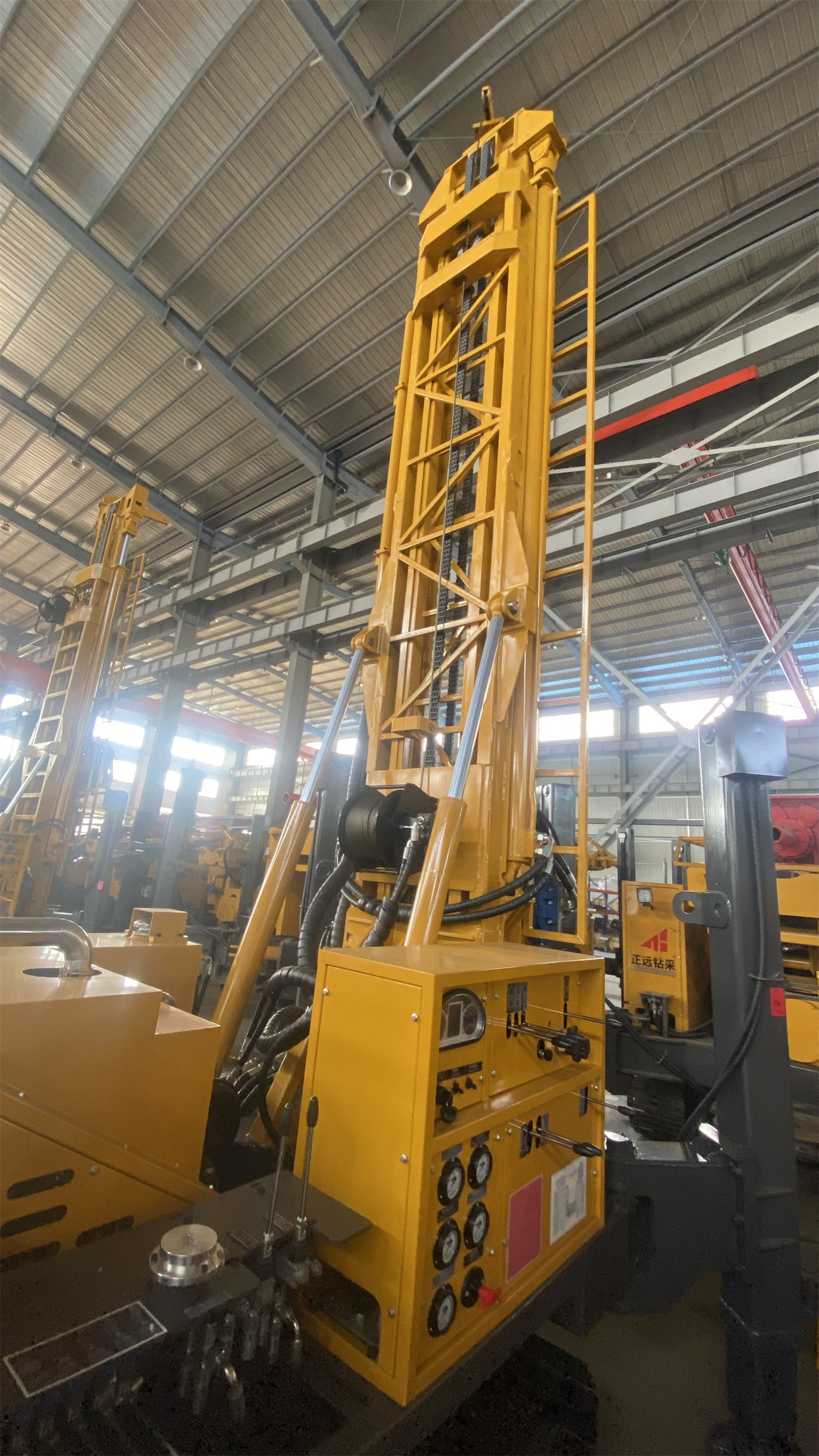
The WRT600 uses a truck-mounted chassis, making it suitable for moving among multiple farms and hole positions and reducing loading and unloading frequency. However, truck-mounted relocation does not mean unconditional passage: the 26 T overall machine weight, transport height of about 3.75 m, and width of 2.48 m require verification during the inquiry stage of rural road width, bridge and culvert load-bearing capacity, and field entry routes. If plots are scattered and road conditions are average, this part should be a key confirmation item.
Air drilling and water source conditions
In suitable rock formations, DTH drilling mainly relies on compressed air impact and cuttings discharge, with relatively low dependence on large amounts of drilling water, making it suitable for arid agricultural areas and projects lacking a stable mud water source. During procurement, the pressure and displacement configuration of the air compressor must also be clarified; if pressure is sufficient but displacement is insufficient, impact will still be inadequate and cuttings discharge difficult. If the upper loose layer is thick, mud or casing assistance may still be required, and this process combination should be clearly stated within the quotation scope.
Municipal and community water supply: first verify well completion structure and supporting scope
Preparation of hydrogeological and water quality evaluation data
For water supply projects for villages, communities, and public facilities, hydrogeological surveys and water quality evaluations should be completed before drilling, and then well depth, well diameter, screen pipes, and pump type should be determined. When purchasing the WRT600, these data need to be translated into specific equipment requirements: target aquifer depth, designed well completion diameter, and positions of screen pipes and sealing sections. These contents are project design inputs and cannot be inferred from the drilling rig model.
Matching of mud rotary and casing techniques
For loose formations such as soil, clay, sand, and gravel layers, a mud pump and suitable drilling tools can be configured for mud rotary drilling. Mud circulation can carry drill cuttings and help stabilize the borehole wall; when the upper loose layer is thick, casing can also be combined to establish a stable hole section before switching to DTH technique in the lower rock layer. Municipal water supply wells have clearer requirements for borehole wall stability and well completion quality, so the procurement list should confirm the supply scope of mud pumps, drilling tools, and casing, and whether they are included in the overall machine quotation.
Hole cleaning methods for strong aquifers and water inflow sections
After entering high-yield aquifers, groundwater will change cuttings discharge and DTH hammer working conditions in the hole. During construction, the depth of main water-producing layers should be recorded, and air supply, hole cleaning, and casing plans should be adjusted according to water inflow. During inquiry, the manufacturer can be asked to explain air supply and hole cleaning configuration recommendations under water inflow conditions, but specific adjustment parameters should be based on on-site working conditions.
Mining water supply: first verify hard rock techniques and entry conditions
Drilling technique configuration for hard rock conditions
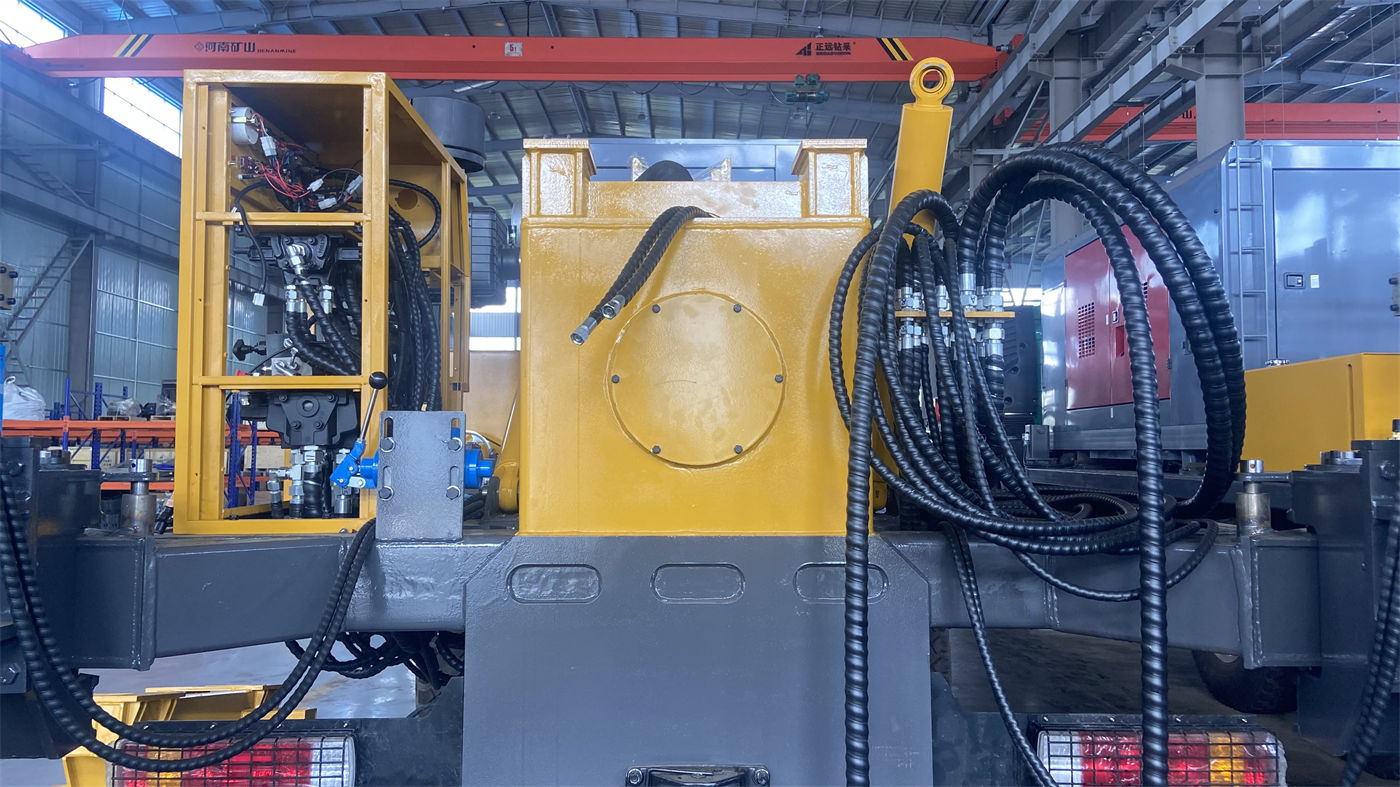
After entering relatively intact rock formations, medium- and high-pressure DTH hammers can be configured for DTH drilling, with recommended working air pressure of 1.2–3.5 MPa and air consumption of 16–55 m³/min. Air compressor selection should consider borehole diameter, hole depth, DTH hammer specifications, rock hardness, and altitude simultaneously, and cannot rely on pressure alone. Mining areas commonly involve working conditions such as limestone, sandstone, and granite. Before procurement, lithology data and hole depth conditions should be submitted to the manufacturer to clarify the matching relationship among drill bits, DTH hammers, and air compressors.
Mining area road and site conditions
In mining areas, the WRT600 can be used to construct camp water supply, dust suppression, equipment cleaning, and auxiliary production water wells, and can also undertake some dewatering boreholes according to hydrogeological design. Mining area roads and sites are often rougher, so before entry, the truck-mounted chassis's road passage, turning, and platform bearing conditions should be confirmed. The 26 T overall machine weight and 3.75 m transport height are key verification points for mining area entry.
Boundary between lifting force and downhole resistance handling
The 37 T lifting force provides margin for drill pipe tripping, DTH hammer recovery, and partial casing operations at 600-meter class hole depths. At 600-meter class hole depths, drill pipe self-weight, borehole wall friction, and casing weight all increase. If abnormal tripping resistance occurs, it should first be handled by cleaning the hole and judging downhole conditions, and should not rely solely on maximum lifting force for forced pulling. This point especially needs clear responsibility boundaries in procurement technical communication for deep holes and variable formations in mining areas.
Comparison of configuration verification for the three demand types
| Verification item | Agricultural irrigation | Municipal water supply | Mining water supply |
|---|---|---|---|
| Focus of hole depth and diameter | Water-finding margin and well completion diameter, matched to pump type | Target aquifer depth, screen pipes, and sealing sections | Hard rock hole sections and designed depth of dewatering holes |
| Drilling technique combination | Mainly air drilling, with mud or casing for loose layers | Mud rotary plus casing, switching to DTH in lower rock layers | Medium- and high-pressure DTH, air pressure 1.2–3.5 MPa |
| Air compressor verification | Displacement and pressure both sufficient; air drilling preferred in arid areas | Confirm air supply according to water inflow and hole cleaning needs | Match according to rock hardness, altitude, and hole depth |
| Scope of supporting equipment | Whether mud pump, drilling tools, and casing are included in the quotation | Supply boundaries for mud pump, drilling tools, screen pipes, and casing | Supply of DTH hammers, drill bits, air pipes, and consumables |
| Road and site conditions | Rural road width, bridge and culvert load-bearing capacity, field entry routes | Passage and site clearance around the community | Mining area roads, platform bearing capacity, turning space |
| Data to be provided by the owner | Target water yield, designed well depth, intended pump type | Hydrogeological survey and water quality evaluation results | Lithology data, hole depth, altitude |
Items requiring itemized confirmation during procurement inquiry
The WRT600 overall machine parameters can serve as a starting point for inquiry, but the following contents cannot be determined from the model alone and should be listed item by item in the quotation:
- The pressure and displacement of the air compressor to be equipped, and whether it is supplied with the machine.
- Whether mud pumps, drilling tools, DTH hammers, drill bits, casing, air pipes, etc. are standard or optional for the overall machine.
- The ratio and quantity of 3 m and 6 m drill pipes.
- The scope of the dual auxiliary winches and accompanying tools.
- Confirmation of overall machine dimensions and weight in transport state, and attribution of responsibility for road surveys.
- Which party provides the technique plan when switching from upper loose layers to lower hard rock.
Drilling efficiency, drilling depth, and final well completion results are affected by actual geological conditions, downhole tools, drilling angle, and operating methods, and should be based on on-site working conditions. The product information on this site does not provide well completion data, customer cases, or price information for specific projects. During procurement, written confirmation should be requested item by item from the manufacturer.