












The WRT1000 has a maximum drilling depth of 1000 m, but 1000 m is the equipment's rated capacity, not a guarantee that any well can be drilled directly to 1000 m. Whether it can actually be achieved depends on several sets of inputs: hole diameter, formation, drill string and casing weight, air compressor matching, and site access transport conditions. The following is presented in the order of items that need to be verified before purchase.
First Look at Hole Diameter: 105–800 mm Determines the Entire Load Chain
The WRT1000's drilling diameter range is 105–800 mm. As hole diameter increases, drill string rotary load, air compressor flow rate demand, casing weight, and hole completion difficulty all rise simultaneously. In other words, the achievable hole depth for the same machine is not the same at 105 mm hole diameter and at 800 mm hole diameter.
Before purchase, the target well's water yield and completion structure should be determined first, then the required well diameter and well casing size should be derived, rather than budgeting based on the 800 mm upper limit. The upper diameter limit is the equipment's capacity boundary, not a recommended construction parameter.
Formation Combination Determines Whether the Process Route Is Staged
A 1000-meter-class deep well is rarely a single formation. Common combinations are an upper loose overburden, a middle weathered rock or fractured zone, and a lower intact hard rock. The WRT1000 can switch processes by section:
- Soil, clay, sand, and gravel layers: use mud rotary, casing, or other hole stabilization methods. The stability of the upper hole section is particularly important for deep wells; early hole collapse, diameter reduction, or casing problems will significantly increase subsequent treatment costs.
- Relatively intact rock formations such as limestone, sandstone, and granite: can be equipped with medium- and high-pressure down-the-hole hammers for DTH drilling.
- Fractured zones and mixed formations: reduce penetration rate, strengthen hole cleaning, and handle blockages and diameter reduction according to hole wall conditions.
If the project formation is dominated by strong water inflow aquifers, increased water in the hole will affect DTH hammer cuttings discharge and circulation status. Before purchase, the depth of the main water-producing layers and expected water inflow must be included in the air supply and casing plan.
Lifting Force and Rotary Torque: The Real Bottleneck in Deep Holes Is Here
At a hole depth of 1000 m, drill pipe self-weight, casing weight, and hole wall friction all increase significantly. The relevant parameters of the WRT1000 are as follows:
| Parameter | WRT1000 |
|---|---|
| Lifting force | 51 / 52 T |
| Axial pressure | 11 T |
| Rotary torque | 20000 / 10000 N·m |
| Rotation speed | 70 / 140 r/min |
| Feed stroke | 7 m (3 m or 6 m drill pipes can be used; recommended drill pipe diameter 114 mm) |
| Fast lift / fast feed | 28 m/min / 42 m/min (non-drilling actions) |
| Diesel power | 194 kW |
The low-speed high-torque gear is suitable for large-diameter, hard rock, and high-friction hole sections; the high-speed gear is suitable for stable formations with lower resistance. Deep hole construction requires dynamic adjustment of gears based on rotary load, cuttings return, and drill string wear. It should be noted that lifting force is used for tripping, DTH hammer recovery, some casing operations, and handling tools in abnormal hole sections. When pulling resistance continues to rise, the hole should be cleaned first and the downhole condition assessed, rather than directly pulling with maximum lifting force.
Drill Pipe Selection Affects the Number of Connections and Operating Conditions
The 7 m feed stroke can be equipped with 3 m or 6 m drill pipes. 6 m drill pipes are suitable for long-cycle deep hole construction, reducing the number of connections; 3 m drill pipes are more practical on sites with limited space, transport, or manual operation.
The Air Compressor Is an External Variable for 1000 m DTH Drilling
The WRT1000's recommended working air pressure for DTH down-the-hole drilling is 1.65–8 MPa, with air consumption of 16–96 m³/min. 1000-meter-class deep holes and large-diameter hard rock place high demands on air compressor pressure and flow rate. Selection must be comprehensively judged based on DTH hammer specifications, hole diameter, hole depth, altitude, and rock hardness, not just rated pressure. The air compressor is project-matched equipment, and its capability should be separately confirmed during purchase to see whether it matches the target working conditions.
Complete Machine Transport and Site Access Conditions Are Easily Underestimated
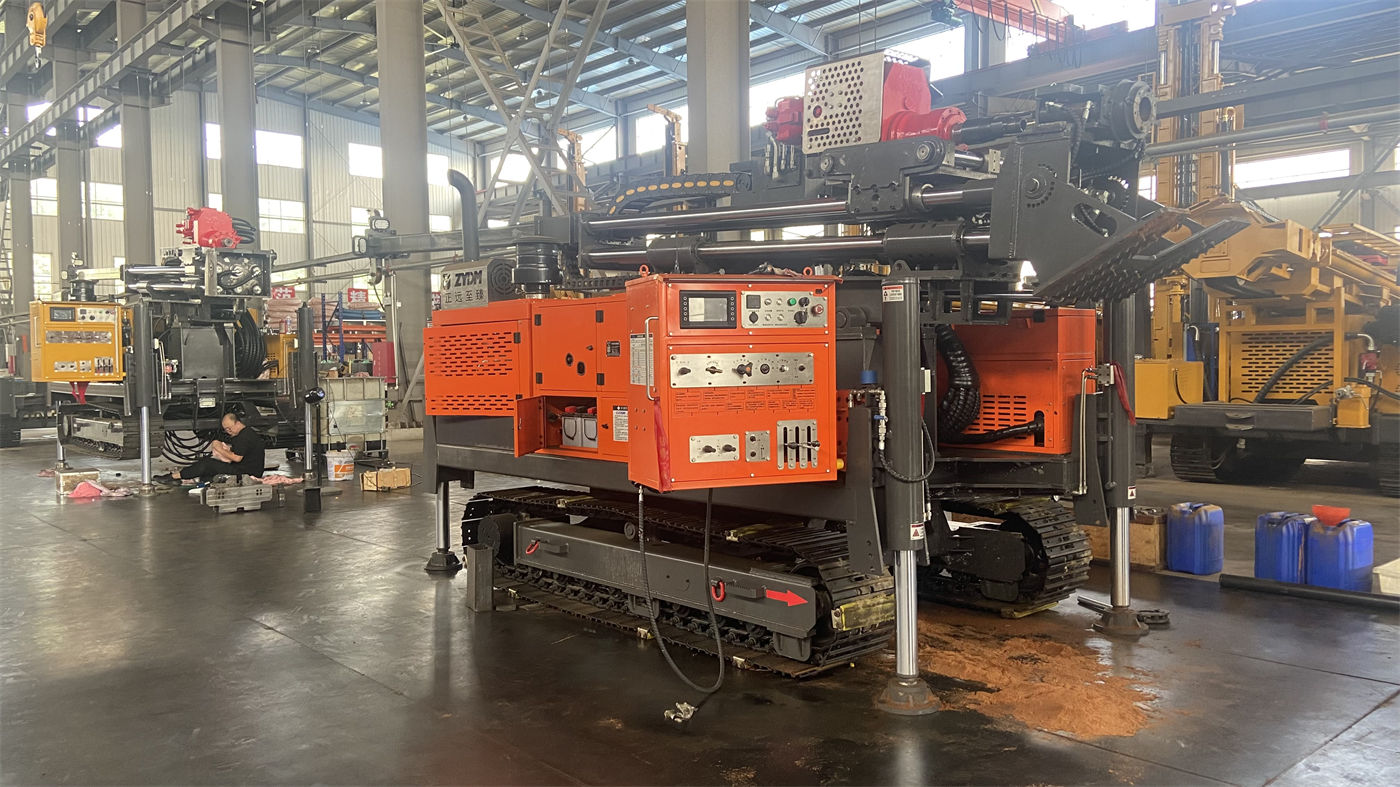
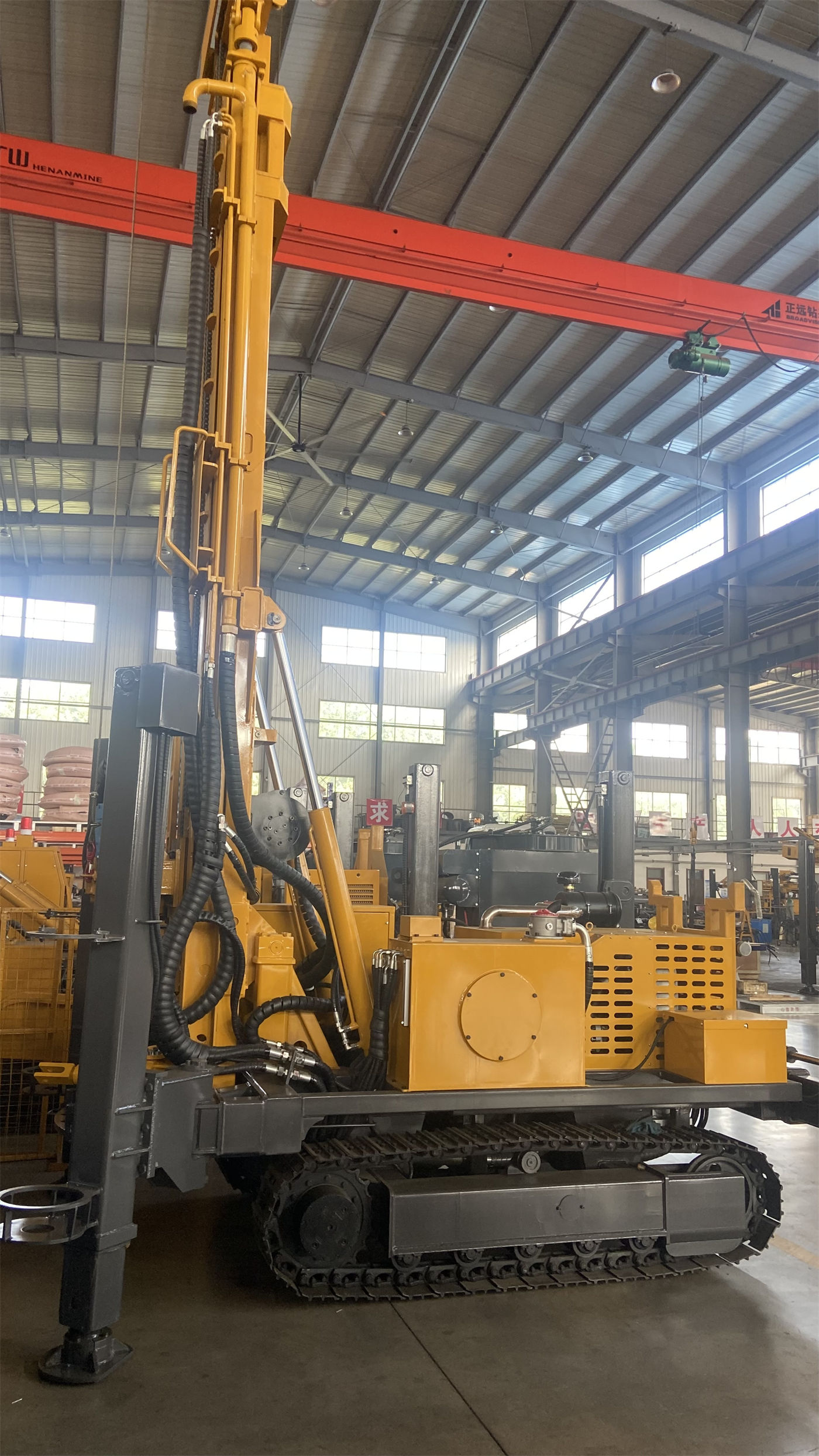
The WRT1000 complete machine weighs about 26 T, with transport dimensions of about 10.8 × 2.5 × 4.23 m. The truck-mounted chassis improves transfer efficiency between drilling points, but the 4.23 m transport height means the following must be verified before site access:
- Road height limits, bridge and overhead line clearances;
- Factory gate openings and other overhead obstacles;
- Passability, slope, and turning radius of mining area or site roads;
- Load-bearing conditions of the drilling rig platform.
These are site conditions that must be resolved before purchase, not after the equipment arrives.
Input Conditions Recommended to Confirm Item by Item Before Purchase
- Target well depth and staged hole diameters, especially the proportion of the maximum diameter section;
- Formation layer description, including loose layer thickness, fractured zone location, and main aquifer depth;
- Expected water yield and completion structure, which determine well casing and pump type;
- Drill pipe specifications (3 m or 6 m, diameter 114 mm) and casing weight;
- Whether the matched air compressor's pressure and flow rate can cover the target hole depth and diameter;
- Site access road height limits, platform load-bearing capacity, and transfer route;
- Diesel engine power performance under the project location's altitude and temperature conditions.
The clearer the above conditions, the easier it is to judge whether the 1000 m drilling depth can be achieved in a specific project. Equipment parameters themselves do not constitute a commitment to the completion result of a particular well; the final plan needs to be determined based on hydrogeological data and professional design. Configurations such as the truck-mounted direct-mast structure and dual auxiliary winches (4 T + 3 T) have practical significance for deep hole tool handling and site organization, but their selection value also depends on whether the above working conditions match.