












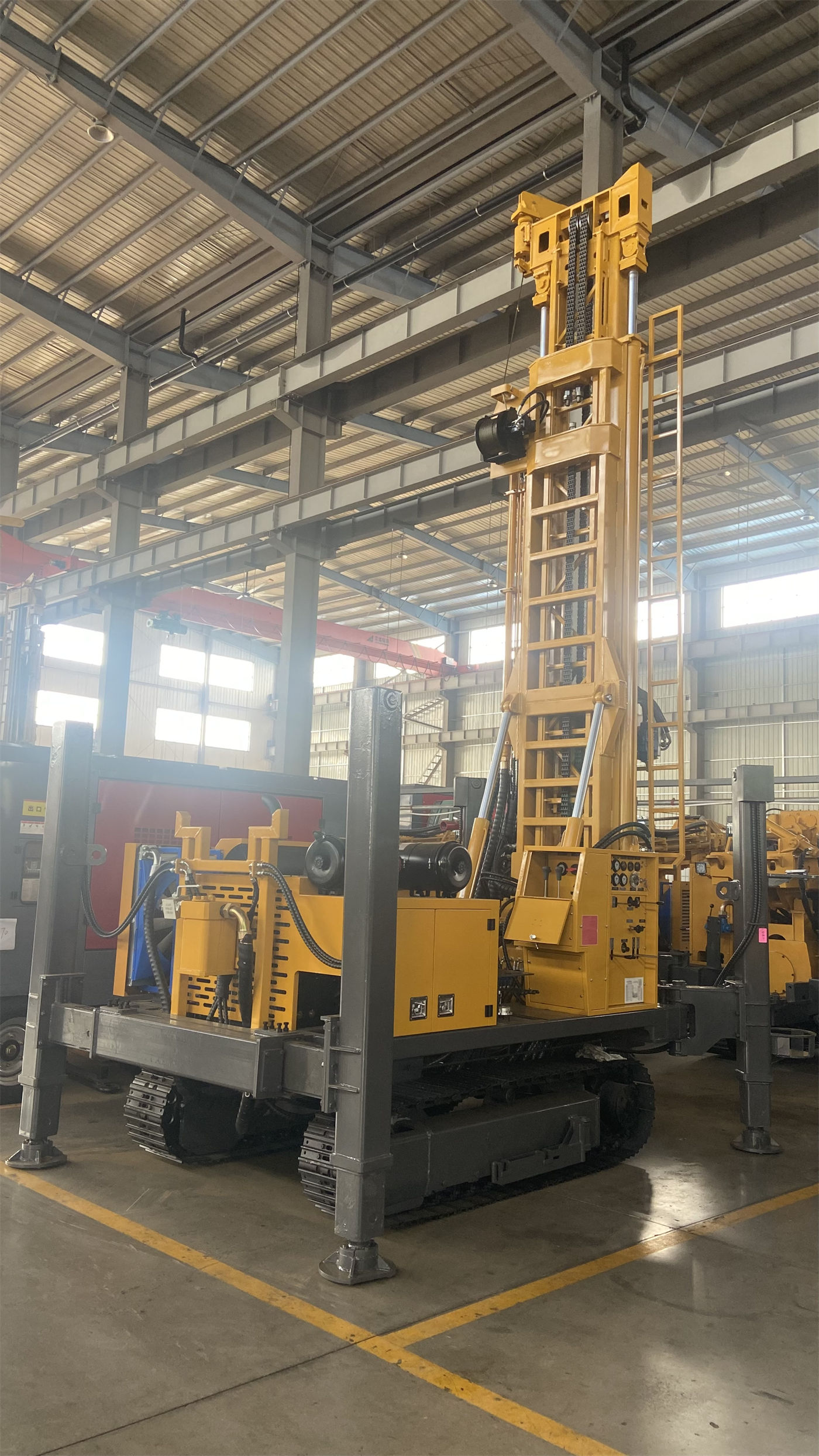
Whether the lifting force and rotary torque of a 600-meter class water well drilling rig are sufficient cannot be judged by maximum drilling depth alone. The deeper the hole, the greater the drill pipe weight and borehole wall friction, which mainly consume lifting force; the larger the hole diameter and the harder the rock formation, the higher the rotational resistance, which mainly consumes torque. The publicly available parameters of the WRT600 are: maximum drilling depth 600 m, borehole diameter 140–450 mm, lifting force 37 T, axial pressure 6 T, dual-condition rotary torque 15000/7500 N·m, and 132 kW diesel power. To determine whether this configuration matches your project, you need to break down the hole diameter, depth, and formation combination separately for verification.
First, distinguish what each of the three variables consumes
Hole diameter affects torque, cuttings removal, and casing
As the hole diameter increases, the contact area between the drill bit and the borehole wall, the volume of broken rock, and the required upward return air velocity all rise simultaneously, increasing both rotary torque and air compressor displacement requirements. The WRT600's hole diameter range is 140–450 mm. Agricultural and community water wells typically use smaller diameters, while mining areas or high-flow water supply may require diameters close to the upper limit. The hole diameter should be determined by the well casing, screen pipe, submersible pump, and expected water yield—not by first drilling at the equipment's maximum diameter and then working backward to the well completion structure.
Hole depth mainly accumulates lifting force and drill string load
As hole depth increases, the drill pipe weight, number of joints, borehole wall friction, and risk of cuttings accumulation all accumulate. The WRT600's 37 T lifting force must simultaneously cover drill pipe tripping, DTH hammer recovery, and some casing operations. Among these, casing weight is easily underestimated: if the well completion plan requires running deeper, larger-diameter casing, the casing weight and lifting force margin should be calculated separately, rather than mixed with drill pipe weight in estimation.
Formation determines torque peaks and condition switching
The WRT600's rotary torque is 15000/7500 N·m dual-condition, corresponding to maximum rotation speeds of 70/140 r/min. The low-speed high-torque gear is more suitable for large diameters, hard rock, and high-friction hole sections; the high-speed gear is suitable for stable formations with lower resistance. The upper loose layer can use mud rotary or casing, and after entering relatively intact limestone, sandstone, or granite, a medium-to-high pressure DTH hammer can be switched to. Mixed formations mean that process switching may be needed within the same well. When judging whether torque is sufficient, consider the most difficult hole section rather than an average.
Different combinations of hole diameter and depth have different load directions
| Combination scenario | Main pressure point | Information to verify during procurement |
|---|---|---|
| Small diameter, near 600 m | Drill pipe weight and borehole wall friction drive up lifting force demand | Proposed drill pipe diameter and length combination, expected maximum tripping resistance |
| Large diameter, medium-shallow hole | Rotary torque, cuttings removal air volume, and casing weight increase | Drilling process for target diameter, air compressor pressure and displacement |
| Large diameter, near 600 m | Torque and lifting force both approach upper limits | Whether it falls within the WRT600's applicable range; requires item-by-item calculation by the manufacturer |
| Thick loose overburden | Borehole wall stability and casing operations consume lifting force | Casing specifications, running depth, mud or casing stabilization plan |
| Mainly intact hard rock | Torque, air pressure, and air consumption demand increase | DTH hammer specifications, displacement matching under working pressure 1.2–3.5 MPa |
The scenarios in the table are only classifications of load direction and do not mean that the WRT600 has been verified as applicable in all combinations. Maximum drilling depth 600 m and maximum hole diameter 450 mm are two independent parameters. Whether both can be accommodated when large diameter and deep hole occur simultaneously is not given in the data on this site, and should be confirmed with the manufacturer based on the specific borehole structure.
When checking against WRT600 public parameters, what can and cannot be calculated
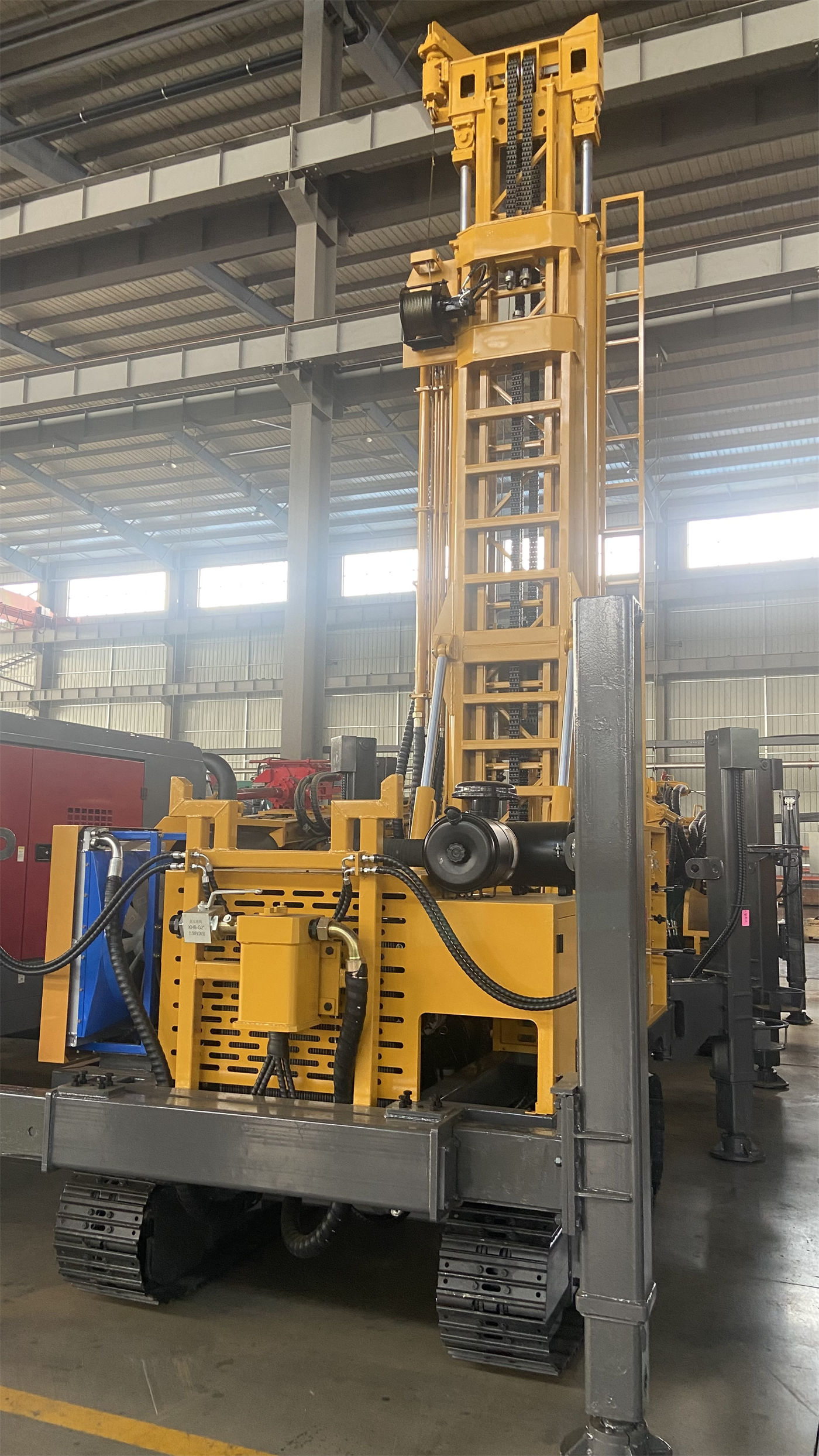
Deterministic information that can be compared includes: maximum drilling depth 600 m, hole diameter 140–450 mm, lifting force 37 T, axial pressure 6 T, torque 15000/7500 N·m, rotation speed 70/140 r/min, feed stroke 7 m, compatible with 3 m or 6 m drill pipes, recommended drill pipe diameters 102/114/127 mm, DTH working pressure 1.2–3.5 MPa, air consumption 16–55 m³/min, and overall weight approximately 26 T. These values can be used directly to question manufacturers.
What cannot be directly concluded: the materials do not provide drill pipe unit weight, maximum casing weight, torque consumption curves for different hole diameters in different rock formations, or safety margin coefficients for torque and lifting force. Therefore, it is impossible to calculate from existing data whether a specific combination of hole diameter and depth is "sufficient" or "insufficient"; these parameters can only serve as verification items for technical communication with manufacturers.
Data checklist to verify with manufacturers before procurement
- Proposed drill pipe diameter, length, single-piece weight, and joint type, as well as recommendations for choosing between 6 m and 3 m drill pipes.
- Recommended rotation speed, torque gear, and feed parameters for intact hard rock and fractured zones at the target diameter.
- Estimated total drill string weight at the deepest hole section, maximum tripping resistance range, and an explanation of the applicable range corresponding to the 37 T lifting force.
- Well completion casing diameter, running depth, total weight, and connection method, to confirm whether lifting force distribution is affected.
- Matching relationship between DTH hammer specifications and air compressor pressure and displacement under the DTH process; note that pressure within the 1.2–3.5 MPa range does not necessarily mean sufficient displacement.
- Adjustments to hole cleaning methods in strong aquifers or water inflow sections, as well as the basis for well completion screen pipe, water stop section, and pump type design.
- Site transfer conditions: road width, height restrictions, turning radius, and drilling site bearing capacity requirements corresponding to the overall weight of approximately 26 T and transport dimensions of approximately 10 × 2.48 × 3.75 m.
Parts that need clarification when data is insufficient
The information on this site about the WRT600 covers the main technical parameters and applicable processes, but does not cover the torque and lifting force calculation process for specific projects, measured loads under different formations, load limits for casing operations, or verification data for large-diameter deep-hole combination conditions. Actual drilling efficiency, drilling depth, and well completion results should be based on on-site conditions and manufacturer technical confirmation data. If a project simultaneously approaches the upper limits of 600 m hole depth and 450 mm hole diameter, it is recommended to request a written verification opinion from the manufacturer for the target borehole structure before procurement, rather than judging solely based on the model parameter table.