












Most disputes in water well drilling rig purchase contracts do not arise from price or main machine parameters, but from the wording of three categories: delivery scope, standard accessories, and training services. Once the main machine model is clearly stated, both parties rarely reverse their positions; what is truly easy to overlook is which items are considered standard, which are optional, which the buyer must provide, and what exactly the training covers, where it takes place, and to what level it is conducted. Based on the structural data of trailer-mounted, truck-mounted, and crawler water well drilling rigs on this site, this article explains the specific items that should be clarified in these three sections.
I. Delivery Scope: First Distinguish the Complete Machine, Standard Attachments, Optional Configurations, and Supporting Components
If the delivery scope in a contract only states a model number, two types of deviations are likely during execution: the buyer assumes the mast, power unit, mud pump, and winch are included, while the seller may consider some of these optional. Water well drilling rigs vary greatly in structure, so each model must be itemized separately.
1. The Complete Machine Itself Should Specify the Structural Form and Main Components
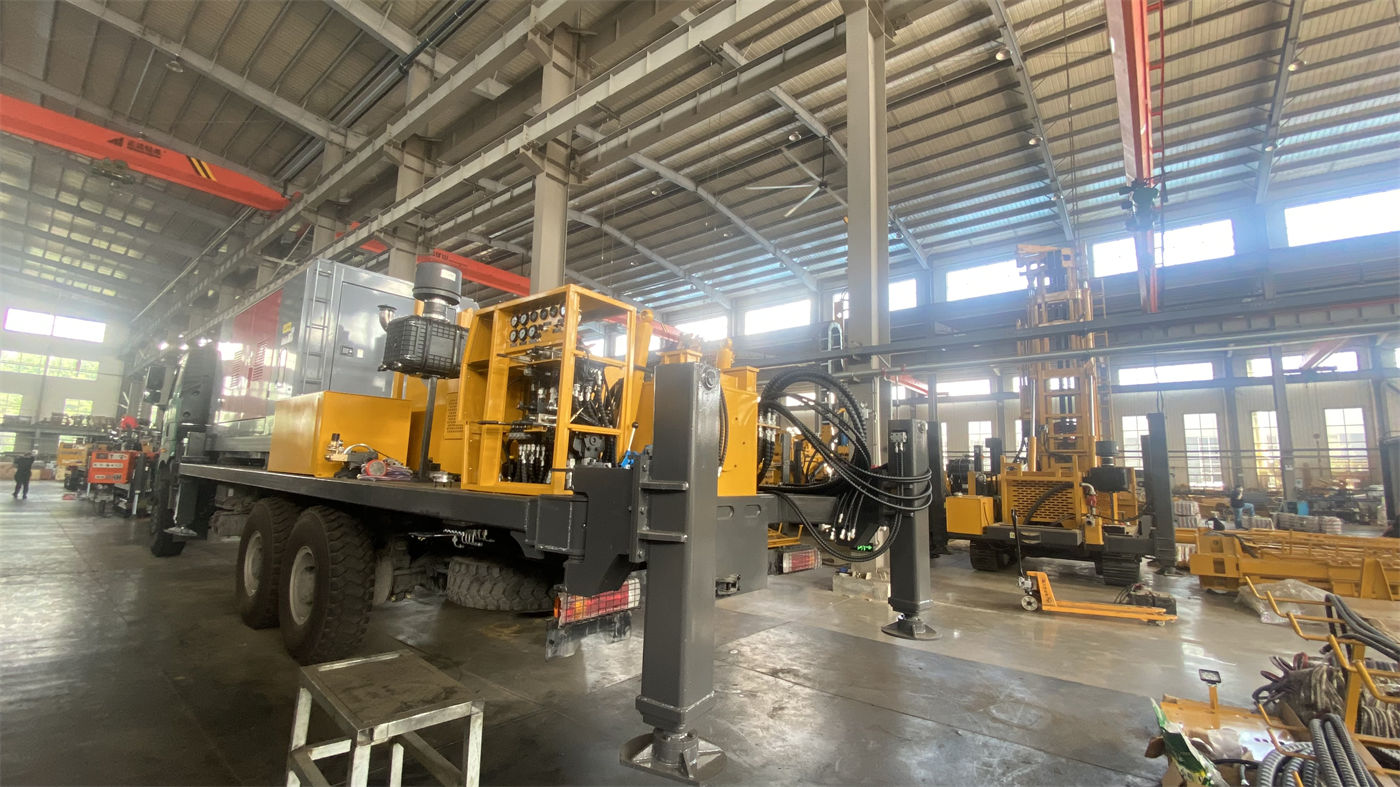
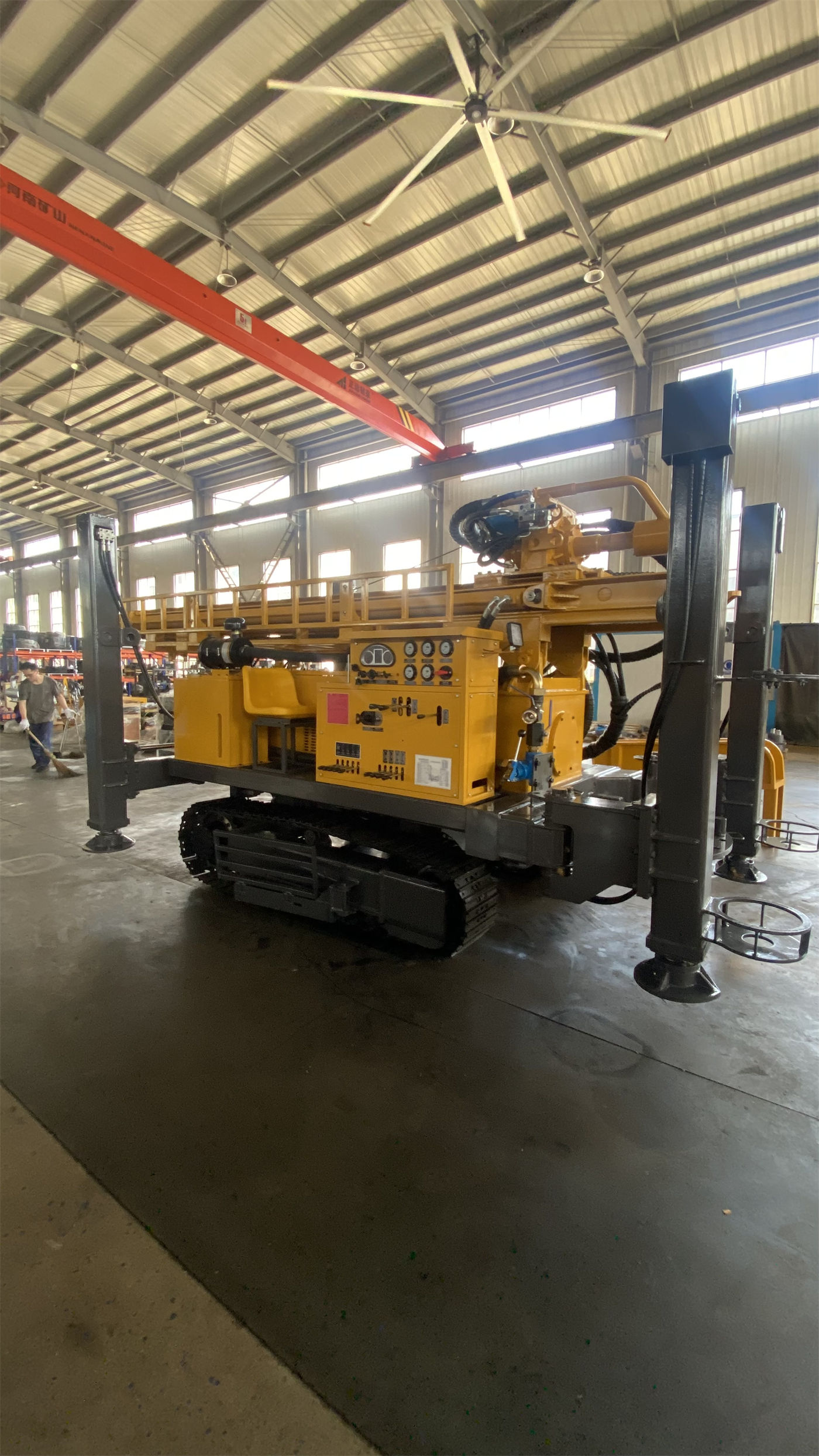
- Mounting type: Whether it is trailer-mounted, truck-mounted, or crawler-mounted. For example, WRTR1000 and WRTR600 are trailer-mounted rotary table rigs; WRT1200, WRT1000, WRT600, and WRT1000 are truck-mounted with a vertical mast structure; WR400RC, WR500RC-CS3, WR500RCE, WR600RC, etc., are crawler-mounted.
- Mast type: Rotary table models involve hydraulic telescopic K-type masts and telescopic masts. For example, the WRTR1000 mast has a total height of 19.5 m, an effective height of 18.482 m, and a maximum load of 60 T; the WRTR600 has short mast and long mast versions, with the short mast having an effective height of 12 m and the long mast 15 m. Vertical mast models such as WRT1200, WRT1000, and WRT600 emphasize a vertical mast structure. Different mast types also mean different transport dimensions and site clearance requirements.
- Power and transmission: The diesel engine model, power, and rated speed should be written into the contract. For example, the WRTR1000 uses a 269 kW Cummins diesel engine; the WRT1200 can be equipped with 220 kW or 264 kW diesel power; the WR500RC-CS3 and WR600RC-CS3 use 132 kW Cummins engines; the WR400RC uses a 92 kW Yuchai engine. For models with multiple power options, the final configuration must be specified.
- Rotation and lifting parameters: For rotary table models, the rotary table torque and speed, such as the WRTR1000 at 25 kN·m and 37/52/84/145 r/min; the WRTR600 at 13.8/9.2/6.2 kN·m and 38/57/85 r/min. For power head models, such as the WRT1200 with 24000/12000 N·m dual working conditions and 75/150 r/min, and the WRT1000 with 20000/10000 N·m and 70/140 r/min. These parameters directly determine whether the expected hole diameter and drilling depth can be achieved.
- Mud pump or air compressor matching: The WRTR1000 is equipped with a BW1200/7 mud pump, with a maximum pressure of 7 MPa and a displacement of 1200 L/min; the WRTR600 is equipped with a 3NB-130 mud pump, with a displacement of 8.4–16.6 L/s and a pressure of 5–10 MPa. For pneumatic drilling models, the WRT1200 recommends an air pressure of 1.65–8 MPa and an air consumption of 16–120 m³/min; the WRT1000 is 1.65–8 MPa and 16–96 m³/min; the WR600RC is 1.6–6 MPa and 16–75 m³/min. The contract should specify whether the air compressor is within the delivery scope.
2. Components Easily Omitted
- Winch system: For dual-winch models, the pulling force of the main winch and auxiliary winch should be specified. The WRTR1000 main winch is 90 kN and auxiliary winch 50 kN; the WRTR600 main winch is 40 kN and auxiliary winch 30 kN; the WRT600 is equipped with 3 T and 1.5 T dual auxiliary winches; the WR500RCE auxiliary winch is 20 kN; the WR600RC winch is 2.5 T.
- Water swivel, traveling hook, and kelly: The WRTR1000 traveling hook and water swivel both have a rated load of 60 T, and the kelly is 108 × 108 × 12192 mm; the WRTR600 water swivel has a maximum load of 30 T and an inner diameter of 63.5 mm, and the kelly is available in 7500 mm and 10500 mm lengths. Whether these are part of the complete machine or supplied separately should be clearly stated in the contract.
- Generator and electrical system: The WRTR1000 is equipped with a 50 kW auxiliary generator; the WRTR600 integrates a 200 kW diesel generator set with a rated voltage of 380 V, rated current of 360 A, and frequency of 50 Hz. Whether the generator's power and voltage system match the on-site power conditions needs buyer confirmation.
- Chassis and traveling mechanism: For truck-mounted models, the chassis brand and drive type; for crawler models, the traveling speed and gradeability, such as the WR400RC and WR500RC-CS3 at about 2.5 km/h with a reference climbing angle of 21°, the WR600RC at about 3.5 km/h with a reference climbing angle of 21°, and the WR500RCE with a reference climbing capability of 30°. These parameters affect transport and site entry conditions.
- Hydraulic outriggers: The WR400RC and WR500RC-CS3 outrigger stroke is 1.6 m, and the WR600RC outrigger stroke is 1.7 m. The number of outriggers, stroke, and whether pads are included should be listed in the contract.
3. Optional Configurations Must Be Listed Separately
Optional configurations are the part of a contract most prone to disagreement. The same model can be configured with different process modules for different projects, and the contract should specify item by item whether they are included.
| Optional Item | Example Models Involved | Content to Be Clarified in Contract |
|---|---|---|
| Air-lift reverse circulation process | WRTR1000 optional air-lift reverse circulation | Whether dual-wall drill pipes, air compression system, and sampling equipment are included |
| Mud pump, centrifugal pump, generator, foam pump | WR500RC-CS3 options | Specific models, power, and quantity supplied with the complete machine |
| RC hammer, DTH hammer, drill bits | WR500RC-CS3, WR600RC-CS3, etc. | Specifications, quantity, and whether spare parts are included |
| Air compressor and high-pressure air hose | Pneumatic drilling models | Pressure and displacement parameters, hose length, and connector specifications |
| Different mast versions | WRTR600 short mast/long mast | Ordered version and its transport dimensions |
| Drill pipe specifications and lengths | WRT1200 supports 3 m or 6 m drill pipes; WRTR1000 standard drill pipe 89 × 9400 mm, optional 89/114/127 mm | Diameter, length, quantity, and thread form |
Optional items not appearing in the table should be based on the supplier's technical confirmation documents and should not be inferred from the model name.
4. Buyer-Supplied Items Should Be Stated in the Contract
Towing vehicles, transport vehicles, lifting equipment, fuel, mud materials, on-site water and electricity, foundation pads, etc., usually need to be provided by the buyer. When transporting the WRTR1000, road width, bridge load capacity, turning radius, and transport height limits must be verified; the WRT1200 complete machine is about 32 T with transport dimensions of about 11.5 × 2.25 × 3.2 m; the WRT1000 complete machine is about 26 T with a transport height of 4.23 m. These conditions directly determine the transport method, and the contract should specify which party is responsible for transport and unloading.
II. Standard Accessories: Distinguish Standard Tools, Wear Parts, and Technical Documents
It is recommended to write the three categories of standard accessories separately: standard tools, standard wear parts, and standard technical documents. Many contracts only vaguely state "one set of standard tools," which cannot be verified during execution.
1. Standard Tools
- Special wrenches, disassembly and assembly tools, lubrication tools, etc., should specify name, specification, and quantity.
- Hydraulic system maintenance tools, such as pressure detection ports and corresponding tools.
- Electrical system inspection tools and instruments.
- Track tensioning and traveling mechanism maintenance tools that may be needed for crawler models.
2. Standard Wear Parts and Spare Parts
The list of wear parts needs to be determined according to the model and process. Mud circulation models focus on mud pump wear parts, seals, and high-pressure lines; pneumatic drilling models focus on DTH hammer lubrication, drill bits, high-pressure air hose connectors, and seals; RC models such as WR500RC-CS3 and WR600RC-CS3 also require attention to dual-wall drill pipe connectors, seals, sample return hoses, cyclones, and internal parts of the splitter. The contract should specify the name, specification, quantity of spare parts and whether they are shipped with the machine; it should not merely state "some common spare parts."
3. Standard Technical Documents
- Product certificate of conformity, packing list, and standard checklist; the packing list should be checked item by item against the actual delivery.
- Complete machine operation manual, engine and generator manuals, mud pump manual.
- Electrical schematic diagrams and hydraulic schematic diagrams for on-site troubleshooting.
- Maintenance schedule for key components.
- If export is required, the standard export documents and language versions should also be specified.
If the standard checklist is in a language that cannot be understood or does not match the actual items, verification during acceptance will be impossible. Therefore, the language and numbering method of the documents should be agreed upon in the contract.
III. Training Services: Specify Content, Location, Duration, and Confirmation Method
If water well drilling rig training is only stated as "training provided," it usually cannot be implemented. The following items are recommended to be written into the contract clause by clause.
1. Training Content
- Complete machine structure and principles: Corresponding to the ordered model, including the structure and function of the mast, rotary table or power head, winch, mud pump, generator set, and hydraulic system.
- Operating procedures: Start-up inspection, drilling parameter adjustment, gear shifting, mud or pneumatic circulation operations. Training should be conducted around the specific configuration of the purchased model and should not be mixed with other models.
- Daily inspection and maintenance: Winch wire rope, braking system, drum spooling, hydraulic oil, engine cooling and air filtration, DTH hammer lubrication, and high-pressure air hose inspection. These are maintenance points repeatedly mentioned in the materials.
- Common abnormality diagnosis: How to judge phenomena such as poor mud return, reduced cuttings return, fluctuating air pressure, abnormal torque, and increased resistance when pulling out. The contract may stipulate that training includes abnormality identification, but should not include unconfirmed operating steps.
- Safety precautions: Confirming no overhead lines or obstacles when raising the mast, personnel not standing under suspended drilling tools or near rotating drilling tools, inspection of high-pressure lines and high-pressure air hoses, etc.
2. Training Location and Method
- Whether training is at the seller's factory or at the buyer's construction site; which party bears travel, accommodation, and meals for on-site training.
- Whether it is theoretical training, practical training, or a combination; whether practical training has the corresponding model available for operation.
- Training language and whether an interpreter is needed; cross-border projects require special agreement.
- Whether the training site has the operating conditions for the purchased model.
3. Training Duration, Number of Participants, and Confirmation Method
- Training days and daily class hours; avoid merely stating "one week of training" without a specific schedule.
- Maximum number of trainees and whether additional participants are charged separately.
- Confirmation documents after training, such as training records, sign-in sheets, and completion confirmation forms, which can serve as the basis for acceptance or payment milestones.
- The sequence between training and equipment arrival, installation, and commissioning.
The materials do not provide specific training days and cost standards for each model type; this part needs to be separately negotiated with the supplier and written into the contract.
IV. Practical Pre-Signing Checklist
- Is the delivery scope listed separately by complete machine, standard attachments, optional configurations, and supporting components, rather than just the model?
- Are the complete machine's mounting type, mast type, transport dimensions, and complete machine weight included and checked against project road and site conditions?
- Is the power configuration a single option or multiple options, and is the final selected power and model clearly specified?
- Are the air compressor, mud pump, generator, foam pump, etc., within the supply scope, and do the parameters match the purchased model?
- Are the specifications and quantities of drill pipes, casing tools, RC hammer, or DTH hammer specified?
- Is there a list of standard tools, wear parts, and spare parts, and is the list numbered and consistent with the packing list?
- Do the language and number of copies of technical documents meet on-site use requirements?
- Are the training content, location, duration, number of participants, and confirmation method written in clause by clause?
- Is the division of responsibility for transport, unloading, installation guidance, and commissioning clear?
- Do the acceptance criteria and acceptance basis correspond to the delivery list?
Matters Needing Confirmation
The product information on this site mainly describes the complete machine structure, parameters, and application scope, and does not cover the delivery list, standard accessory details, and training service clauses of specific contracts. The items listed in this article are those typically required to be agreed upon in a contract and do not constitute a commitment to the actual standard configuration of any model. For a specific model and order, standard attachments, optional items, spare parts, and training arrangements should be based on the supplier's written technical confirmation documents and the formal contract; for matters not covered in the materials, the supplier should be required to provide a written reply before signing.