












The adaptability of water well drilling rigs in high-temperature, extreme cold, or sandstorm environments is usually not directly reflected in standard specification tables. Public information on existing HJH water well drilling rigs provides drilling depth, hole diameter, lifting force, rotary torque, diesel engine power, and some transport dimensions, but does not list high-temperature, extreme cold, or sandstorm-specific configurations item by item. Therefore, when purchasing, environmental adaptability cannot be judged solely by model and standard parameters; the actual supply configuration must be verified with the manufacturer item by item. The following explains what should be clarified with the manufacturer based on verifiable model information.
I. First Confirm Whether the Model Itself Matches the Working Conditions
Different HJH water well drilling rigs differ significantly in drilling depth, hole diameter, mounting form, and power. The starting point for verifying environmental adaptability is the degree of match between the model and the project.
| Model | Mounting Form | Max. Drilling Depth | Drilling Diameter | Diesel Power | Relevant Configuration in the Data |
|---|---|---|---|---|---|
| WRTR1000 | Trailer-mounted rotary table | 1000 m | Not specified | 269 kW Cummins NTA855-C360 | 25 kN·m rotary table, 60 T mast, BW1200/7 mud pump, 50 kW auxiliary generator |
| WRTR600 | Trailer-mounted rotary table | 600 m | Max. 500 mm | 200 kW diesel generator set (SCGC-200kW) | 3NB-130 mud pump, short mast 12 m/long mast 15 m, main and auxiliary double winch |
| WRT1200 | Truck-mounted straight mast | 1200 m | 105–900 mm | 220 / 264 kW | 61 T lifting force, 24000/12000 N·m, air pressure 1.65–8 MPa |
| WRT1000 | Truck-mounted straight mast | 1000 m | 105–800 mm | 194 kW | 51/52 T lifting force, 20000/10000 N·m, air pressure 1.65–8 MPa |
| WRT600 | Truck-mounted straight mast | 600 m | 140–450 mm | 132 kW | 37 T lifting force, 15000/7500 N·m, air pressure 1.2–3.5 MPa |
| WR400RC | Crawler reverse circulation | 400 m | 105–305 mm | 92 kW Yuchai | 22 T lifting force, 8000/4000 N·m, air pressure 1.2–3.5 MPa |
| WR500RC-CS3 | Crawler reverse circulation | 500 m | 105–400 mm | 132 kW Cummins | 25 T lifting force, 10000/5000 N·m, CS3 sampling system |
| WR500RCE | Crawler air-lift reverse circulation | 500 m | 140–400 mm | 132 kW | 300 kN lifting force, 8000–12000 N·m, air pressure 1.7–3.5 MPa |
| WR600RC | Crawler reverse circulation | 600 m | 105–450 mm | 132 kW Cummins | 29 T lifting force, 12000/6000 N·m, air pressure 1.6–6 MPa |
| WR600RC-CS3 | Crawler reverse circulation | 600 m | 105–450 mm | 132 kW Cummins | 29 T lifting force, 12000/6000 N·m, CS3 sampling system |
This table only reflects the content already provided in the public information for each model. Most models do not specify operating temperature range, protection rating, or sand prevention configuration. Specific configurations are subject to the manufacturer's technical confirmation documents.
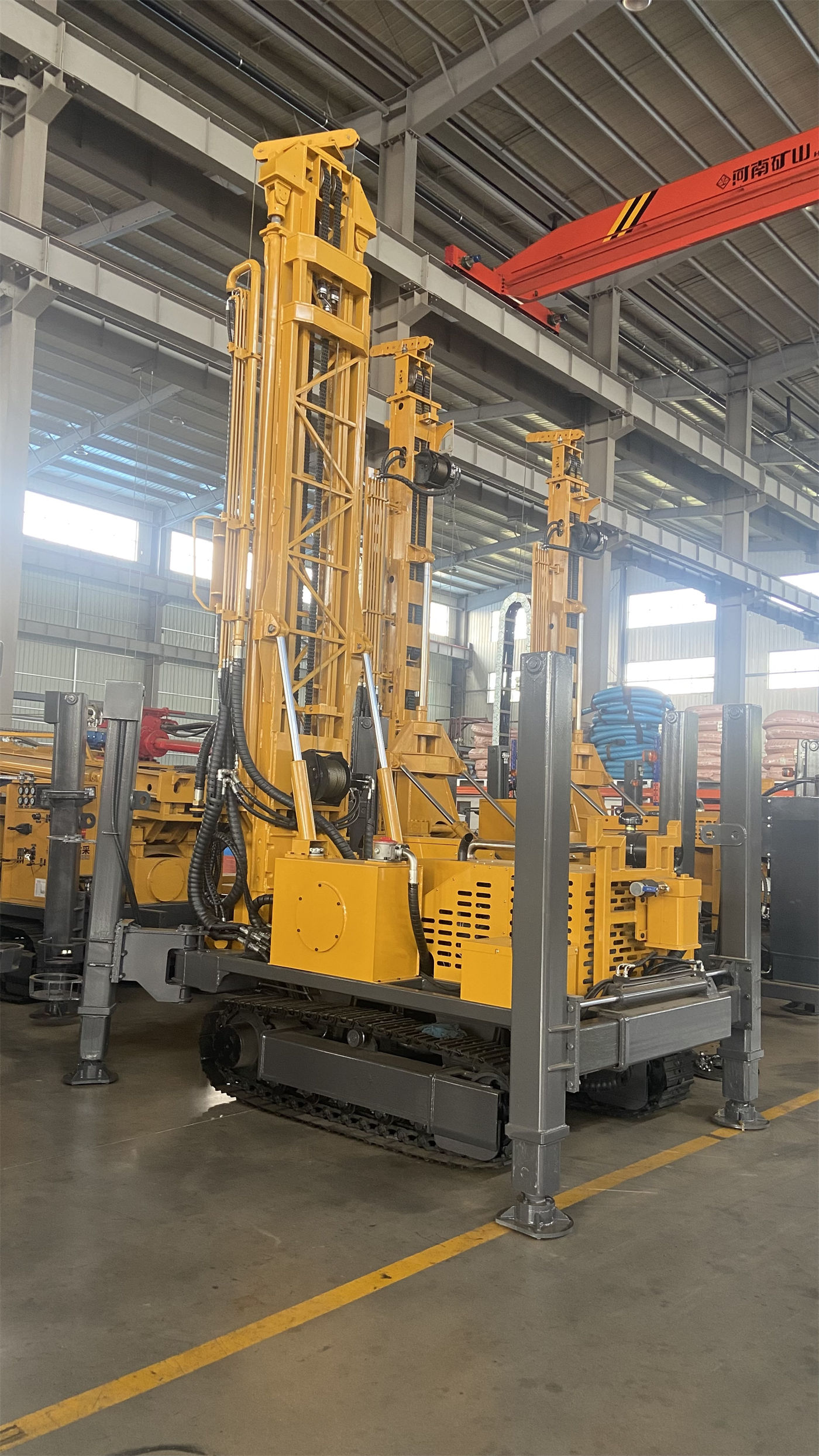
II. Items to Verify for High-Temperature Environment Operation
In high-temperature environments, the diesel engine, hydraulic system, and electrical system are the main points of concern. Existing information on truck-mounted models such as WRT600 and WRT1000 mentions that during long-term hard rock or deep hole construction, attention should be focused on maintaining the engine cooling, air filtration, and fuel systems, but does not give a specific upper ambient temperature limit.
Diesel Cooling and Heat Dissipation Capacity
- What ambient temperature the engine cooling system is designed for, and whether an enlarged radiator or high-temperature environment configuration is available;
- The heat dissipation margin of the hydraulic oil cooler, rotary system, and winch system under continuous high load;
- Whether the 50 kW auxiliary generator configured on models such as WRTR1000 has independent heat dissipation and ventilation arrangements.
Hydraulic Oil and Lubrication
- Whether the recommended viscosity grades of hydraulic oil, gear oil, and grease are adjusted for high-temperature working conditions;
- The lubrication intervals and temperature resistance requirements for the rotary table, power head, winch, and other parts;
- The working pressure and seal requirements of mud pumps (such as BW1200/7 and 3NB-130) in high-temperature environments.
Electrical and Personnel Environment
- The protection and temperature resistance ratings of control cabinets, cables, and generators;
- Whether the cab or operator console can be equipped with cooling configurations such as air conditioning;
- Recommended replacement intervals for hydraulic hoses and seals under high temperature.
III. Items to Verify for Extreme Cold Environment Operation
Extreme cold environments mainly affect starting, hydraulic fluidity, and oil condition. Existing information does not specify the minimum operating temperature of each model, nor does it state whether a low-temperature starting package or preheating system is available.
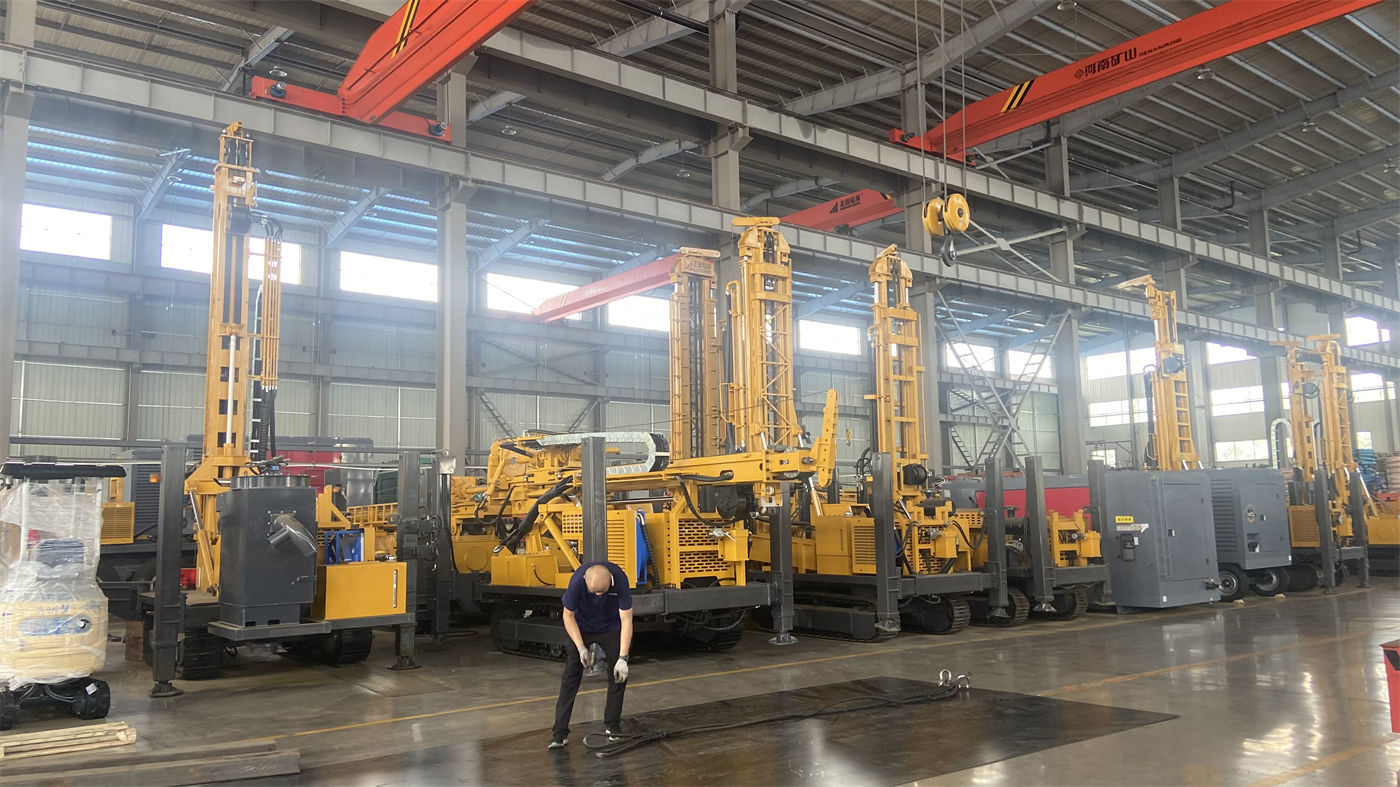
Starting and Preheating
- Whether the diesel engine is equipped with low-temperature starting aids, such as glow plugs, fuel heating, or coolant heating;
- Whether battery capacity and low-temperature starting current are selected according to the project's minimum temperature;
- Anti-icing and anti-blocking measures for the pneumatic system (air compressor and pipelines for DTH) at low temperatures.
Hydraulics and Oil
- Low-temperature hydraulic oil grades and low-temperature fluidity requirements;
- The warm-up procedure for hydraulic pumps and multi-way valves after low-temperature starting;
- Configuration and operating requirements for freeze protection and sedimentation prevention in the mud system at low temperatures.
Structure and Materials
- Material performance requirements for masts, drill pipes, and wire ropes at low temperatures;
- Whether the transport and deployment of straight mast models (WRT1200, WRT1000, WRT600) are affected by low temperatures;
- Low-temperature adaptability of the towing and braking systems of trailer-mounted models (WRTR1000, WRTR600).
IV. Items to Verify for Sandstorm Environment Operation
The key points in sandstorm environments are intake filtration, sealing and dust prevention, and lubrication. Existing information mentions that models such as WRT600 and WRT1000 should increase the frequency of filter element and radiator cleaning on sites with heavy dust, but does not provide specific multi-stage filtration or dust-proof structure descriptions.
Intake and Filtration
- Whether the diesel engine air filter uses multi-stage filtration or a pre-filter, and the specific filtration grade;
- The air compressor intake filtration configuration and dust protection during DTH drilling;
- Dust prevention requirements for the double-wall drill pipe seals of crawler reverse circulation models such as WR400RC and WR600RC.
Sealing and Lubrication
- Dust-proof sealing configuration for the rotary system, power head, and winch;
- Whether the hydraulic oil tank breather has a dust-proof function;
- Protection and cleaning requirements for exposed threads and drill pipe joints in sandstorms.
Electrical and Operating Environment
- The dust-proof rating of control cabinets and junction boxes;
- The sealing and air filtration of the operator console and cab;
- The impact of sandstorms on the heat dissipation channels of generators and auxiliary equipment.
V. Transport and Site Conditions Still Need to Be Verified
These items are related to climate adaptability, but they are also matters that must be confirmed before purchase. Existing information provides transport dimensions and overall weight for some models, which can serve as a basis for communication.
- The WRT1200 has an overall weight of about 32 T and transport dimensions of about 11.5 × 2.25 × 3.2 m. Road width, bridge load capacity, turning radius, site bearing capacity, and overhead obstacles need to be verified;
- The WRT1000 has an overall weight of about 26 T and transport dimensions of about 10.8 × 2.5 × 4.23 m. The 4.23 m transport height requires verification of height limits and gate openings;
- The WRT600 has an overall weight of about 26 T and transport dimensions of about 10 × 2.48 × 3.75 m;
- The WRTR600 short mast transport dimensions are about 15100 × 2480 × 4100 mm, and the long mast about 16630 × 2480 × 4100 mm. Local trailer transport requirements need to be confirmed;
- The WR400RC has an overall weight of about 11 T, a travel speed of about 2.5 km/h, and a maximum climbing angle reference of 21°. Ground bearing capacity and slope need to be confirmed;
- The WR500RC-CS3, WR600RC, and WR600RC-CS3 have overall weights of about 12–12.5 T and dimensions of about 7 × 2.1 × 2.9 m. RC projects also need to reserve a platform for the air compressor and sampling system.
VI. Checklist Recommended for Item-by-Item Confirmation Before Purchase
- Extreme high temperature, extreme low temperature, sandstorm intensity, and altitude data for the project location;
- Whether the standard configuration of the model includes high-temperature, extreme cold, or sand prevention options, and which are optional;
- Environmental adaptability descriptions and limits for the diesel engine, hydraulic system, and electrical system;
- Recommended oil grades, filter specifications, and maintenance intervals;
- Specific solutions for low-temperature starting, preheating, and anti-icing and anti-blocking;
- Air filter, seal, and breather configurations for sandstorm environments;
- Transport dimensions, weight, towing method, and on-site deployment conditions;
- List of accompanying spare parts and wear parts, and after-sales response arrangements.
For the above content, any items involving specific environmental limits, optional configurations, and material solutions must be subject to the manufacturer's formal technical confirmation documents. Existing public information does not list the high-temperature, extreme cold, and sandstorm adaptability configurations of each model one by one, and judgments should not be made solely based on standard specification tables before purchase.