












Mud direct circulation, air foam, and DTH hammer are three different methods of breaking rock at the hole bottom and removing cuttings. When switching between them, it is not a single component that is affected, but the entire system of power, air source, drill tools, wellhead cuttings return, and consumables. Before purchasing or modifying the rig, at least the air compressor pressure and displacement, impactor and drill bit specifications, drill pipe structure, air hoses and foam injection device, wellhead cuttings return and sampling conditions, and the rig's load capacity after switching must be verified item by item. The following explains what needs to be confirmed based on the public information for the WRTR1000 trailer-mounted rotary table water well drill rig on this site; specific values not given in the source material should be confirmed in writing by the supplier according to project conditions and must not be directly copied from other models.
First, distinguish what each of the three processes relies on
The WRTR1000 information lists three drilling methods: mud direct circulation, air foam, and DTH hammer, with optional air-lift reverse circulation. Their ancillary requirements are not the same:
- Mud direct circulation: relies on the BW1200/7 mud pump (maximum pressure 7 MPa, displacement 1200 L/min) and a 25 kN·m rotary table, using mud to carry cuttings, stabilize the hole wall, and cool the drill bit.
- Air foam: adds a foam medium on top of air cuttings removal. The information states it can be used for sections that are partially dry, lost circulation, or require improved cuttings carrying capacity. Foam concentration, air volume, and injection method need to be adjusted according to hole depth, hole diameter, and formation permeability.
- DTH hammer: uses compressed air to drive a down-the-hole impactor to break rock. The information clearly states that an air compressor, DTH hammer, and drill bit matched to the formation should be configured, and specifically notes the need to pay attention to air compressor capacity, DTH hammer lubrication, and cuttings removal status.
For this reason, when switching to air foam or DTH, the mud pump remains on the rig, but the truly critical auxiliary machine becomes the air compressor and the matching air circuit, drill tools, and consumables.
Ancillary equipment to verify before purchase
Air compressor: look at pressure and displacement together
The WRTR1000 information only states that DTH drilling requires a suitable air compressor and points out that if rock powder at the hole bottom cannot be discharged in time, drilling efficiency will be significantly reduced. It does not give specific air pressure and displacement values for this model. Therefore, before purchase, the following should be confirmed with the supplier:
- The air compressor's rated working pressure and effective displacement required for the target hole diameter and depth;
- The impact of altitude and ambient temperature on the air compressor's actual output air volume;
- Whether the air compressor is integrated with the drill rig or towed separately, and how the site layout and pipeline length are arranged;
- The lubrication method required by the DTH hammer, and the matching oil mist lubricator or lubrication device.
It should be noted that parameters from other models of the same brand cannot be directly applied to the WRTR1000. For example, models such as WRT600, WRT1000, WR500RCE, and WR600RC have different air pressure ranges and air consumption rates, and mixing them will mislead selection.
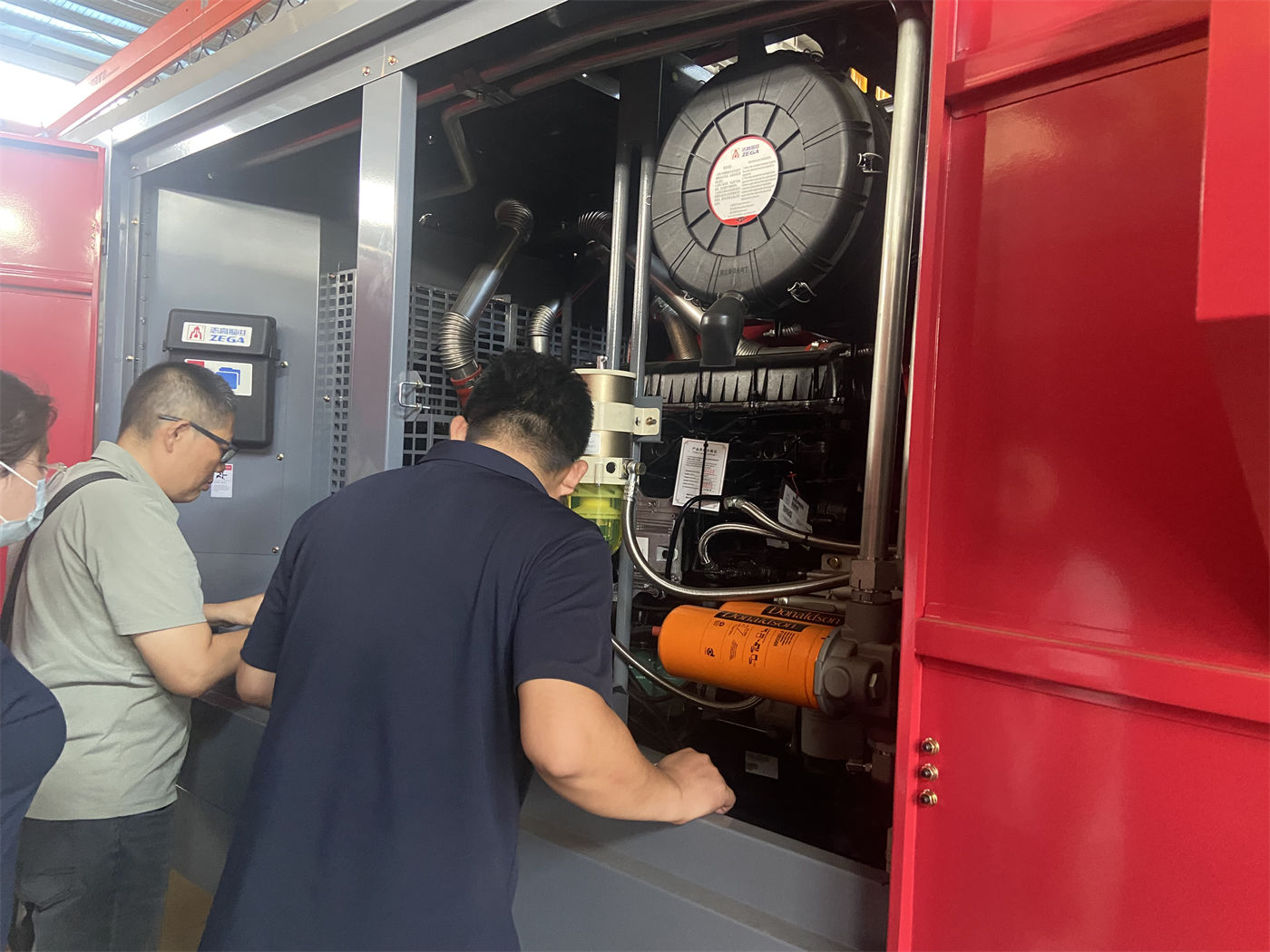
Differences between DTH hammer, drill bit, and air-lift reverse circulation
DTH drilling centers on a DTH hammer plus drill bit. The information mentions that after entering relatively intact hard rock, a suitable air compressor, DTH hammer, and drill bit can be configured; for deep holes in hard rock, attention should be paid to air compressor capacity, DTH hammer lubrication, and cuttings removal status. Before purchase, the matching relationship between the impactor model and rock hardness and hole diameter should be confirmed, as well as drill bit specifications, quantity, and replacement cycle.
If the project further considers air-lift reverse circulation, the information clearly states that the WRTR1000 can be optionally equipped with this process, but it is not a dedicated RC exploration rig. If the project has clear requirements for sample representativeness and sample splitting quality, matching dual-wall drill pipes, an air compression system, and sampling equipment should also be configured. This point is easily overlooked in purchasing decisions.
Drill tools and wellhead cuttings return conditions
The drill tools given in the WRTR1000 information include a 12.192 m kelly and 9.4 m standard drill pipe, with optional drill pipe diameters of 89 / 114 / 127 mm, and a rotary table maximum through-hole of 660 mm. After switching to DTH or air foam, the following need to be verified:
- Whether the drill pipe specifications used match the impactor and air circuit connection method;
- If air-lift reverse circulation is used, whether dual-wall drill pipes and their sealing maintenance conditions are available;
- The direction of wellhead cuttings return, dust and noise control methods, and the on-site cuttings discharge channel;
- Whether cuttings generated during drilling are discharged directly or need to be collected for sampling.
Foam injection device and defoaming conditions
The information's description of the air foam process is: foam concentration, air volume, and injection method should be adjusted according to hole depth, hole diameter, and formation permeability, and uniform parameters cannot cover all formations. Before purchase, it is necessary to confirm whether there is a matching foam pump (or injection pump), foam agent supply channel, and arrangements for defoaming and discharging the returned foam. Specific models and dosages are not given in the information and belong to items that need to be confirmed separately according to the project.
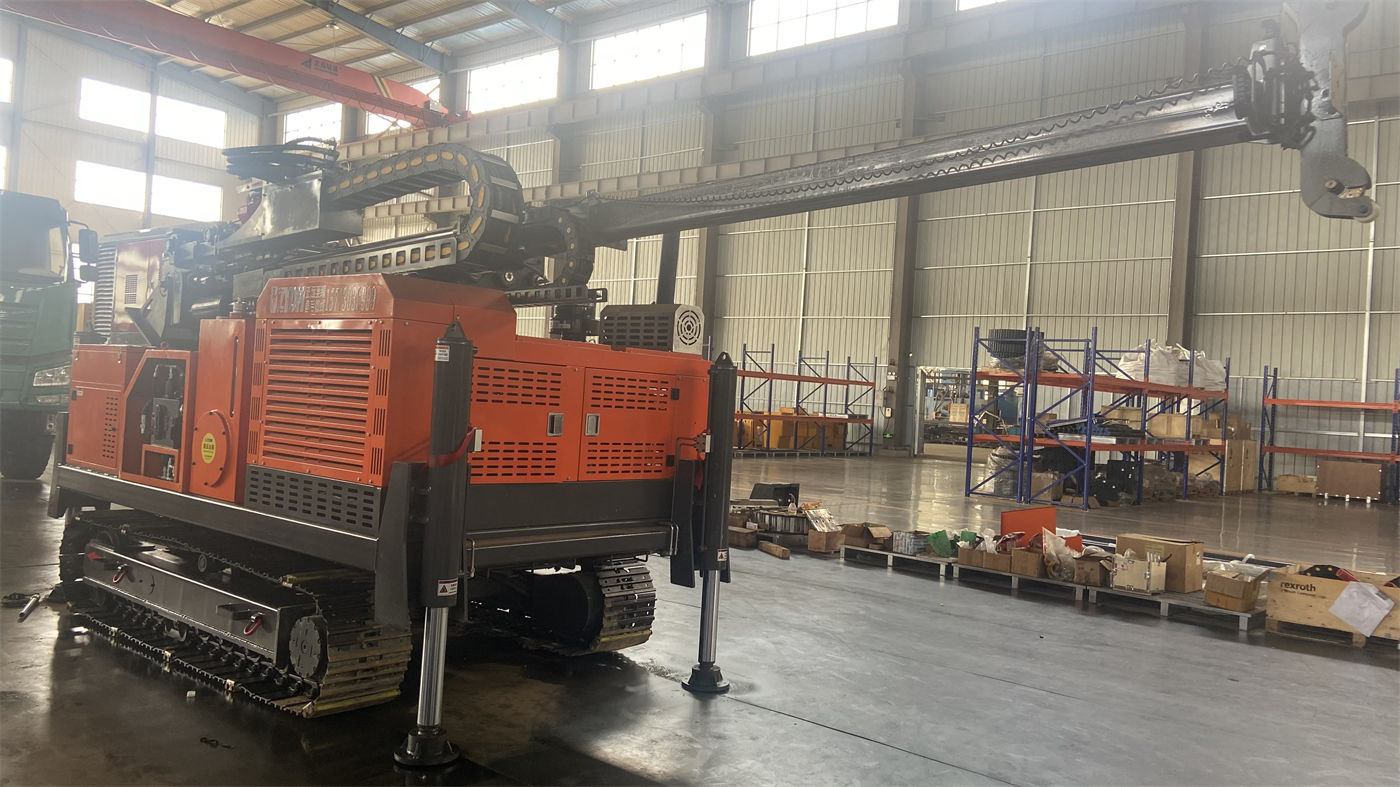
Hole stabilization and casing accessories
The information states that sand and gravel layers are prone to collapse, slurry loss, and hole enlargement, and may require temporary casing or staged casing. The 660 mm rotary table through-hole and 60 T mast load provide greater operating space for casing operations, but the specific casing stages still need to be determined according to formation design. After switching to air drilling, the upper loose layers usually still need to be stabilized first with mud or casing, so casing tools, casing running procedures, and corresponding lifting capacity cannot be omitted just because the process has changed.
Changes in rig load before and after switching
The same drill rig has different force and load paths under different processes. Taking the WRTR1000 as an example, its mast maximum load is 60 T, main winch single-line pull is 90 kN, auxiliary winch is 50 kN, traveling block and swivel rated loads are both 60 T, rotary table maximum torque is 25 kN·m, and four-speed rotation is 37 / 52 / 84 / 145 r/min. The information also notes that when sticking and abnormal resistance occur, they should first be handled through circulation, slow lifting, and downhole judgment rather than directly pulling hard. After switching to DTH, in addition to the drill string itself, the additional weight of the impactor, air hoses, and wind pipes must be considered, as well as the impact of smooth pneumatic cuttings removal on tripping resistance.
Power and energy conditions
The WRTR1000 uses a Cummins NTA855-C360 diesel engine, 269 kW, rated speed 2100 r/min. The information does not explain how this power is distributed between mud direct circulation and DTH, so before purchase the following should be confirmed:
- The actual power demand under DTH or air foam conditions, and whether an independent air compressor with its own power is needed;
- On-site fuel storage and supply conditions;
- Cleaning and maintenance arrangements for the engine air filter and radiator under high-dust conditions.
Consumables and maintenance items to confirm in advance
The consumables and maintenance information covered in the source material includes: DTH hammer lubrication, drill bit wear, high-pressure air circuits, and cuttings return status. The following items do not have specific dosages or cycles given in the information and need to be confirmed with the supplier and on site:
- Specifications and reference consumption of impactor lubricating oil (or oil mist lubricator);
- Basis for judging replacement of drill bits and impactor wear parts;
- Types, preparation, and consumption of foam agents;
- Inspection and replacement cycles for air hoses, connectors, and seals;
- Seal inspection of dual-wall drill pipe joints and inner tubes (if air-lift reverse circulation is used).
Checklist that can be directly used before purchase
| Verification item | Content to confirm |
|---|---|
| Air compressor | Confirm working pressure and effective displacement according to target hole diameter, depth, and altitude; integrated or separate layout |
| DTH hammer and drill bit | Model matching rock hardness and hole diameter; lubrication method; drill bit specifications and spare parts |
| Drill tools | Whether drill pipe specifications are compatible with impactor and air circuit; air-lift reverse circulation requires dual-wall drill pipes and sampling equipment |
| Air circuit | Air hoses, connectors, safe fixing methods; inspection requirements for high-pressure lines |
| Foam system | Foam pump or injection device; foam agent supply; defoaming and discharge of returned foam |
| Hole stabilization and casing | Casing stages for upper loose layers, casing running tools, and lifting capacity |
| Rig load | Load calculation for mast, winch, traveling block, and swivel after switching |
| Power | Distribution of 269 kW power under pneumatic conditions; fuel supply conditions |
| Cuttings return and sampling | Wellhead cuttings return direction; whether depth-based sampling is required and corresponding sampling equipment |
| Consumables and maintenance | Impactor lubrication, drill bit replacement, air circuit sealing, foam agent consumption, etc. |
In the table above, only the directional requirements for air compressor, DTH hammer, drill bit, foam, dual-wall drill pipe, and sampling equipment come from the WRTR1000 information. Specific values and types all need to be confirmed according to project conditions. Putting these conditions into written documentation item by item during the purchasing stage makes it easier to control cost and schedule than making temporary on-site additions later.