












When drilling continuously across multiple job sites, the limitations of trailer-mounted and truck-mounted water well drills are not just about whether they can be driven on the road, but about which conditions must be verified for each relocation. Trailer-mounted units, represented by the WRTR600 and WRTR1000, have the entire machine arranged on a trailer chassis and are moved as a whole by a towing vehicle. Their main limitations come from towing conditions, road passability, and their own transport dimensions. Truck-mounted units, represented by the WRT600, WRT1000, and WRT1200, integrate the drilling system onto a truck chassis, making relocation relatively simpler, but height limits, load capacity, turning, and drill site clearance must still be verified. The following sections explain the practical limitations of the two types separately based on available information.
The structural differences between the two types determine the direction of limitations
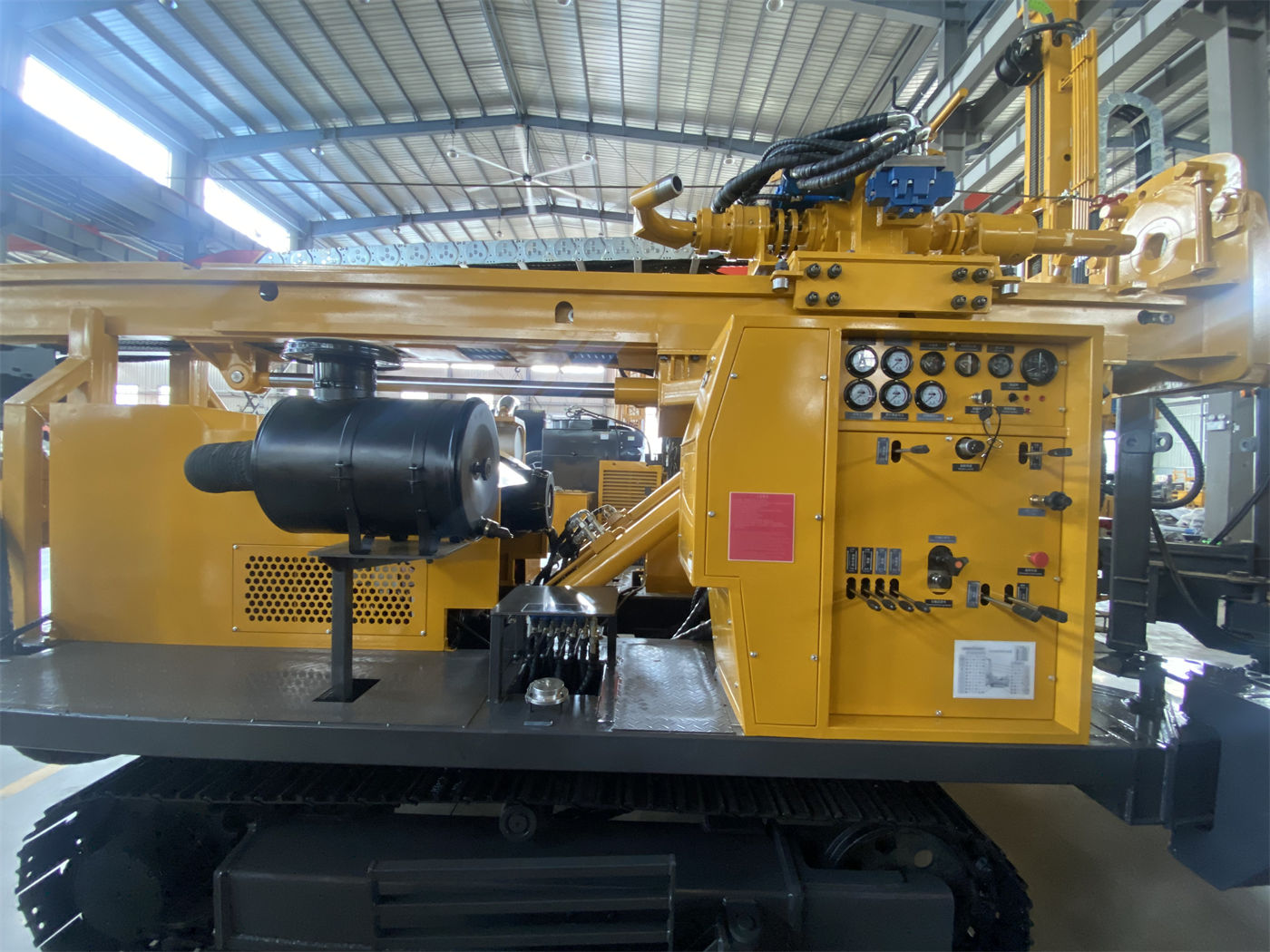
Trailer-mounted water well drills are characterized by the mast, rotary table, winch, mud pump, and power system arranged around a trailer platform. This structure makes it easier to move between projects than a fixed drill site, but the entire unit must be towed by a suitable towing vehicle, and towing capacity, trailer transport requirements, and road conditions must be confirmed before relocation. The WRTR600 trailer structure integrates a diesel generator, 3NB-130 mud pump, rotary table, dual winches, mast, outriggers, and auxiliary breakout mechanism; the WRTR1000 integrates an independent diesel power unit, 25 kN·m rotary table, 60 T hydraulic telescopic K-type mast, dual winches, BW1200/7 mud pump, and 50 kW auxiliary generator on a trailer chassis.
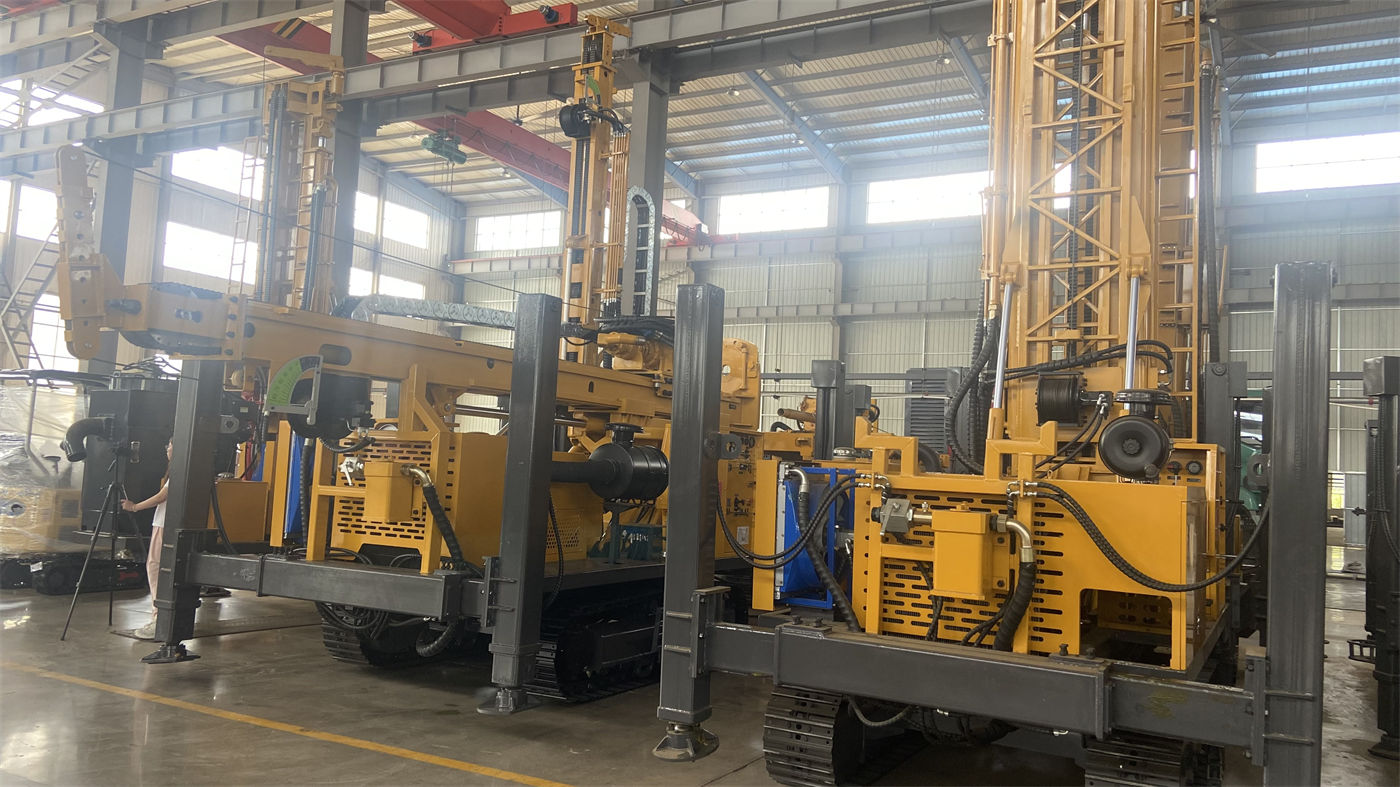
Truck-mounted water well drills integrate the mast, power head, hydraulic feed, winch, and operating system onto a truck chassis, making relocation closer to road vehicle transport. The WRT1200 uses a truck-mounted straight mast structure, and the WRT1000 and WRT600 are also truck-mounted straight-mast fully hydraulic water well drills. The convenience of truck mounting lies in reducing repeated loading, unloading, and lifting organization, but the straight mast and overall machine profile are relatively fixed. The transport profile cannot be lowered in part as with a telescopic mast, making it more sensitive to height limits and entry space.
Relocation limitations of trailer-mounted water well drills
Towing vehicle and trailer transport conditions
Trailer-mounted equipment cannot travel on roads under its own power and requires a matching towing vehicle. According to the WRTR600 working and transport dimension data, the short mast transport dimensions are approximately 15100 × 2480 × 4100 mm, and the long mast transport dimensions are approximately 16630 × 2480 × 4100 mm. Before cross-regional construction, road width, turning radius, bridge load capacity, height limits, and local trailer transport requirements should be confirmed. These dimensions mean that relocation is not simply changing sites, but requires coordinating the towing vehicle, route, and entry sequence together.
Road width, load capacity, and height limits
The transport width of trailer-mounted equipment is approximately 2480 mm, the length is between 15 and 16.6 m, and the transport height is 4100 mm. Before relocation, it is necessary to verify not only whether the road is wide enough, but also whether there is sufficient space at turns, whether bridges and road surfaces can bear the combined weight of the towing vehicle and drill, and whether height limits along the route are below 4100 mm. The data does not provide the overall weight and transport dimensions of the WRTR1000, so judgments regarding road load capacity and height limits for the WRTR1000 must be confirmed with the supplier's technical data.
Site entry and mast working space
When trailer-mounted equipment enters a site, space must be reserved for the towing vehicle to turn around and for the trailer chassis to park. After the mast is raised, the WRTR600 short mast working dimensions are 15100 × 2480 × 14170 mm, and the long mast working dimensions are 15100 × 2480 × 17170 mm; the WRTR1000 mast total height is 19.5 m with an effective height of 18.482 m. The working height is much greater than the transport height, so site clearance and overhead obstacles must be verified during site layout and cannot be judged only by transport dimensions.
Relocation limitations of truck-mounted water well drills
Transport height is the primary item to verify
The relocation efficiency of truck-mounted equipment comes from the chassis, but the straight mast structure makes transport height a prominent limitation. The WRT1000 has an overall weight of approximately 26 T and transport dimensions of approximately 10.8 × 2.5 × 4.23 m. The 4.23 m transport height means that road height limits, bridges, overhead lines, factory gate openings, and other overhead obstacles must be verified before entry. The WRT600 has an overall weight of approximately 26 T and transport dimensions of approximately 10 × 2.48 × 3.75 m, and likewise requires confirmation of road width, bridge load capacity, height limits, turning radius, and drill site ground bearing capacity. The WRT1200 has an overall weight of approximately 32 T and transport dimensions of approximately 11.5 × 2.25 × 3.2 m. Before project entry, road width, bridge load capacity, turning radius, site bearing capacity, and overhead obstacles still need to be verified.
Overall weight and site bearing capacity
Although truck-mounted equipment can relocate on roads, once it reaches the hole position, the overall weight acts concentratedly on the chassis and outrigger positions. The WRT1000 requires stable support in working condition. When drilling large-diameter holes, hard rock, or high-torque operations, ground bearing conditions directly affect overall machine stability. The WRT1200, at approximately 32 T, is more suitable for road relocation between mining areas, industrial parks, farms, and different cities, but mining area road conditions may be complex. Before entry, the road passability, turning, slope, and drill site bearing conditions of the truck chassis must be confirmed. The data does not provide ground pressure ratios or outrigger pad requirements for each truck-mounted model, and such data must be confirmed with the manufacturer.
Straight mast structure and site clearance
The WRT1200 uses a straight mast rather than a telescopic mast. The data indicates that its advantage lies in a more direct overall force path, making it suitable for long-duration high-torque rotation, heavy drill string tripping, and casing operations, at the cost of a more fixed transport profile. Therefore, road height limits, entry space, and site clearance should be confirmed before construction. The WRT1000 also uses a straight mast structure and is oriented toward continuous deep-hole operations rather than compressing the transport profile. For projects that require frequent relocation in narrow sites, the trade-off between the site adaptability of a straight mast and the telescopic mast of a trailer-mounted unit should be considered together during selection.
Comparison of relocation limitations between the two types
| Comparison item | Trailer-mounted (WRTR600 / WRTR1000) | Truck-mounted (WRT600 / WRT1000 / WRT1200) |
|---|---|---|
| Relocation method | Towed as a whole by a suitable towing vehicle | Road relocation using the truck chassis, reducing loading and unloading steps |
| Dimensions to verify | Transport width approximately 2480 mm, transport height 4100 mm, length 15–16.6 m (WRTR600) | Transport height 3.75 m (WRT600), 4.23 m (WRT1000), 3.2 m (WRT1200) |
| Overall weight data | Data does not provide overall weight for WRTR600 or WRTR1000 | Approximately 26 T (WRT600, WRT1000), approximately 32 T (WRT1200) |
| Mast structure | WRTR600 offers a 12 m short mast or 15 m long mast; WRTR1000 has a 60 T hydraulic telescopic K-type mast | All have straight mast structures with relatively fixed transport profiles |
| Site clearance concerns | Working height is significantly greater than transport height; space for turning around and raising the mast must be reserved | Height limits, gate openings, overhead lines, and drill site bearing capacity must be verified |
| Road and load capacity | Bridges, road surface load capacity, and trailer transport requirements must be verified based on the combined towing vehicle and drill weight | Bridges, turning, slopes, and drill site ground bearing capacity must be verified based on overall weight |
Information to confirm before relocation
- Transport dimensions: WRTR600 short mast approximately 15100 × 2480 × 4100 mm, long mast approximately 16630 × 2480 × 4100 mm; WRT600 approximately 10 × 2.48 × 3.75 m; WRT1000 approximately 10.8 × 2.5 × 4.23 m; WRT1200 approximately 11.5 × 2.25 × 3.2 m.
- Overall weight: WRT600 and WRT1000 approximately 26 T, WRT1200 approximately 32 T. Overall weight data for WRTR600 and WRTR1000 is not provided and must be confirmed.
- Road conditions: width, turning radius, slope, bridge load capacity, height limits along the route, and local trailer transport requirements.
- Site conditions: drill site ground bearing capacity, entry passage, turning and parking space, overhead lines, and obstacles.
- Working dimensions: WRTR600 short mast working dimensions 15100 × 2480 × 14170 mm, long mast 15100 × 2480 × 17170 mm; clearance must be verified according to these before raising the mast.
- Towing and transport vehicles: trailer-mounted units require confirmation of a matching towing vehicle; truck-mounted units still require confirmation of road transport requirements and equipment securing methods.
How to reduce relocation limitations during selection
If project drill points are scattered, frequent movement between multiple job sites is required, and road conditions allow towing vehicle passage, the overall transfer of trailer-mounted units can reduce the complexity of transporting the mast, power, and mud system separately. The WRTR600 data also indicates that this structure is more suitable for continuous construction across multiple job sites. For projects requiring cross-regional road relocation and reduced loading and unloading frequency, truck-mounted units are more suitable, but the transport height and overall weight of the WRT1200 and WRT1000 require advance verification of height limits and bridge load capacity.
For projects with narrow sites and strict height limits, short mast configurations or models with lower transport profiles are easier to bring in. The WRTR600 short mast version has an effective height of 12 m, equipped with a 7.5 m Kelly bar and 5.5 m drill pipe, and its transport dimensions are also shorter than the long mast version; the long mast version has an effective height of 15 m, equipped with a 10.5 m Kelly bar and 9 m drill pipe, which helps reduce the number of pipe connections, but transport dimensions increase to approximately 16630 mm. Such configuration differences directly affect relocation arrangements, and transport conditions and drilling efficiency should be weighed together during selection.
It should be noted that the data does not provide the minimum turning radius, climbing ability (WRT series), ground pressure ratio, or passability conclusions under different road grades for each model. This information should be confirmed in combination with specific projects and supplier technical data, and it cannot be inferred solely from transport dimensions that the equipment can pass all roads. Drill rig relocation and construction are specialized operations, and the actual route, site bearing capacity, and transport plan should be verified on site by professionals.