












The most worthwhile thing to do before requesting a quote for a drilling rig is to organize the working condition data into a checklist that can be compared item by item, rather than asking about price first. Only after the supplier knows the use, target hole depth and diameter, formation conditions, site transport conditions, and auxiliary systems can they determine which type of drilling rig may be applicable. This article organizes the information that buyers typically need to prepare into several groups of questions and lists the items that need to be confirmed with the supplier one by one. When the product scope of this site is involved, it only explains the existing product categories and verified parameters, and does not involve price, delivery time, certification, or construction cases.
First Clarify the Drilling Purpose: Water Well, Core, or Reverse Circulation Have Different Orientations
Although all are called drilling rigs, the focus of water well, core, and reverse circulation applications differs greatly. Buyers can first determine what the main goal of the project is.
- If the goal is to complete a well and extract water, the focus is on hole depth, hole diameter, well completion structure, aquifer location, and water yield design, generally classified under water well drilling rigs.
- If the goal is to obtain continuous, intact cores, the focus is on coring capability and core specifications, and a dedicated core drilling rig should be selected rather than substituting a water well drilling rig.
- If the goal is to obtain cuttings samples by depth for mineral exploration or geological sampling, it can be classified under reverse circulation drilling rigs.
- If the same project requires both well completion and sampling, it is necessary to distinguish which holes are mainly for well completion and which are mainly for sampling, and then determine the equipment combination.
The existing products on this site cover three directions: water well drilling rigs, core drilling rigs, and reverse circulation drilling rigs. The water well direction includes WRTR1000 and WRTR600 trailer-mounted rotary table drilling rigs, and WRT1200, WRT1000, and WRT600 truck-mounted direct mast water well drilling rigs; the reverse circulation direction includes crawler-mounted models such as WR400RC, WR500RC-CS3, WR500RCE, WR600RC, and WR600RC-CS3. After the use is clearly determined, the subsequent hole depth, hole diameter, and formation data have a basis for comparison.
Target Hole Depth and Diameter: Provide a Range Rather Than a Single Number
A common problem during inquiries is providing only one design hole depth, when in fact the supplier needs to know the range and corresponding diameters. Buyers are advised to organize the following:
- The design hole depth range, for example, what the common hole depth and the deepest hole depth are;
- The opening diameter and final hole diameter, whether casing is needed, and casing specifications and stages;
- Whether single-pass drilling is required, or staged reaming is allowed;
- The expected specifications of the well pipe, filter pipe, and submersible pump during well completion.
Taking verifiable parameters from this site's data as examples: WRTR1000 has a maximum drilling depth of 1000 m and a rotary table through-hole diameter of 660 mm; WRTR600 has a maximum drilling depth of 600 m, a maximum drilling diameter of 500 mm, and a rotary table through-hole of 500 mm; WRT1200 has a maximum drilling depth of 1200 m and a drilling diameter of 105–900 mm; WRT1000 has a maximum drilling depth of 1000 m and a drilling diameter of 105–800 mm; WRT600 has a maximum drilling depth of 600 m and a drilling diameter of 140–450 mm; WR500RCE has a maximum drilling depth of 500 m and a drilling diameter of 140–400 mm; WR600RC and WR600RC-CS3 have a maximum drilling depth of 600 m and a drilling diameter of 105–450 mm.
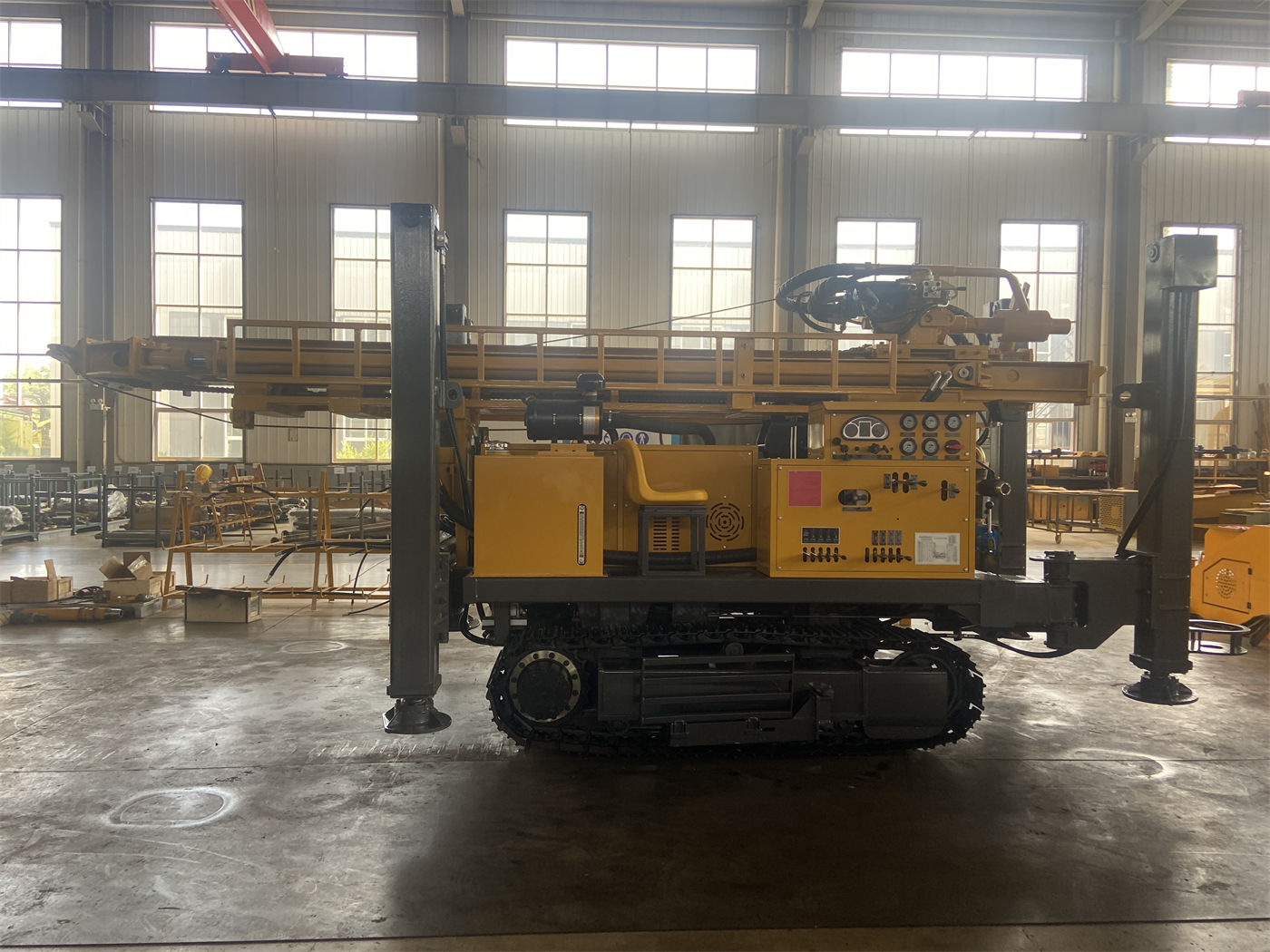
It should be noted that maximum drilling depth and maximum hole diameter are usually not achieved simultaneously under the same conditions. Actual drilling depth is affected by hole diameter, drilling tools, formation, circulation method, hole deviation, and well completion design. This point should be verified with the supplier and cannot be directly converted from a single rated value.
Available Formation Data: Whether It Can Be Provided Determines the Selection Direction
The more specific the formation data, the better the supplier can determine the suitable drilling method. It is recommended to prepare:
- The type of upper overburden, whether clay, silt, sand, or gravel;
- The expected depths of strongly weathered, moderately weathered, and intact bedrock;
- Whether there are fault fracture zones, karst caves, or fractured development sections;
- The expected location of the main aquifer and water inflow conditions;
- Whether there are nearby drilling records, hydrogeological data, or geophysical results.
Different formations correspond to different process directions: clay, silt, and soft overburden generally rely mainly on mud positive circulation to control the borehole wall and carry cuttings; sand and gravel layers are prone to collapse and mud loss, and may require temporary casing or staged casing; relatively intact hard rock may consider DTH hammers; dry, lost-circulation, or sections requiring improved cuttings-carrying capacity may consider air foam; projects requiring sampling by depth and attention to return sample continuity fall under the reverse circulation process category.
Construction Site and Transport Conditions: Do Not Wait Until the Equipment Arrives to Confirm
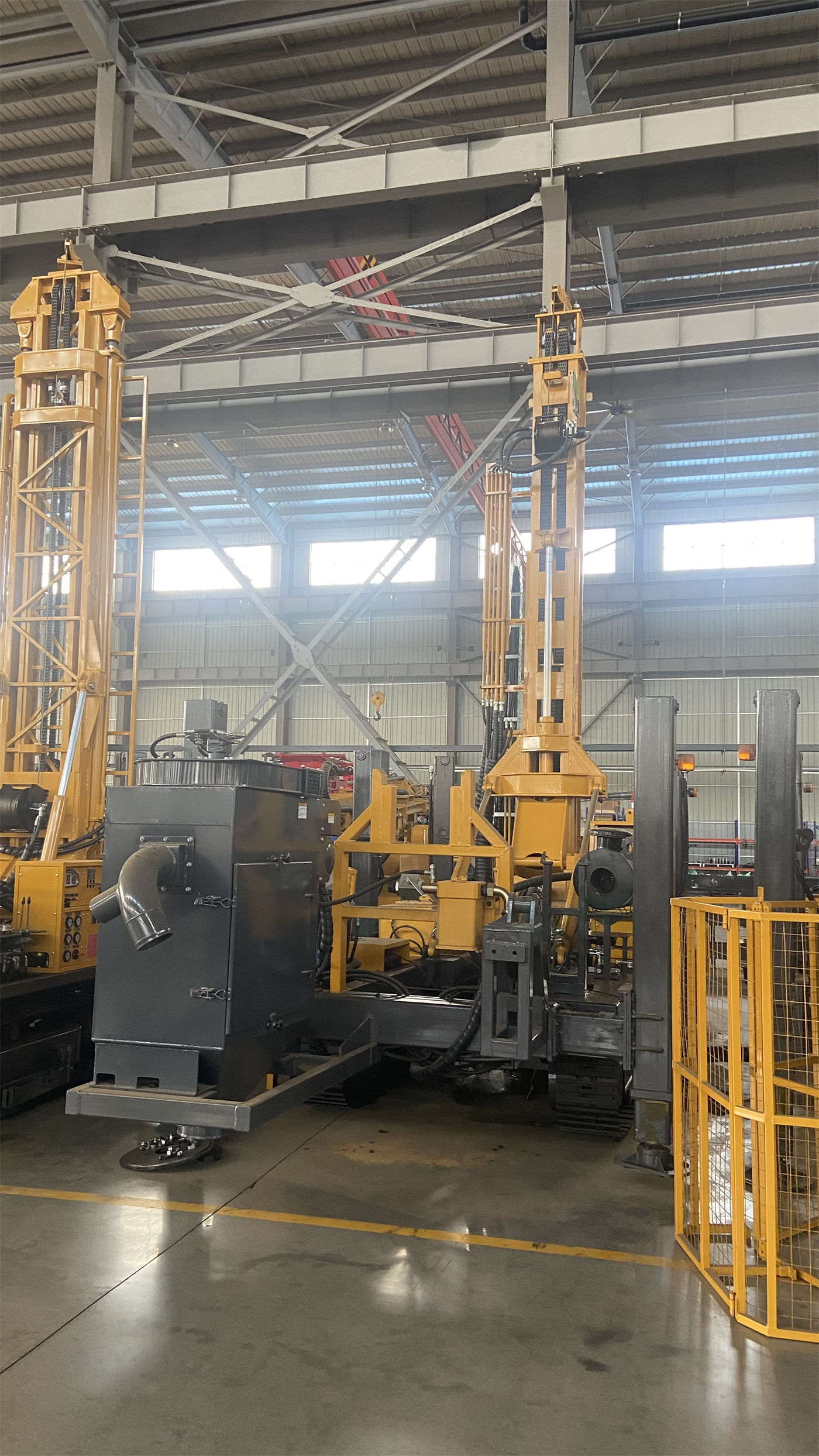
Most water well and reverse circulation equipment requires overall relocation, and transport conditions are items that must be confirmed at the inquiry stage. Taking this site's data as examples:
- WRTR600 short mast transport dimensions are approximately 15100 × 2480 × 4100 mm, and long mast transport dimensions are approximately 16630 × 2480 × 4100 mm;
- WRT1200 overall weight is approximately 32 T, and transport dimensions are approximately 11.5 × 2.25 × 3.2 m;
- WRT1000 overall weight is approximately 26 T, and transport dimensions are approximately 10.8 × 2.5 × 4.23 m;
- WRT600 overall weight is approximately 26 T, and transport dimensions are approximately 10 × 2.48 × 3.75 m.
Site and transport issues that buyers need to confirm with suppliers include: road width, turning radius, bridge load capacity, height limits and overhead lines, access road slope, and drilling site ground bearing capacity. Trailer-mounted equipment also requires confirmation of towing vehicle conditions, truck-mounted equipment requires confirmation of chassis road passage conditions, and crawler-mounted equipment requires confirmation of slope and soft ground conditions. If these conditions are not met, the equipment cannot be properly deployed even after arrival.
Circulation and Auxiliary Systems: Whether Mud Pumps, Air Compressors, and Generators Match
The drilling rig itself is only part of the system; auxiliary systems often determine whether continuous construction can be carried out on site. Items that need to be organized and confirmed include:
| Auxiliary Item | Information to Confirm with the Supplier |
|---|---|
| Mud system | Which mud pump is selected, and whether its displacement and pressure range meet the target hole depth and diameter; this site's WRTR1000 is equipped with a BW1200/7 mud pump, with a maximum pressure of 7 MPa and a displacement of 1200 L/min; WRTR600 is equipped with a 3NB-130 mud pump, with a specified displacement of 8.4–16.6 L/s and a rated working pressure of 5–10 MPa |
| Air system | Air pressure and air consumption requirements when using DTH or reverse circulation; WRT1000 recommends a working air pressure of 1.65–8 MPa and air consumption of 16–96 m³/min; WRT1200 recommends 1.65–8 MPa and 16–120 m³/min; WRT600 recommends 1.2–3.5 MPa and 16–55 m³/min; WR500RC-CS3 recommends 1.6–6 MPa and 16–55 m³/min; WR600RC recommends 1.6–6 MPa and 16–75 m³/min; WR500RCE recommends 1.7–3.5 MPa and air consumption of 17–42 m³/min |
| Power and electricity supply | Diesel engine power and whether an auxiliary generator is needed; WRTR1000 is equipped with a 269 kW Cummins diesel engine and a 50 kW auxiliary generator; WRTR600 integrates a 200 kW diesel generator set; WRT600 is equipped with a 132 kW diesel engine; the WR600RC series is equipped with a 132 kW Cummins engine |
| Sampling system | For exploration sampling projects, confirm whether cyclone separation, sample splitting, and collection devices are configured; WR500RC-CS3 and WR600RC-CS3 integrate a three-in-one cyclone sampling system |
| Other options | Whether items such as foam pumps, centrifugal pumps, casing tools, high-pressure air hoses, and oil mist lubricators are necessary |
The selection of auxiliary systems should be comprehensively judged based on hole diameter, hole depth, rock hardness, and altitude. Meeting pressure alone while displacement is insufficient may still result in insufficient impact, difficult cuttings removal, and cuttings accumulation at the hole bottom. The specific configuration should be based on on-site working conditions and supplier technical confirmation documents.
Checklist of Items to Confirm with the Supplier
After organizing the data, the following questions can be verified with the supplier item by item during the inquiry to avoid treating equipment data as a commitment to project results:
- Based on the planned use, hole depth and diameter, and formation combination, which type of model does the supplier recommend, and why;
- Under the target hole diameter, the actual achievable drilling depth range of that model, and what conditions limit it;
- Whether the corresponding formation requires casing, mud, foam, or other auxiliary processes, and whether the equipment can support them;
- Parameters such as the torque and speed ranges of the rotary table or rotary system, lifting force, and feed stroke, and whether they match the target drilling tools and casing weight;
- Whether auxiliary equipment such as mud pumps, air compressors, and generators need to be separately supplied, and how interfaces and capacities connect;
- Overall transport dimensions, weight, disassembly and assembly requirements, and site entry conditions;
- If sampling or coring is required, whether the equipment can meet the sample type requirements, and whether core projects should switch to a dedicated core drilling rig;
- The units, test conditions, and applicable boundaries of parameters in the supplied technical documentation, and which are optional configurations;
- The scope of after-sales service, spare parts, consumable parts lists, and maintenance documentation; commercial terms need to be agreed separately.
When data is insufficient, the approach is: first explain to the supplier the items not yet confirmed, such as incomplete formation data, target hole diameter to be determined, or site conditions to be measured, and then ask the other party to provide a list of additional data needed. No model parameter should be directly used as a procurement conclusion without a working condition basis.
Summary
Before requesting a quote for a drilling rig, buyers can first organize five categories of data: use, target hole depth and diameter, available formation data, site transport conditions, and auxiliary equipment conditions, and then confirm with the supplier item by item the model applicability, actual capability limits, auxiliary requirements, and transport conditions. This article only organizes a question checklist based on verified data and does not involve specific prices, delivery times, certifications, or construction cases; the applicable equipment for different drilling tasks should be verified with the supplier based on actual working conditions.