












Let's answer the question clearly first: in the materials for the WRTR1000 model, the mast is described as a "60 T hydraulic telescopic K-type mast," which means it is a fixed component of this 1000-meter-class product itself; there is no optional "with or without" for the same model. What is really worth asking is not whether it should be equipped, but why a 1000-meter-class rotary table drilling rig has reached the point where it must be telescopic. Reading the mast parameters together with the drilling tools and chassis, the answer is fairly concentrated.
First, break this question into three layers
"Does it necessarily require a telescopic mast?" contains at least three different questions: whether this model offers a version without a telescopic mast; whether the 1000-meter drilling depth level must rely on a telescopic structure; and whether the telescopic mast solves a construction process problem or a transport problem. The answers to the three questions are different, and mixing them together easily leads to a vague "it depends."
- Model level: in the WRTR1000 materials, the mast column has only one wording, namely 60 T hydraulic telescopic K-type mast, and no non-telescopic alternative configuration is listed.
- Level: what needs to be compared is the mast height, effective height, load, and the length of the drill pipe used.
- Application level: it is necessary to distinguish whether the telescopic action occurs during tripping the drill string or during transport and raising/lowering.
19.5 m mast height and 12.192 m kelly
The WRTR1000 mast has a total height of 19.5 m and an effective height of 18.482 m. The difference of just over 1 meter between the two values is occupied by the top structure of the mast and the lower connection; what can truly be used for the lifting stroke is the effective height item.
Among the matching drilling tools, the kelly specification is 108 × 108 × 12192 mm, the standard drill pipe is 89 × 9400 mm, and three optional diameters are available: 89 / 114 / 127 mm. Placing the 12.192 m kelly into the 18.482 m effective height leaves margin for the combined height of the traveling hook, swivel, elevators, and a single drill pipe joint—this part is not listed item by item in the materials, so it is impossible to directly infer from the mast height how many drill pipes can be handled per trip; it can only be determined that there is margin in the length direction.
Effective height is not usable lifting stroke
The figure "effective height 18.482 m" is easily mistaken for the net stroke that the traveling system can complete. The actual usable stroke must also deduct the length of the traveling hook, swivel, and tool string itself. The materials give the structural dimensions of the mast, but do not give the working stroke range of the traveling system inside the mast, so 18.482 m cannot be directly used as the drill string length that can be lifted in a single trip.
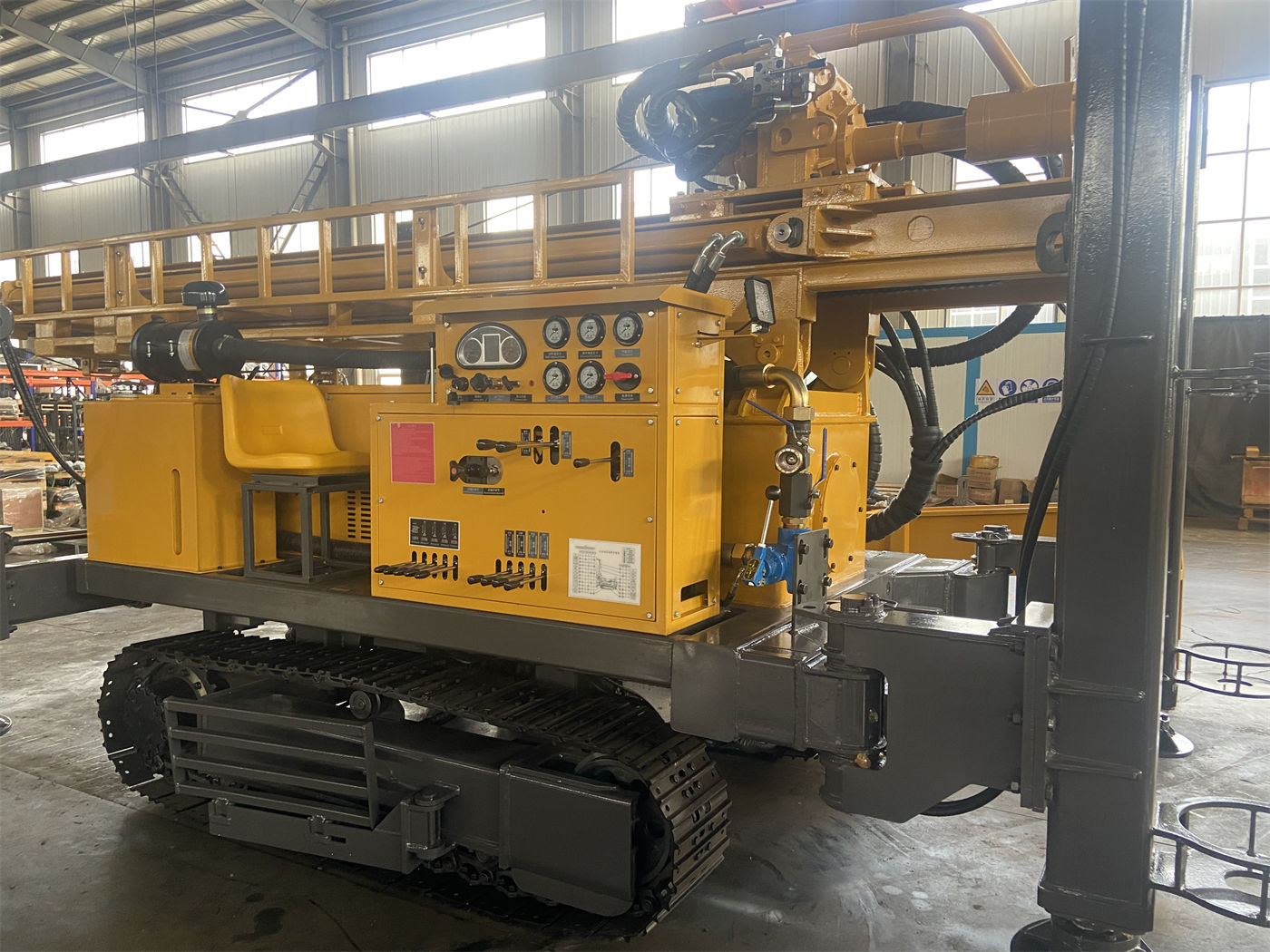
What working conditions does the 60 T load press on
The mast's maximum load is 60 T, and the rated loads of the traveling hook and swivel on the same model are also 60 T. The three values are aligned, indicating that the constraints in the deep-hole section are uniformly placed on the same line: after the drill string's own weight, casing weight, and borehole wall friction are superimposed, whether tripping can be completed within 60 T.
In 1000-meter-class boreholes, the drill string weight increases monotonically with depth. At this level, the mast's load-bearing capacity is not an add-on item, but a basic item on par with rotary table torque and hoisting capacity. It should be noted that 60 T is the rated load, not an allowance for "still being able to continue lifting after abnormal resistance occurs"; the materials also do not give handling values under abnormal conditions such as stuck pipe, which belongs to the scope of on-site judgment based on downhole conditions.
The word "telescopic" governs the transport state
The role of the K-type hydraulic telescopic structure can be viewed separately from two states.
- Working state: the mast is raised, providing 18.482 m effective height and 60 T load, supporting long drill string and casing operations.
- Transport state: the mast can lower part of its working height and be transported as a whole with the towed chassis.
The original wording in the materials is "lower part of the working height in the transport state," and it does not give the folded transport height, transport length, or height limit values. This means it can be confirmed that telescoping brings a change in the transport state, but the specific road transport dimensions cannot be inferred from this, nor can it be inferred whether the mast is completely laid flat in the transport state. When such values are needed, they fall within the scope of separate verification with the supplier.
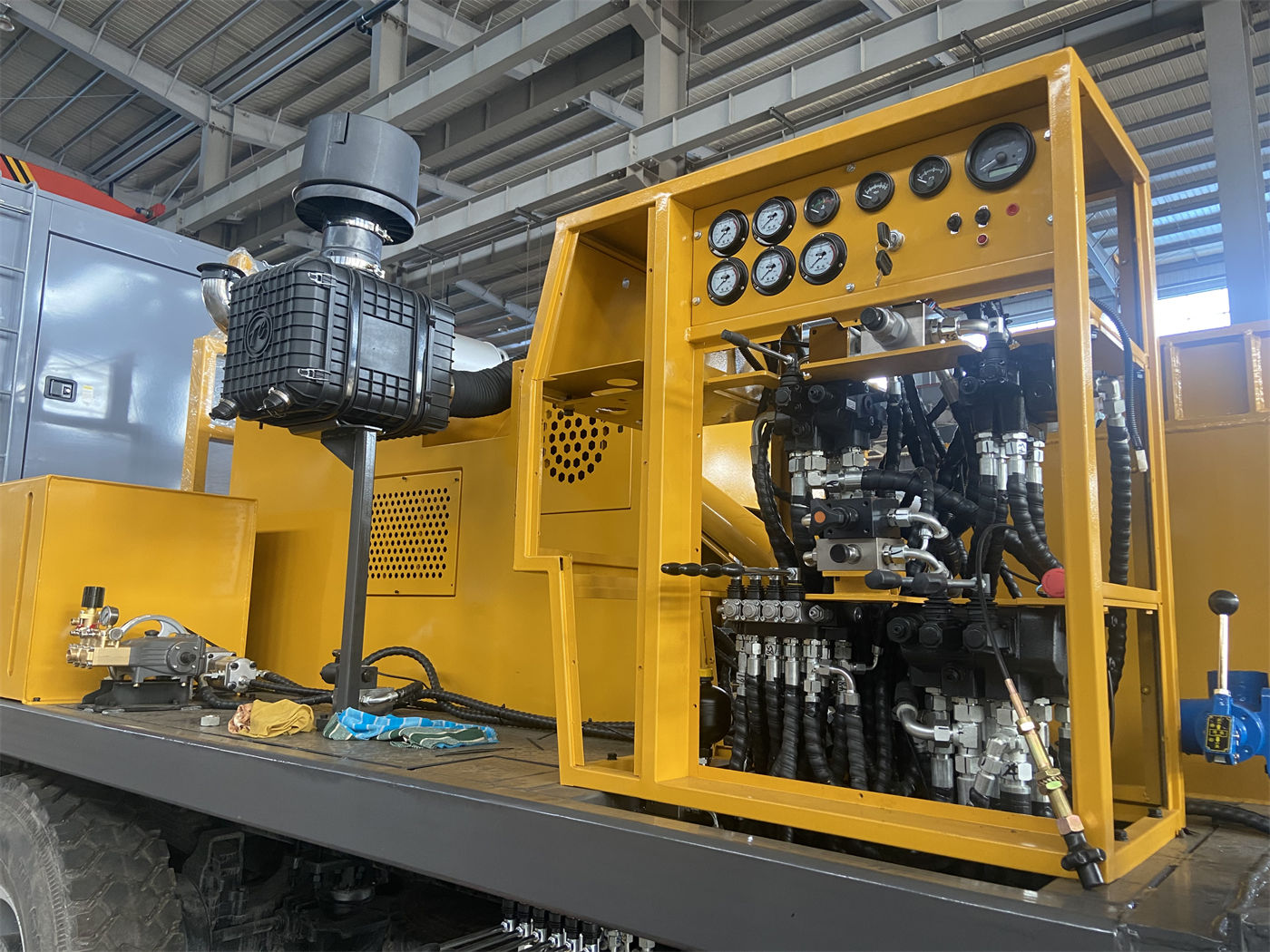
The towed chassis determines that this mast must be able to change posture
The WRTR1000 is a towed platform, with the mast, rotary table, double winch, BW1200/7 mud pump, 269 kW Cummins diesel engine, and 50 kW auxiliary generator all arranged around the same chassis. The entire machine must be able to move between mining areas, farms, geothermal fields, and remote water well projects, so the mast must have the ability to be stowed during transport and raised after arrival. Conversely, if it were a completely stationary drilling site equipment, transport would no longer be borne by the entire machine, and whether the mast is telescopic would no longer be constrained by the same reason.
If replaced with a fixed mast, where does the cost fall
Assuming a non-telescopic structure is not used, three directly affected positions can be inferred along the parameters, but note that these are inferences based on existing parameters, not an evaluation of a specific piece of equipment.
| Stage | Existing parameters | What must be faced again after removing telescoping |
|---|---|---|
| Whole-machine transfer | The towed chassis integrates all systems | The working height in the mast transport state cannot be lowered, increasing the difficulty of verifying road height limits, bridge load-bearing, and turning radius |
| Raising/lowering the mast | Hydraulic telescopic K-type mast | Without hydraulic action, raising and lowering the mast require separate arrangements such as lifting or other methods |
| Deep-hole drill string handling | Effective height 18.482 m, equipped with 9.4 m standard drill pipe | The mast height itself does not change, but changes in transport and raising/lowering conditions will affect the on-site organization of the same long drill string arrangement |
The third row in the table is easily misread as "telescoping affects drilling efficiency." From the materials, telescoping changes the mast's posture, not the mast's height and load after it is raised; drilling and tripping efficiency are more determined by effective height, winch lifting capacity, and drill pipe length.
At the same level, what is truly constrained is drill string length
Moving attention from the mast form to drill pipe length reveals a clearer trade-off: the 9.4 m standard drill pipe and 12.192 m kelly reduce the number of connections in a 1000-meter deep hole, while raising requirements for space inside the mast, lifting organization, and transport length. In this combination, the telescopic mast plays the role of allowing long drill string operations and whole-machine transfer to coexist, rather than being just an alternative term for a "tall mast."
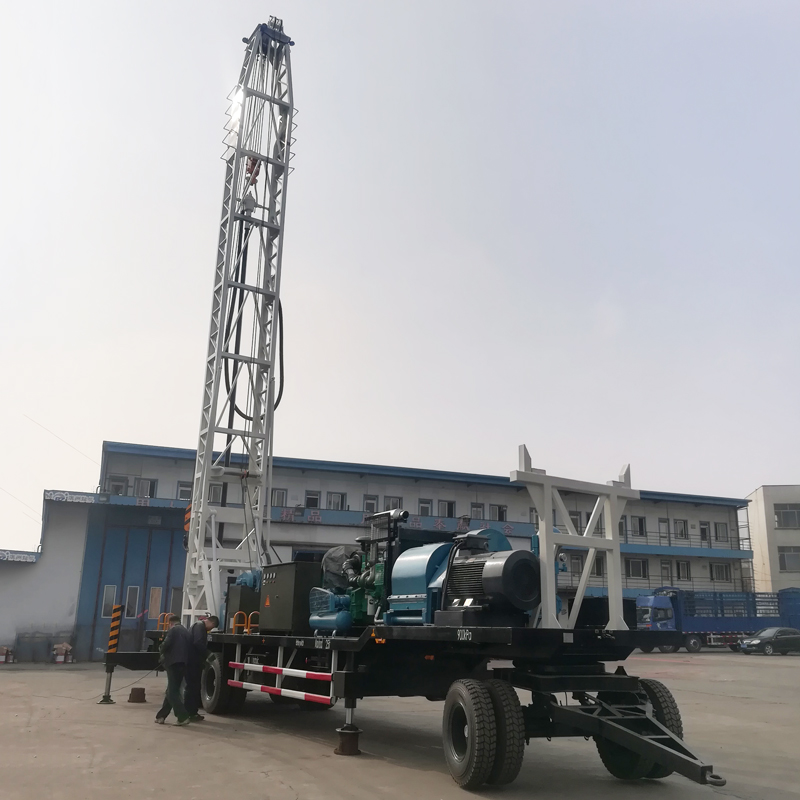
The materials also give the main winch single-line lifting force as 90 kN and the auxiliary winch single-line lifting force as 50 kN, with drum rope capacity both 160 m. The main and auxiliary double winches divide the work of drill string handling, casing assistance, and on-site lifting. The mast load of 60 T, traveling hook of 60 T, swivel of 60 T, and these two winches together form a complete chain for deep-hole drill string handling; looking at any one item alone is not enough to judge operating capability.
Which questions the materials do not answer
The following points do not appear in the materials on this site regarding the WRTR1000; if confirmation is needed, verify with the supplier:
- The actual height, length, and weight of the mast in the transport state;
- The auxiliary equipment and site clearance required for raising/lowering the hydraulic telescopic mast;
- The actual working stroke of the traveling system inside the mast;
- Whether there is a WRTR1000 version not equipped with a telescopic mast;
- Daily inspection and hydraulic system maintenance requirements for the telescopic action.
Before obtaining this information, directly replacing "does it necessarily require a telescopic mast?" with "so one must buy one with telescoping" still lacks a step. The defensible judgment is: on the WRTR1000 towed 1000-meter-class platform, the telescopic K-type mast, 60 T load, 18.482 m effective height, and 12.192 m kelly appear as a set, and the telescopic action mainly serves whole-machine transfer and mast raising/lowering; as for whether a project needs this level, it should be inferred from hole depth, hole diameter, casing program, and relocation conditions, rather than drawing a conclusion from the mast form alone.