












When both weathered rock and intact hard rock appear in the same hole, the drilling rig is not facing a single type of stratum, but a series of operating states that must be switched back and forth. Weathered rock is relatively loose, the borehole wall is prone to instability, and the volume of returned cuttings is large, while intact hard rock offers high resistance, slow penetration, and requires continuous stable air supply. Treating these two sections as one issue makes it easy for the process to get stuck in one section. Using the WR400QS parameters already published on this site as a sample, the following explains the applicability conditions for 400-meter-class equipment in such alternating hole sections, using only the values and descriptions appearing in the data as the basis.
First, break down the word "alternating"
Alternating does not mean uniformly mixed. It usually appears as: the upper overburden and weathered layer are relatively thick, transitioning downward into more intact rock mass, with possible interbedded fractured zones or fissure sections. The applicable strata listed in the WR400QS data include weathered rock, limestone, sandstone, and granite, and it also states support for mud rotary drilling, capable of handling loose strata such as soil layers, clay, and sand layers. This means that the same machine must switch mainly drilling methods and operating parameters across a borehole profile, rather than changing machines.
Which conditions the equipment can match and which must be judged separately on site need to be listed separately.
Weathered layer section: solve the borehole wall first, then discuss penetration
The data gives one clear reminder for loose strata: when the upper overburden is thick, priority should be given to solving borehole wall stability before entering the rock layer for pneumatic DTH drilling. This sentence sets the order of judgment for the weathered layer section—it is not a question of "which drill bit to use," but whether the borehole wall can hold until the next hole section.
Several parameter-related items in this section
- The rotary system provides 8000 / 4000 N·m dual-condition torque, corresponding to maximum rotation speeds of 75 / 150 r/min; the higher speed gear can be selected for stages with lower resistance and larger returned cuttings volume.
- Axial pressure reference value is 4 T, used for feed control.
- The equipment can be optionally equipped with mud pumps, centrifugal pumps, and foam pumps for wall protection, cuttings carrying, and dewatering support.
- Hydraulic outrigger stroke is 1.6 m, used for leveling and stable support on soft ground; the data notes that pads should be used on soft ground.
One point needs to be distinguished here: borehole wall stability is mainly controlled by the mud system, casing plan, and feed rhythm; rotary gears and axial pressure are only operating variables within that. The data does not give specific rotation speeds or mud ratios corresponding to a particular type of weathered rock; this part falls within the scope of on-site process.
Entering intact hard rock: air supply is tighter than pressure values
In intact rock sections, the main contradiction shifts from the borehole wall to the hole bottom. The data states that DTH hammer drilling recommends a working air pressure of 1.2–3.5 MPa and air consumption of 16–55 m³/min, and can match medium- and high-pressure DTH hammers; it also notes that for larger hole diameters, intact hard rock, or high-altitude conditions, whether the air compressor displacement is sufficient is often more important than simply reaching a pressure value.
What this note means for the 400-meter class
As hole depth increases, an air compressor of the same displacement must overcome greater friction losses along the path, and the effective air volume and pressure at the hole bottom will decrease. In intact hard rock, cuttings return depends on a stable upward airflow; once air volume is insufficient, cuttings accumulation at the hole bottom directly affects penetration and drilling tool condition. Therefore, for hard rock sections in alternating strata, the basis for judgment is not "whether the air compressor's nominal pressure is enough," but whether the hole bottom can actually maintain continuous cuttings return.
The data also notes that if cuttings return decreases or air pressure is abnormal, priority should be given to determining whether there is blockage, air leakage, or cuttings accumulation at the hole bottom, rather than simply increasing feed. This handling order is worth following as originally intended.
What lifting force and rapid actions handle in each section
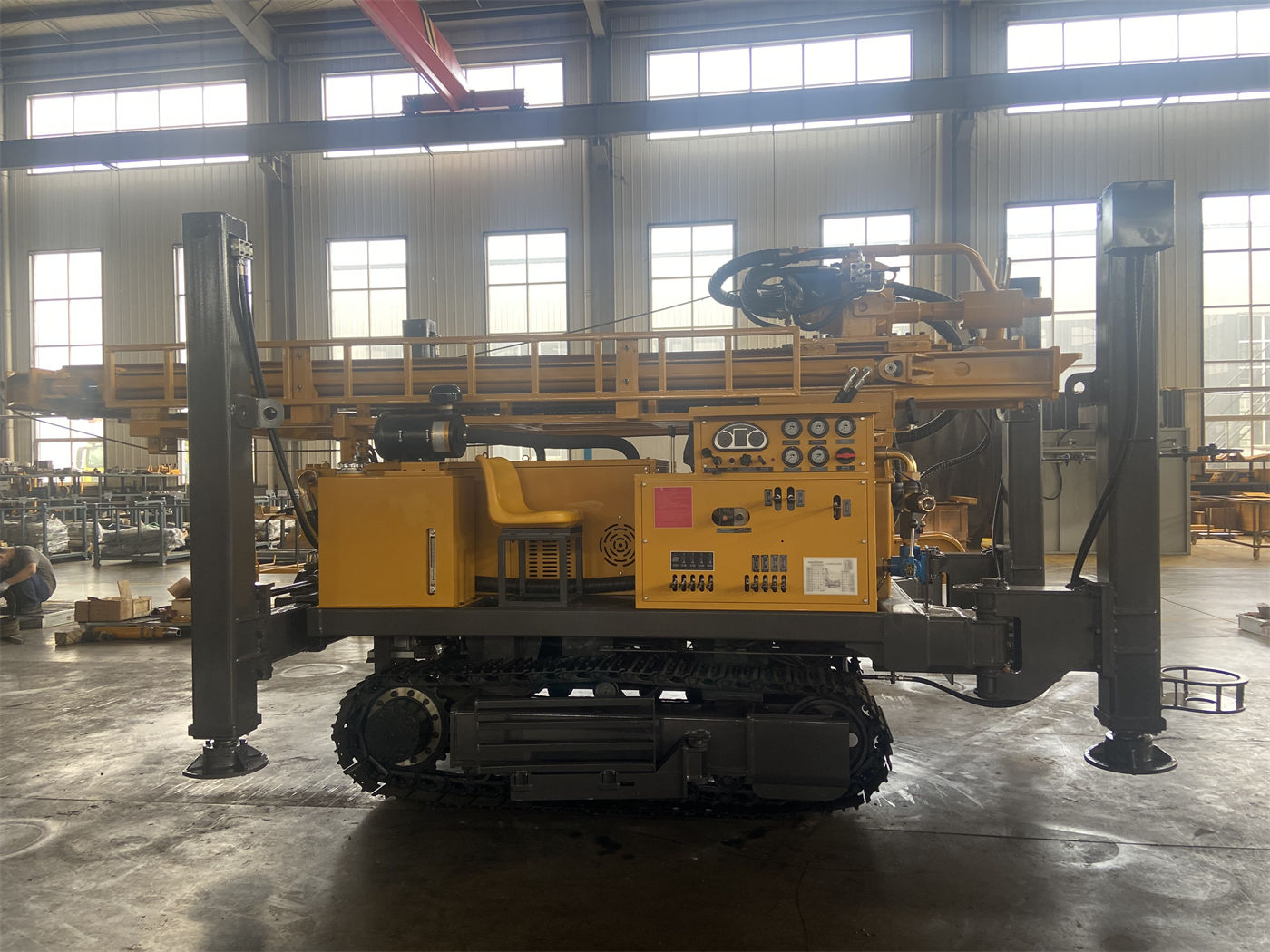
For the WR400QS's 22 T lifting force, the data explains that as hole depth increases, drill pipe self-weight, borehole wall friction, and casing weight all rise, and greater lifting capacity is beneficial for normal tripping, drilling tool recovery, and casing handling. It works in both weathered layers and hard rock sections, but in different ways: weathered layers more often involve casing handling, while hard rock sections are more often for tripping and drilling tool recovery.
The same data clearly defines rapid feed at 56 m/min and rapid lift at 29 m/min—mainly used for power head return, drill pipe handling, and non-drilling actions; actual rock penetration speed depends on strata, drill bit, DTH hammer, and air compressor capacity. These values should not be taken as penetration expectations.
In addition, the data clearly states that when encountering stuck drilling, hole shrinkage, or borehole wall caving, priority should be given to solving the problem through hole cleaning and process adjustment, rather than simply relying on maximum lifting force to pull hard. This point deserves special attention at the boundary between weathered layers and hard rock, because caving and hole shrinkage are precisely likely to occur at such boundaries.
Fractured zones and fissure sections: signals requiring reduced speed
The data describes fractured zones as possibly causing caving, air leakage, and stuck drilling, and recommends reducing excessive feed, maintaining continuous hole cleaning, and using foam, casing, or other auxiliary measures according to air leakage and borehole wall conditions; if drilling tool rotation resistance suddenly increases, it should promptly determine whether caving or hole shrinkage exists in the hole.
In alternating strata, fractured zones often lie exactly between weathered layers and intact rock, or appear at positions of sudden lithology change. This section belongs neither to "loose" nor to "intact," and no dedicated parameter gear can be found for it; it requires real-time adjustment based on in-hole feedback. The data does not give quantitative criteria for fractured zones, and this must be stated truthfully here.
After entering an aquifer, the basis for judgment changes
The data notes that after entering the main aquifer, groundwater will change cuttings discharge in the hole and the working state of the DTH hammer; the depth of the water-producing layer should be recorded promptly, and air supply, hole cleaning, and casing methods should be adjusted according to water inflow; during well completion, filter pipes and sealing sections should also be reasonably set according to aquifer position.
In a hole where weathered rock and intact rock alternate, the aquifer may fall in any section. Strong water inflow sections weaken the effect of pneumatic cuttings discharge; if drilling continues with the original air supply parameters at this time, return samples and hole bottom conditions will change. This section is a working condition that requires adjustment according to actual water inflow, and the data does not give specific thresholds.
Several equipment-side items related to long-cycle construction
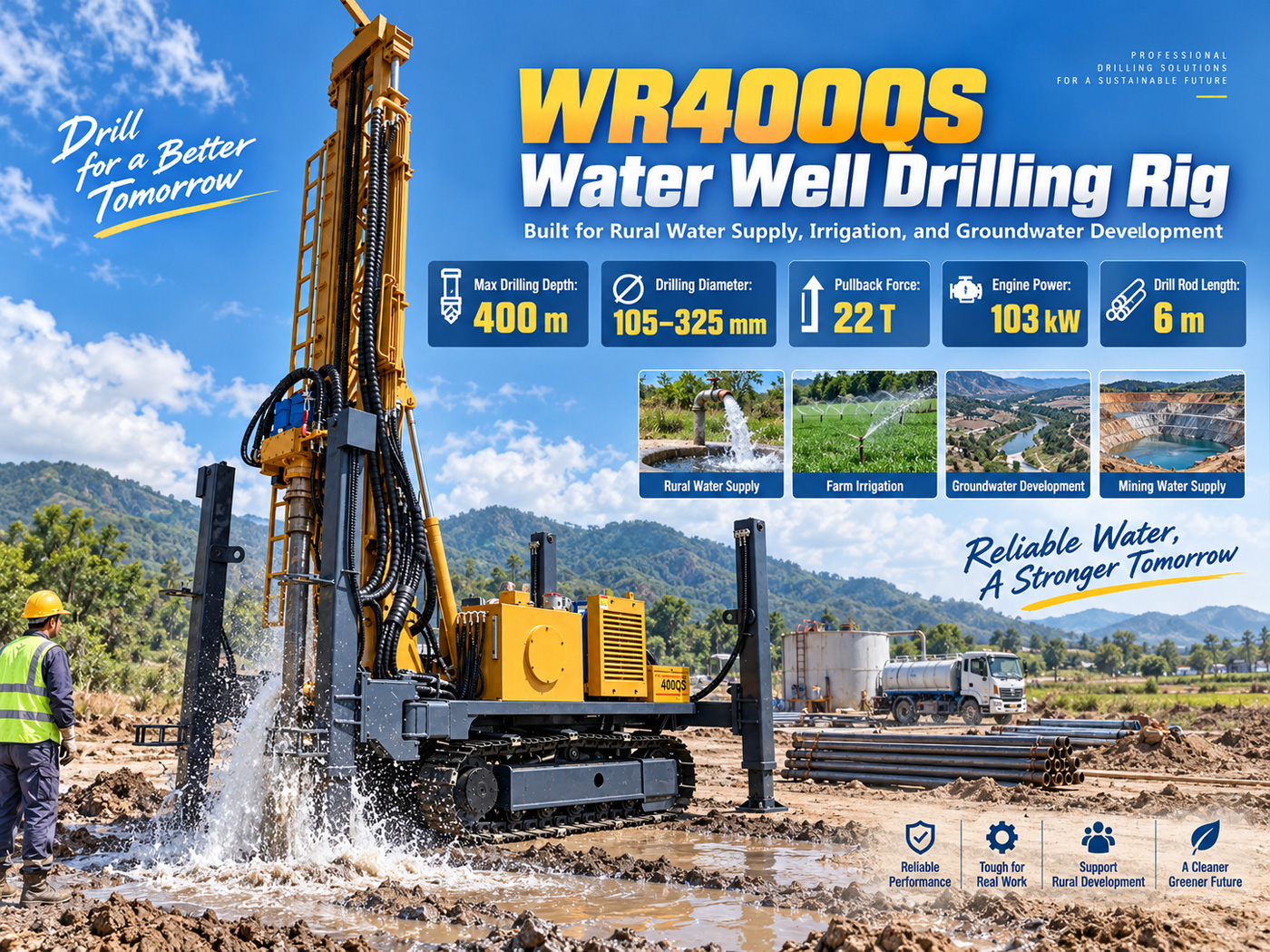
- Overall weight is about 8.6 T, dimensions are about 6.25 × 1.7 × 2.39 m, crawler travel speed is about 3 km/h, and maximum climbing angle reference is 21°; during relocation, attention should be paid to ground bearing capacity, slope stability, and transport routes.
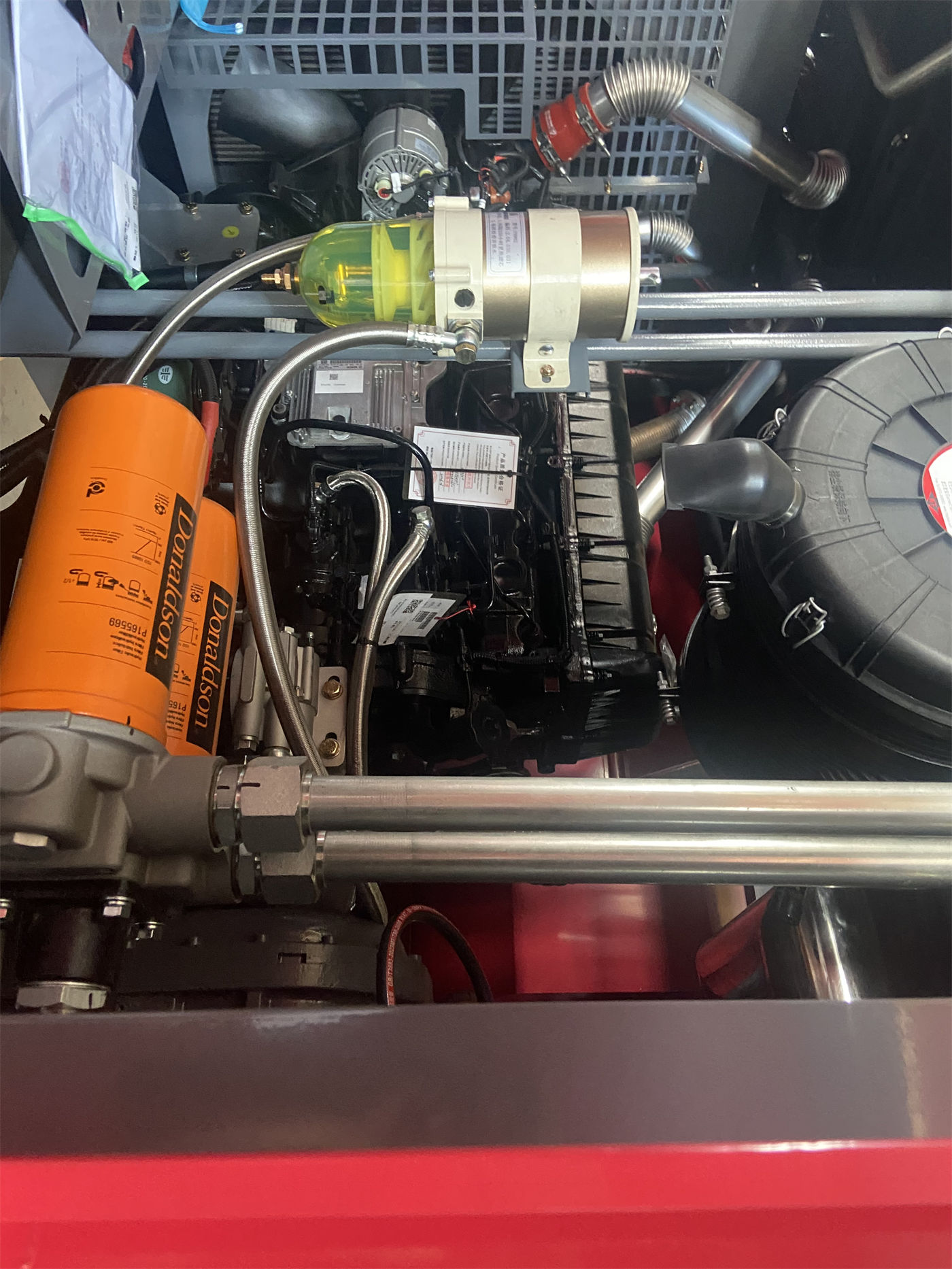
- It uses a 103 kW Weichai engine; medium-deep hole and hard rock construction last relatively long, and the data notes that the air filter and radiator should be cleaned regularly and attention paid to engine cooling and fuel quality.
- Auxiliary winch lifting force is 1.5 T, usable for handling DTH hammers, drill pipes, casing, and on-site accessories.
- Supports 6 m drill pipes, recommended drill pipe diameters 89 / 102 mm.
These are conditions at the overall machine level; in alternating strata they do not change because of switching sections, but they directly affect whether a process can be executed continuously.
Which conditions are not given in the data and need separate confirmation
The following points have no basis in the publicly available data on this site and should not be inferred on one's own; it is recommended to verify them item by item during the planning stage:
- Specific penetration rate expectations corresponding to each section of weathered rock, hard rock, and fractured zone; the data only says penetration speed depends on strata, drill bit, DTH hammer, and air compressor capacity.
- Specific formulations, density, and wall protection plans for the mud system.
- Specific amounts and ratios of foam or other auxiliary measures used in fractured zones and air leakage sections.
- At what aquifer water inflow level casing or sealing methods need to be changed.
- Air supply matching points for different borehole diameters (105–325 mm range) under the same lithology.
- Actual values for final drilling depth and well completion effect.
The above content involves combinations of specific strata and in-hole tools, and should be based on actual on-site working conditions and special construction plans; the data on this site does not constitute a construction conclusion for any particular type of stratum.
Fix the checking order for alternating hole sections
In summary, the judgment order for such hole sections can first proceed layer by layer: for the upper loose or weathered section, first confirm borehole wall and wall protection measures, then enter pneumatic drilling; for the intact hard rock section, focus on checking whether the air compressor displacement can maintain cuttings return at the hole bottom; for fractured zones, reduce speed according to in-hole feedback and maintain continuous hole cleaning; for aquifers, adjust air supply and well completion structure according to water outflow. The parameter basis for each step can find a corresponding item in the WR400QS data, but the cross-section process connection plan still needs to be separately confirmed before startup in light of local hydrogeological conditions.