












In the WR300SE parameter table, the engine power row lists two figures: standard power 73 kW, optional power 85 kW. Later in the same document there is another sentence—'If the project is long-term under conditions of larger hole diameter, hard rock, or high altitude, a higher power configuration can be evaluated.' This sentence provides a direction for judgment, not a criterion. To turn the direction into checkable options, it is first necessary to clarify what consumes this 12 kW during drilling.
This article examines three layers by load source: hole diameter, rock formation, and altitude. Each layer corresponds to the engine's actual output power, while the source material only provides the two definite values of 73 kW and 85 kW; the quantitative relationships of the remaining links are not given.
First, distinguish: power does not act solely on 'being able to drill'
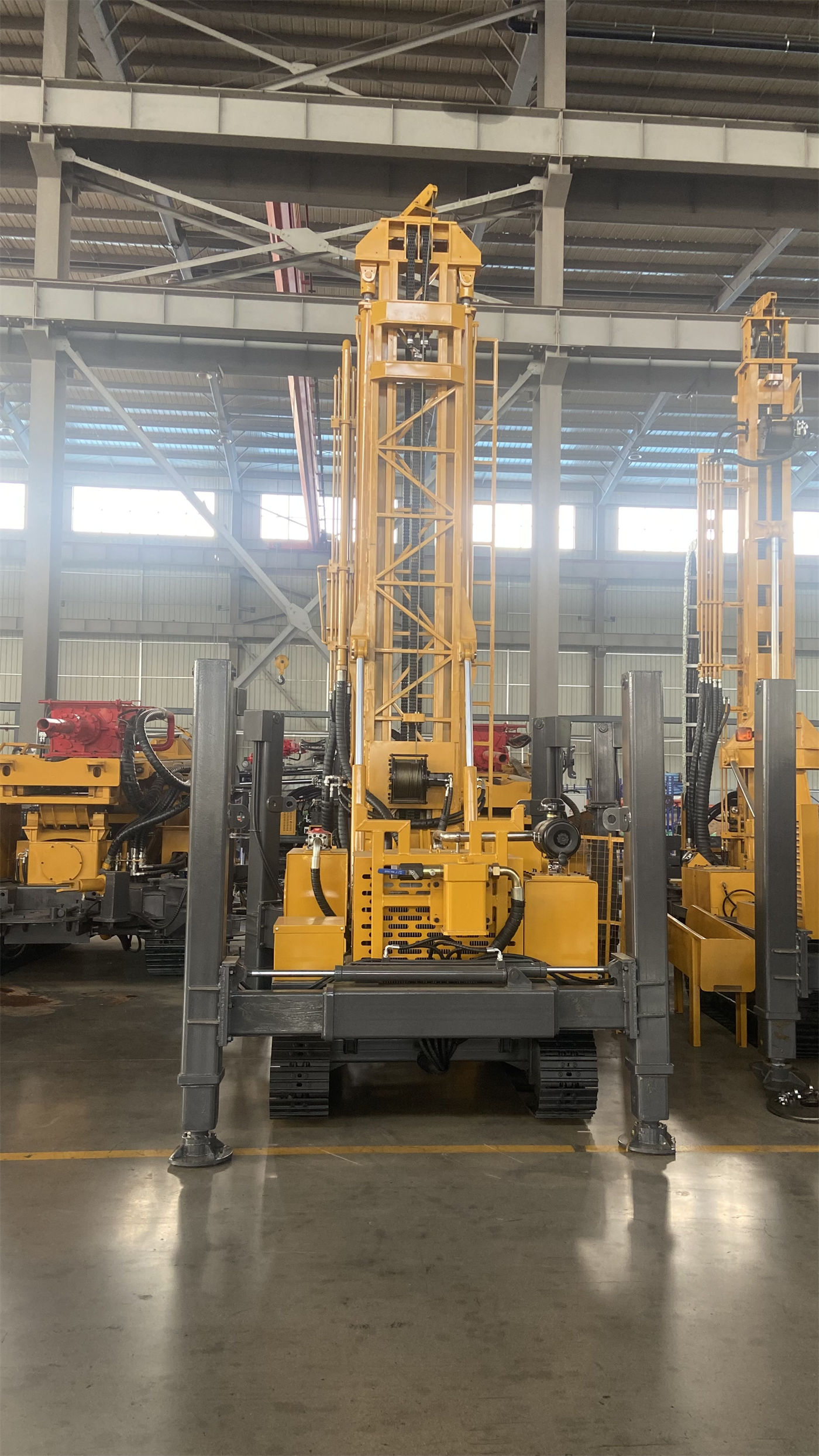
The engine power of a crawler-type fully hydraulic drilling rig is not delivered directly to the drill bit. Taking the WR300SE data as an example, power must be distributed across several parallel consumption lines: the hydraulic system drives rotation and lifting, pneumatic drilling also drives the matching air compressor, and the machine's travel, outriggers, and auxiliary winch also consume a portion. This structure determines that power selection cannot only look at 'whether it can drill,' but must consider whether there is still margin when these lines operate simultaneously throughout the entire work cycle.
Parameters directly listed alongside power in the source material include: maximum drilling depth 300 m, hole diameter 105–325 mm, maximum torque of the rotation system 7000 / 3500 N·m, maximum rotation speed 80 / 160 r/min, lifting force 15 T, recommended working air pressure for pneumatic drilling 1.2–3.5 MPa, air consumption 16–55 m³/min. These values individually do not involve engine power, but they describe the load side—power ultimately serves these loads.
Layer one: continuous power draw from hole diameter
The hole diameter range of 105–325 mm spans nearly three times. Enlarging the hole diameter changes at least three things: the contact area between the drilling tools and the hole wall during rotation, the air volume or mud volume required for cuttings removal at the hole bottom, and the continuous torque demand for large-diameter hole sections. The rotation torque in the source material is divided into two levels, 7000 / 3500 N·m, corresponding to two rotation speed levels of 80 / 160 r/min, indicating that this equipment itself has already prepared a low-speed, high-torque working range for large hole diameters.
However, how much torque the hydraulic system can provide and whether the engine can maintain this torque output for a long time are two different matters. The source material does not give corresponding values for engine load under different hole diameters, so it is impossible to directly calculate from the parameter table that a certain hole diameter must use 85 kW. What can be confirmed is only the source material's directional judgment: larger hole diameter is one of the conditions under which a higher power configuration can be evaluated.
Layer two: rock formation changes the way the load fluctuates
The WR300SE source material clearly states that it is suitable for loose formations and rock formations. The power demand of these two types of formations is not a difference of 'larger or smaller,' but a difference in fluctuation pattern.
- Soil, clay, sand, and gravel layers use methods such as mud rotary drilling, where the load is relatively stable; the main risks are hole collapse, diameter shrinkage, and drill burial, and the focus is on hole stability rather than power.
- After entering weathered rock or intact rock formations, DTH hammer drilling is switched to. The percussion itself is driven by compressed air, but the matching air compressor's air consumption is 16–55 m³/min according to the source material, with air pressure 1.2–3.5 MPa. This part of the energy does not come from the drilling rig engine, but it is related to the overall matching arrangement of the machine.
- Fracture zones, fissures, and local cavities can cause air leakage and block falling. When encountering such hole sections, the source material recommends reducing feed, strengthening hole cleaning, and observing changes in air pressure.
In hard rock drilling, engine power is more responsible for the continuous output of the rotation system and the stable supply of the machine's hydraulic system. The source material includes 'hard rock' among the conditions under which higher power can be evaluated, but it does not give a conversion relationship between rock properties and power demand. Therefore, whether a specific type of rock requires 85 kW should be verified with the manufacturer and cannot be inferred from the parameter table on one's own.
Layer three: altitude affects both ends simultaneously
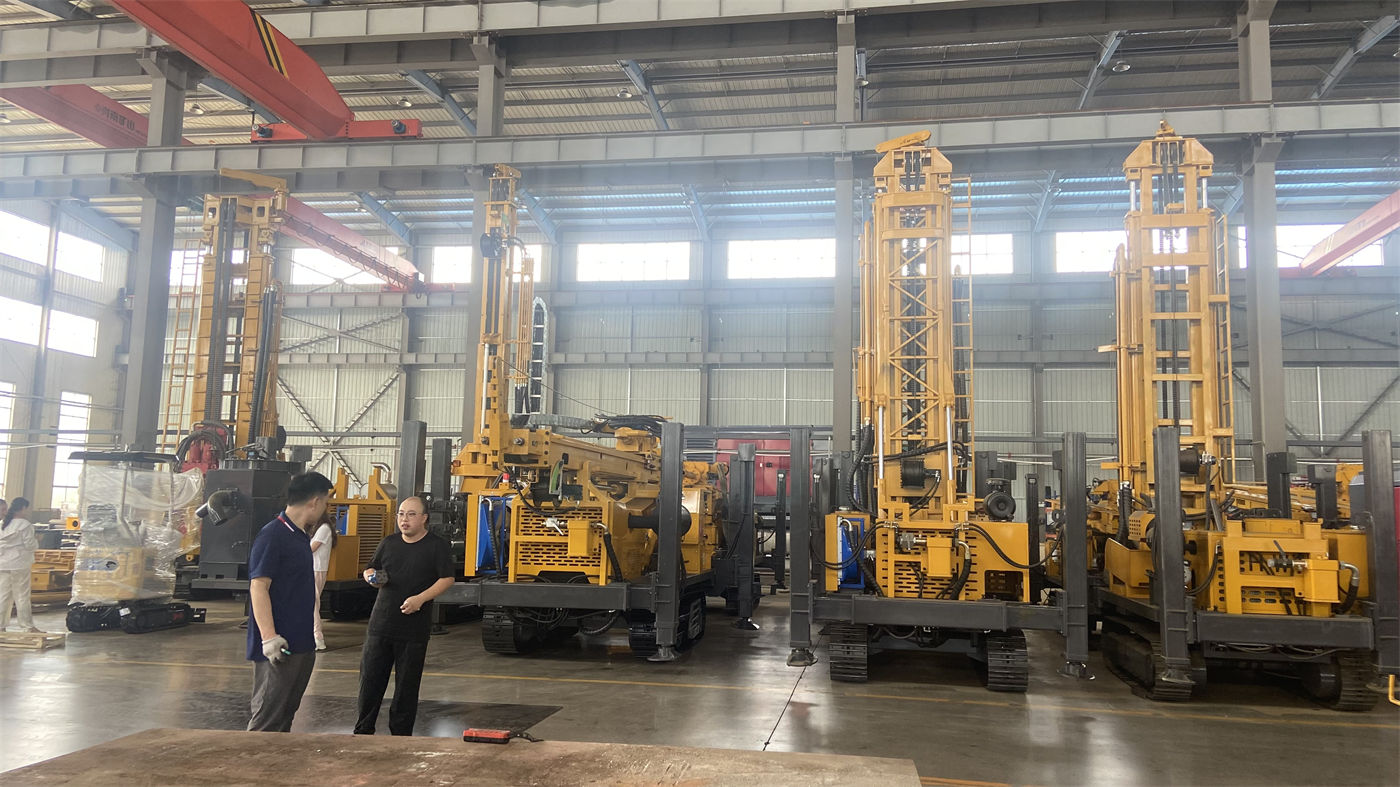
High altitude is the most easily underestimated of the three conditions because it acts on two links at the same time. The output of a naturally aspirated diesel engine decreases with increasing altitude, which is a loss on the engine side; and the actual displacement of the air compressor on which DTH hammer drilling depends also decreases with altitude, which is a loss on the air supply side. The source material already notes in the air compressor selection section that actual selection should combine hole diameter, drill pipe, DTH hammer specifications, rock formation hardness, and altitude; insufficient displacement will directly affect percussion efficiency and hole bottom cuttings removal.
That is to say, on high-altitude sites, if the main drilling method is DTH hammer, power selection must be considered together with the air compressor. Merely changing the drilling rig power from 73 kW to 85 kW cannot compensate for the decrease in air compressor displacement; conversely, if the air compressor displacement itself has already been corrected for altitude, whether the drilling rig power also needs to be increased accordingly is not given by the source material.
What judgment directions do the two power options correspond to?
| Condition | 73 kW standard power | 85 kW optional power |
|---|---|---|
| Hole diameter | Conventional hole diameter, the more commonly used section within the 105–325 mm range in the source material | Long-term use of larger hole diameters |
| Formation | Mainly loose formations, low proportion of rock formations | More or continuous hard rock sections |
| Altitude | Low-altitude conventional sites | High-altitude sites |
| Project nature | Conventional projects such as farmland irrigation, rural water supply, and aquaculture water use | Long-term working conditions of larger hole diameter, hard rock, or high altitude mentioned in the source material |
The correspondences in the table come from the two statements in the source material: 'standard power helps control equipment cost' and 'for long-term conditions of larger hole diameter, hard rock, or high altitude, a higher power configuration can be evaluated.' The critical values for specific hole diameter, rock properties, and altitude are not given in the source material. Therefore, this table can only serve as a checklist of conditions to verify, not as a selection threshold.
An easily overlooked point: 85 kW is not a comprehensive replacement for 73 kW
The source material writes the two as 'standard power' and 'optional power,' rather than two parallel recommended configurations. This wording means that the default configuration is 73 kW, and 85 kW is an add-on for specific working conditions. For farmland irrigation or rural water supply projects mainly involving loose formations and conventional hole diameters, the source material clearly states that the design orientation of 73 kW is to control equipment cost, improve equipment utilization, and investment recovery.
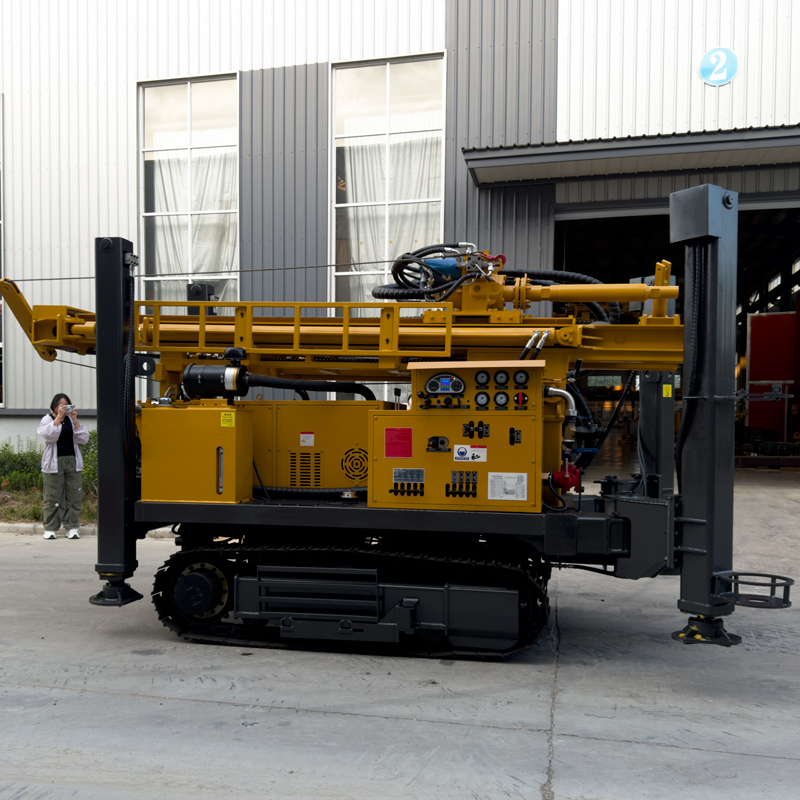
If the project conditions themselves fall within the conventional range, choosing 85 kW will not automatically bring an increase in footage—the reference drilling efficiency in the source material is 10–35 m/h, clearly stating that the actual penetration rate depends on formation, hole diameter, drilling tools, air compressor, and operation method. Power is only one variable, and not the only variable.
Several items to verify with the manufacturer during selection
The source material gives the two values of 73 kW and 85 kW, as well as the directional judgment that 'larger hole diameter, hard rock, and high altitude can be evaluated for higher power,' but it does not give the following content, which must be confirmed separately before actual procurement:
- The actual power consumption of the machine's hydraulic system under different hole diameters;
- The engine's load rate and heat dissipation performance during continuous hard rock drilling;
- The respective correction magnitudes of diesel engine output and matching air compressor displacement at the target altitude;
- After choosing 85 kW, whether matching components such as the air compressor and hydraulic pump need to be adjusted simultaneously.
Power configuration is only one of the many optional items of the WR300SE. The same source material also lists optional components such as mud pumps, centrifugal pumps, generators, and foam pumps, and notes that different customers do not need to uniformly configure all accessories; they should be combined according to the main drilling method, on-site power supply, drainage conditions, and formation characteristics. Power selection should also be judged together within this combination, rather than being singled out and decided separately.