












When comparing 180 m class and 200 m class small crawler water well drills side by side, it is easy to reduce the difference to a single phrase: a 20 m difference in drilling depth. However, based on the two sets of specifications published for the WR180E and WR200SE, this 20 m is only one result. The real differences between the two machines are distributed across power, lifting force, mast structure, and hole diameter range, and they do not fall on the same process step.
The following comparison uses only the values and descriptions that appear in these two product documents and does not extend to other models not provided; items not specified in the documents are listed separately.
Specification Comparison of the Two Machines
| Parameter | WR180E | WR200SE |
|---|---|---|
| Maximum drilling depth | 180 m | 200 m |
| Drilling diameter | 90–230 mm | 140–254 mm |
| Engine power | 28 HP (Changchai) | 58 kW |
| Lifting force | 16 T | Not listed in this section |
| Mast height | 1.5 m | Telescopic mast, 3.3 m single feed |
| Drill pipe specifications | 50 / 60 / 76 mm, 1.5 / 2.0 m | Not listed in this section |
| Rotation speed | 40–70 rpm | Not listed in this section |
| Overall weight | 1.8 T | Not listed in this section |
| Dimensions | 3000 × 1300 × 1700 mm | Not listed in this section |
The table lists only fields that can be aligned between the two sets of data. For items left blank on the WR200SE side, the current documents do not provide corresponding values, and no inference is made.
Where the 20 m of Drilling Depth Falls in the Process
The WR180E has a maximum drilling depth of 180 m and a drilling diameter of 90–230 mm. The document positions it as covering shallow-to-medium depth groundwater projects in rural, hilly, and agricultural areas. The WR200SE has a maximum drilling depth of 200 m and is also a telescopic mast water well drill, but the document pairs it with 58 kW power and a 3.3 m single feed.
These two sets of numbers do not point to the same kind of margin. Both 180 m and 200 m fall within the shallow-to-medium depth class. The actual completed well depth should still be determined by local groundwater level, aquifer position, hole diameter, and construction method, rather than using the equipment's upper limit. Therefore, the 20 m here is closer to a "boundary of coverage" than a simple conversion of "drilling 20 m more in the same well."
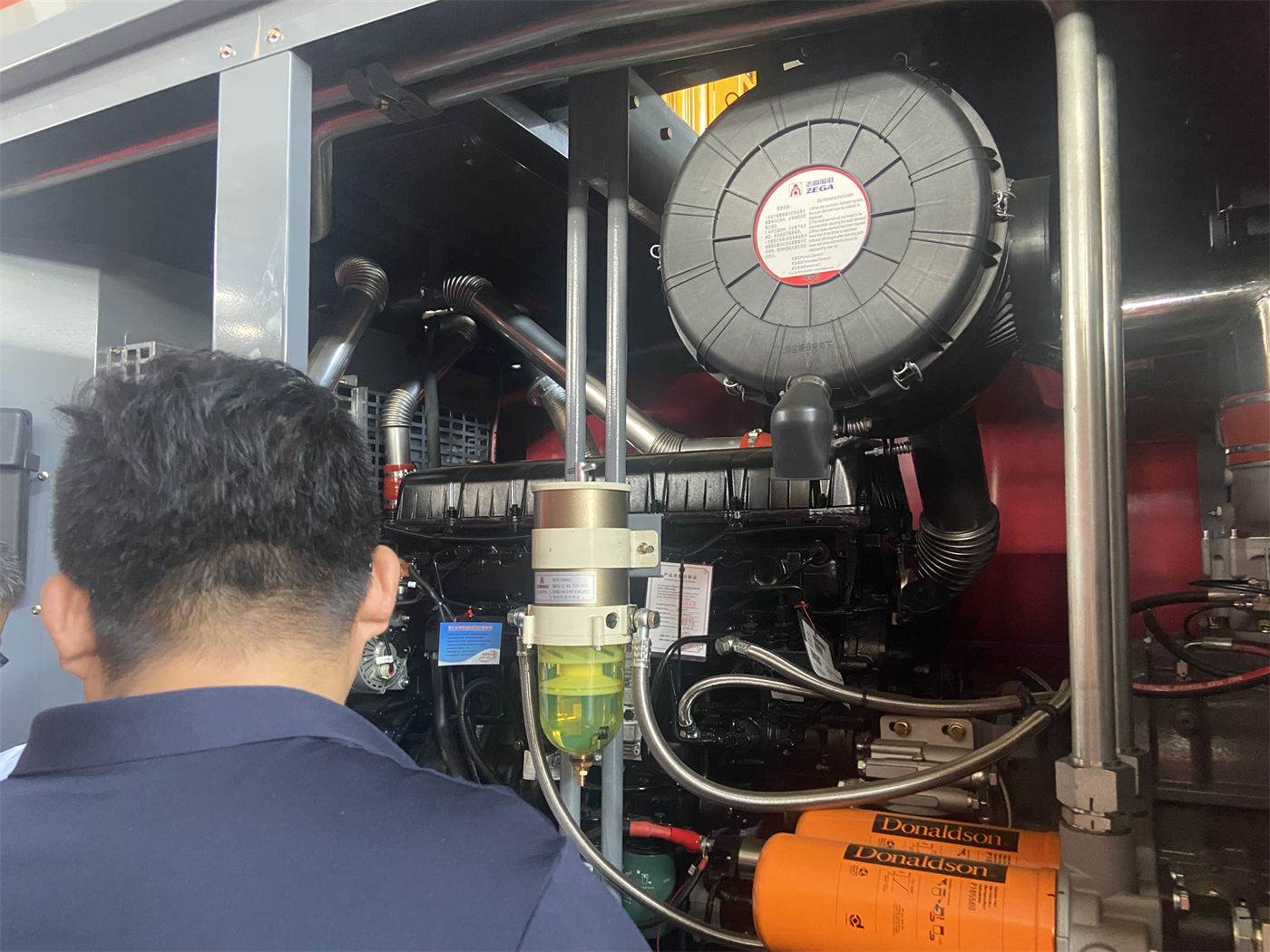
Power Segment Difference: 28 HP and 58 kW Are Not the Same Order of Magnitude
The WR180E's 28 HP Changchai diesel engine, according to the document, provides power for the hydraulic system, rotation, and crawler travel, and the document explicitly states that this configuration is "more suitable for conventional drilling projects with limited budgets, scattered hole locations, and frequent site transfers." This description itself positions the power on the compact and economical side.
The 58 kW on the WR200SE side appears only as a power value in the current document, with no corresponding hydraulic or rotation specifications given. It can be confirmed that the power magnitude is different, but the actual drilling performance of the two machines under the same hole diameter and same formation is not compared in the documents and cannot be directly inferred from the power difference.
The question that can be confirmed during selection is: will the project be in larger hole diameters or harder rock formations for a long time? If so, the power margin becomes an item that needs separate evaluation, and for this item, both documents provide only numbers without corresponding formation applicability conclusions.
Mast and Pipe Connection: 1.5 m vs. 3.3 m Single Feed Changes Auxiliary Time
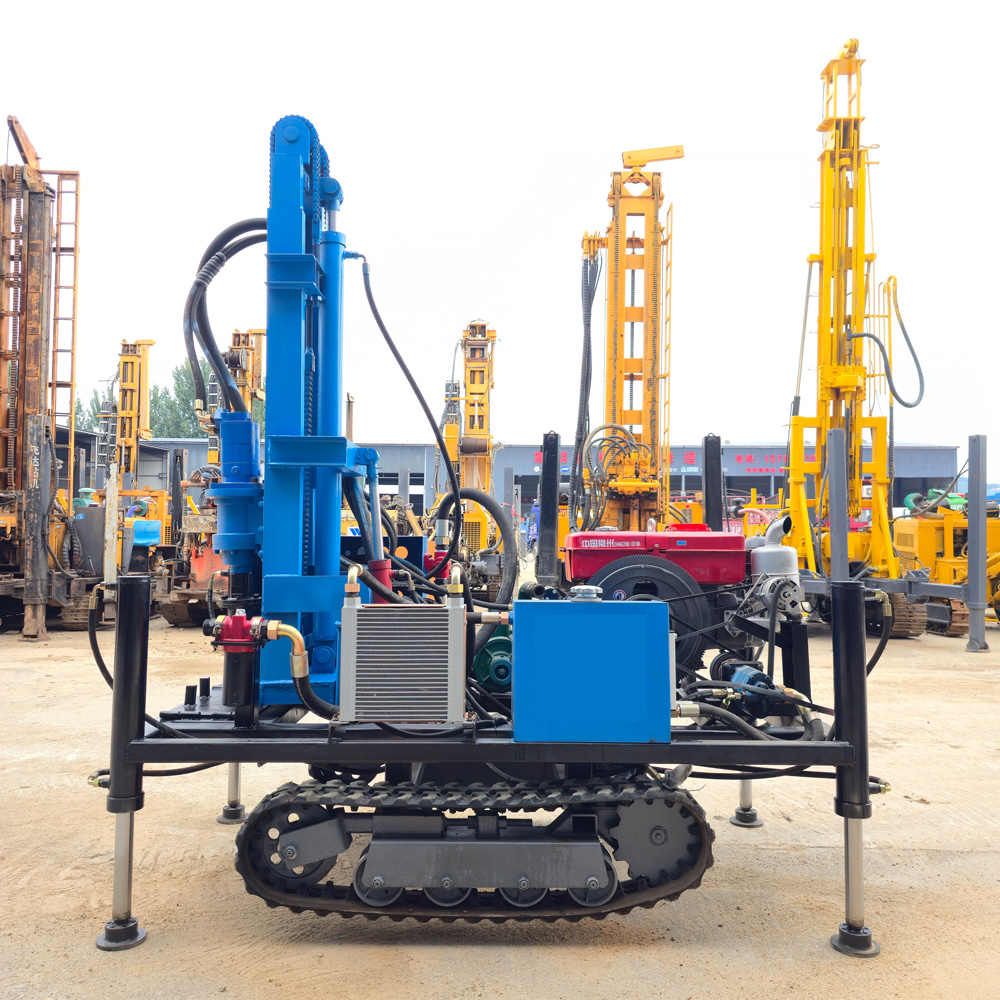
The WR180E uses a 1.5 m mast. The document states that this height keeps the machine at a lower working height and smaller transport volume, making it suitable for limited spaces such as courtyards, orchards, small construction sites, and rural roads. The document also notes that a shorter mast means the drill pipe replacement frequency will be higher than long-stroke models, so this machine leans toward flexibility and economy.
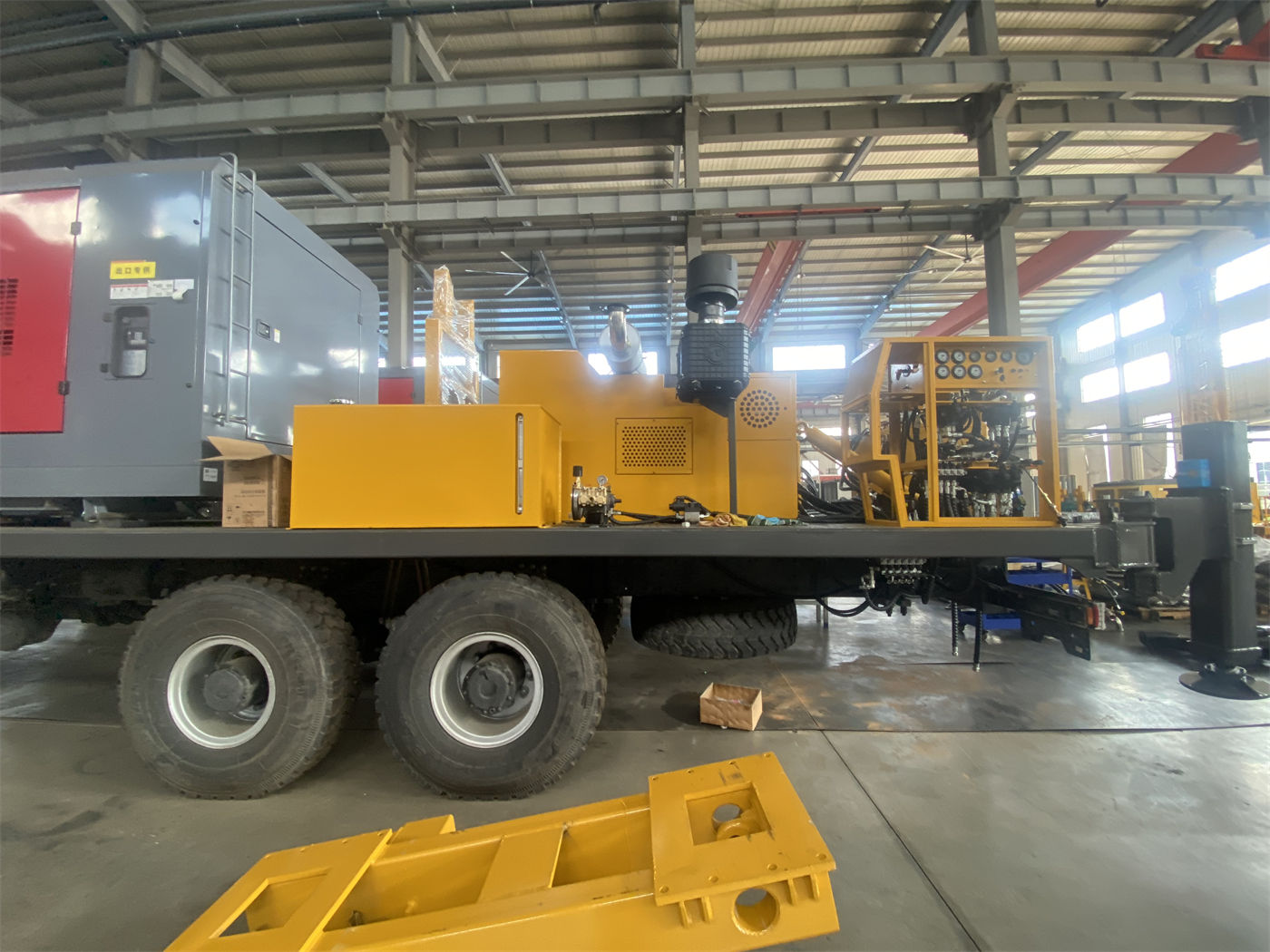
The WR200SE side gives a single feed of 3.3 m and uses a telescopic mast structure. The single feed length directly relates to how far continuous drilling can proceed per drill pipe connection, thereby affecting the number of repetitions of auxiliary processes such as pipe connection and tripping. This kind of difference accumulates well by well in continuous multi-hole construction, but may not immediately show in the drilling time of a single well.
It should be noted that the two machines use different drill pipe lengths: the WR180E uses 1.5 m and 2.0 m drill pipes, while the drill pipe length on the WR200SE side is not listed in this section. Therefore, a unified standard cannot be used to calculate the number of pipe connections for both.
Hole Diameter Range: 90–230 mm and 140–254 mm Cover Different Well Types
The WR180E's 90–230 mm hole diameter, according to the document, can be selected based on well casing size, submersible pump specifications, and expected water yield. It is aimed at household water wells, village domestic water wells, small public water intake wells, and irrigation wells for farmland, orchards, greenhouses, and nurseries. The lower limit of the hole diameter is relatively low, matching smaller well casings and submersible pump specifications.
The WR200SE's 140–254 mm hole diameter has a lower limit raised to 140 mm, and the upper limit is also larger. This means the two machines do not overlap at the "minimum hole diameter" end: if the project requires a smaller well diameter, the WR180E side's hole diameter range is lower; if the project requires a larger completed well diameter, it needs to be checked against the WR200SE side's range.
The correspondence between hole diameter and well casing is not expanded to specific casing specifications in either document, and should be separately confirmed according to the actual well design during procurement.
In What Order to Decide Which Machine to Choose
Based on these two documents, the following order can be used for verification:
- First determine which segment the project's common hole diameter falls into. If it is mainly on the smaller hole diameter side, the WR180E's 90–230 mm covers lower; if the completed well diameter is larger, check against the WR200SE's 140–254 mm.
- Then look at the formation. Both machines involve soil, clay, sand, and gravel layers. The WR180E document also mentions weathered rock and alternating soft-hard formations and gives the direction to "adjust operating parameters." If the project is mainly complete high-hardness rock formations, the document suggests re-evaluating whether the drilling tools, power, and equipment class match.
- Then look at the construction organization method. The WR180E's 1.8 T overall weight, 3000 × 1300 × 1700 mm dimensions, and 2.5 km/h travel speed align with the document's positioning for "scattered hole locations and frequent site transfers"; the WR200SE side's site transfer and overall machine data are not listed in this document and cannot be compared here.
- Finally, check the auxiliary process capacity. The WR180E's 16 T lifting force corresponds to conventional tripping, drill tool recovery, and some in-hole tool handling; the lifting force on the WR200SE side is not given in the document.
Items Not Covered by the Current Documents That Require Separate Confirmation
The comparable parts end here. The following content is not provided in either document and cannot be inferred from existing data:
- The WR200SE's lifting force, drill pipe diameter and length, rotation speed, travel speed, overall weight, and dimensions.
- Comparison of drilling efficiency between the two machines under the same hole diameter and same formation.
- The hole diameter and formation combinations that 28 HP and 58 kW can each actually withstand long-term.
- The relationship between compatible well casing specifications, submersible pump specifications, and water yield for the two machines.
- Specific requirements for site transfer transportation conditions, such as vehicle tonnage and road width restrictions.
Actual drilling efficiency, completed well depth, and applicable hole diameter should be based on on-site geological conditions, in-hole tools, drilling angle, and operating method; for selection conclusions involving specific projects, it is recommended to provide formation and well design data to the manufacturer and verify item by item.