












In the product information for the WR1200SL, the power section lists two items: a 264 kW Cummins diesel engine and a diesel/electric dual power configuration. The same section also includes a limitation: "The final power, voltage, frequency, and starting scheme of the electric part should be determined according to the project power supply system." This statement indicates that, at the documentation level, dual diesel-electric power is a configurable power option, not a single machine with two already-calibrated operating costs. Whether fuel costs are saved depends on conditions at the job site, and those conditions are not in the drilling rig specification table.
First, clarify what "dual power" corresponds to in the documentation
The information on this site describes dual diesel-electric power as "configurable between diesel and electric solutions according to site conditions," and notes that the electric solution is suitable for fixed mine drilling sites, industrial parks, or long-term construction projects. In other words, diesel mode corresponds to independent field construction capability, while electric mode corresponds to a fixed site with a stable power grid. The two are not a switch on the same power system, but rather configuration directions selected according to project conditions.
The documentation does not provide the rated power, voltage level, cable specifications, power consumption, or energy consumption per unit of drilling for the electric drive. Therefore, it is impossible to calculate how much fuel or cost would be saved per day by switching to electric at a given job site. This is the boundary that must be stated first in this article.
Conditions at the job site that must be secured before an electric solution is viable
The requirements for the electric part in the documentation focus on the power supply system itself: voltage, frequency, transformer capacity, cable distance, and starting current. These are not parallel technical terms; each corresponds to a specific on-site issue.
- Voltage and frequency: The documentation clearly states that the final parameters of the electric part are determined according to the project power supply system, indicating that the drilling rig side and the on-site grid side must be aligned first; the rig cannot be specified first and then the grid modified.
- Transformer capacity: The documentation mentions that transformer capacity must be confirmed but does not give specific values. Whether the capacity is sufficient must be determined jointly by the actually selected electric configuration and the on-site load.
- Cable distance: The documentation lists cable distance as an item to be confirmed, indicating that the distance between the power source point and the hole location is a condition affecting the feasibility of the electric solution; the specific limit is not given in the information on this site.
- Starting current: The documentation likewise only lists this as an item to be confirmed and does not give a value. The starting scheme must be determined together with it.
The documentation also states that the electric configuration cannot be simply converted directly from diesel power. This is especially prone to error when comparing diesel and electric costs: 264 kW is the nominal power of the diesel engine, not equal to the capacity required at the electric end, nor equal to the actual on-site power consumption. Between the two lie transmission methods, load curves, power supply efficiency, and other content not elaborated in the documentation.
Which projects are more likely to meet electric conditions
According to the applicable scope given in the documentation, fixed mine drilling sites, industrial parks, and long-term construction projects are scenarios that may have a stable power grid. The documentation also notes that remote mining areas, deserts, and field projects generally rely more on diesel power. Taken together, these two statements form a directional judgment: whether the hole location remains fixed for a long time and whether there is available power nearby are more decisive for whether dual diesel-electric power can be effective than the rig's own parameters.
It should be made clear here that the documentation describes "may have a stable power grid" and "can be configured with an electric solution according to demand," and does not promise that any specific job site will certainly meet the conditions. Whether the hole location is fixed, whether the grid remains available throughout the construction period, and whether the power supplier permits connection are all matters outside the scope of the information on this site and need to be verified by the project party.
Other constraints on the power scheme in 1200 m class construction
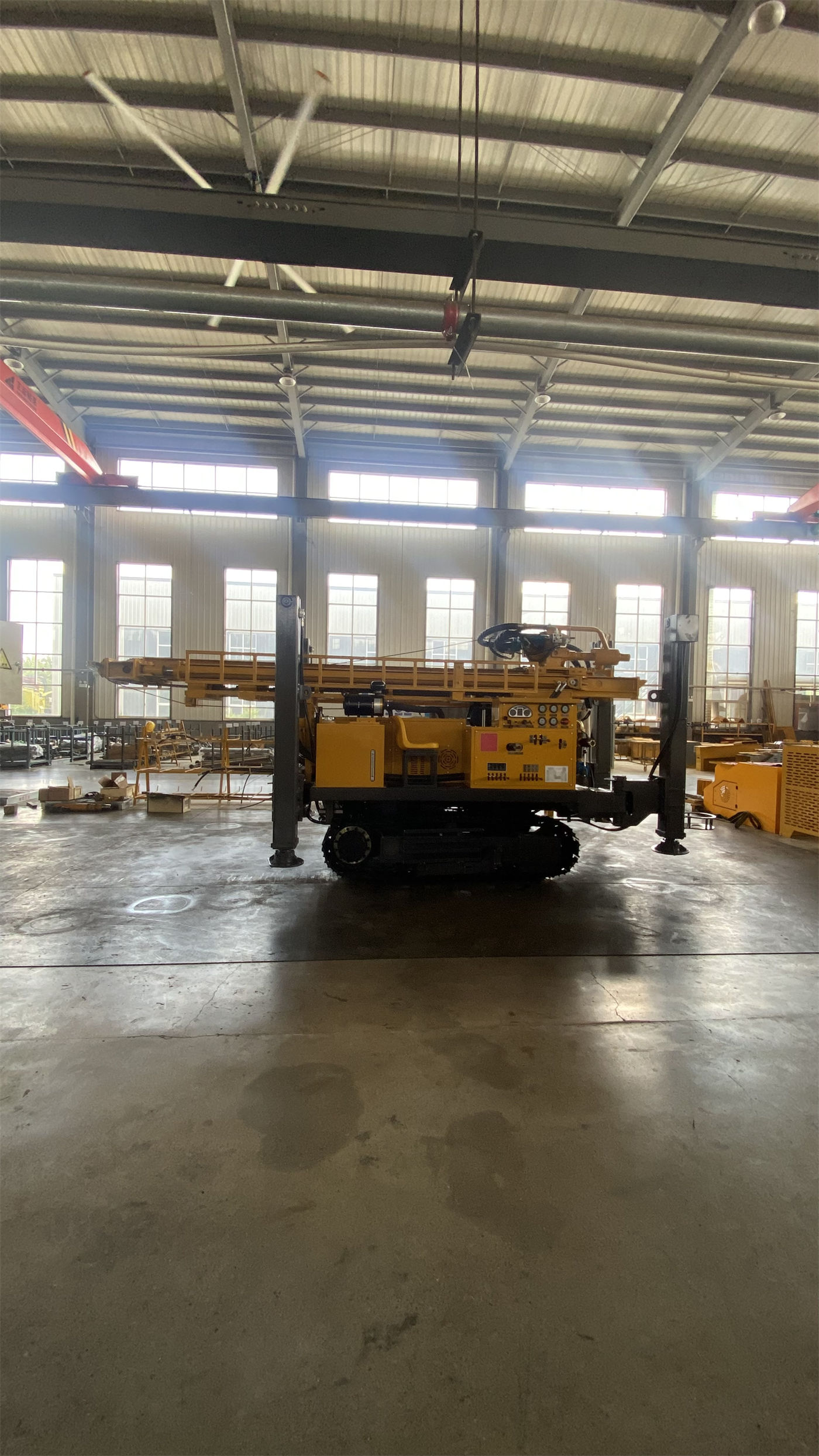
The WR1200SL has a maximum drilling depth of 1200 m, a hole diameter of 105–900 mm, a lifting force of 60 T, a rotary torque of 30000 / 15000 N·m, a maximum rotation speed of 85 / 170 r/min, supports 9.6 m drill pipes, and recommends drill pipe diameters of 114 / 127 mm. These parameters describe equipment capability and do not directly answer the economics of the power scheme, but they determine how large a continuous load the power system must bear.
| Information item | Value |
|---|---|
| Maximum drilling depth | 1200 m |
| Hole diameter | 105–900 mm |
| Lifting force | 60 T |
| Rotary torque | 30000 / 15000 N·m |
| Diesel power | 264 kW Cummins |
| Supported drill pipe | 9.6 m, recommended 114 / 127 mm |
In the diesel power section, the documentation mentions that 1200 m deep holes usually involve long continuous operation, and engine cooling, air filtration, fuel system, and hydraulic oil temperature maintenance should be strengthened. This content is aimed at diesel mode and does not give corresponding maintenance items and limiting conditions for electric mode.
Beyond fuel costs, what else does the dual-power configuration affect
The benefit given for electric mode in the documentation is that it "helps reduce fuel consumption and on-site exhaust emissions." This is a directional description without supporting values. In addition to fuel costs, the dual-power configuration also involves pre-entry power supply preparation, power supply stability during construction, and the difference between two organizational modes: fixed drilling sites and field relocation.
Therefore, the actual value of a dual diesel-electric machine does not depend on how many power options it lists, but on whether the project location simultaneously satisfies two conditions: there is an accessible stable power grid, and the hole location does not require frequent long-distance relocation during the construction period. If either condition does not hold, diesel mode remains the main choice; in that case, "dual power" serves to preserve configuration margin rather than being a source of current savings.
Matters requiring separate confirmation
The information on this site does not provide data such as the power, voltage, frequency, power consumption, and modification cost of the electric drive, nor does it give a cost comparison between diesel and electric under different working conditions. These contents must be verified jointly by the manufacturer and the power supplier after the project power supply scheme is determined, and should not be inferred during the selection stage using the diesel parameter of 264 kW.
The documentation also states that actual drilling depth still needs to be determined according to hole diameter, formation, drill pipe, air compressor, and hydrogeological conditions; for pneumatic DTH drilling, the recommended working pressure is 1.65–8 MPa and the air consumption is 16–120 m³/min. These conditions are unrelated to the power scheme, but when evaluating energy consumption for long-duration deep-hole operation, they need to be considered together with the power configuration.