












45°–90° appears on the same line of parameters, looking like just an adjustable range. In the CR800I documentation, this angle range appears twice: once in the overall machine capability description, and once on the ground-contact integrated mast, paired with a 2500 mm feed stroke. Its two appearances indicate that it is not a set of dial markings, but rather the relationship between the mast structure and the drilling direction.
Treating 45° to 90° as "drill at whatever angle you want" would miss the several sets of conditions that follow. This article proceeds in the order of "the angle range itself—basis for inclined hole layout—site constraints—items requiring separate verification," using only the CR800I information published on this site, with parts not covered by the documentation marked separately.
What hole types do 90° and 45° correspond to?
In engineering practice, 90° refers to the drill rod pointing vertically downward, i.e., a near-vertical hole. 45° is the inclination angle relative to the horizontal plane, with the borehole entering the formation at an angle. The value of an inclined hole lies in this: when the orebody itself occurs at a certain dip, a vertical hole crossing the ore layer at an angle will have a shorter effective footage, and the hole section passing through the mineralized zone is compressed; an inclined hole allows the borehole to cross in a direction closer to perpendicular to the orebody attitude, increasing the intersection length between the borehole and the mineralized zone.
The CR800I documentation states this very clearly: in quartz vein-type gold deposits, shear zone-type gold deposits, and structurally altered-type deposits, orebodies often have the characteristics of inclined extension and local pinch-out and reappearance. The drill supports a 45°–90° drilling angle and can arrange inclined holes according to the orebody attitude and exploration line direction. In other words, the upstream basis for angle selection is the orebody attitude and exploration line direction, and what the equipment provides is the ability to realize this basis.
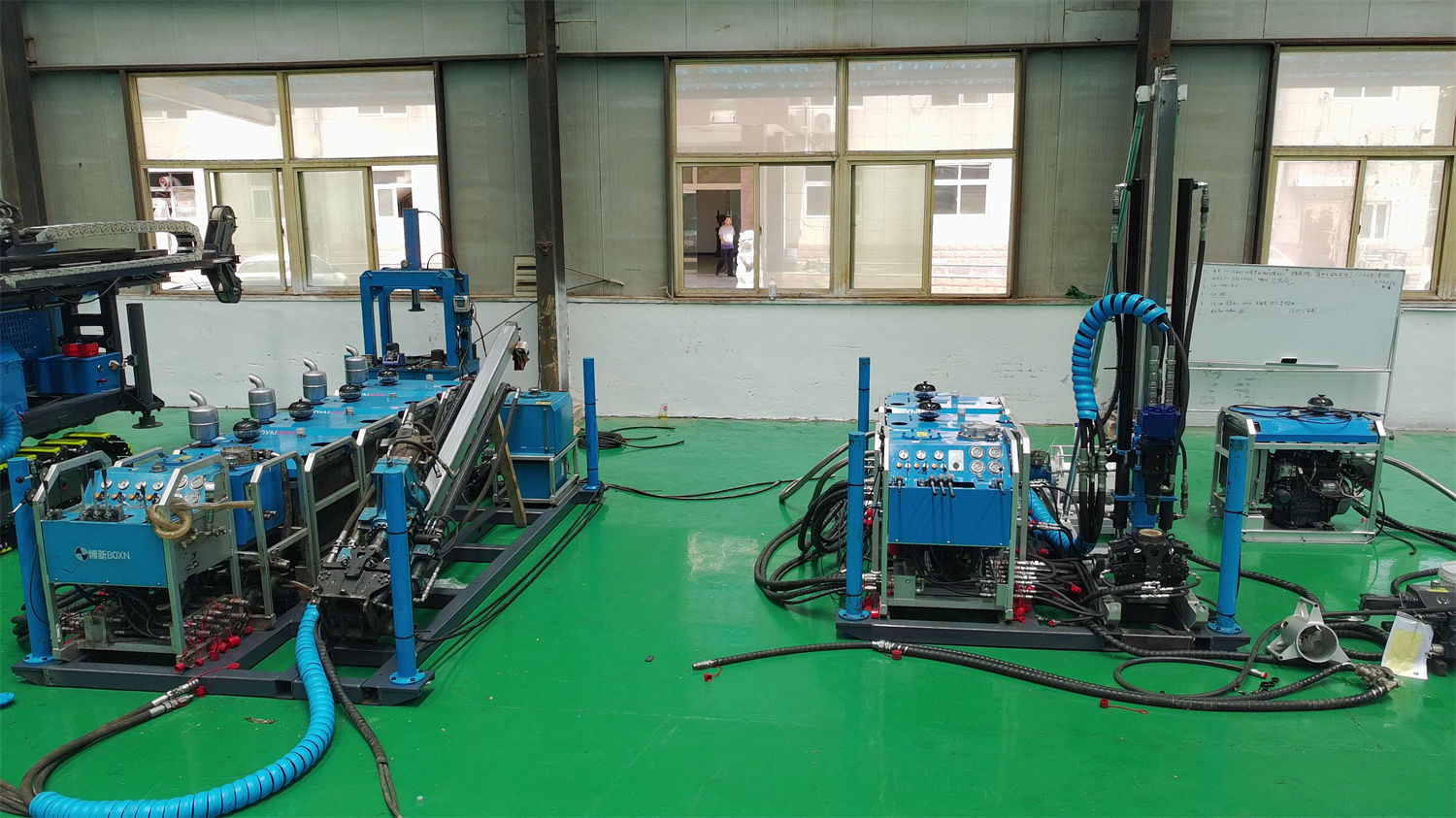
The angle range is jointly determined by the mast and the feed stroke
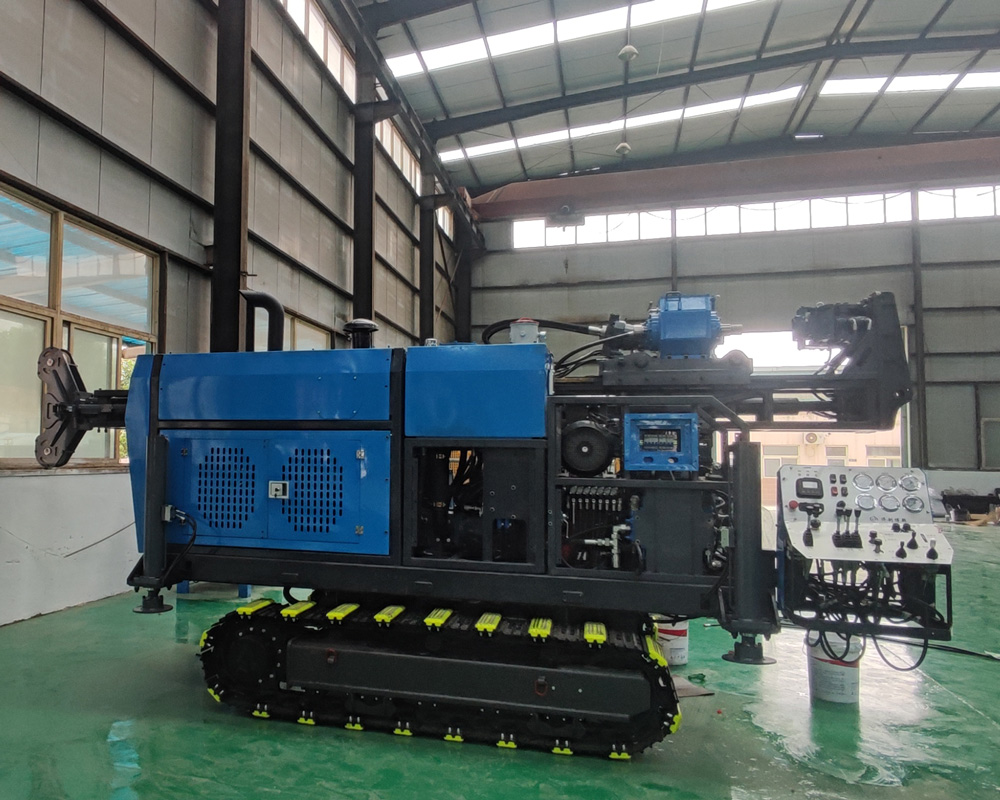
The description of the ground-contact integrated mast in the CR800I documentation is: the mast adopts a ground-contact integrated structure, drilling angle 45°–90°, feed stroke 2500 mm. The three items are written together, indicating that the mast posture directly determines the angle, and the feed stroke is a length of stroke available after the posture is determined. The mast touching the ground means that during operation the mast can directly form drilling support, and the documentation also points out the purpose of doing so—helping to reduce shaking and deviation during drilling.
The larger the inclination angle, the greater the deviation between the mast and the gravity direction of the drill string, and the pressure of shaking and deviation changes accordingly. The supporting requirements given in the documentation for inclined hole construction are: site leveling and rig fixation should be completed in advance to avoid platform settlement affecting hole deviation control. This sentence speaks of conditions, not capability limits.
Angle is not the same as hole deviation accuracy
45° and 90° describe the design direction of the borehole, which is a different matter from whether the actual borehole trajectory can maintain this direction. In the inclined hole section, the CR800I documentation does not give values for hole deviation, nor does it give deviation correction methods. It only lists in the maintenance precautions: "Before starting the hole, confirm the drill tool specifications, drilling angle, mud system, and winch wire rope condition." What can be confirmed is only one point: the angle is one of the items to be checked before starting the hole, not a result that is automatically established after starting the hole.
Intact hard rock, fault fracture zones, and strongly weathered layers affect hole deviation in different ways. The documentation's approach to broken formations is: shorten the run, reduce mechanical impact, and observe changes in return water and core integrity; when necessary, use casing, adjust flushing fluid properties, or conduct sectional wall protection. These measures target hole wall stability and core recovery. The documentation does not directly link them to hole deviation control, so one cannot infer from this how angle deviation will change.
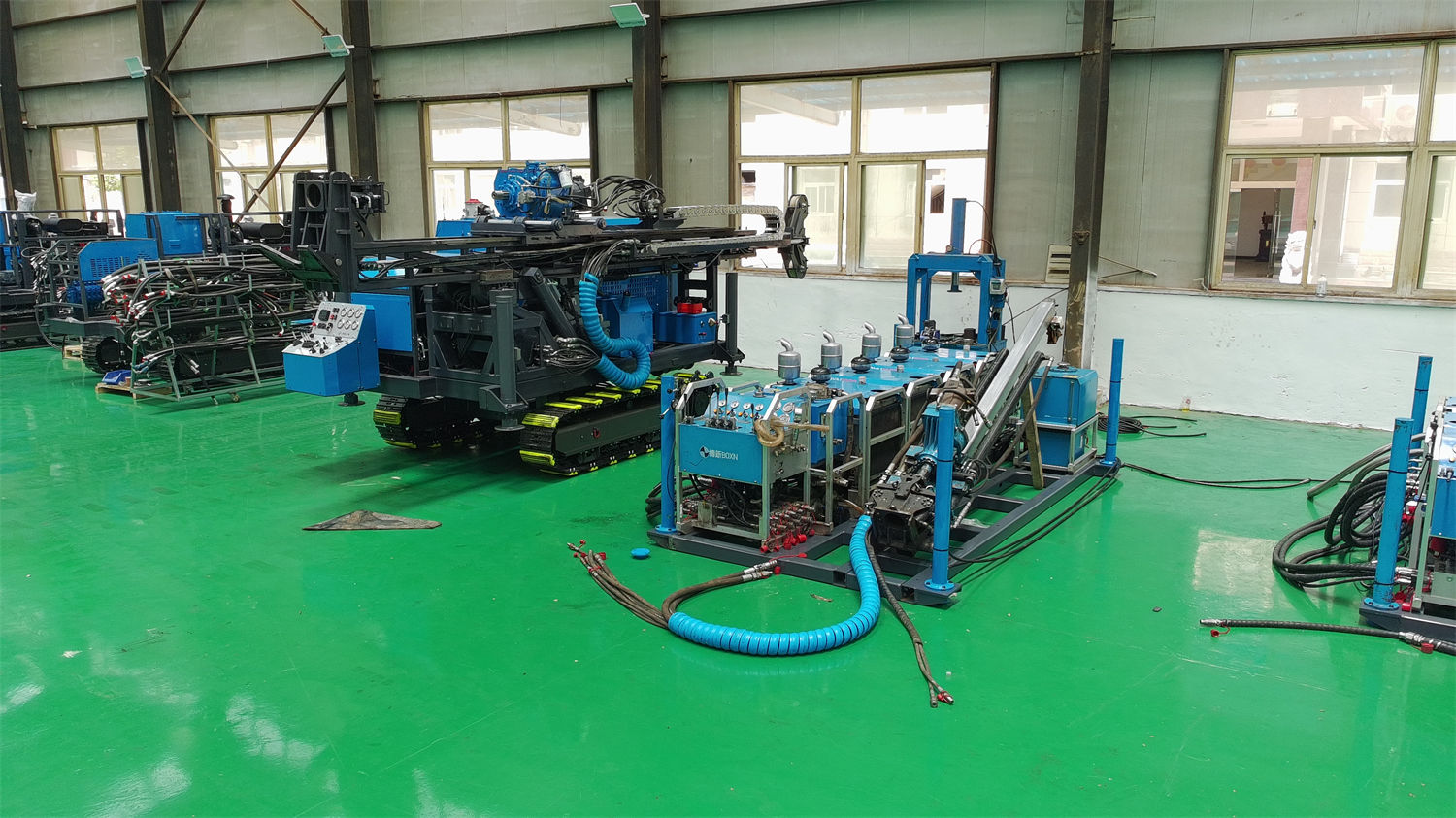
Differences between inclined holes and vertical holes in downstream procedures
After the angle changes, what is affected is not only the mast posture. The following items have corresponding descriptions in the documentation and can be compared side by side. Differences not appearing in the documentation are not inferred in this section.
| Item | Documentation statement | Relationship to angle |
|---|---|---|
| Mast type | Ground-contact integrated mast, drilling angle 45°–90°, feed stroke 2500 mm | Posture is directly reflected by the mast angle |
| Site conditions | For inclined hole construction, site leveling and rig fixation should be completed in advance | More sensitive to platform settlement under inclined conditions; the documentation states this affects hole deviation control |
| Drill string load | 152 kN pull-up force, 63 kN feed force | The documentation does not give load values separately by angle |
| Mud circulation | Hydraulic mud pump reference flow 100 L/min, pressure 70 bar | The documentation does not explain the effect of angle on circulation parameters |
| Winch | 6 mm wire rope, rope capacity 1000 m, lifting force 13 kN | The documentation does not distinguish wireline coring operation differences between vertical and inclined holes |
What this table shows is: at the documentation level, the angle mainly falls on the two items of mast and site, while the parameter values of other systems are not given in tiers according to angle. Therefore, understanding 45°–90° as "the equipment can achieve the same drilling performance within this range" exceeds the basis of the existing documentation.
Order of judgment for the applicability of inclined holes
According to the conditions appearing in the documentation, the following order can be organized:
- First confirm the orebody attitude and exploration line direction, and judge whether an inclined hole is more conducive than a vertical hole to crossing the mineralized zone;
- Then check whether the proposed angle falls within the 45°–90° range;
- Next check whether the site can complete leveling and rig fixation to avoid platform settlement;
- Then confirm that the drill tool specifications, mud system, and winch wire rope condition are in a verifiable state before starting the hole;
- When entering broken or strongly weathered sections, adjust according to the documentation's approach of shortening the run and reducing mechanical impact, and take casing or flushing fluid adjustment measures when necessary.
In this order, the second step is the only link directly corresponding to the angle parameter. The previous step determines whether an inclined hole is worth doing, and the latter two steps determine whether it can be maintained once done.
Items requiring separate confirmation
The CR800I documentation on this site does not provide the following content. When these judgments are involved in selection or construction plans, they should be separately verified with the manufacturer or project technical party: the actual hole deviation range and measurement method under different inclined hole angles; whether the available margin of pull-up force and feed force changes after the angle changes; the requirements for wireline coring inner tube placement and retrieval operations under inclined hole conditions; the specific provisions for site bearing capacity and fixation methods when the mast is near the 45° end; and the influence of different rock formation combinations on angle selection.
Summary
For the CR800I, 45°–90° is the drilling angle range achievable by the mast, and its purpose is to allow the borehole direction to match the orebody attitude and exploration line direction. The range itself does not guarantee hole deviation accuracy, nor does it automatically solve site, fixation, and formation problems. Using this parameter within the overall judgment of inclined hole layout is closer to the original intent of the documentation than treating it as an independent selection indicator.