












In this site's core drill information, there are two 1000-meter-class models with different structures: the CR1000I is integrated, and the CR1000P is portable modular. Both list a reference drilling depth of 1000 m for N-size, but their structural descriptions are completely different. Treating "integrated" and "modular" as two options for transport method can easily overlook the processes they actually affect.
First, ground the two terms in the source material
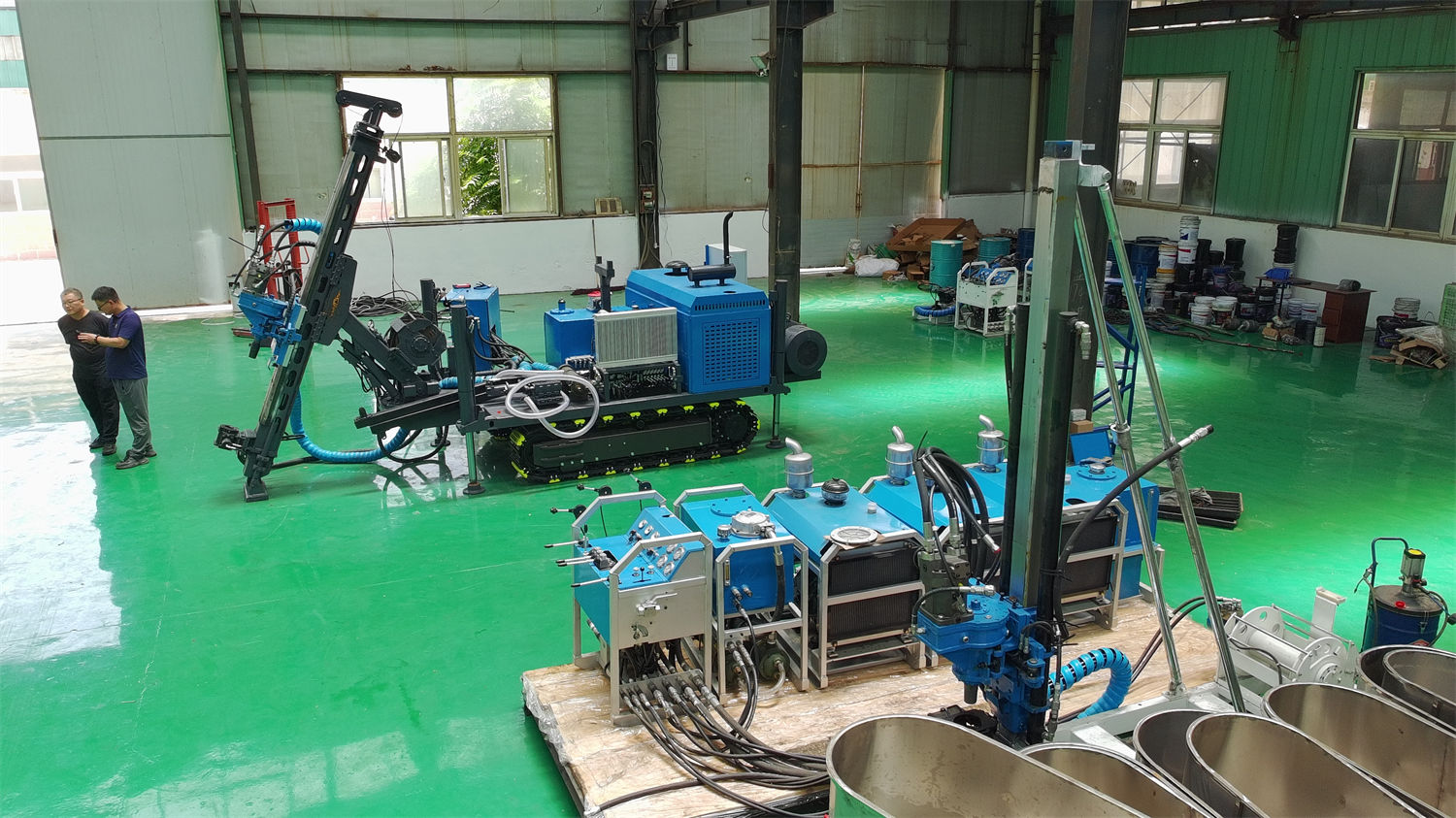
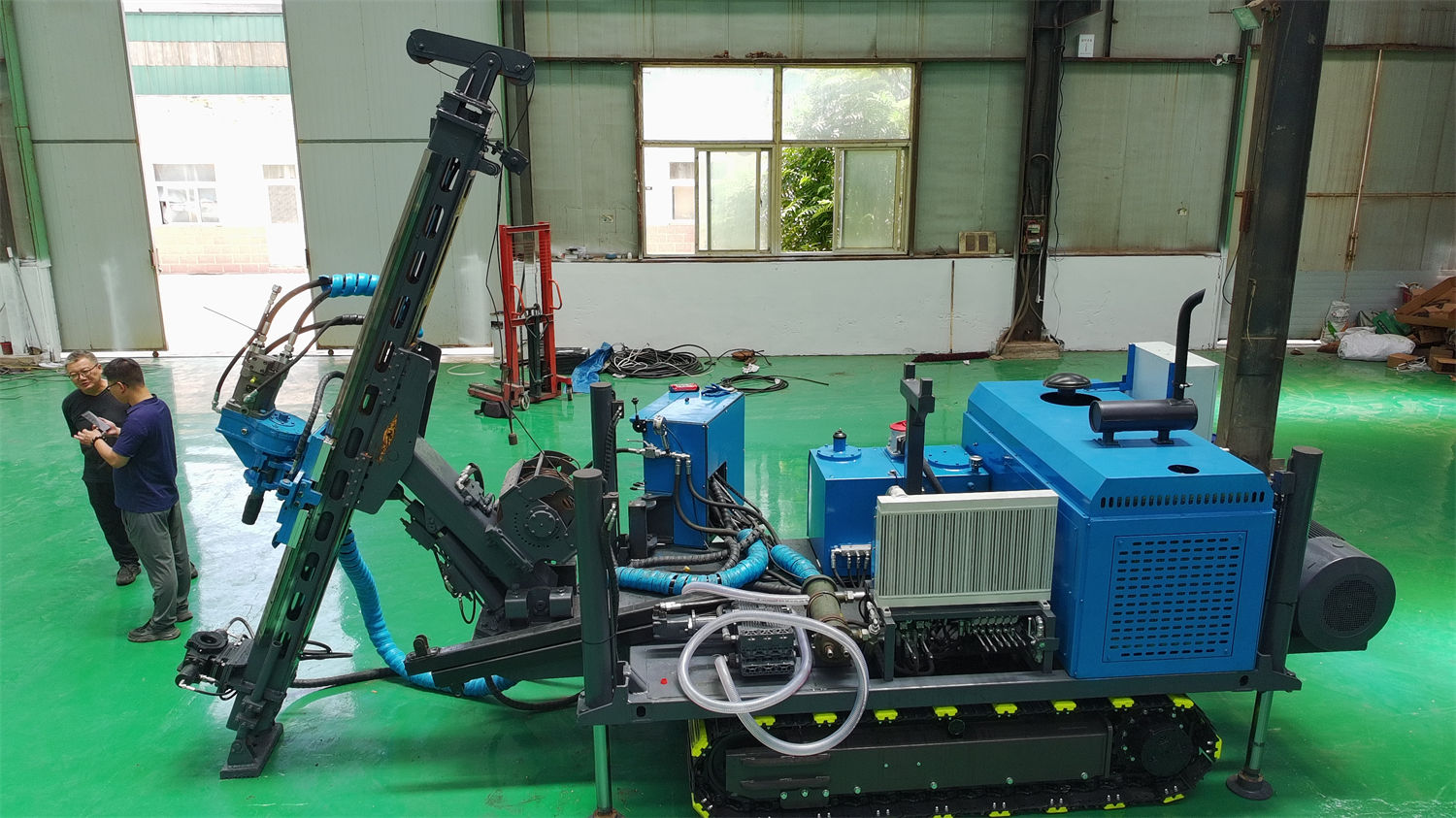
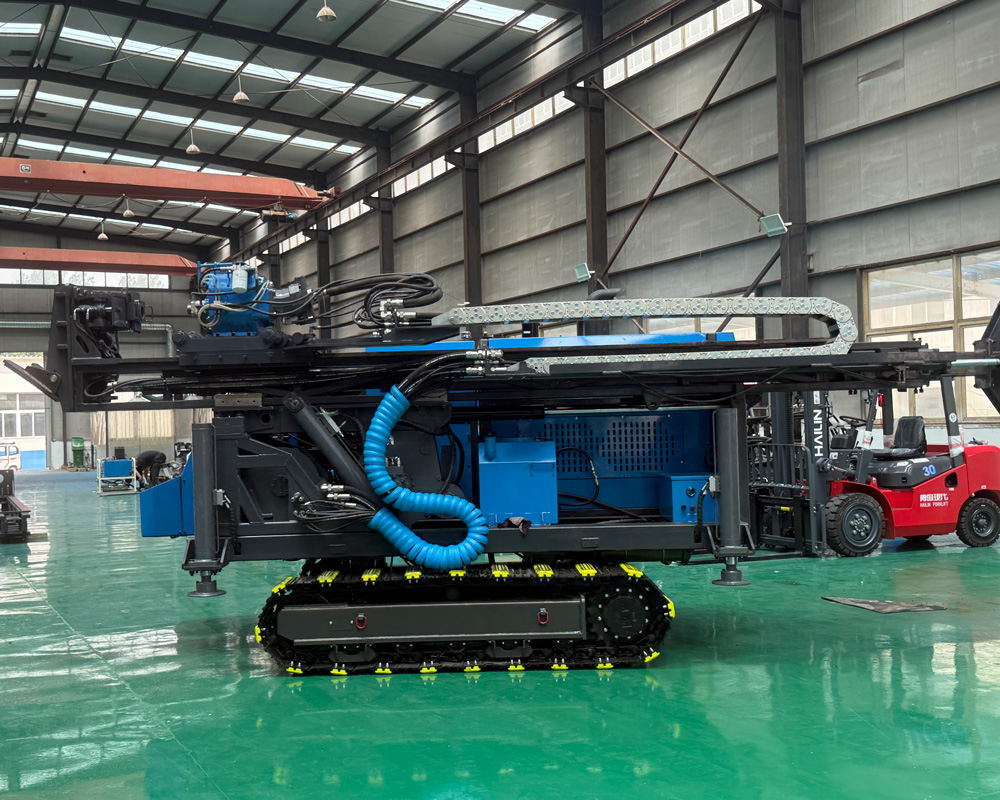
In the CR1000I information, integrated corresponds to this description: the power assembly, hydraulic system, power head, mast, winch, chuck, and mud circulation system are concentrated on the same crawler platform, reducing on-site disassembly and module connection work. The CR1000P information is titled "portable modular" and "1000 meters." Modular here does not mean a single machine can be split into two parts, but that the complete machine is transported in modules and assembled into working condition at the hole location.
So these two terms do not describe the same level of issue. Integrated is a single mobile unit; modular is a set of modules that must be assembled on site. The differences lie in access routes, relocation methods, assembly steps, and daily maintenance boundaries.
The site end: can the complete machine reach the hole location?
The premise of an integrated structure is that the equipment can walk to the hole location itself. The CR1000I uses a crawler chassis; the information notes that the crawler chassis has good traction and ground adaptability, making it easier to move on mining roads, gravel ground, mountain platforms, and partially hardened sites. For projects with scattered drill points and frequent short-distance relocations, the integrated structure can reduce time lost to auxiliary lifting and repeated assembly.
The modular type follows the opposite logic: when the complete machine cannot pass roads, steep slopes, or platforms, the equipment is first disassembled into modules for transport and then assembled on site. The CR1000P information notes that for deep-hole transport and on-site assembly in mountainous areas, road, lifting, and site conditions should be verified beforehand. This passage points to a preliminary task, not a fixed procedure. Under what road conditions disassembly is required, how many pieces it is split into, and the weight of each piece are not listed item by item in this site's information for that model and need to be confirmed with the manufacturer.
The process differences are most obvious in two places
There are two differences that can be read directly from the information.
First: the basis for adjusting drilling angle
The CR1000I gives a drilling angle of 45°–90°. The information states that this angle range can be achieved through coordination of the mast and feed system, and the hole direction can be adjusted according to the geological profile and target body attitude. On integrated equipment, the mast and feed mechanism are fixed on the same platform, so angle adjustment is completed within a single setup.
The angle capability of modular equipment also presupposes that the hole location can be laid out, but the mast and main unit attitude can only be confirmed after on-site assembly. The CR1000P information does not give a specific angle range and requires separate verification by project.
Second: wireline coring and winch configuration
The CR1000I winch uses 6 mm wire rope, with a rope capacity of 1000 m and a hoisting speed of 98 m/min. The information states that it works with the wireline coring process to reduce the time required to pull the entire drill string each time core is recovered. For modular equipment, the winch rope capacity, wire rope diameter, and hoisting speed have no corresponding values in the CR1000P public information and cannot be directly applied.
How to read the coring capability column
Both machines grade drilling depth by size; it is not a single number. The comparison is as follows:
| Item | CR1000I | CR1000P |
|---|---|---|
| Structure | Integrated crawler | Portable modular |
| B-size reference drilling depth | 1200 m | Not listed |
| N-size reference drilling depth | 1000 m | 1000 m |
| H-size reference drilling depth | 500 m | Not listed |
| Drilling angle | 45°–90° | Not listed |
What this table shows is that the way size grades are read is consistent within the same manufacturer's information, and drilling depth values must be read together with the size letter. Blank cells in the table do not mean the modular type can only drill N-size; they mean this site's available information does not cover them, and no inference should be made from that.
The relationship between load parameters and structure
The CR1000I has a maximum torque of 1200 N·m, a maximum rotation speed of 1350 rpm, a feed force of 63 kN, and a pull force of 185 kN. These parameters are capability indicators of the power head and feed system and are not necessarily related to whether the machine is integrated. Modular equipment also needs sufficient pull force to handle deep-hole drill string weight and borehole wall friction, but the specific values need to be verified separately from the CR1000P information.
The chuck through-hole diameter also needs separate verification. The CR1000I chuck through-hole diameter is 127 mm, and applicable drill rods include NQ, HQ, PQ, NTW, and HTW. Modular equipment differs from integrated equipment in disassembly, assembly, and hole-mouth operation methods; whether chuck specifications affect the choice of drilling tool system is not explained in the information.
Maintenance focus also differs
The hydraulic, power, and cooling systems of integrated equipment are concentrated on one crawler platform. The CR1000I uses a hydraulic system with a main pump flow of 250 L/min and pressure of 25 MPa, and an auxiliary pump flow of 80 L/min and pressure of 17 MPa; cooling is a combination of air cooling and water cooling. The information specifically notes that in long drilling tasks, hydraulic system temperature control, filtration status, and oil cleanliness directly affect the stability of the power head, actuators, and control valves.
The hydraulic lines and connection points of modular equipment must be reconnected at each assembly, and the interface status between modules is part of daily inspection. The inspection frequency and focus of the two parts differ, but both revolve around the same thing: in-hole operations must not be interrupted by the equipment itself.
Boundaries that can be drawn first when selecting a model
Based on the published information, the applicable conditions of these two structural types can be preliminarily judged in the following order:
- For projects with scattered hole locations, frequent relocations, and road conditions that allow crawler equipment to travel on its own, the relocation efficiency of the integrated type has a stronger basis.
- When the site itself cannot accommodate the complete machine, or when the transport route has hard passage restrictions, the modular disassembly and assembly method provides another path, but the weight of disassembled parts, lifting capacity, and on-site assembly space must be verified in advance.
- For projects requiring a wide range of drilling angle adjustment, confirm whether the mast of the selected structure can complete the angle setup in a single setup.
The above judgment uses only descriptions already present in the information. "The allowable range of road conditions" and "the specific weight and assembly time of modular disassembled parts" are not within this site's public information and need to be confirmed project by project.
What the information does not answer
How many modules the CR1000P modular type is specifically split into, the dimensions and weight of each module, and the auxiliary equipment and time required for on-site assembly are not given in this site's information. For the CR1000I under the integrated structure, the complete machine transport weight and external dimensions are also not listed in the available information.
When matching these values to specific drilling tasks, the manufacturer's complete technical information and on-site condition verification should be taken as the basis; values from one model should not be used to infer another.