












When a 600-meter-class and an 800-meter-class portable modular core drill are placed side by side, the easiest conclusion is that they differ by 200 meters of drilling depth. But if only this number is considered, most of the differences in the downhole process will be overlooked. In the product information on this site, the CR600P and CR800P are two drilling depth classes within the same structural system, with the former having an NQ reference drilling depth of 600 m and the latter an NQ reference drilling depth of 800 m. Reading the two sets of published specifications side by side shows that the differences are actually distributed across several areas, some directly affecting downhole loads and others affecting supporting systems.
First, Clarify Which Set of Drilling Depths the "Class" Refers To
The numbers in the two equipment designations correspond to the reference drilling depth for the NQ size, but the sizes do not scale proportionally. The CR800P's three reference drilling depths are BQ 920 m, NQ 800 m, and HQ 380 m. The information on this site does not provide the BQ and HQ reference drilling depths for the CR600P, so this article does not infer the differences between the two in other sizes; the complete specification table for the CR600P needs to be consulted.
This affects the order of judgment: if a project is mainly controlled by HQ hole diameter, looking only at the NQ 600 m and 800 m is not enough to explain the capability difference between the two machines at that diameter; the actual difference in the HQ range must be verified separately.
Feed and Pull: The Most Easily Overlooked Set in the Intermediate-Depth Stage
In the published data for the CR800P, the thrust force is 67 kN, the pull force is 130 kN, the feed stroke is 1.8 m, and the lifting speed is 115 m/min. As hole depth increases, the weight of the drill string and the friction of the hole wall rise together. The significance of pull capacity is not only normal tripping but also providing operating margin for drill string handling in deeper hole sections.
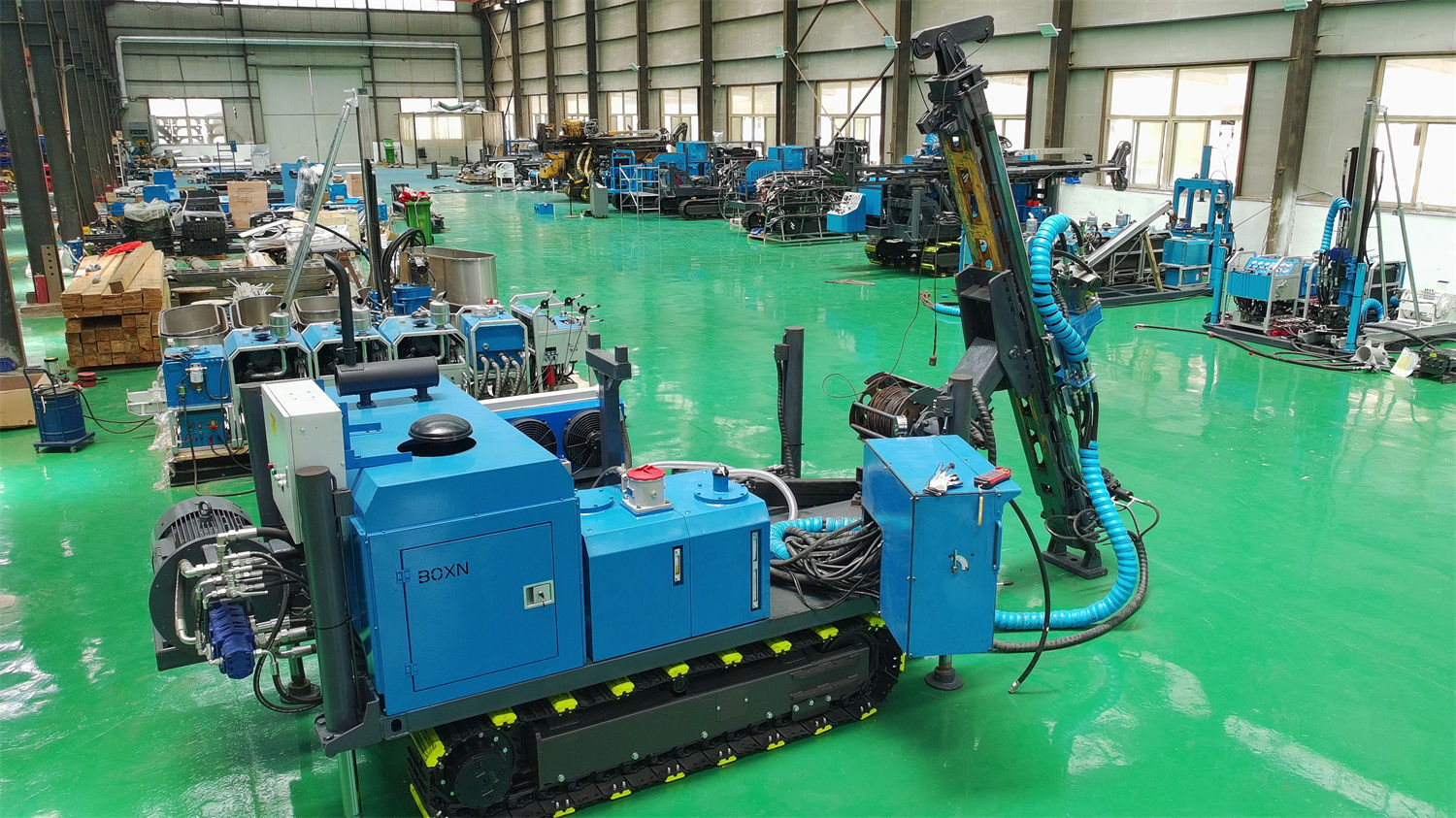
For the same portable modular structure and the same use of 1 m and 1.5 m drill rod lengths, whether the 600-meter-class and 800-meter-class scale up in this area in sync depends on the specific configuration of the model. Batch differences, actual downhole tool combinations, and drilling angle all affect load performance, and pull force cannot be inferred from the drilling depth ratio.
Power Head Torque and Speed Must Be Read Together
The CR800P power head has a maximum torque of 980 N·m and a maximum speed of 1200 rpm, with direct drive from the spindle. The information describes this set of parameters as being used according to rock type: in intact hard rock, reasonable speed and bit pressure maintain the cutting efficiency of the diamond bit; after entering fractured, strongly weathered, or high-friction hole sections, speed and thrust should be appropriately reduced to prevent bit clogging or sticking in the hole.
Torque and speed are capabilities in two different directions, not high and low settings of the same parameter. The values of the 800-meter-class in these two items are related to the high-friction conditions it must face in deeper hole sections; whether the 600-meter-class needs the same torque reserve depends on project rock type and tripping frequency, not on the drilling depth number.
Wireline Winch Rope Capacity Is a Clear Dividing Point
The CR800P wireline winch uses 6 mm steel wire rope, with a rope capacity of 1000 m, a lifting speed of 116 m/min, an empty drum pull of 11.5 kN, and a full drum pull of 5.6 kN. The information clearly states that the 1000 m rope capacity leaves a certain margin for 800-meter-class wireline coring, which can reduce limitations during inner tube lifting in deep holes.
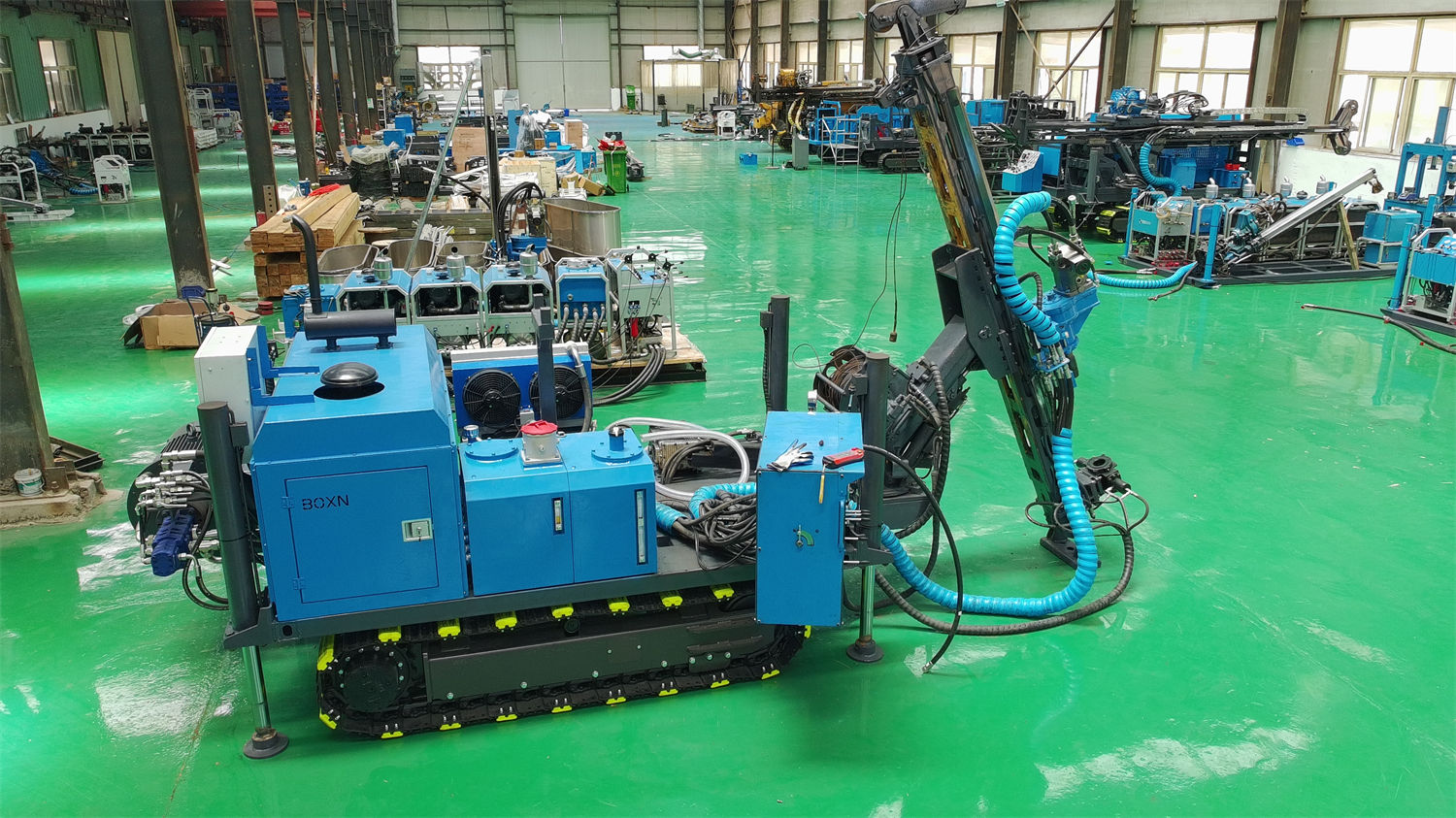
Wireline coring inner tube lifting is a process that must be performed every run, and a tight rope capacity means less operational flexibility in deep hole sections. This machine is also equipped with a hydraulic clamp, with a maximum clamping force of 130 kN and a through-hole capacity of 54–127 mm—clamping through-hole and winch configuration are two conditions in the same stage of the process and should be checked together when purchasing, rather than asking only about winch parameters.
The Mud Unit Involves Return Water and Rock Cuttings Transport
The CR800P mud pump is a plunger high-pressure pump, hydraulically driven, with a mud flow rate of 100 L/min and a pressure of 7 MPa; the mud agitator has a speed of 1500 rpm and a mixing capacity of 1.2 m³/min. The applicable description given in the information is: when fractures are developed, return water is unstable, or the rock cuttings transport distance in intermediate-deep holes is long, higher mud pressure helps maintain circulation, but in practice it should still be adjusted according to hole diameter, rock type, and loss conditions, and simply pursuing high pump pressure is not advisable.
As hole depth increases, the distance for rock cuttings to return upward along the annular space becomes longer, which is a constraint at the mud system level. The magnitude at which the 600-meter-class is configured in this area requires consulting the mud parameters of the corresponding model and cannot be converted by the drilling depth difference.
Power and Module Weight: The Overlooked Entry End
The CR800P diesel engine power requirement is ≥99 kW, and a 22 kW × 3 electric motor configuration can also be used, with a diesel/electric dual-use power form. Regarding reference module weights, the power unit is 180–260 kg, the operating unit is 140 kg, the hydraulic oil unit (including oil) is 160 kg, the mud unit is 95 kg, and the total weight is 1380 kg.
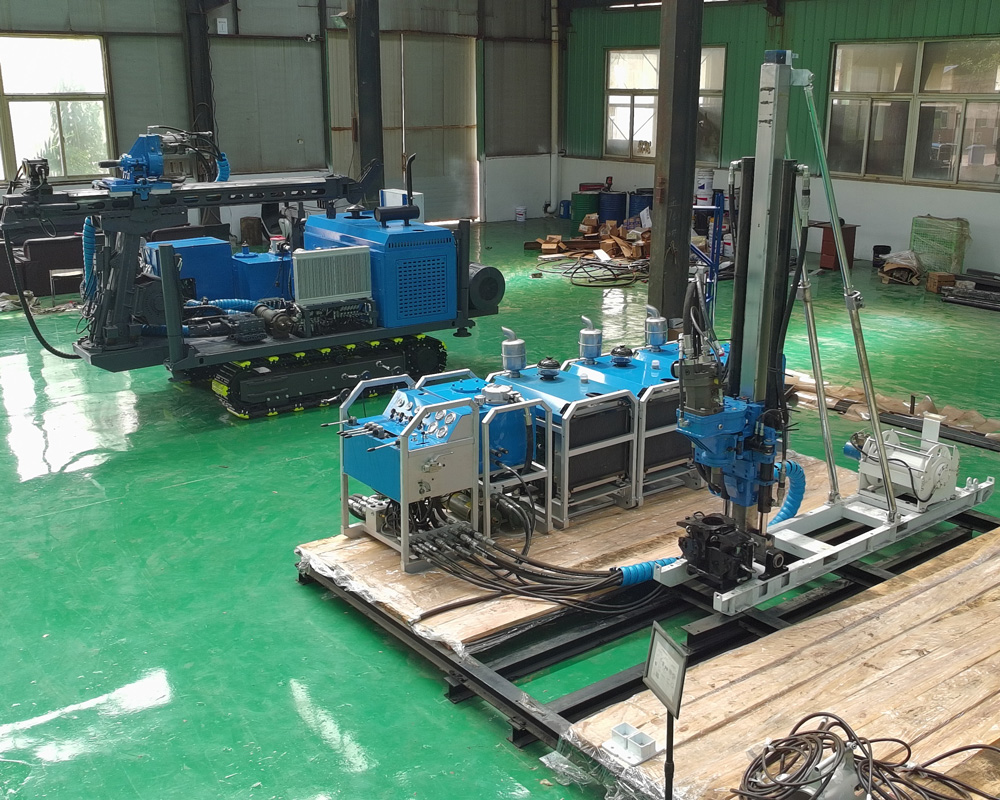
The value of the modular structure lies in hole site accessibility and relocation organization: the power, operating, mud, and drilling units are transported separately. This means that an increase in class not only changes downhole parameters but also changes the transport list—which item is heaviest, whether additional manpower is needed, and how much assembly space is required on the mountain must all be checked item by item according to module weight. The CR800P information also notes that hydraulic quick-change couplings and connectors should be checked after each module assembly.
Specification Comparison Table
| Comparison Item | CR800P Published Value | To Be Confirmed in Comparison |
|---|---|---|
| NQ reference drilling depth | 800 m | Corresponding value for 600-meter-class |
| BQ/HQ reference drilling depth | 920 m/380 m | Values for the same sizes in 600-meter-class |
| Drilling angle | 45°–90° | Whether the angle ranges of the two models are the same |
| Thrust force/Pull force | 67 kN/130 kN | Values in the corresponding items for 600-meter-class |
| Maximum torque/Speed | 980 N·m/1200 rpm | Power head configuration of 600-meter-class |
| Winch rope capacity | 1000 m (6 mm steel wire rope) | Steel wire rope specification and rope capacity |
| Mud flow rate/Pressure | 100 L/min/7 MPa | Mud pump type and pressure rating |
| Total weight | 1380 kg | Complete machine and module weights of 600-meter-class |
Judge by Process Sequence, Not by Drilling Depth
Putting these items together shows that the differences between the two classes are not concentrated in one place. A more practical order of judgment is: first confirm which hole diameter range the project mainly uses, and then check the reference drilling depth for the corresponding size; next, see whether the feed and pull capacity can handle the drill string load at that depth; then check whether the winch rope capacity and clamping through-hole match the selected drilling tool system; finally, return to mud and power to confirm whether the supporting systems can sustain long-term circulation. Transport and assembly conditions should be checked separately after this sequence.
What This Article Cannot Answer
This article is entirely based on the published specifications of the CR800P on this site. The complete specification table for the CR600P is not within the scope of this material, so this article does not infer the specific differences between the two models in BQ/HQ reference drilling depth, thrust and pull loads, power head torque, winch rope capacity, mud parameters, and module weight. Actual drilling efficiency, drilling depth, and core recovery are also affected by formation conditions, downhole tools, drilling angle, and operating methods, and should be based on site conditions and manufacturer confirmation.