












In core drilling rig documentation, the number most easily singled out is often drilling depth. The first row of the CR1000P parameter table says "1000-meter class," but the same document also lists three drilling depths: BQ reference drilling depth 1150 m, NQ reference drilling depth 1000 m, and HQ reference drilling depth 550 m. For the same model and the same structure, drilling depth can range from 550 m all the way to 1150 m. This set of data itself shows that drilling depth is not a value that stands on its own; it depends on the selected hole diameter specification, and the hole diameter specification in turn involves power, pull-up, mud, and hoisting configuration.
Reducing deep-hole capability to a single drilling depth figure skips two layers of information: first, which hole diameter grade the value corresponds to; second, whether the other parameters supporting that grade to reach that depth hold up. Below, based on the published data for the CR1000P, these two layers are separated and examined.
Drilling depth is not one value, but a table divided by specification
The CR1000P's reference drilling depths are listed separately for three specifications:
| Specification | Reference Drilling Depth | Corresponding Meaning |
|---|---|---|
| BQ | 1150 m | Smaller hole diameter; the same machine can reach a greater depth |
| NQ | 1000 m | Often regarded as the representative grade for this model |
| HQ | 550 m | As hole diameter increases, the same depth limit shifts down noticeably |
Putting the three rows of data together, it is not "this machine can drill 1000 meters," but "this machine has a reference depth of 1150 meters under BQ specification, 1000 meters under NQ specification, and 550 meters under HQ specification." When discussing deep-hole capability, if the hole diameter specification is not stated, the drilling depth figure has no definite reference. Conversely, the drilling depth range of the same machine spans nearly 600 meters, showing that drilling depth is closer to a conditional value rather than an inherent property of the equipment.
Hole diameter changes not only the hole wall, but the entire load set
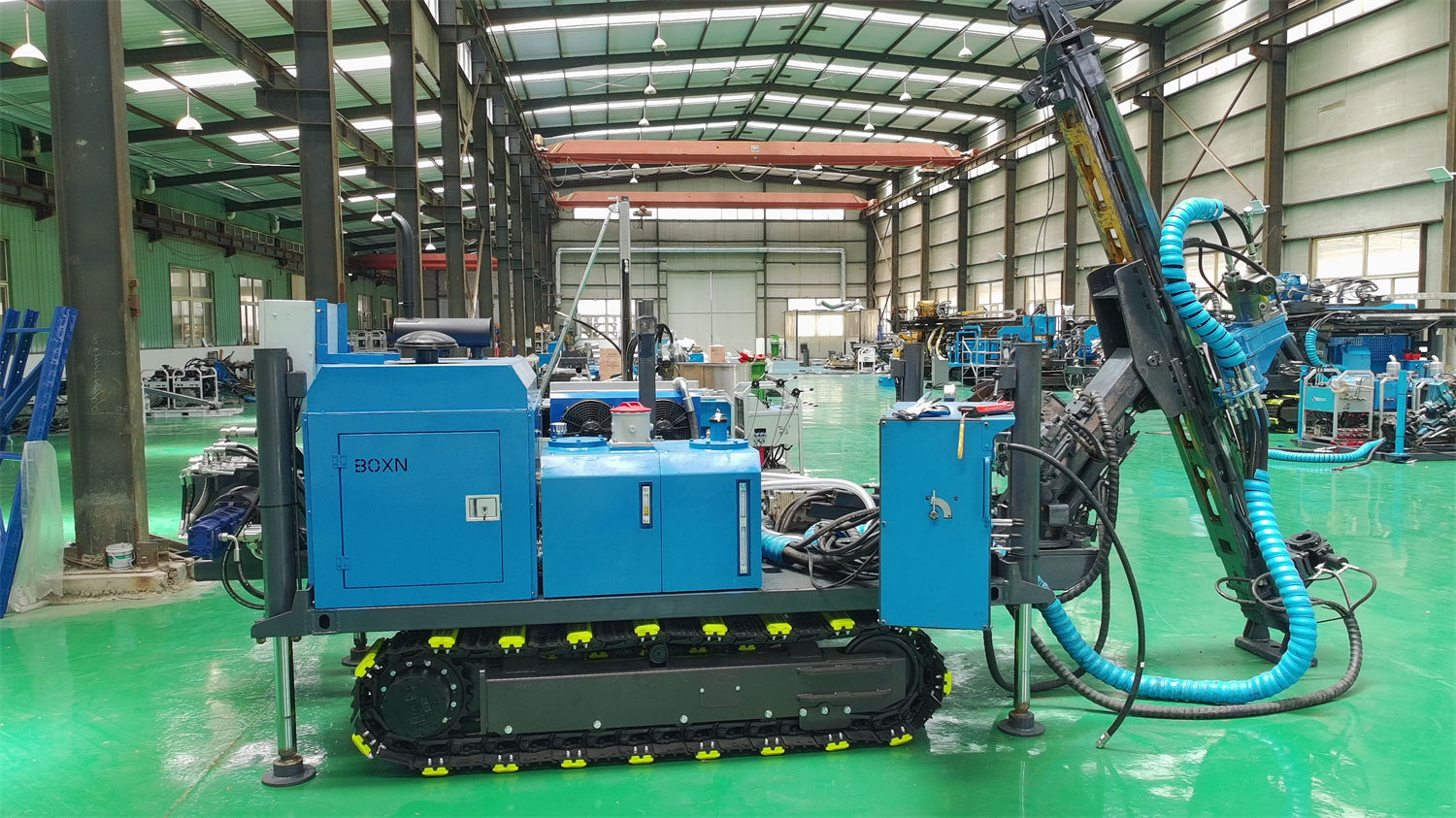
When hole diameter increases, the volume of core to be recovered, the cutting area of the bit, and the contact area between the drill string and the hole wall all change, and the torque the power head needs to output and the pull-up demand corresponding to the drill string's own weight also change accordingly. At this end, the CR1000P's parameters are a power head maximum torque of 1100 N·m, a maximum rotation speed of 1250 rpm, a feed force of 67 kN, and a pull-up force of 130 kN. These values are not decorative indicators: the deeper the hole and the larger the specification, the more obvious the drill string weight and hole-wall friction become, and whether normal drilling can be maintained and tripping out can proceed smoothly depends on whether torque and pull-up force can still handle this load.
Putting HQ's 550 m together with BQ's 1150 m allows a more specific meaning to be read: the same CR1000P, when HQ is selected, has a clearly lower maximum depth than with BQ. This does not mean the equipment configuration has shrunk, but that the same set of rotation and lifting conditions can support different depths under different hole diameters.
Before drilling depth is reached, several processes must first hold up
Drilling depth describes how far the hole bottom can go, but in deep-hole operations the links most likely to get stuck are often outside the hole or between hole sections. Several sets of supporting parameters of the CR1000P point to these links:
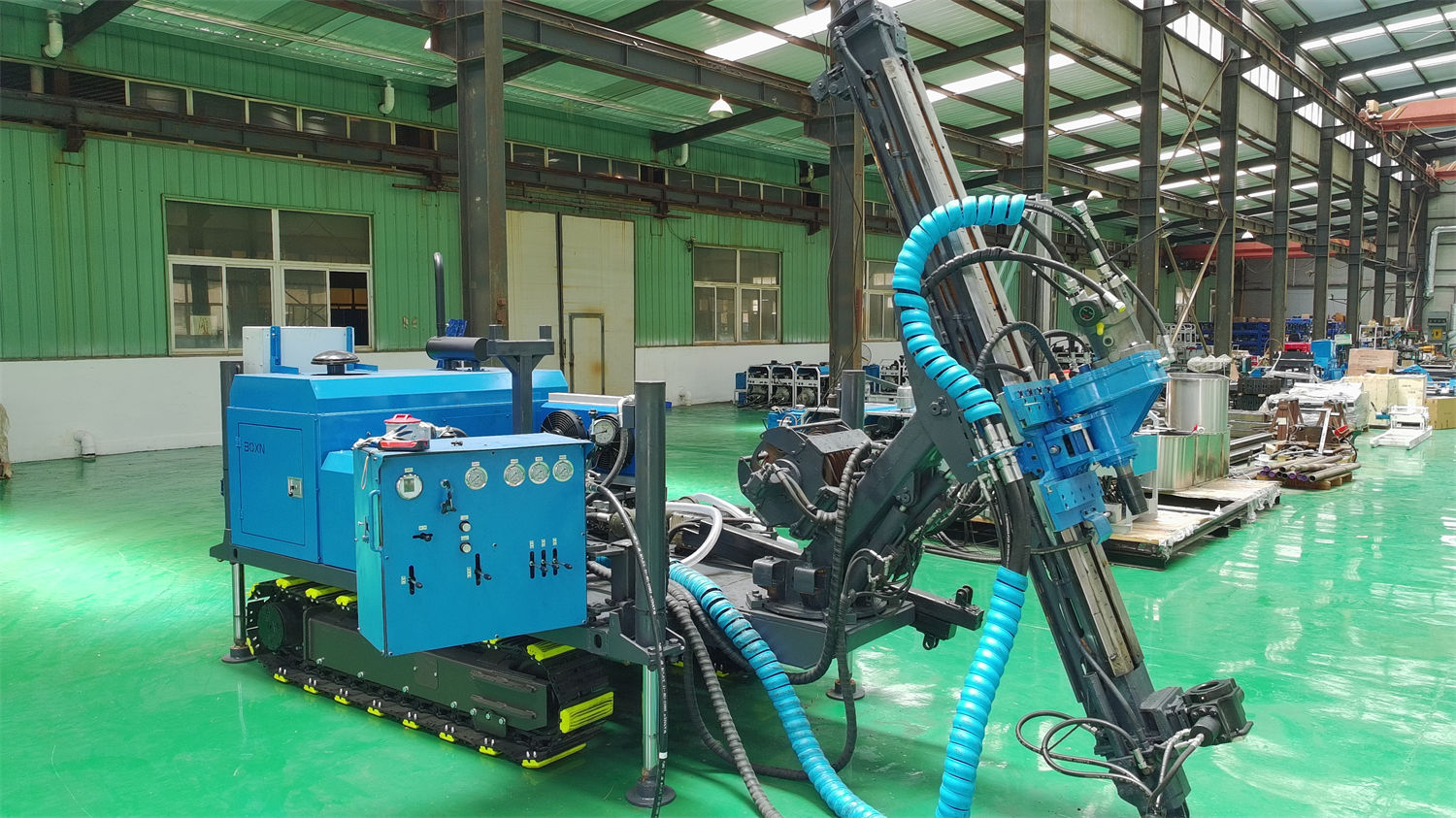
- Wireline winch rope capacity 1200 m (6 mm wire rope), empty drum pull-up force 14.5 kN, full drum pull-up force 6.9 kN, lifting speed 116 m/min. The inner tube lifting distance in wireline coring is directly related to hole depth, and the rope capacity must match the target hole depth; wire rope fatigue, rope end fixing, and spooling status all need close attention during long-distance lifting.
- Main pump flow 200 L/min, pressure 25 MPa, main oil tank 200 L. In long-cycle deep-hole construction, the hydraulic system handles power head rotation, feed, clamping, and winch actions, and oil contamination, filter status, and system temperature rise will gradually affect action stability.
- Mud flow 100 L/min, pressure 7 MPa. As hole depth increases, the rock powder transport distance becomes longer and circulation resistance rises; return water, pump pressure, and core condition are important bases for judging downhole conditions. Deep leakage zones, water-bearing fractures, and fault zones require adjustment of the mud system according to actual conditions.
- Clamp maximum clamping force 130 kN, through-hole capacity 54–127 mm, type hydraulic clamp. The through-hole size determines which drill tool grade can pass through, forming a corresponding relationship with the selected specification.
If any one of these parameters does not match the actual hole depth conditions, "can drill to a certain depth" may remain only on paper. Drilling depth is the result; process continuity is the process.
Power configuration also reversely affects the feasible range of deep holes
The CR1000P's power is divided into two routes, diesel and electric: diesel engine power requirement ≥132 kW, with diesel engine brands optional Kubota, Cummins, Yunnei, and Yuchai; the electric configuration is 30 kW × 3, motor speed 3000 / 1450 rpm. Remote areas without electricity usually choose diesel power, while fixed platforms with stable power supply conditions can evaluate electric options. The power form is not directly written in the drilling depth column, but it determines whether the equipment can continuously output at the hole site, and also determines the organization of supporting materials and supplies.
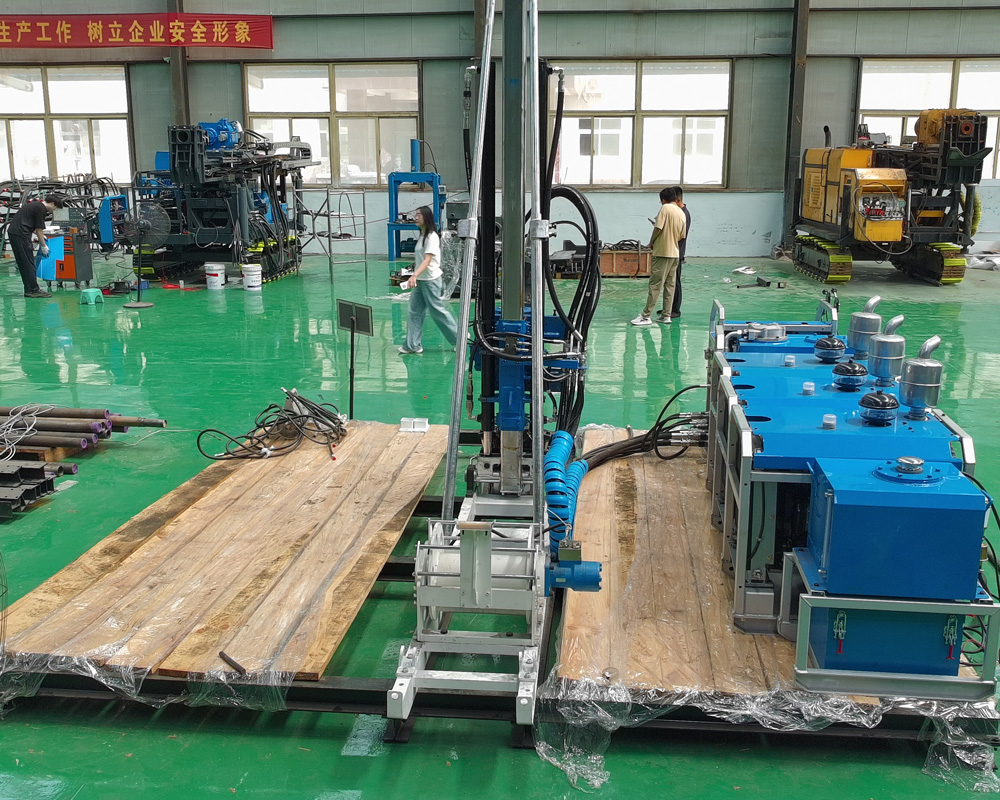
In addition, the CR1000P adopts a modular split structure: power unit 180–260 kg, operation unit 145 kg, hydraulic oil unit (including oil) 160 kg, mud unit 95 kg, total weight 1640 kg, and the main systems can be disassembled for transport and then assembled on site. Whether a deep-hole project can be established also includes whether the modules can reach the hole site and whether on-site assembly can be completed.
How to verify when looking at "deep-hole capability" again
If only one number can be picked from the parameter table to judge deep-hole capability, that number has limited reference value. A more practical approach is to first clarify the target hole diameter specification, then check several sets of conditions in sequence:
- What is the reference drilling depth corresponding to the selected specification; the maximum value cannot be cited across specifications;
- At that depth, whether the power head torque and rotation speed, feed and pull-up force still leave room for adjustment;
- Whether the winch rope capacity covers the planned inner tube lifting distance;
- Whether the mud flow and pressure are commensurate with formation return water and rock powder transport conditions;
- Whether the power form matches site access conditions and module transport methods.
These conditions are not listed in parallel, but constrain one another: as hole diameter increases and depth increases, the burden on torque and pull-up rises accordingly; as drilling time lengthens, the continuity requirements for the hydraulic and mud systems also increase. The CR1000P's public information gives specific values for these links, but the actual achievable drilling depth and coring results are still related to geological conditions, downhole tools, drilling angle, and operating methods, and should be based on on-site working conditions.