












Whether the PV390R can reduce whole-machine repositioning does not depend on the single feature of "having 360° rotation," but on the relationship between pile row spacing and the working range the equipment can cover after one stop. Simply put: the denser the piles and the smaller the row spacing, the higher the probability that 360° rotation and 500 mm telescopic compensation will replace whole-machine movement in actual construction; when piles are sparse and row spacing exceeds the equipment's working radius, the crawler chassis will still need to move. The materials do not provide the working radius from the rotation center to the drilling tool, the lateral coverage distance converted from the swing arm, or terrain limitations other than the climbing angle. Therefore, it is impossible to directly calculate "how many meters are reduced" or "how many repositioning operations are saved." Only a judgment method and the data that need to be verified can be provided.
First distinguish what direction each of the four adjustment methods handles
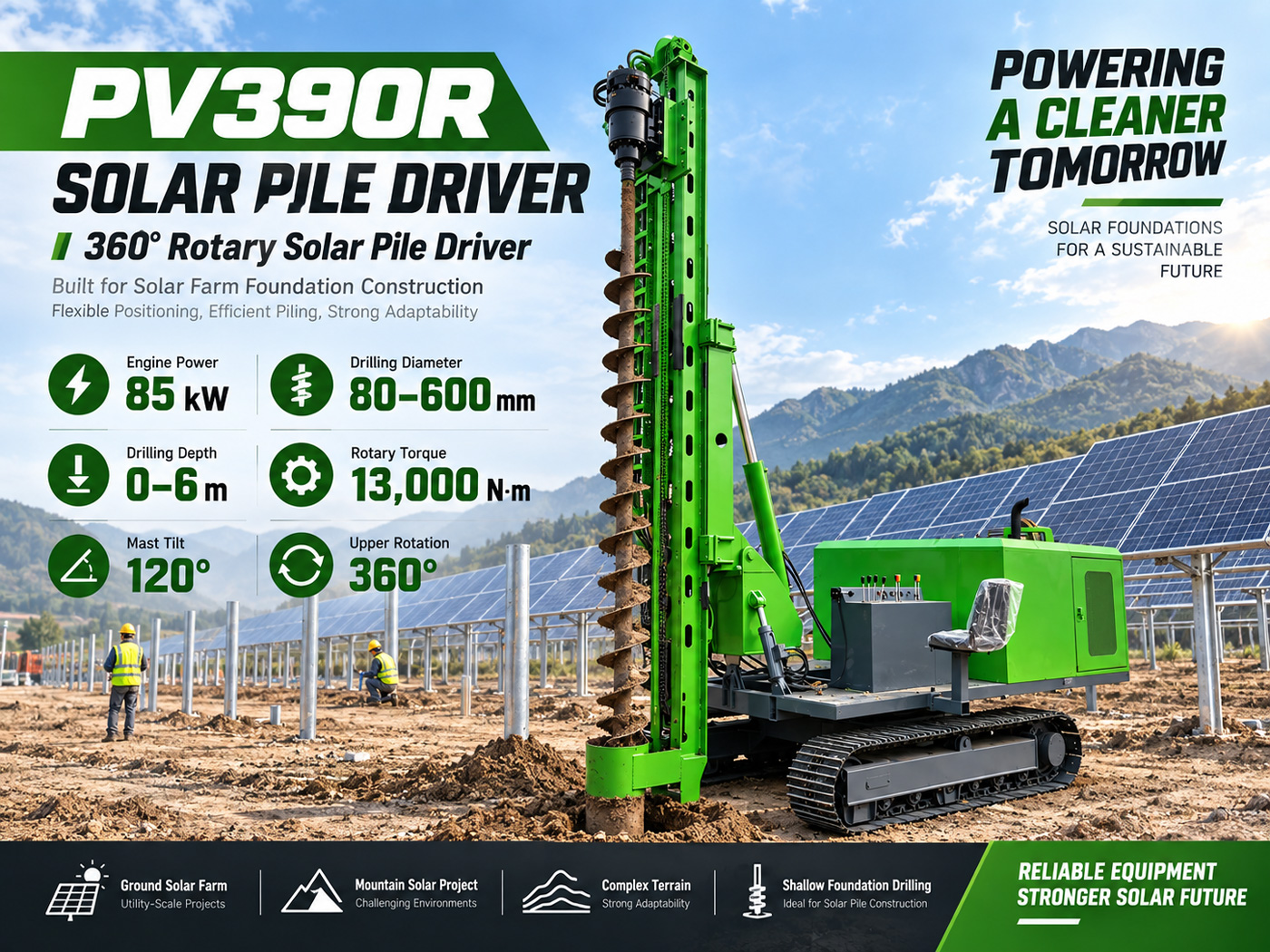
The original materials for the PV390R list four posture and position adjustment functions. They correspond to different adjustment directions and should be understood separately during procurement rather than lumped together as "360° rotation."
- 360° rotation: The upper working mechanism rotates around the chassis, mainly changing the azimuth of the drilling tool, corresponding to the distribution direction of pile positions around the equipment.
- Dual-cylinder left-right swing arm: The mast laterally corrects the drilling position without moving the chassis.
- 500 mm telescopic compensation: Used for fine adjustment in the front-rear direction of pile positions; the compensation amount marked in the materials is 500 mm.
- 120° mast pitch: Adjusts the drilling posture angle; the materials state it is beneficial for slopes and inclined pile positions.
These four functions together determine how large an area can be covered after one stop. Whether whole-machine repositioning is necessary depends on whether the target pile position falls within the combined area of the above adjustment ranges.
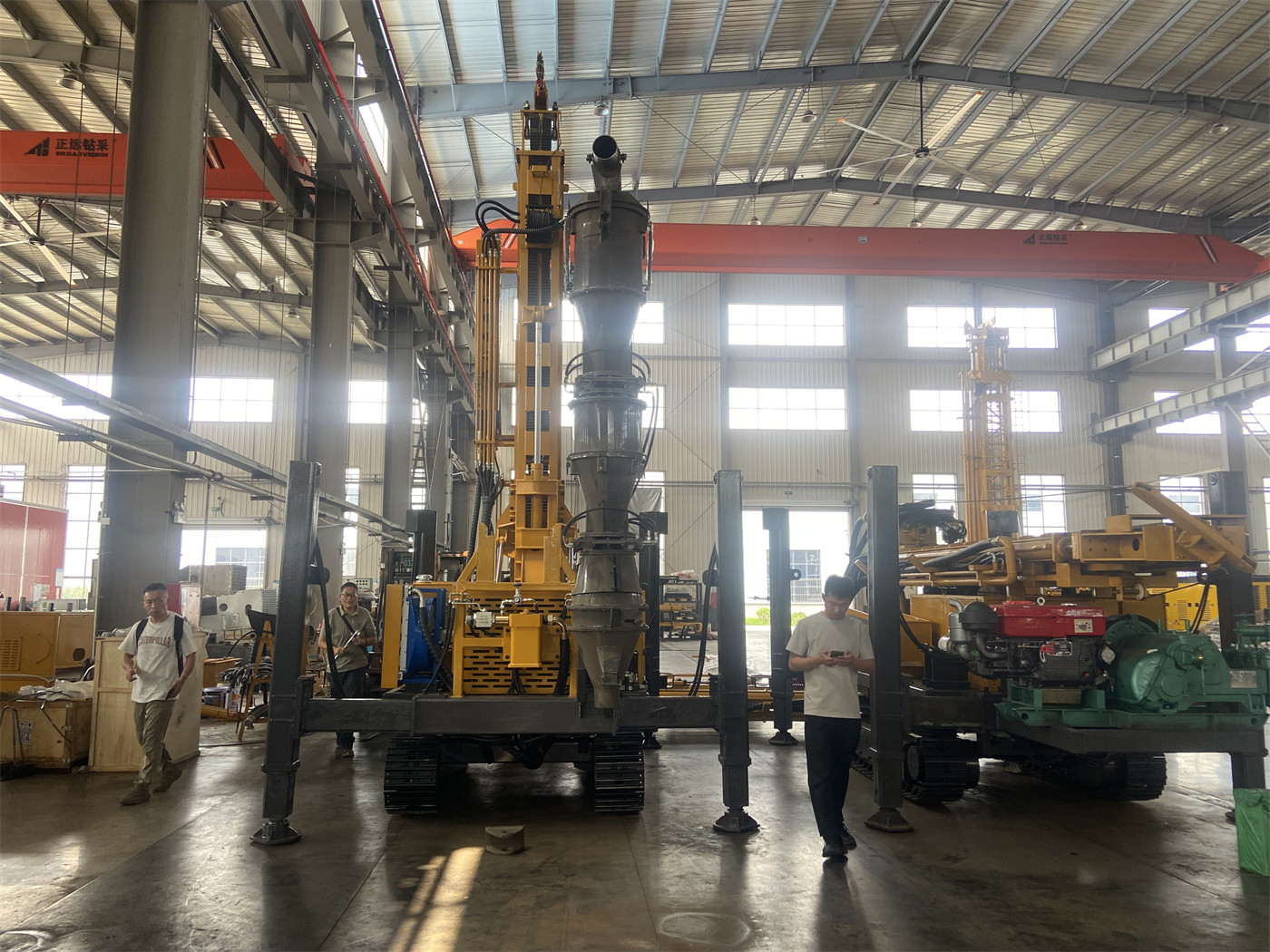
How pile arrangement density affects the number of whole-machine repositioning operations
When pile spacing within a row is small
Pile positions in photovoltaic plants are usually arranged in regular arrays. If the spacing between adjacent pile positions in the same row is small and all are within the azimuth range covered by equipment rotation, operators can change azimuth through 360° rotation without moving the crawler chassis, then use the swing arm and telescopic compensation for hole alignment, and process the pile positions in the row one by one. The smaller the pile spacing, the greater the number of pile positions that may be processed continuously after one stop.
When the distance between rows is small
Row spacing is the key to judging whether whole-machine movement is needed. If the row spacing falls within the range covered by the mast swing arm's lateral correction and 500 mm telescopic compensation, in theory some pile positions in adjacent rows can be handled from the same stop position; if the row spacing exceeds these compensation ranges, even with 360° rotation, after azimuth alignment the machine still needs to move forward or backward to reach the next row.
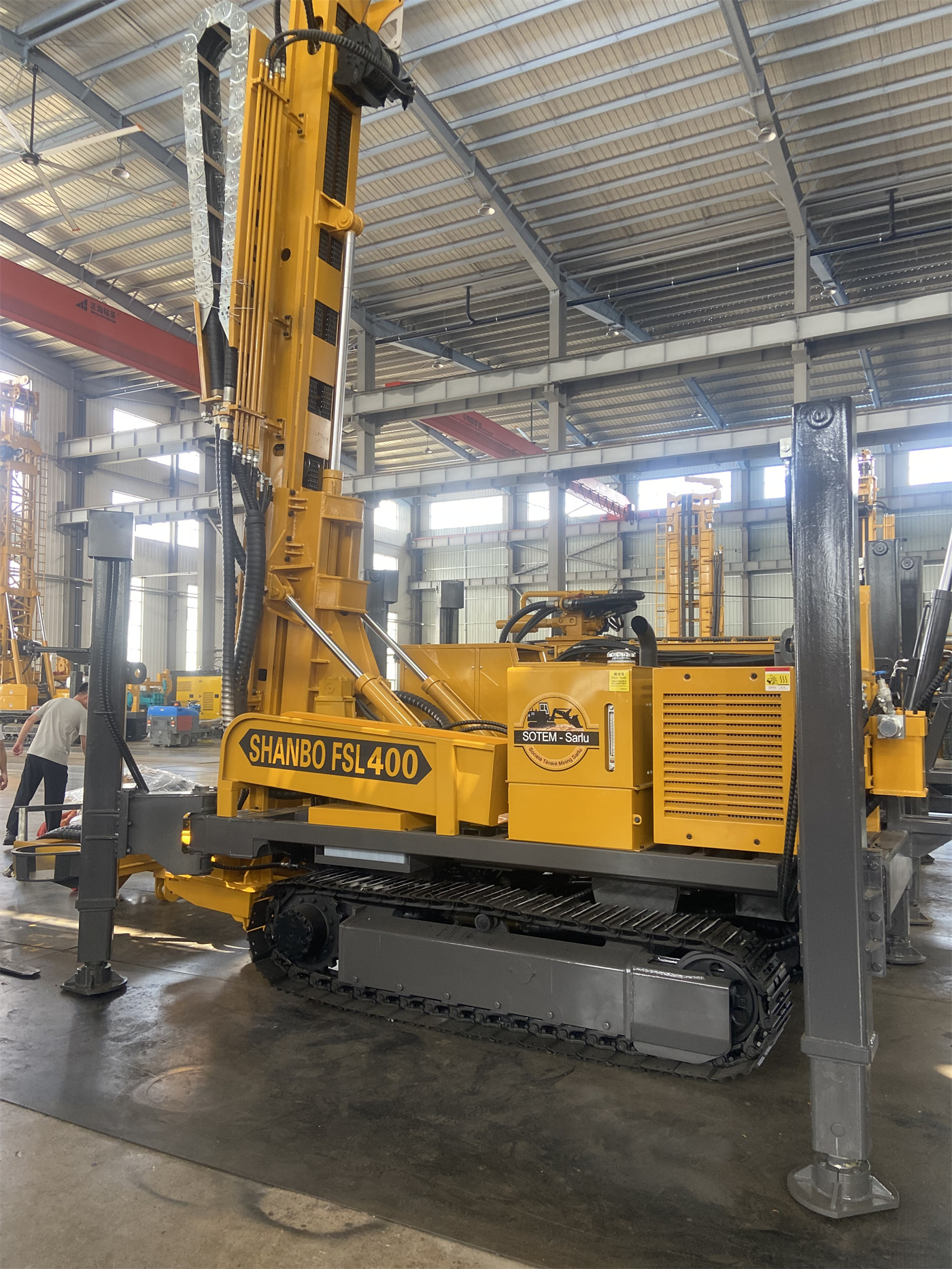
When there are many pile rows
The materials state that the PV390R is suitable for continuous construction of large-area photovoltaic pile positions. Its approach is that the crawler chassis handles site transfer, while 360° rotation, swing arm, and telescopic compensation handle detailed alignment, enabling the equipment to complete pile position adjustments in more directions from one stop position. The more rows and the more regular the array, the more obvious the time saved from repeated whole-machine turning and repositioning usually is; conversely, for projects with scattered pile positions and row spacing far greater than the compensation amount, the room for reducing repositioning is limited.
Unmarked data that should be verified with the manufacturer before purchase
To judge "how much whole-machine repositioning can be reduced," the three descriptions of 360° rotation, 500 mm telescopic compensation, and dual-cylinder left-right swing arm are not enough. The verified materials on this site do not provide the following data. They should be confirmed item by item during procurement, and do not calculate them yourself or apply those of other models:
| Item to verify | Purpose |
|---|---|
| Working radius from rotation center to drilling tool center | Determine the circular range coverable after one stop with 360° rotation |
| Maximum lateral swing amplitude or swing angle of the dual-cylinder left-right swing arm | Convert to lateral correction distance and compare with row spacing |
| Direction definition of the 500 mm telescopic compensation | Confirm whether it acts in the front-rear direction or another direction |
| Pile positioning accuracy requirements and construction process | Judge whether the compensation amount meets hole alignment accuracy |
| Center-of-gravity change after rotation during slope construction and allowable working conditions | The materials indicate that the center-of-gravity state changes after rotation; safety cannot be judged solely by the maximum climbing parameter |
Existing parameters related to whole-machine movement
The PV390R has a crawler chassis, track shoe width 400 mm, marked climbing angle 35°, and overall dimensions 5200 × 2300 × 2800 mm. These parameters affect site passability and transfer method, but are not directly equal to the pile position range coverable after one stop. The materials also state that actual mountain construction should comprehensively consider cross slope, ground wetness and slipperiness, soil quality, and whole-machine center of gravity. Especially before slope operations, the equipment parking platform must be stable.
Conclusion and boundaries
According to verified materials, it can be confirmed that the PV390R has 360° rotation, dual-cylinder left-right swing arm, 500 mm telescopic compensation, and 120° mast pitch. The design purpose is to reduce repeated whole-machine turning and repositioning, making it suitable for photovoltaic projects with dense pile positions, narrow construction surfaces, or the need to continuously handle multiple pile points in different directions. However, "specifically how much whole-machine repositioning is reduced" depends on data not given in the materials, such as pile row spacing, pile spacing within a row, working radius, and converted swing arm distance. This site cannot provide a quantitative conclusion based on that. Before purchase, it is recommended to request the above working range data from the manufacturer and check row by row against the project pile layout drawing. Whether repositioning is truly reduced should be based on on-site working conditions and the project foundation design.