












In the WRT600 parameter table, the lifting force is listed as 37 T, and the same section also gives 6 T axial pressure. These two values are often memorized side by side, but they do not govern the same thing downhole. Axial pressure governs the segment where the power head pushes downward, while lifting force governs the segment where it pulls upward. The object being pulled upward is not just a single drill pipe; it may be the entire drill string, a DTH hammer, part of the casing, or the additional margin needed to handle a stuck-pipe situation during tripping. Understanding 37 T as "how much weight it can drag" misses the object it truly constrains.
Which specific actions the lifting force corresponds to
In water well drilling, the lifting force mainly applies to the following categories of operations. These actions all have corresponding text in the public description of the WRT600, but the data does not give actual load values for each operation.
- Drill pipe tripping: At a hole depth of around 600 meters, the longer the drill string, the greater its self-weight. Each trip requires pulling the entire drill string out of the hole, and adding or removing pipe also falls within this load path.
- DTH hammer recovery: After DTH drilling, the DTH hammer needs to be pulled from the bottom of the hole. Once there is cuttings accumulation or borehole wall narrowing, the resistance to pulling the hammer rises noticeably.
- Certain casing operations: The data mentions that the 37 T lifting force provides margin for "certain casing operations." The wording is "certain," and it does not specify casing diameter, single-joint length, or total weight; these need to be calculated separately according to the actual well completion design.
- Contingency margin when tripping is obstructed: The data clearly states the handling principle—if abnormal tripping resistance occurs, it should first be addressed by cleaning the hole and assessing downhole conditions, and one should not rely solely on maximum lifting force to pull forcefully. This determines that the role of 37 T is margin, not a construction method.
Why it is not simply "the deeper the hole, the more lifting force is needed"
Drilling depth only determines the lower limit of drill string length. The actual load acting on the lifting system is a superposition of several items: drill pipe self-weight, borehole wall friction, additional resistance from downhole cuttings, bottom hole assembly weight, and dynamic load at a given moment during tripping. The WRT600 data gives drill pipe lengths of 3 m or 6 m, and the recommended drill pipe diameter is written as the group 102 / 114 / 12 (original values; specific units and complete specifications need to be confirmed with the manufacturer). Drill pipes of different diameters and lengths do not have the same weight per meter, so the statement "600-meter drilling depth paired with 37 T lifting force" cannot directly lead to "any 600-meter hole can smoothly pull out the drill string."
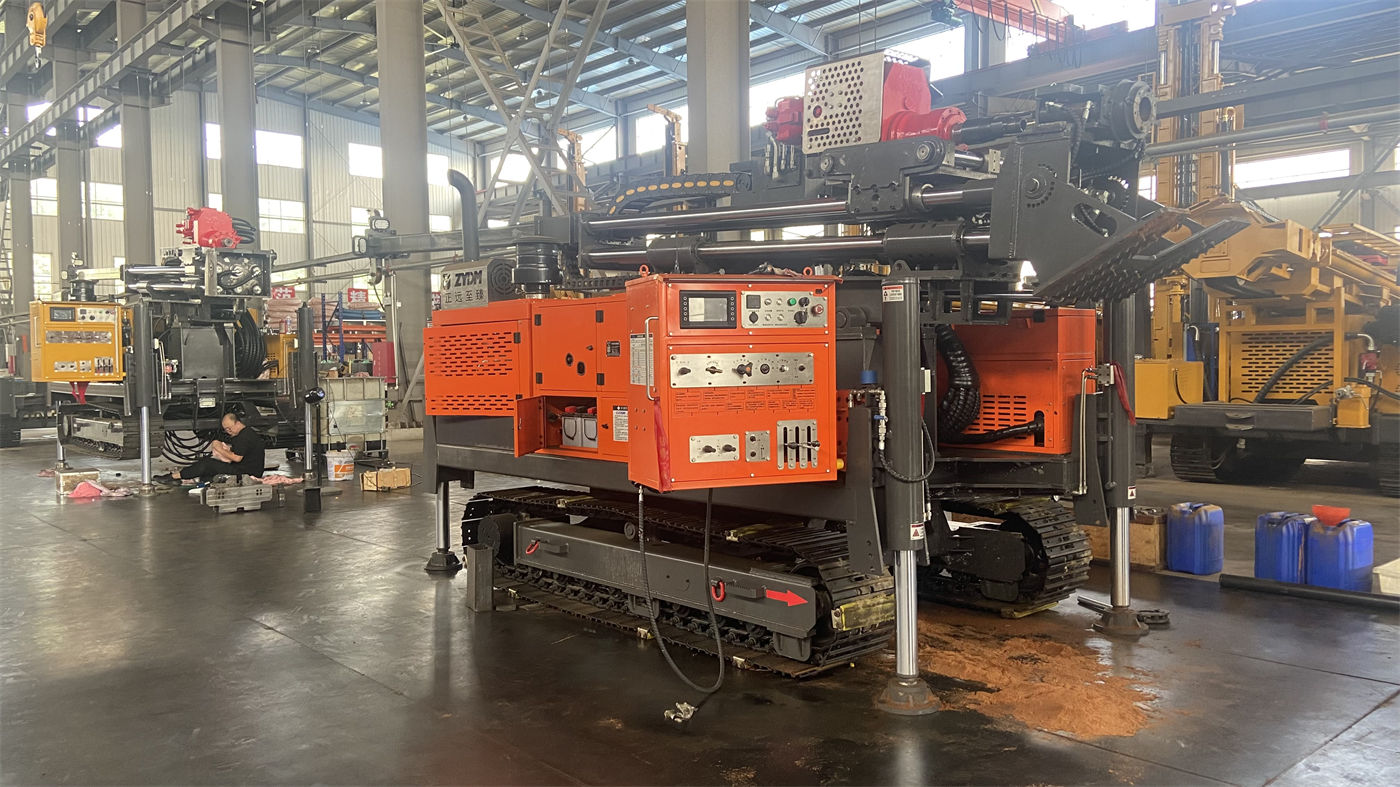
Hole diameter also participates indirectly. The WRT600's drilling diameter range is 140–450 mm. As hole diameter increases, the borehole wall contact area, cuttings removal difficulty, and possible friction all change, and these are reflected in the actual load during tripping. The data does not give the proportion of lifting force occupied under different hole diameters, so it is impossible to calculate from the existing text how much margin remains at a given hole diameter.
37 T and 6 T should be viewed together
In the same document, the 37 T lifting force and 6 T axial pressure appear side by side. They are a pair of loads in opposite directions, but the values differ by more than six times. This difference itself cannot indicate any design intent; it only shows that the available forces in the upward and downward directions are different. In actual drilling, axial pressure is used for feed and pressurized rotation, while lifting force is used for tripping and handling abnormalities. Reading 37 T as "overall equipment capability" fails to separate these two directions.
Beyond drill string load, which other parameter groups the lifting force involves
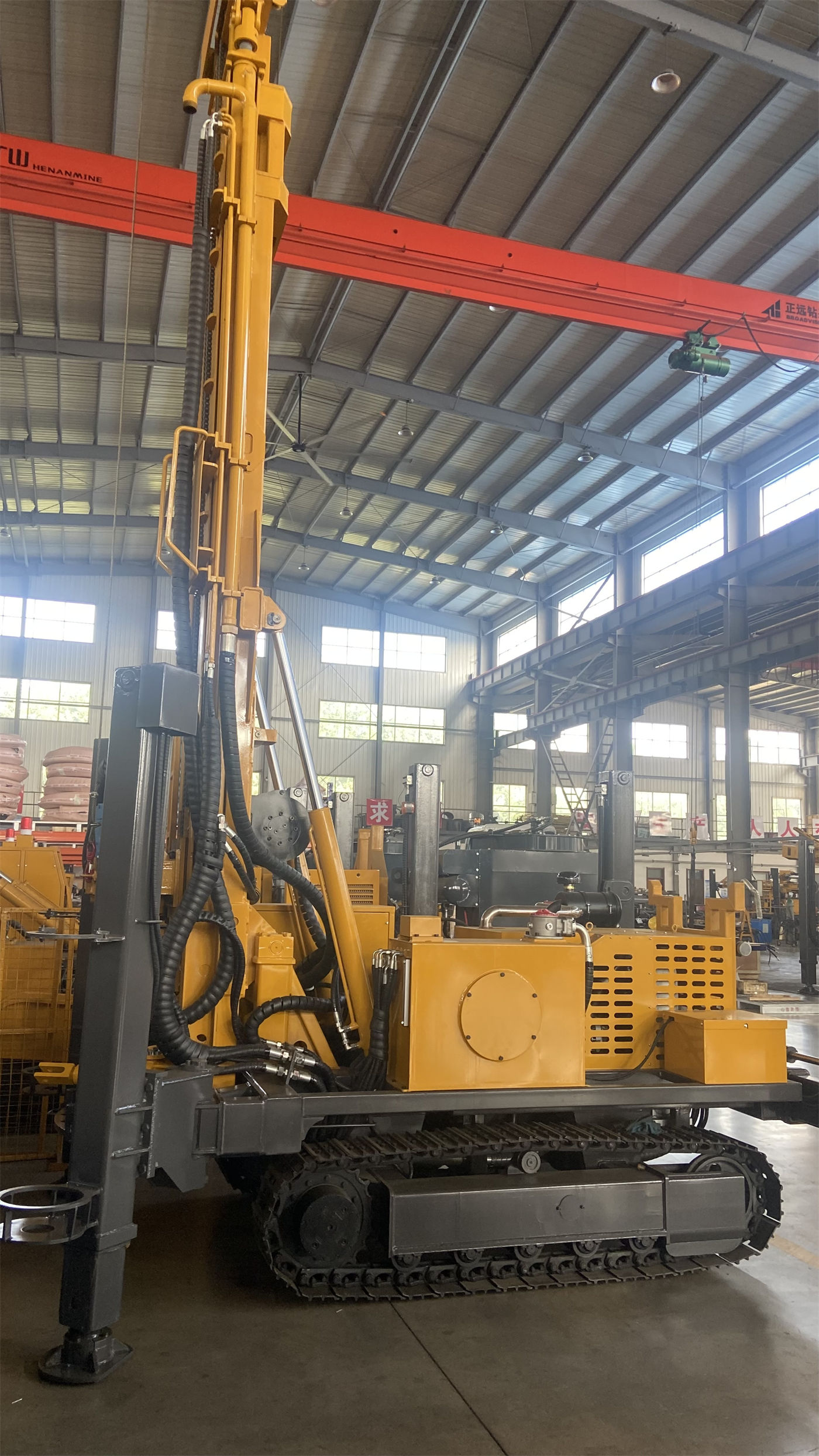
In the WRT600 data, feed stroke and fast lifting speed are also part of the same operational chain as lifting force. The feed stroke is 7 m, used with 3 m or 6 m drill pipes; fast lifting speed is 30 m/min and fast feed speed is 41 m/min. The data states that these two are mainly used for drill pipe operations and power head return. These values describe the time segment required to trip one drill pipe, while lifting force determines how much load can be lifted during that stroke. Together they constitute process efficiency, not a single capability limit.
The dual auxiliary winches are another related configuration: a 3 T large auxiliary winch and a 1.5 T small auxiliary winch, used for handling DTH hammers, drill pipes, casing tools, air hoses, and other accessories. They are not at the same load level as the 37 T main lifting force, and their purposes are also different. The data lists them separately, and they should be understood separately when reading.
Which conclusions cannot be drawn from the single value of 37 T
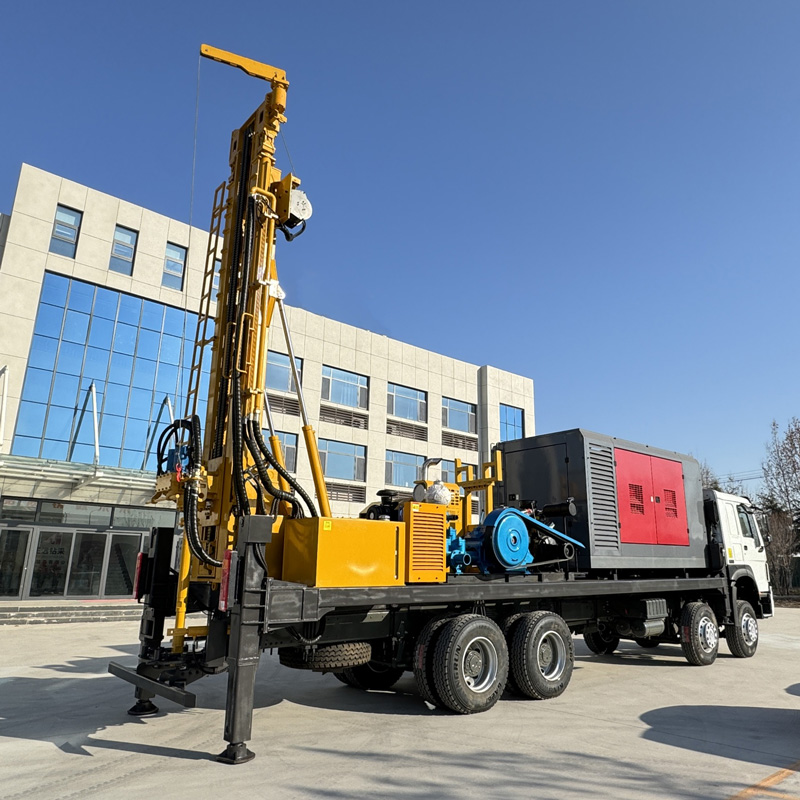
- It cannot be concluded that "a 600-meter drill string can be pulled out under any formation and any hole diameter." Lifting force is only an upper limit; actual downhole resistance is determined jointly by geological conditions, hole cleaning status, and drilling tool condition.
- It cannot be concluded what maximum casing specification is applicable. The data only says "certain casing operations" and does not give casing diameter, single-joint length, or total weight.
- It cannot be concluded that there is a conversion relationship between lifting force and drilling depth. 37 T is not the result of "600 meters divided by weight per meter"; drill string load is not calculated that way.
- It cannot be concluded what the matching relationship with torque is. In the data, the maximum torque of the rotary system is 15000 / 7500 N·m, corresponding to maximum rotation speeds of 70 / 140 r/min. These are parameters on the rotary side and belong to a different system from lifting force.
- It cannot be inferred what the drilling efficiency or well completion effect will be. The data clearly states that actual geological conditions, downhole tools, drilling angle, and operating methods vary, and the final drilling efficiency, drilling depth, and well completion effect should be based on actual site conditions.
Checking whether lifting force is sufficient: what the data can and cannot provide
According to the existing data, what can be checked is: drilling depth 600 m, hole diameter 140–450 mm, drill pipe length 3 / 6 m, 37 T lifting force, 6 T axial pressure, 15000 / 7500 N·m dual-condition torque, and 7 m feed stroke. These values form a set of mutually constraining conditions, and any one of them alone is insufficient to judge whether the configuration is appropriate.
What cannot be provided is: the weight per meter corresponding to different drill pipe diameters, estimates of borehole wall friction under different hole diameters, the casing specification range, and the method for determining dynamic load during tripping. These contents do not appear in this site's WRT600 data and are items that need to be confirmed separately with the manufacturer or project side. According to the wording in the data, when abnormal tripping resistance occurs, downhole conditions should be assessed first rather than relying on maximum lifting force to handle it.