












In the PV390H materials, the track height extension dimension is listed as 1200 mm, with the function described as "tracks can be adjusted according to slope height." This sentence can easily be read as a general site permit: as long as the tracks can be raised, mountains, hills, and slopes can all be worked on. The materials themselves do not say this. In the same document, after discussing the high-low legs, there is a qualifier: the high-low leg function can improve slope adaptability, but cannot replace safe construction platforms and foundation bearing assessment. Only by putting this sentence together with the 1200 mm figure does the complete meaning of this function emerge—it solves posture issues caused by elevation differences, while the rest of the site issues remain.
What 1200 mm adjusts is posture, not the site
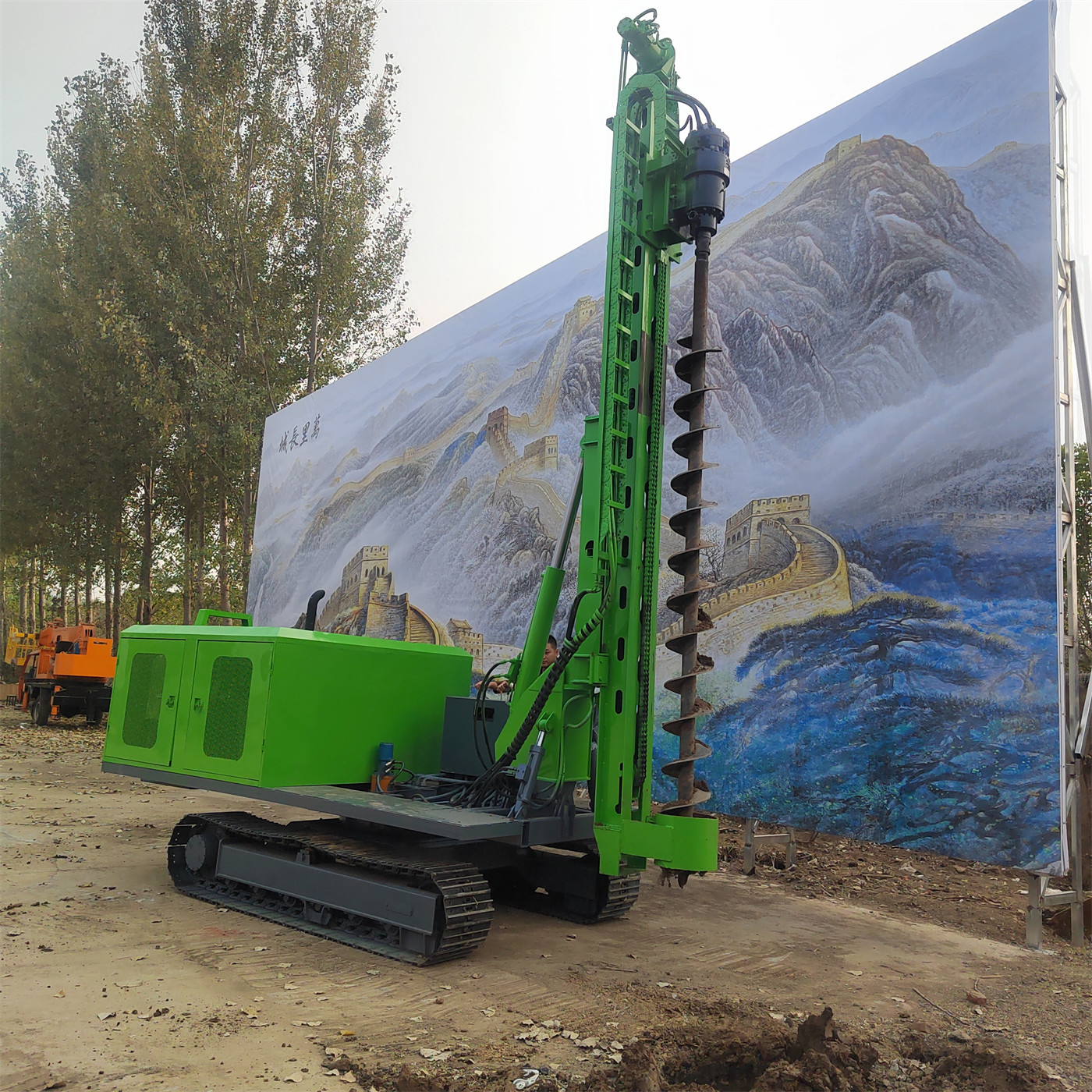
To determine what adjustable track height governs, first look at what it changes. When equipment works on uneven ground, the direct obstacle is that the ground contact heights of the left and right tracks are inconsistent, causing the chassis to tilt and making it difficult for the mast to align with the pile position. The PV390H's approach is to make the track height extendable, with an extension dimension of 1200 mm, allowing the two tracks to each find their position on the slope surface, giving the entire machine a relatively stable working posture. It adjusts the machine's own form.
Site conditions are another category of objects: whether the ground can bear the load, whether the slope surface will slide, whether the equipment can get in, and whether the pile positions are densely arranged. These conditions will not change because the tracks are raised or lowered. The materials clearly separate these two types of issues: posture adjustment belongs to the high-low legs, site safety belongs to on-site judgment.
In the same materials, there are several other parameters related to posture that can be understood together: mast pitch 120°, dual-cylinder left-right swing arm, and 450 mm extension compensation. Their roles do not overlap—track height handles the overall left-right elevation difference, pitch handles drilling angle, swing arm handles lateral hole alignment, and extension compensation handles front-back fine adjustment. No single item can independently support the judgment of "suitable for all sites."
Which conditions still need to be confirmed as-is
Foundation bearing and slope stability
The materials clearly state that high-low legs cannot replace foundation bearing assessment. This sentence actually points to: before the equipment enters the site, it is still necessary to judge whether the ground can bear the entire machine's weight and drilling vibration, and whether the slope surface soil and soft layers can still maintain adhesion after rain. When discussing soil layers, the materials also mention that slope loess may experience decreased adhesion and equipment sliding risk after rain; at this time, attention should be paid both to hole-forming quality and to track ground contact status. Such judgments are unrelated to track height adjustment.
Overall center of gravity and single-side adjustment range
The materials provide a clear limitation in the usage tips: when using the high-low leg function, avoid excessive single-side adjustment causing overall center-of-gravity shift; cross-slope construction should be more cautious; before adjusting track height, ensure the equipment is at low speed or stopped, and observe surrounding personnel and obstacles. These are not safety platitudes, but boundaries on how the 1200 mm figure is used—an adjustable range does not mean any combination is safe.
Passage and transfer conditions
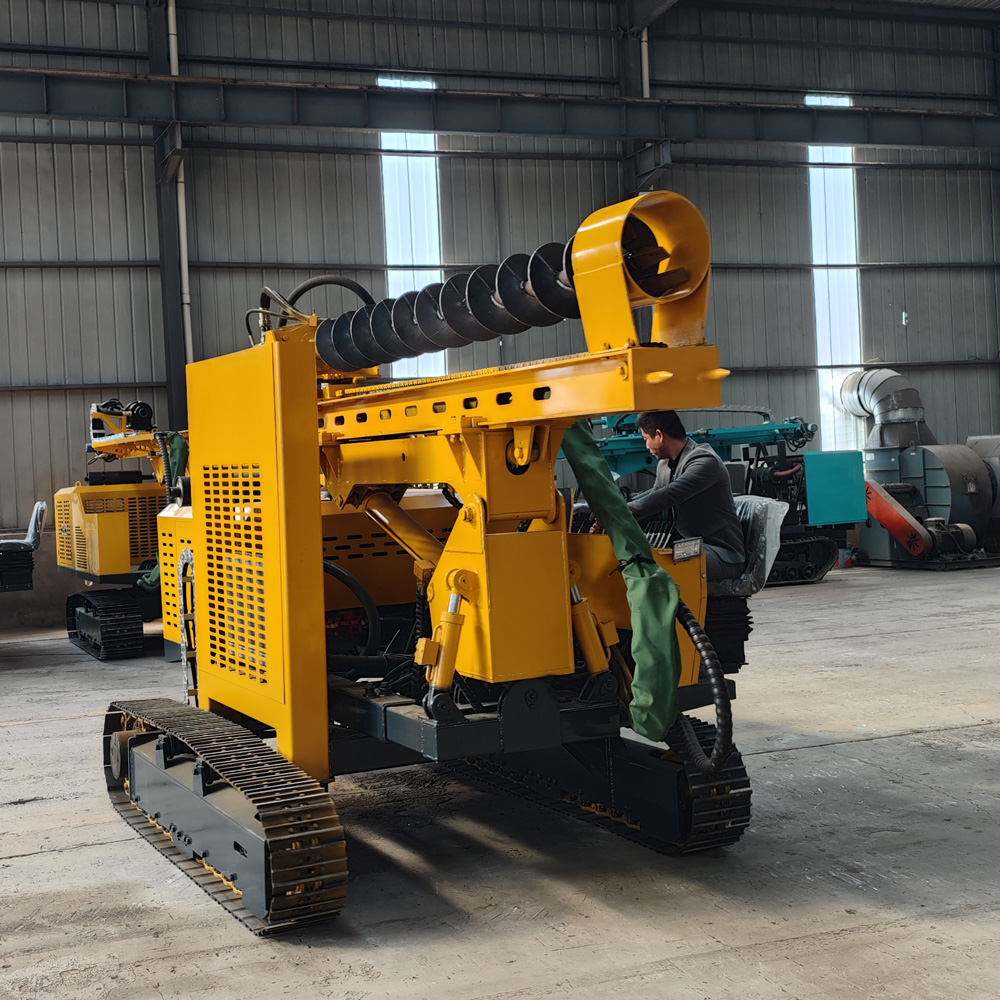
The overall dimensions given in the materials are 5200 × 2300 × 2800 mm, with track shoe width 300 mm. The equipment is used on dirt roads, grass, gravel, and general slopes. For wet slopes, soft soil, and areas with large cross-slopes, the materials recommend reducing speed and paying attention to rollover risk. Adjustable track height does not change the overall dimensions of the machine; passability in narrow site areas and construction access roads is still judged according to the original dimensions.
Additional conditions for steeper slopes
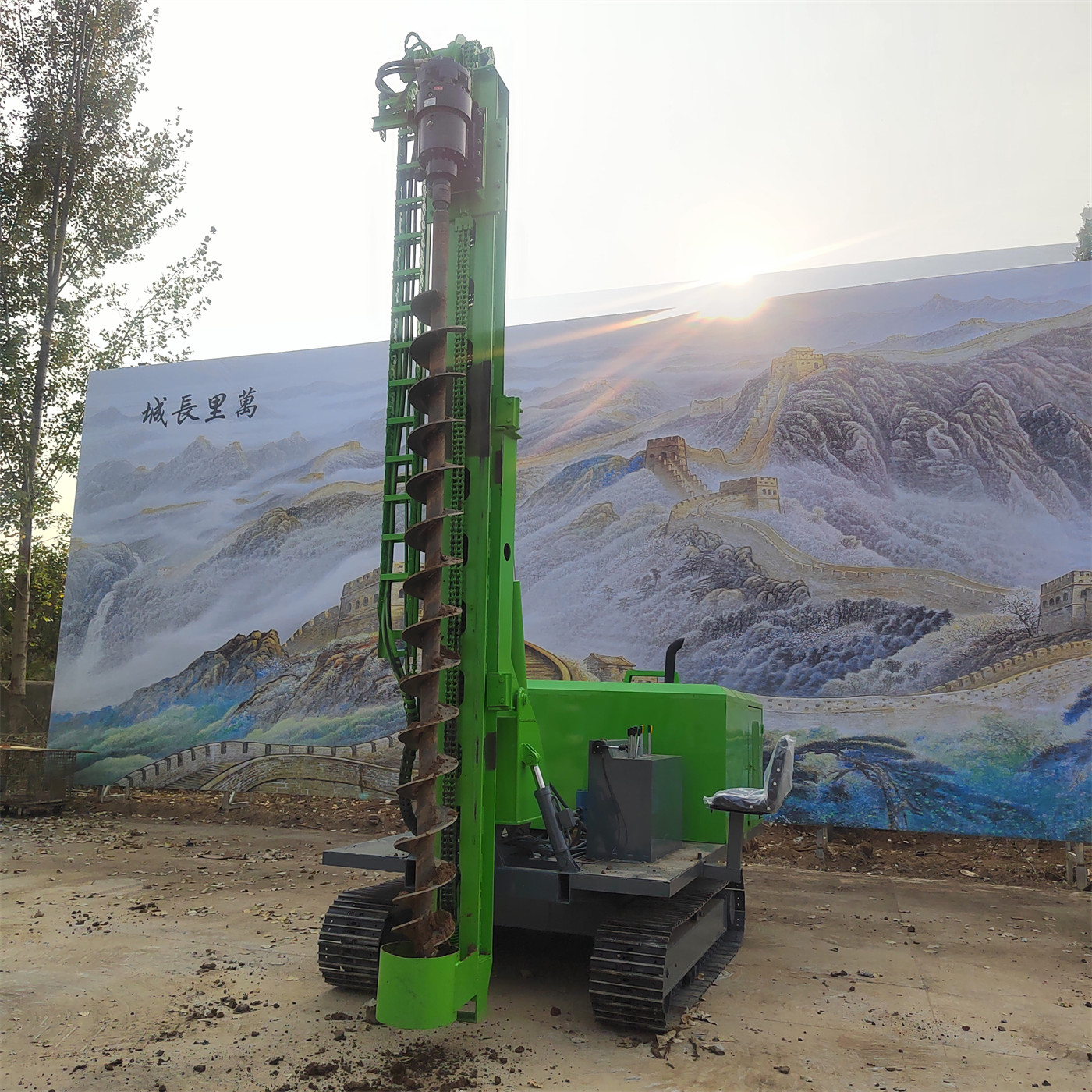
The materials mention that after adding a winch, it can be used for steeper slope conditions, and also note that before use, the anchor point, wire rope, and traction direction must be confirmed reliable, and the winch cannot replace necessary construction roads and safety platforms. In other words, for greater slopes, the materials provide an additional configuration path, rather than directly expanding the range of track height adjustment.
Pile positions themselves also need separate verification
There is another layer related to pile positions in site issues that is easily attributed to track height. The equipment being able to stand does not mean the drilling tool can align with every designed pile position. The mechanisms used by the PV390H for lateral and front-back fine adjustment are the dual-cylinder left-right swing arm and 450 mm extension compensation; if the pile position offset relative to the chassis stopping position exceeds this fine adjustment range, the chassis usually needs to be moved to reposition. This part belongs to the organizational issue of travel and hole alignment, and track height adjustment cannot help.
Conversely, in mountainous photovoltaic site areas with dense pile positions and frequently changing ground elevation differences, high-low legs combined with swing arm, pitch, and extension compensation reduce the number of times the ground must be repeatedly leveled and the chassis moved. This is where the value of this function lies, but the occasion for its success is "elevation differences and hole alignment," not a universal solution for all site obstacles.
How to draw the boundary: a comparison
| Site issue | Effect of 1200 mm track height adjustment | Still requires separate confirmation |
|---|---|---|
| Left-right elevation difference on slopes | Adjusts the height of both tracks to give the machine a working posture | Single-side adjustment range and overall center of gravity |
| Slope angle | Works with 120° mast pitch to adjust drilling posture | Whether the slope exceeds the equipment's operable range |
| Ground bearing | Does not change ground contact pressure | Foundation bearing assessment |
| Slope slipping, soft soil | Does not change track adhesion | Ground contact status and sliding risk after rain |
| Pile position deviation | Does not handle lateral or front-back hole alignment | 450 mm extension compensation and swing arm adjustable range |
| Site passage | Does not change overall machine dimensions | Road width, turning radius, access road conditions |
| Steeper slopes | Can be equipped with a winch for auxiliary traction | Anchor point, wire rope, and traction direction |
How to use this function back in a project
In terms of verification order, a more practical approach is to first judge whether the site can bear the load and allow passage, then judge whether the slope falls within the equipment's operating conditions, then see whether the pile position arrangement can complete hole alignment within the swing arm and extension compensation range, and finally use track height adjustment to address the elevation differences measured on site. The materials put the key sentence of this order after the high-low leg description: any slope capability cannot replace on-site safety judgment.
There are also some conditions for which the materials on this site do not provide conclusions and need to be confirmed at the project level or with the manufacturer. These include: how to define the usable slope and ground contact conditions on slope soil layers with higher moisture content; operational restrictions during rain or after continuous rainfall; the maximum allowable adjustment difference between the two sides of the tracks under different slopes; and whether other site types besides dirt roads, grass, and gravel are applicable. These contents exceed the scope covered by the PV390H public parameters, and this article does not infer them.