












When comparing towable and truck-mounted rigs, transfer method is the first difference mentioned. But transfer method is not just about how a piece of equipment gets from one site to another; it cascades down to several specific processes: who provides travel power, how the mast and accessories are positioned in transport mode, and what is done first upon arrival.
In our materials, towable and truck-mounted types each have corresponding models: the WRTR1000 is a 1000-meter-class towable rotary table water well drilling rig, while the WRT1200, WRT1000, and WRT600 are truck-mounted direct mast water well drilling rigs. Below, the differences are mapped to processes along the transfer chain, using only what these materials already state.
First, distinguish how "towable" and "truck-mounted" each move
The WRTR1000 materials state that the complete machine integrates independent diesel power on a towable chassis and can be moved between projects by a suitable towing vehicle. The same materials also remind that road width, bridge load capacity, turning radius, and transport height limits must be verified in advance. In other words, the travel capability of the towable type comes from an external towing vehicle, while the chassis itself handles load-bearing and working functions.
On the truck-mounted side, our materials classify the WRT1200, WRT1000, and WRT600 under the truck-mounted direct mast structure, where direct mast is a mast form as opposed to a telescopic mast. The materials also give the WRT1200 overall dimensions of 11.5 × 2.25 × 3.2 m and a total weight of 32 T; these values constrain the profile of the direct mast structure in transport mode. The two sets of materials emphasize different aspects of "how it moves": the towable type emphasizes towing conditions and road verification, while the truck-mounted type emphasizes overall dimensions and weight as a set of transport parameters.
Do the power, mud pump, and generator travel with the chassis or are they arranged separately?
This is the most easily overlooked difference between the two structures in transfer, and it directly determines what must be done first upon arrival.
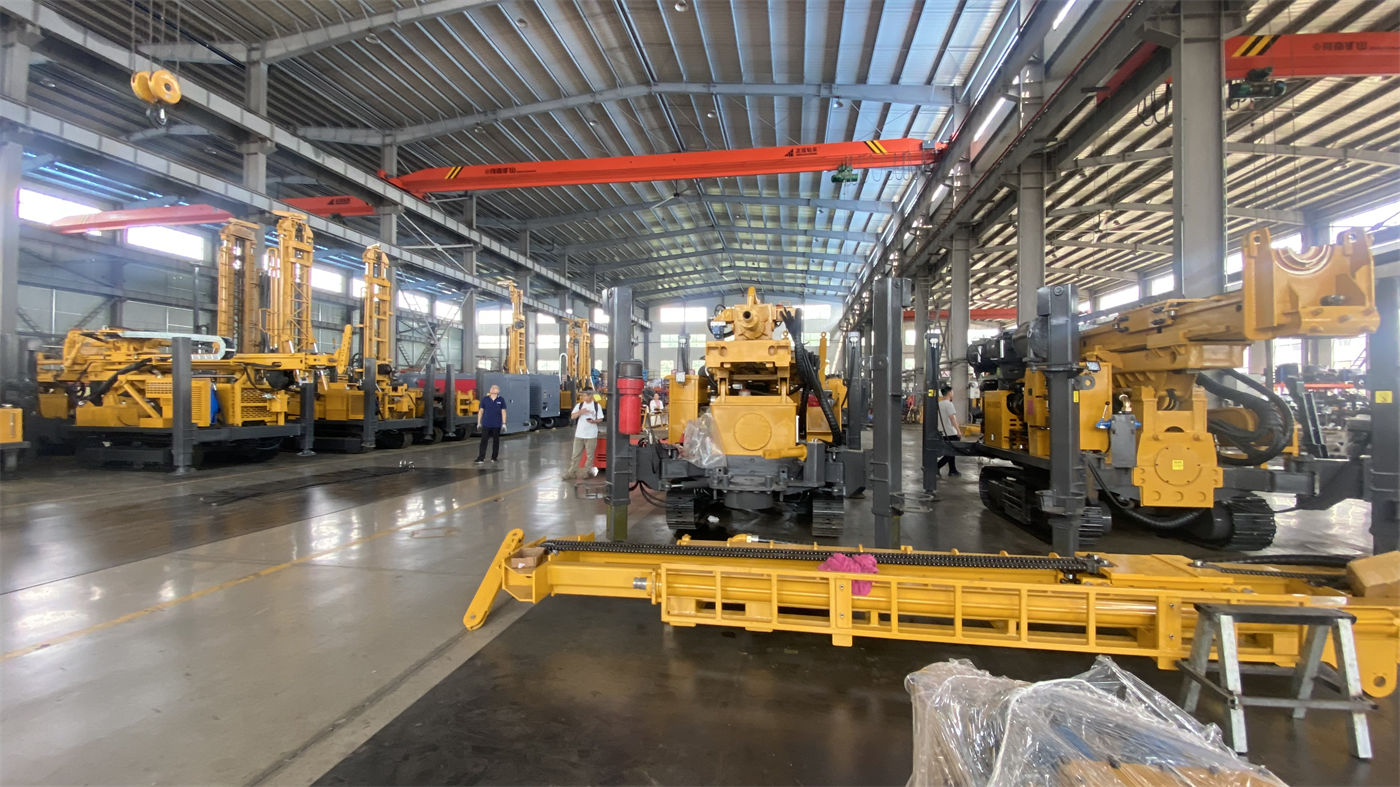
The WRTR1000 towable chassis integrates independent diesel power, a 25 kN·m rotary table, a 60 T hydraulic telescopic K-type mast, double winches, a BW1200/7 mud pump, and a 50 kW auxiliary generator. The materials explicitly state that the complete machine uses a Cummins NTA855-C360 diesel engine with 269 kW power. These components are not separately arranged accessories but part of what arrives with the chassis.
Therefore, for the towable type, what must be secured before transfer is the external condition of a towing vehicle, as well as traffic conditions such as roads, bridge load capacity, turning radius, and height limits; the mud pump, generator, and power system do not require separate transport and on-site positioning.
On the truck-mounted side, our materials give the WRT1200 220/264 kW diesel power, and the WRT600 is described with 37 T lifting force and 6 T axle pressure, but these materials do not state whether the mud pump and generator are also integrated on the truck-mounted chassis or require separate matching. This point is not covered by the materials and needs to be confirmed with the manufacturer before procurement or production scheduling; it should not be assumed directly based on the towable type's integration approach.
The form of the mast in transport mode changes the first process upon arrival
Mast form and transfer method are often discussed together, but they actually constrain different process stages.
The WRTR1000 uses a 60 T hydraulic telescopic K-type mast with a total height of 19.5 m, an effective height of 18.482 m, and a maximum load of 60 T. The materials state that the hydraulic telescopic K-type structure can handle long drill pipes and deep-hole drill strings while reducing part of the working height in transport mode. "Reducing part of the working height" corresponds to the process of extending the mast first after arrival, before normal drilling operations can begin.
The truck-mounted direct mast structure is a different case: the mast is transported upright with the chassis and does not need to be telescopically extended upon arrival. In the WRT1200 materials, the two sets of values—7/13 m feed stroke and 3 m/6 m drill pipe—fall at the process rhythm level: the matching relationship between feed stroke and single drill pipe length directly affects rod connection frequency and auxiliary time. This is a separate matter from whether the mast is telescopic and should not be merged into a single judgment.
The several processes affected by transfer differences can be compared as follows
| Stage | Towable (using WRTR1000 materials as an example) | Truck-mounted (using WRT1200 materials as an example) |
|---|---|---|
| Source of travel power | External towing vehicle; road width, bridge load capacity, turning radius, and transport height limits must be verified | Materials give overall dimensions and weight; the provided materials do not state the travel method |
| Accessory arrangement | Rotary table, mast, double winches, BW1200/7 mud pump, and 50 kW auxiliary generator are integrated with the towable chassis | Materials provide parameters such as 220/264 kW power; whether the mud pump and generator are integrated on the vehicle is not stated |
| Mast in transport mode | Hydraulic telescopic K-type mast; part of the working height is reduced in transport mode | Direct mast structure; materials give overall dimensions and weight that constrain the transport profile |
| First process upon arrival | Mast extension must be completed, after which drilling preparation begins | Materials do not list the post-arrival operation sequence item by item |
The table only fills in what the materials state. Any cell not answered by the materials is left blank or marked as not stated, without adding speculation.
Two sets of parameters affected by transfer method: drill pipe length and rod connection process
The WRTR1000 materials give a kelly specification of 108 × 108 × 12192 mm and a standard drill pipe of 89 × 9400 mm, with optional drill pipe diameters of 89/114/127 mm. The materials state that longer drill pipes help reduce the number of rod connections in 1000-meter deep holes but also increase requirements for mast space, lifting, and transport organization. This latter sentence is exactly one path by which transfer differences propagate to processes: drill pipe length affects not only in-hole rhythm but also transport organization itself.
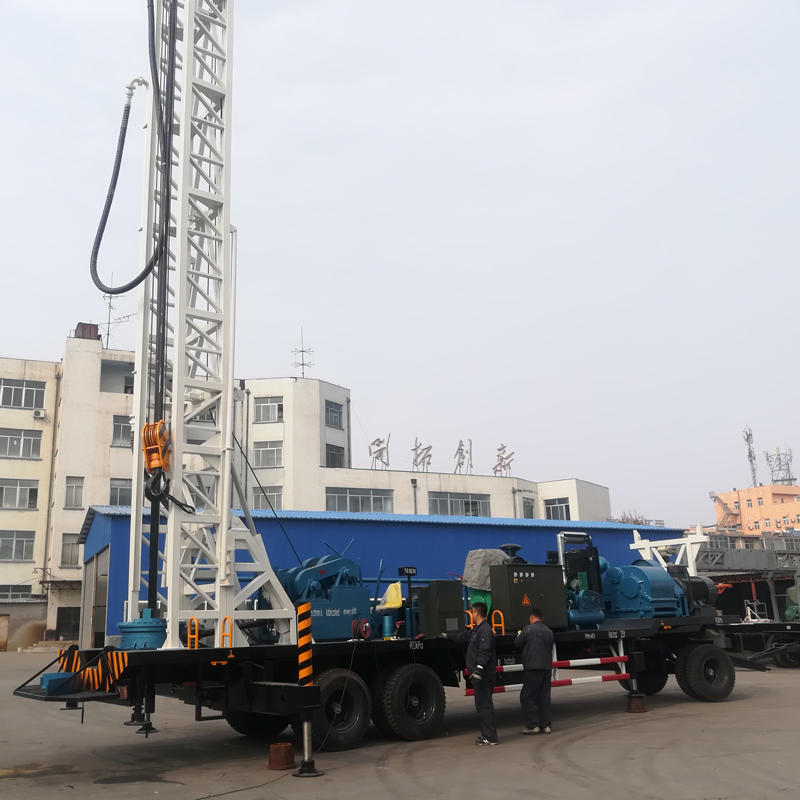
In the WRT1200 materials, the 7/13 m feed stroke and 3 m/6 m drill pipe are written together, falling at the process rhythm level. The reference relationship between the two sets of values has been discussed in a dedicated article on this site and will not be repeated here.
The boundary between what the materials can and cannot answer
Based on the above sections, what can be confirmed is:
- The WRTR1000, as a towable rotary table drilling rig, relies on an external towing vehicle for transfer, and traffic conditions such as roads and bridges must be verified.
- The WRTR1000's power system, rotary table, mast, double winches, BW1200/7 mud pump, and auxiliary generator are integrated with the towable chassis.
- The WRTR1000's hydraulic telescopic K-type mast reduces part of the working height in transport mode.
- The WRT1200's overall dimensions and weight constitute the transport profile constraints of the truck-mounted direct mast structure.
What the materials do not answer and what needs separate confirmation on the project side or with the manufacturer includes:
- Whether the truck-mounted models' mud pump, generator, and power system are integrated with the chassis, and their specific arrangement positions.
- For each transfer method, the complete steps from arriving at the site to being ready to drill, and the approximate time required for each step.
- The specific requirements of the transfer method for access road grade, towing vehicle, or transport vehicle, beyond the road width, bridge load capacity, turning radius, and transport height limits already stated in the materials.
- The actual traffic feasibility of the same model under different regional road conditions; this is a project site verification matter and cannot be inferred from parameter tables.
Which end to start verifying from based on project conditions
If the project location is relatively fixed and the single-point operation cycle is long, the focus for the towable type is on the towing vehicle and traffic conditions, with equipment-side accessories arriving with the chassis. If the project moves frequently between multiple sites, the first process after arrival must be clarified first: whether the mast needs to be extended first, whether the mud pump and generator are on the vehicle, and what other actions occur between arrival and being ready to drill. This is where transfer method truly lands on processes, and it is also the part not yet fully covered by existing materials that needs to be confirmed with the manufacturer.