












In the WR600RC product information, the sample item is stated fairly clearly: the equipment mainly obtains cuttings samples, not continuous complete core. This sentence also points out the first dividing line between the two sampling methods—what you get in hand is different. But the difference is not only in form. Cuttings samples and core samples differ in the type of information they record, the process steps they depend on, and their position in the project data chain. Reducing them to "RC gets fragments, core gets a column" would miss the parts of the two lines that truly need attention.
First separate the two lines by definition
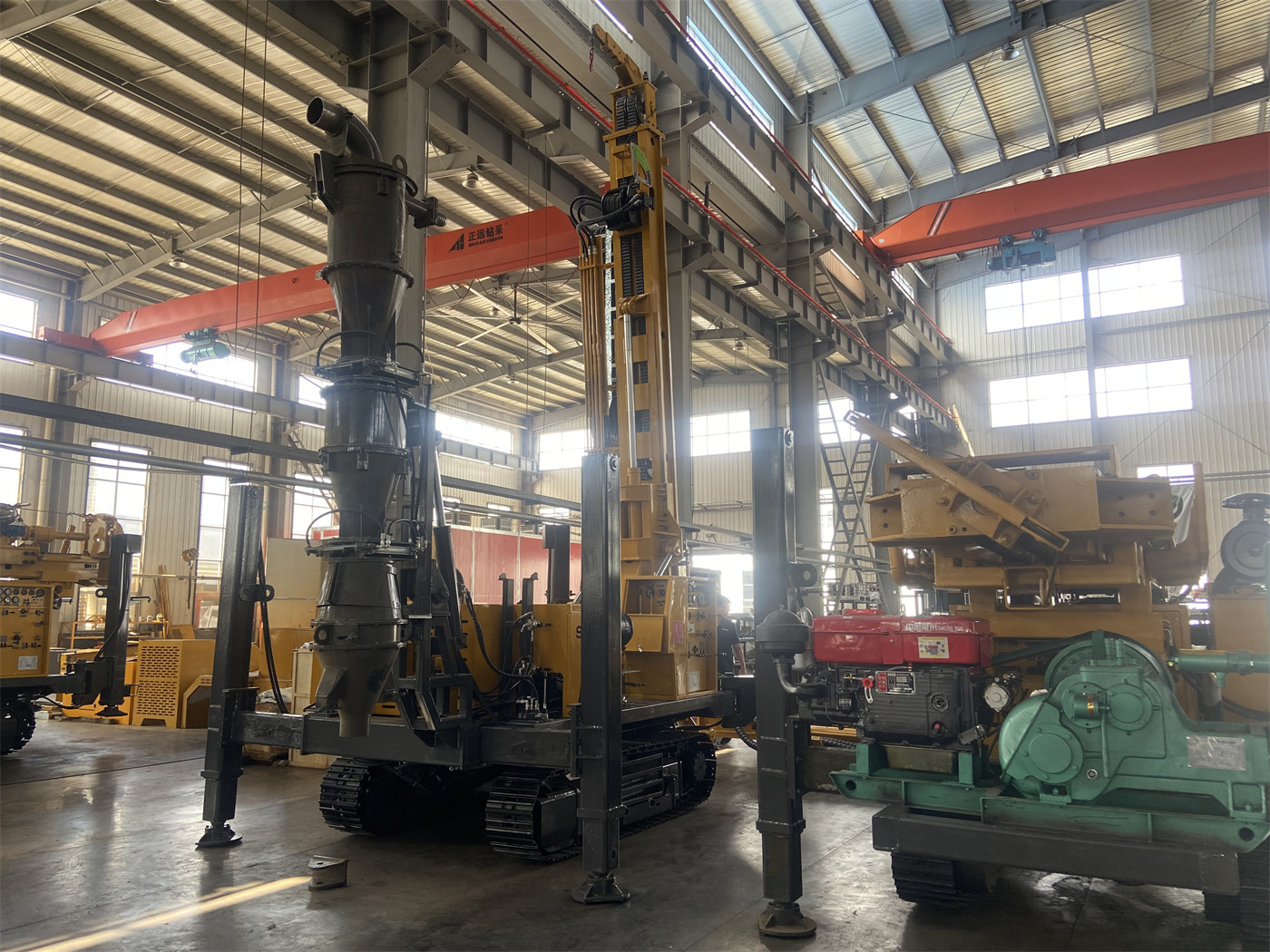
RC drilling uses dual-wall drill pipes. The description of this path in the information is: compressed air travels down along the outer channel of the drill pipe, and after driving the RC hammer and bit at the bottom of the hole, it carries cuttings back to the surface through the inner channel. This is a sample return path with a clear inlet and outlet. Samples are concentrated upward along the inner tube and collected at the collar at fixed footage intervals.
A core drilling rig follows another path. Core enters the core barrel directly and is retrieved intact as the drilling tools are lifted. It does not pass through pneumatic transport in between, nor does it depend on the continuity of a sample return channel. The sample form is a column, and there is a clear correspondence between footage and sample.
The basic differences between these two paths can be listed directly:
| Comparison item | RC sampling | Core sampling |
|---|---|---|
| Sample form | Cuttings | Continuous core column |
| Sample return path | Inner tube of dual-wall drill pipe, pneumatic upward return | Core barrel, retrieved as drilling tools are lifted |
| Relationship between sample and footage | Collected by depth interval; mixing within the interval is possible | Corresponds segment by segment with hole depth |
| Information focus | Depth trends of lithology, alteration, and mineralization | Hole interval sequence, structures, and contact relationships between rock layers |
This table only describes the typical characteristics of the two methods. For a specific piece of equipment or a specific process, actual performance also depends on sample return stability, footage control, and sampling management systems; conclusions cannot be drawn solely from the table classification.
Differences on the sample line: interval samples and segment samples
RC samples depend on depth interval management
The WR600RC information mentions that samples should be collected on site at fixed footage intervals, and the drill hole number, sample number, start and end depths, and abnormal conditions should be recorded. This means that the smallest management unit of an RC sample is an interval, not a precise depth point. Cuttings from different depths within the interval have already mixed during sample return, and the sample represents the combined characteristics of that interval.
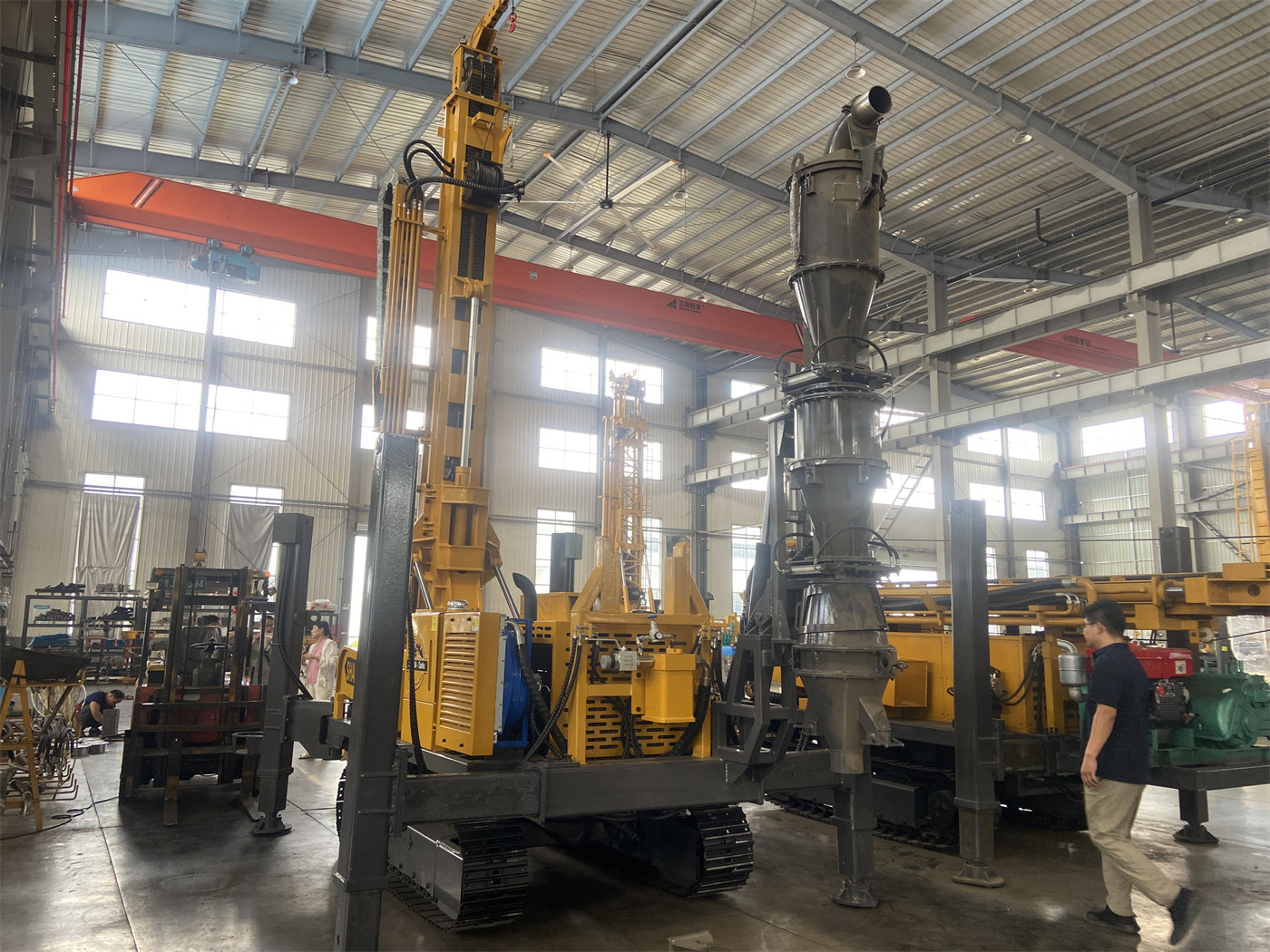
The information also mentions that if there is a sudden decrease in sample, delayed sample return, or obvious cross-contamination, the drill pipe seals, sample return channel, air compressor output, and whether there is air leakage in the hole should be checked. These checks all point to the same issue: the reliability of interval samples depends on sample return continuity. Once sample return is interrupted or intervals are mixed, the correspondence between sample and depth will be affected, and this kind of impact often cannot be restored afterward simply by organizing records.
Core samples preserve the hole interval sequence
Core sampling does not involve the concept of a sample return channel. Core enters the core barrel from the bottom of the hole, and the inner tube or wireline coring device brings it intact to the surface. During the process from underground to the surface, the depth order is not disrupted by a pneumatic path. Each column segment in the core box corresponds to a depth interval in the hole, and spatial information such as rock layer contact boundaries and structural plane angles is preserved on the column.
The core difference between the two lines in terms of samples can be summarized as: an RC sample is a set of interval samples with depth markers, while a core sample is a continuous column with spatial relationships. The former is suitable for trend judgment, and the latter is suitable for structural judgment.
Differences on the information line: trend judgment and structural confirmation
RC information has broad coverage but vertical resolution is limited by footage intervals
The applicable scenarios described in the WR600RC information are: obtaining geological information at different depths through continuous cuttings return, suitable for orebody down-dip investigation, peripheral anomaly verification, mine expansion investigation, and deep geological control. The common point of these uses is that control points for multiple drill holes need to be established quickly over a large area. The focus of each drill hole is to confirm the lithology, alteration, and mineralization trends at a certain depth, rather than to describe a specific structural interface in detail.
The corresponding information judgment method for such uses is to look at lithology changes, alteration zoning, and mineralization trends across different depth intervals. A drilling depth on the order of 600 meters can cover a relatively large vertical range, allowing one drill hole to verify multiple depth segments at the same time. For projects that already have some shallow information and need to track downward, this is a relatively efficient path for information acquisition.
Core information is narrower but has higher vertical resolution
The information advantage of core sampling is concentrated in vertical resolution. The position and thickness of rock layer contacts, orebody boundaries, and structural fracture zones can all be directly observed and measured on core. This type of information is difficult to reconstruct from RC interval samples, because mixing within the interval has already erased the vertical details.
However, the cost structure of core drilling is different. The coring process involves the core barrel, inner tube, and lifting procedures, and single-hole progress is usually slower than that of an RC hole. In projects with many drill holes that require rapid coverage of a large area, switching entirely to core holes would lengthen the overall cycle. This explains why the two often appear in combination in projects: first use RC holes to establish large-scale control, then arrange core holes in key anomaly areas for structural confirmation.
How the two lines work together in the same project
There is a noteworthy statement in the WR600RC information: for large-area projects, RC drilling can first be used to quickly establish deep control, and then core holes can be arranged for key anomaly areas, improving overall exploration efficiency and drilling resource utilization.
This statement reflects exactly the division of labor between the two lines of samples and information. RC holes provide trend data with broad coverage and short cycles, answering "which depth and which location are worth continuing to examine"; core holes provide data with high vertical resolution and complete preservation of spatial relationships, answering "what exactly is the geological structure at this location like." The data from the two cannot replace each other because the collection targets are different; but they can support each other within the same exploration design.
Connection points between the two lines
- Depth correlation: the depth of the anomaly interval in an RC hole needs to be aligned with the depth coordinates of the core hole; otherwise the two sets of data cannot be used on the same section.
- Positional relationship: the relative positions of the RC hole and core hole on the plan determine whether the anomaly area can be accurately delineated.
- Consistency in sampling management: the sample numbering, depth recording, and quality control system mentioned in the RC information also need to be followed in core hole sampling management. The information clearly states that the drilling rig is responsible for obtaining samples, and the final data quality also depends on sampling management.
It should be noted that the information on this site only provides descriptions of RC sampling and process switching for the WR600RC equipment, and does not provide specific model parameters for core drilling rigs. For details of core drilling processes, separate information on core drilling rigs must be consulted and cannot be inferred from the WR600RC parameters.

Process switching cannot change the essence of the sampling method
The WR600RC information shows that the equipment supports RC drilling and conventional DTH down-the-hole hammer drilling, and in loose overburden can also switch to mud rotary mode to stabilize and form the hole first. These process switches change the drilling tool combination and drilling method, but do not change the fact that the equipment obtains cuttings samples. The DTH method also does not produce core, and the mud rotary section also obtains cuttings or material returned from the hole.
Switching to core drilling requires different equipment and a different drilling tool combination. This point is crucial when determining whether a project should use RC or core: process switching solves the problem of "whether drilling can proceed," while the choice of sampling method solves the problem of "what information is needed." The two are not at the same decision-making level.
Answer these two questions first when choosing
- Is the main purpose of this hole to confirm the lithology and mineralization trend of a depth interval, or to describe the geological structure of a local area? The former corresponds to RC, and the latter corresponds to core.
- Is the control focus of the entire project the number of drill holes or the data density of a single hole? Large-scale rapid control is suitable for RC, and detailed confirmation of key areas is suitable for core.
The answers to these two questions are usually not an either-or choice. Most exploration projects have different information needs at three stages: the reconnaissance stage requires coverage, and RC holes take on the main task; the detailed exploration stage requires structural precision, and the proportion of core holes rises; in the transition zone between the two stages, the entry point needs to be determined based on the data already obtained. The WR600RC information does not record specific project adjustment experience; the above is only logical reasoning based on the information characteristics of the two sampling methods.
Whether a specific piece of equipment can meet a project's sampling requirements still needs to be checked against hole diameter range, hole depth, formation conditions, and on-site supporting facilities. Matters not covered in the information, such as actual sample recovery rate, core recovery rate, and laboratory detection limits for samples, are beyond the scope of what this article can infer and need to be determined by the project's geological design and sampling system.