












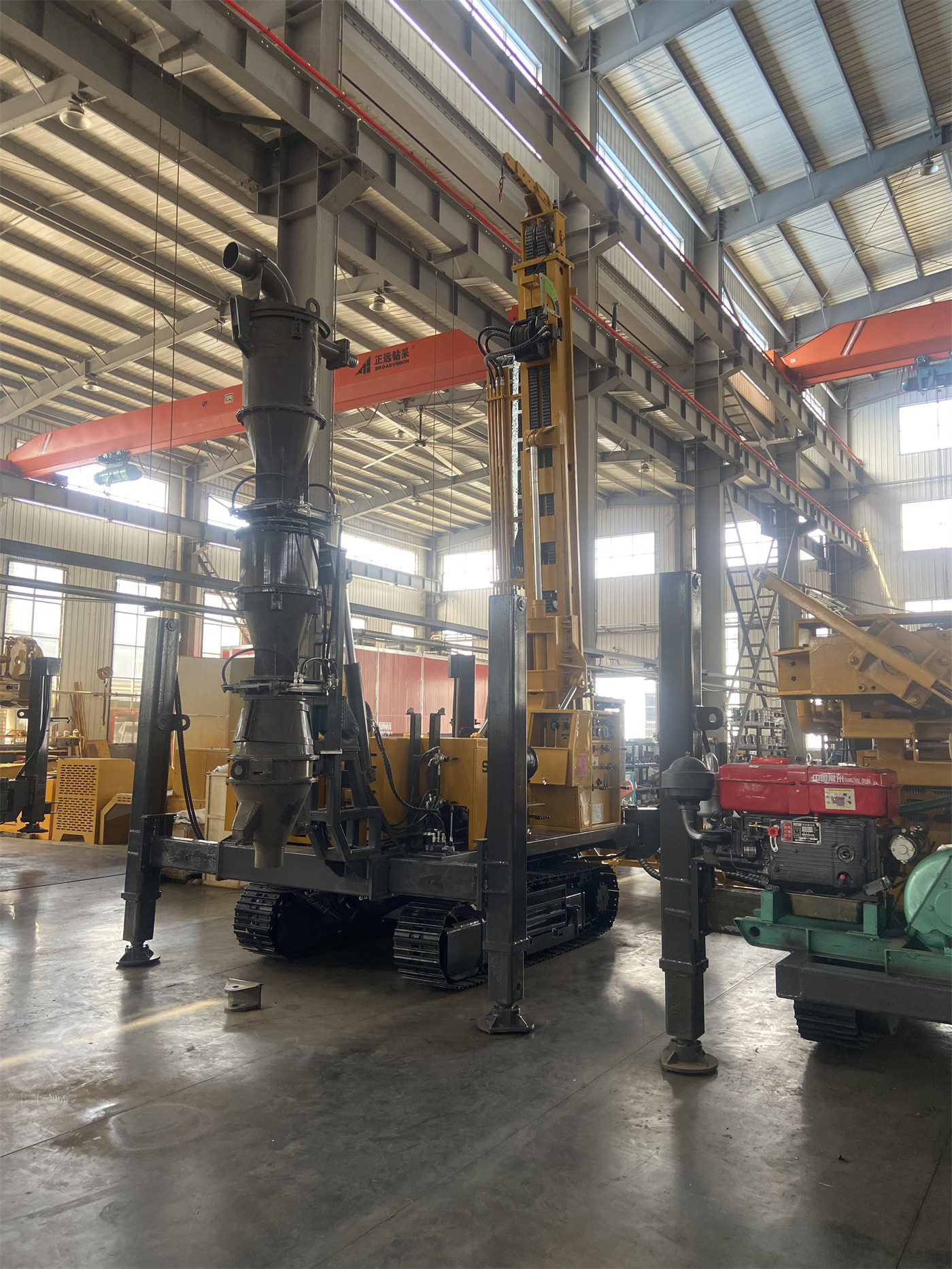
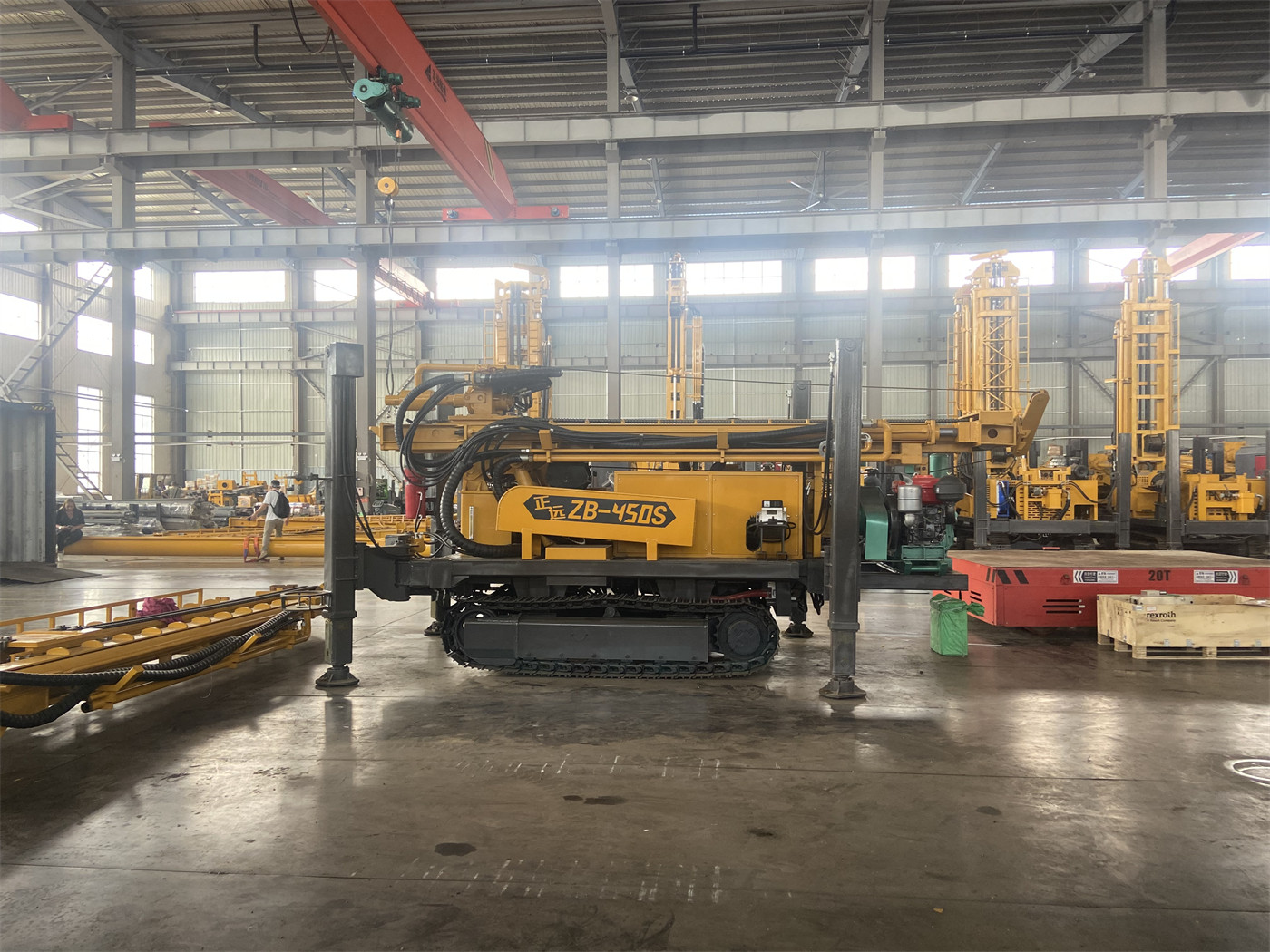
If the goal of an exploration project is to obtain continuous intact core for logging and testing, the WR400RC is not the corresponding equipment; its positioning is to obtain cuttings samples returned by hole depth using the reverse circulation method. The WR400RC is a 400 m crawler-mounted reverse circulation drill rig with a maximum drilling depth of 400 m and a hole diameter of 105–305 mm, suitable for mineral exploration, geological sampling, and deep water well construction. Before purchasing, first clarify whether the project requires cuttings samples or continuous core—this is the first question in determining whether this equipment is suitable.
First Distinguish Between the Two Sampling Objectives
What Cuttings Sampling Answers
Reverse circulation drilling establishes an independent return channel through dual-wall drill pipes. After compressed air drives the downhole drilling tool, cuttings quickly return to the surface through the inner tube. Compared with discharge through the outer annulus, this path helps shorten the mixing distance of cuttings in the hole, making it easier to collect samples in segments by hole depth. It is suitable for collecting samples at fixed footage intervals, recording changes in color, lithology, alteration, and mineralization, and then sending them to the laboratory for grade analysis.
What Continuous Core Answers
Continuous coring obtains intact core, which facilitates observation of structures, textures, and contact relationships, as well as systematic testing by core length. The WR400RC's information clearly states that it obtains cuttings samples returned by depth, not continuous intact core. If the project design requires full-hole coring and uses core recovery as an acceptance indicator, a core drill rig should be selected instead, rather than seeking an alternative with this equipment.
Common Combination Approach
In mineral exploration, a common practice is to first use reverse circulation to quickly establish drill hole control points over a larger area for anomaly verification and preliminary judgment of ore body boundaries, and then decide which key areas require further core drilling based on the results. The WR400RC's information lists exploration for gold, copper, iron, and lithium mines as applicable directions. For gold mines, it can be used for surface anomaly verification, mineralization investigation below overburden, ore body boundary control, and peripheral extension drilling.
WR400RC's Documented Parameters and Applicable Conditions
| Item | Documented Parameter |
|---|---|
| Maximum drilling depth | 400 m |
| Hole diameter | 105–305 mm |
| Working angle | 45° / 90° |
| Engine | 92 kW Yuchai |
| Lifting force | 22 T |
| Axial pressure | 6 T |
| Rotary torque | 8000 / 4000 N·m |
| Maximum rotation speed | 75 / 150 r/min |
| Working air pressure | 1.2–3.5 MPa |
| Air consumption | 16–55 m³/min |
| Recommended RC drill pipe | 89 / 102 mm, drill pipe length 3 m |
| Crawler travel speed | Approx. 2.5 km/h |
| Maximum climbing angle reference | 21° |
| Hydraulic outrigger stroke | 1.6 m |
| Auxiliary winch lifting force | 1.5 T |
| Overall weight | Approx. 11 T |
| Dimensions | Approx. 7 × 1.85 × 2.86 m |
It should be noted that 400 m is the maximum drilling depth given in the information. Actual drilling depth will be affected by hole diameter, drill pipe, air compressor capacity, formation conditions, hole deviation, and drilling tool wear. It should be understood as a reference capability under typical configuration, not a lower limit guaranteed under all working conditions.
Check Three Things by Project Type
Mineral Exploration and Geological Sampling
- Whether the hole depth and hole diameter fall within the 400 m and 105–305 mm ranges. When both hole diameter and hole depth approach the upper limits, more careful verification is needed.
- Whether the hole direction is vertical or a 45° inclined hole. The information gives two working angles, 45° and 90°, which can be used for inclined ore bodies, structural zones, or specific target verification. Before formal construction, the hole direction and hole angle should be confirmed according to the geological design.
- Whether full-hole continuous coring is required. If coring is required, this model does not comply; if only cuttings samples are needed, a sample numbering, weighing, sealing, and anomaly recording system should be established at the same time.
Medium-to-Deep Water Well Construction
The information lists deep water wells as one of the main applications. Rural water supply, farmland irrigation, industrial water use, and mining area groundwater development can all be considered. However, water well construction does not necessarily require the RC sampling system throughout the entire process. Depending on the formation and well completion requirements, down-the-hole hammers, mud drilling, or other suitable methods can be selected. Exploration holes focus more on sample quality, while water wells focus more on hole stability, well diameter, and water-producing layers. Within the same project, sharing the platform but configuring separately can be considered.
Shared Use for Mining Area Water Supply and Mine Investigation
Mining projects may have both exploration hole needs and water well needs for domestic water, dust suppression, and auxiliary production. The WR400RC has multiple drilling methods and can adjust its configuration according to the objectives of different holes within the same project, which has practical significance for equipment utilization.
Determine Whether the Process Can Connect According to Formation
- Loose overburden: Soil, clay, sand, and gravel layers are prone to collapse and may not be suitable for direct pneumatic RC drilling. The information indicates that this model supports mud drilling, so the upper loose formation can be drilled using mud circulation and casing according to hole wall conditions, and then the process can be switched after entering stable rock.
- Weathered rock and relatively intact hard rock: Medium- and high-pressure down-the-hole hammers can be used. Attention should be paid to air compressor displacement, down-the-hole hammer lubrication, bit wear, and return cuttings status.
- Fractured zones and formations with developed fissures: Block falling and local hole enlargement are likely. Cuttings may remain in the hole and return in concentrated batches, causing poorer correspondence between samples and depth. If sampling accuracy requirements are high, the monitoring arrangements of on-site geologists for changes in return samples should be specified in the procurement and construction plan.
Supporting Requirements for Reverse Circulation Sampling
RC drilling has high requirements for both air compressor pressure and displacement. The information gives a working air pressure of 1.2–3.5 MPa and air consumption of 16–55 m³/min. When hole depth increases, hole diameter increases, or rock layers are hard, if air volume is insufficient, the return speed of cuttings will decrease, which may affect sampling continuity and hole bottom cleanliness. Air compressor specifications need to be verified item by item with the construction party according to actual hole depth and hole diameter. This website's information does not provide a fixed matching scheme. Before purchasing, the required air volume and pressure range should be confirmed with the manufacturer.
The return status of samples directly affects data quality. During construction, observe the return sample volume, particle size, dust changes, and whether there is obvious cross-contamination. Each time a pipe is added, the hole is cleaned, or drilling is restarted for sampling, the transition section should be handled according to on-site sampling procedures to avoid mixing samples from different depths. RC samples should be numbered, weighed, and sealed according to fixed hole depth intervals, and the drill hole number, depth, time, and anomalies should be recorded. The sampling system, cyclone, or sample splitter also needs regular cleaning.

Regarding drill pipes, the recommended RC drill pipe diameter is 89 / 102 mm, with a length of 3 m. RC drill pipes differ in structure from ordinary single-wall drill pipes, and the sealing and reliable connection of the inner and outer channels must be ensured. During construction, the dual-wall drill pipe joints, seals, and inner tube wear should be checked regularly to avoid air leakage and sample mixing that affect sampling quality.
Items to Confirm Before Purchase
- Whether the project accepts cuttings samples instead of continuous core, and how the acceptance criteria are written.
- The combination of maximum hole depth and hole diameter, and whether 45° inclined holes are required.
- The air compressor pressure and displacement configuration scheme, and whether it is provided by the manufacturer as a package.
- The specific process and responsibility division for sample collection, splitting, numbering, and sealing.
- The switching conditions between mud drilling and pneumatic RC processes, and casing configuration.
- On-site layout conditions: the overall weight is about 11 T, crawler travel speed is about 2.5 km/h, and the maximum climbing angle reference is 21°. Before moving, ground bearing capacity and transport routes need to be confirmed.
- The outrigger pad scheme for inclined holes and high-torque operations. On soft ground, long-term high loads should be avoided to prevent outrigger sinking.
The WR400RC provides a drilling platform. Final sample quality also depends on on-site sampling procedures and personnel operation. The above judgments are based on the information available on this website and do not involve specific customer cases, transaction situations, or measured data. For content involving supporting equipment selection and contract terms, it is recommended to confirm item by item in writing with the manufacturer during the inquiry stage.