












In the WR750S documentation, the pulling force is listed as 40 T, and the same section adds a qualifier: when abnormal pull-out resistance occurs, it should first be handled through hole cleaning, slow pulling, and assessment of downhole conditions, avoiding treating the maximum pulling force as the sole solution. This statement itself draws the boundary. Reading 40 T as 'no matter what happens downhole, it can pull it out' mistakes the upward-pulling capability for an overall solution to downhole problems.
Pulling force is a numerical value of equipment capability, while downhole conditions are a collection of phenomena. The two are not on the same level. Below, based on the WR750S's published data, this matter is broken down.
What actions does 40 T correspond to on the equipment side?
The WR750S's public information states: pulling force 40 T, feed force 6 T, maximum drilling depth 750 m, hole diameter 105–450 mm, recommended 102 mm drill pipe, supports direct operation with 6 m drill pipe and 6 m casing. The value of 40 T mainly falls in the upward direction, and the actions involved can be grouped into several categories:
- During normal tripping, bearing the weight of the entire drill string, and lifting operations when connecting and disconnecting 6 m drill pipes one by one;
- Lifting and recovering downhole tools such as DTH hammers and drill bits;
- Running and handling of partial casing;
- The margin available for handling when pull-out resistance is encountered.
The common point of these items is that they are upward-pulling actions the equipment needs to complete under normal operating procedures. 40 T provides margin for these actions, which does not equal providing margin for all downhole anomalies.
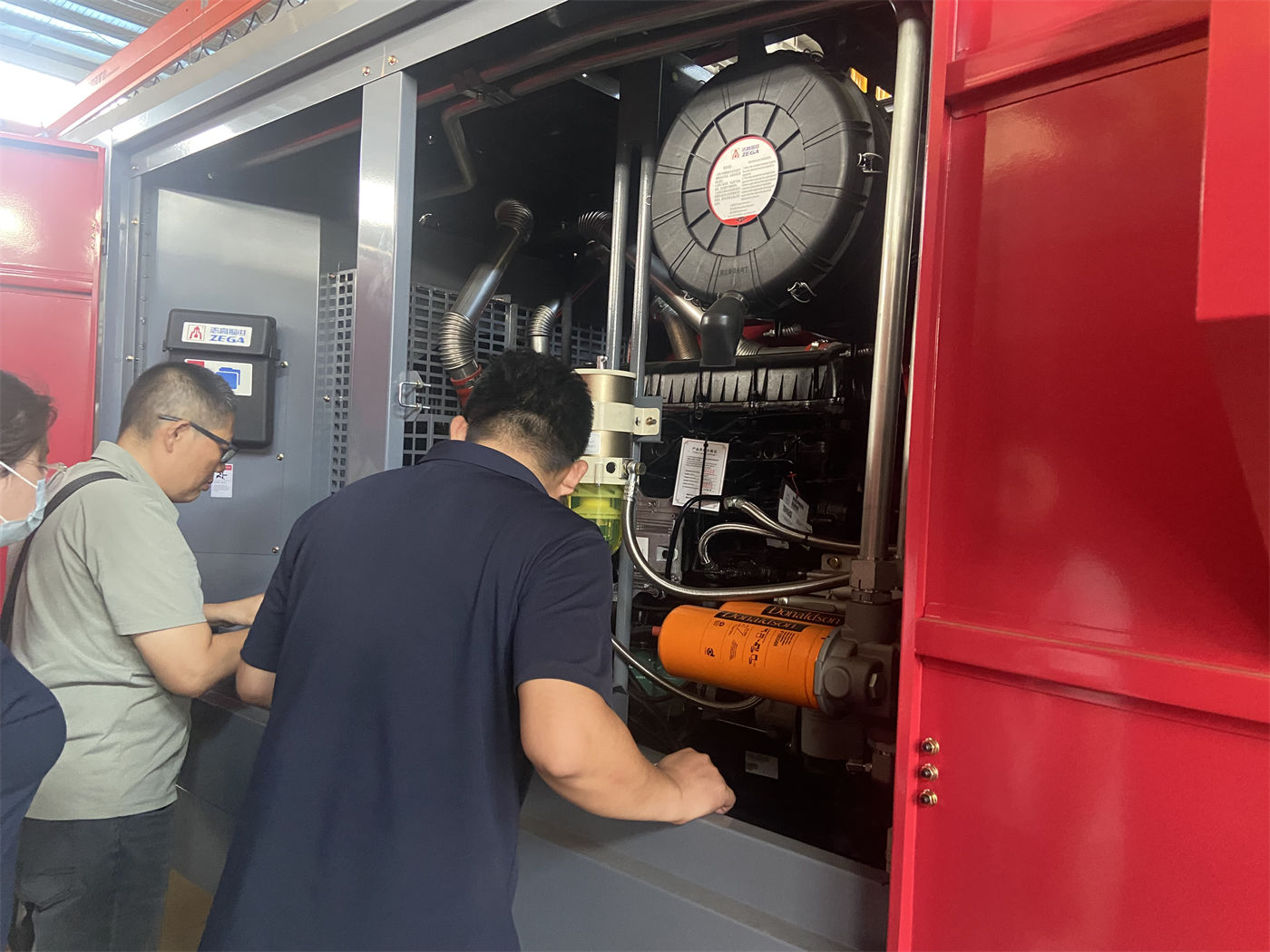
Downhole conditions do not all belong to the 'pulling' category
Listing common downhole problems according to descriptions that appear in the WR750S documentation, it can be seen that they fall into different stages:
| Downhole condition | Corresponding handling stage in the documentation |
|---|---|
| Poor cuttings removal, sediment, and regrinding | Continuous hole cleaning, hole bottom cleanliness, and air supply parameters |
| Falling blocks in fractured zones, hole shrinkage, air leakage, stuck pipe | Reduce feed, maintain hole cleaning, use casing, foam, and other auxiliary methods when necessary |
| Weathered rock and alternating soft-hard formations | Adjust rotation, feed, and hole cleaning frequency; use casing in unstable upper hole sections |
| Aquifers and strong water inflow sections | Record the depth of water-producing zones, adjust air supply, hole cleaning, and casing methods |
None of these rows is directly solved by pulling force. They are handled separately by hole cleaning, wall protection, casing, air supply parameters, and drilling procedures. Pulling force only has room to play when the drill string itself can be freely pulled up; once the hole wall jams the drilling tools, applying more upward force faces the constraint of the hole wall, not insufficient pulling force.
The 750-meter-class hole depth determines the load structure that 40 T must face
The WR750S documentation states that at 750-meter-class hole depths, the drill pipe not only bears greater self-weight but also faces hole wall friction, rotational torque, and possible local jamming, so drill pipe strength, thread condition, and straightness are very important, and a drill pipe inspection and rotation system should be established during construction. This passage shows that 40 T faces a superimposed load: the entire string's self-weight plus hole wall friction plus local jamming, and changes in any of these will change the actual force required for pulling.
In the same document, the rotary system can use either 13000 / 6500 N·m or 15000 / 7500 N·m configurations, with maximum rotation speed 95 / 190 r/min; recommended working air pressure 1.6–6 MPa, air consumption 16–75 m³/min. These values govern rotation and air supply respectively, and are not the same type of parameter as 40 T. Only by looking at them together can the load structure during deep hole drilling be formed.
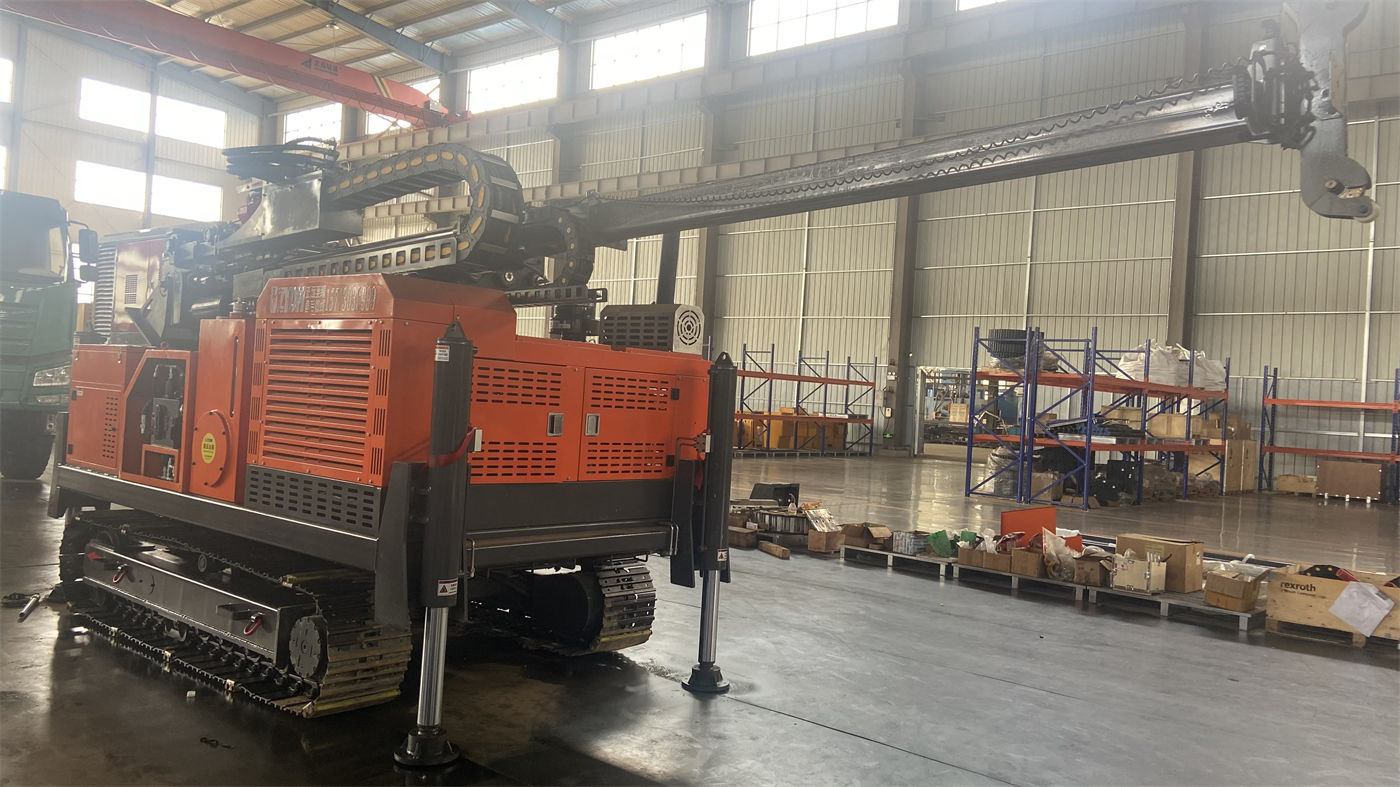
The handling sequence already stated in the documentation
Immediately after 40 T, the WR750S documentation gives an operational recommendation: it should first be handled through hole cleaning, slow pulling, and assessment of downhole conditions. The order of these three actions is worth noting—first clean the hole, then pull slowly, while assessing downhole conditions. Hole cleaning addresses problems such as sediment and regrinding that can change downhole conditions; slow pulling tests the source of resistance without directly applying the maximum pulling force; assessing downhole conditions is to distinguish whether the resistance is friction, falling blocks, or hole shrinkage.
The documentation also states that if air volume loss is obvious, it should be determined whether large fissures and cavities exist, rather than simply increasing air compressor pressure. This judgment logic is the same as with pulling force: increasing a single value is not the solution to all downhole conditions.
What conclusions cannot be drawn from the single value of 40 T
- It cannot be concluded that 'any downhole condition can be handled.' The documentation itself states that abnormal pull-out resistance should first be handled according to hole cleaning, slow pulling, and condition assessment.
- It cannot be concluded that 40 T corresponds to a specific hole depth. In the documentation, 750 m is the maximum reference drilling depth, the hole diameter range is 105–450 mm, and the drill string load varies with hole diameter, drill pipe specifications, and hole wall conditions.
- It cannot be concluded that 40 T can replace wall protection or casing. The handling of fractured zones, weathered rock, and aquifer sections is described in the sections on casing, foam, and well completion structure.
- 40 T and 6 T feed force cannot be mixed into capability in one direction. Feed force governs downward pushing, pulling force governs upward pulling.
Other sets of values that appear alongside 40 T on this equipment
The WR750S documentation also lists: auxiliary winch pulling force 2.5 T, crawler travel speed about 3 km/h, maximum climbing angle reference 21°, hydraulic outrigger stroke 1.6 m, overall weight about 14 T, dimensions about 6.64 × 2.25 × 2.67 m, 176 kW Weichai engine, fast lifting speed 31 m/min, fast feed speed 65 m/min. These values each correspond to different parts of the equipment. The auxiliary winch is used for handling DTH hammers, drill pipes, casing tools, and on-site accessories, and is a separate rated load from the main hoist; fast lifting speed affects the time consumed by auxiliary actions, not the magnitude of pulling force.
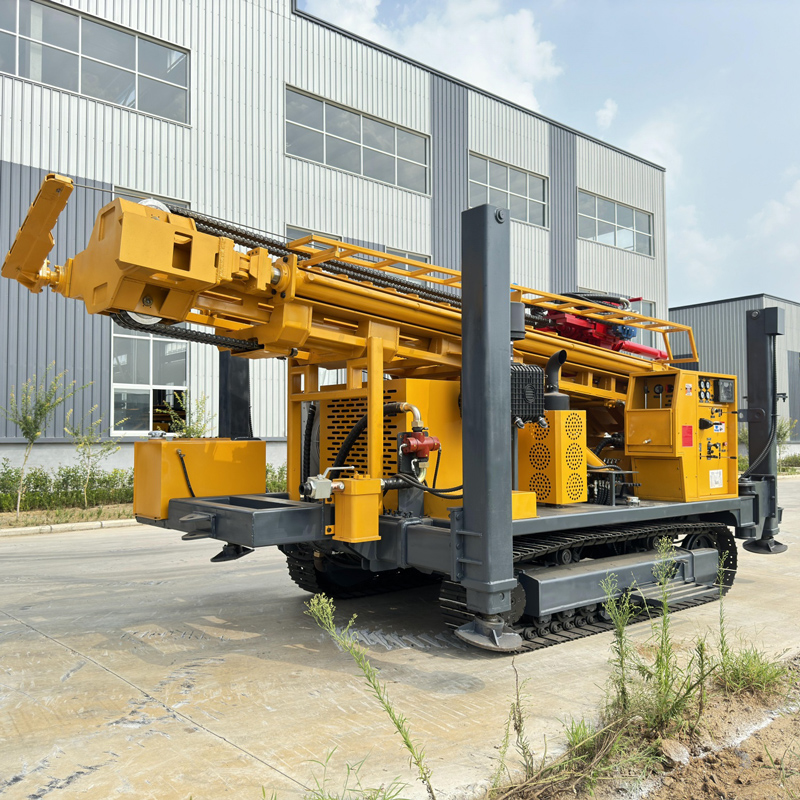
Taking 40 T out of this set of values and magnifying it alone would lose its position within the entire equipment.
What additional information is needed to judge whether pulling force is sufficient
The content already published on this site for the WR750S can explain the types of actions corresponding to pulling force and its numerical magnitude, but to judge whether 40 T is sufficient for a specific project, project-side information is still needed: target hole diameter and well completion structure, actual drill pipe specifications and total length run in, hole wall stability of the main rock formations, whether casing is needed and the running depth, and hydrogeological data of the construction area. These contents are outside the scope of existing product documentation and need to be confirmed separately for each project.
Pulling force is a value on the equipment side, while downhole conditions are a set of conditions on the project side. Treating the former's value as a general conclusion for the latter spans too large a gap.